Our Location
304 North Cardinal St.
Dorchester Center, MA 02124

304 North Cardinal St.
Dorchester Center, MA 02124

If you’re investing in a commercial hydroponic tower system, the most important decision you’ll make is what to grow in it. The right crop choice can mean the difference between a profitable harvest and a disappointing season.
Some crops thrive in vertical systems — they love the airflow, the gravity-fed nutrient flow, and the dense planting configuration. Others struggle. This guide covers 13 of the best-performing crops for hydroponic towers, ranked by yield potential, growth speed, and commercial profitability.
Whether you’re a greenhouse operator looking to diversify, a soil farmer transitioning to hydroponics, or an investor planning a new vertical farm, this guide will help you make the right choice.
We’ve categorized these crops into three groups: Leafy Greens (fastest ROI), Herbs (highest margin per gram), and Fruiting Crops (highest total revenue per tower).
Best for: Beginners and high-volume commercial operations
Growth cycle: 30–45 days from seed to harvest
Tower density: 30–50 plants per tower
Profitability: ⭐⭐⭐⭐⭐
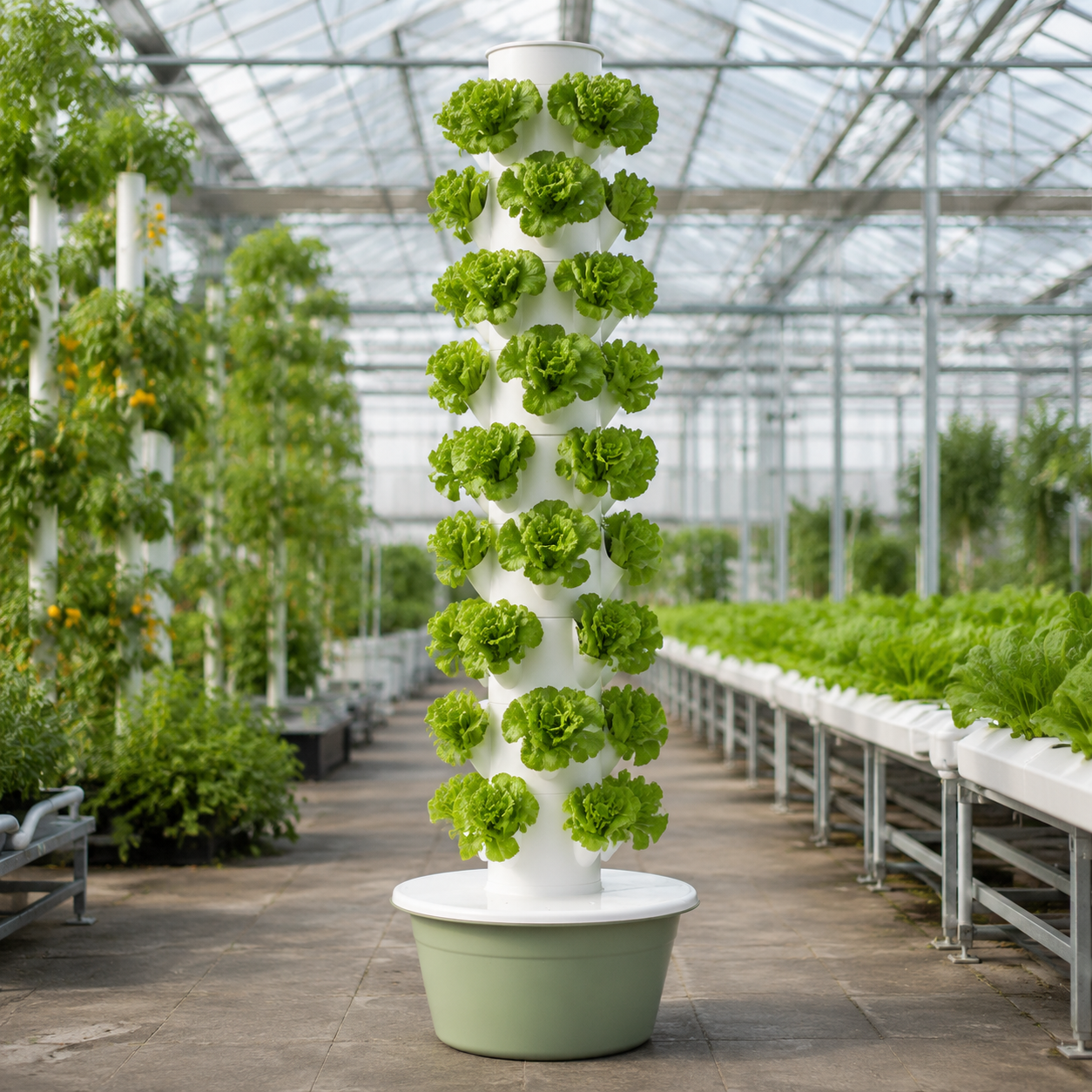
Lettuce is the undisputed king of hydroponic tower growing. It has a short growth cycle, thrives in the tower’s airflow-rich environment, and commands consistent demand from restaurants, grocery stores, and CSAs. Varieties like Butterhead, Romaine, and Oakleaf perform exceptionally well. Pro tip: stagger your planting so you harvest 5-10 heads per tower every week for steady cash flow.
Best for: Health-conscious markets and smoothie manufacturers
Growth cycle: 35–50 days
Tower density: 25–40 plants per tower
Profitability: ⭐⭐⭐⭐
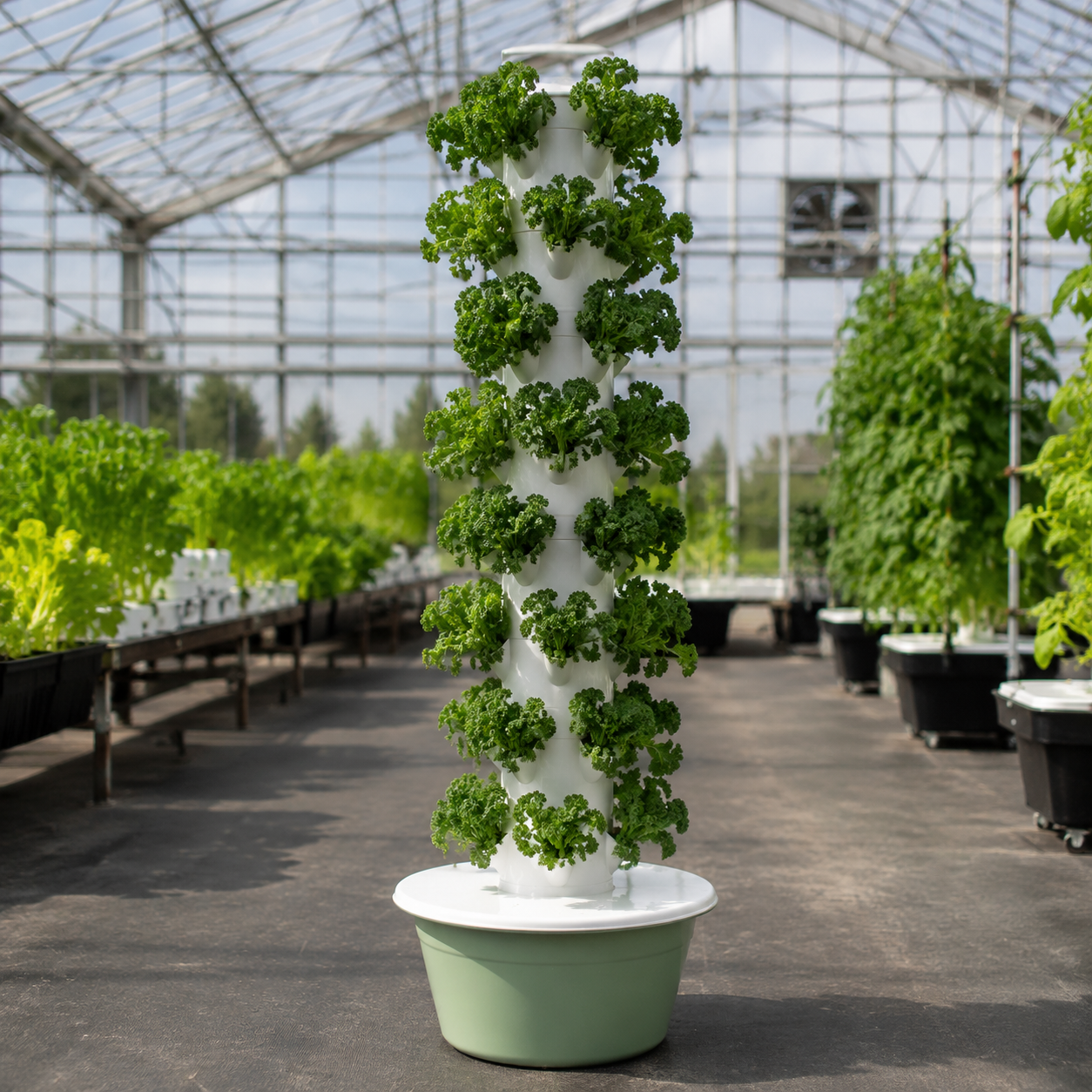
Kale is a nutrient-dense superfood that performs beautifully in vertical towers. It tolerates a wider pH range than lettuce and can be harvested multiple times (cut-and-come-again). Lacinato (Dinosaur) and Red Russian varieties are particularly popular in upscale markets. Kale’s sturdy leaves hold up well during shipping, reducing post-harvest losses.
Best for: Fast turnover, baby leaf production
Growth cycle: 25–40 days
Tower density: 35–50 plants per tower
Profitability: ⭐⭐⭐⭐
Spinach grows quickly in towers and commands premium prices, especially in winter when field-grown spinach is scarce. It prefers slightly cooler conditions (18–22°C), making it ideal for indoor or climate-controlled greenhouse towers. Harvest as baby leaf for the highest price per gram.
Best for: Visual appeal, farmers market sales
Growth cycle: 40–55 days
Tower density: 25–35 plants per tower
Profitability: ⭐⭐⭐
Rainbow chard is one of the most visually striking crops you can grow in a tower. Its colorful stems (red, yellow, orange, pink) make it a favorite at farmers markets and high-end restaurants. It’s also heat-tolerant and produces continuously if you harvest outer leaves.
Best for: Italian restaurants, pesto manufacturers
Growth cycle: 28–40 days
Tower density: 30–45 plants per tower
Profitability: ⭐⭐⭐⭐⭐
Basil is the most profitable herb for tower systems. It loves the warm, well-drained conditions of vertical hydroponics and produces exceptionally fragrant leaves. Genovese (sweet basil) is the highest-demand variety. Basil sells for $20–40/kg wholesale and up to $60/kg retail, with production costs under $5/kg.
Best for: Tea producers, cocktail bars, Middle Eastern cuisine
Growth cycle: 25–35 days
Tower density: 30–50 plants per tower
Profitability: ⭐⭐⭐⭐
Mint is aggressively productive in tower systems — it’s hard to stop it from growing. Peppermint and Spearmint are the most commercial varieties. Mint spreads quickly in the tower pockets and can be harvested weekly once established. Great for mixed cropping towers as it helps deter pests.
Best for: Year-round supply to grocery chains
Growth cycle: 50–70 days
Tower density: 25–35 plants per tower
Profitability: ⭐⭐⭐
Flat-leaf (Italian) parsley is a staple herb with consistent year-round demand. It grows steadily in towers and can be harvested continuously. While its per-kg price is lower than basil, its reliability and volume potential make it a solid choice for commercial operations.
Best for: Dried herb production, pizza restaurants
Growth cycle: 45–60 days
Tower density: 25–35 plants per tower
Profitability: ⭐⭐⭐
Oregano is a hardy perennial herb that thrives in tower systems with minimal maintenance. It can be sold fresh or dried (dried oregano sells for $30–80/kg). Once established, oregano produces reliably for months with minimal input.
Best for: High-value retail, U-pick operations
Growth cycle: 60–90 days from transplant
Tower density: 20–30 plants per tower
Profitability: ⭐⭐⭐⭐
Strawberries are one of the highest-value crops for hydroponic towers. They grow vertically with the cascading runners hanging beautifully down the tower sides. Day-neutral varieties (like Albion and Seascape) produce fruit continuously rather than in a single season, giving you months of harvest. Strawberries sell for $8–15/kg wholesale and up to $25/kg retail.
Best for: Restaurant supply, long harvest window
Growth cycle: 70–90 days from transplant
Tower density: 15–20 plants per tower
Profitability: ⭐⭐⭐⭐
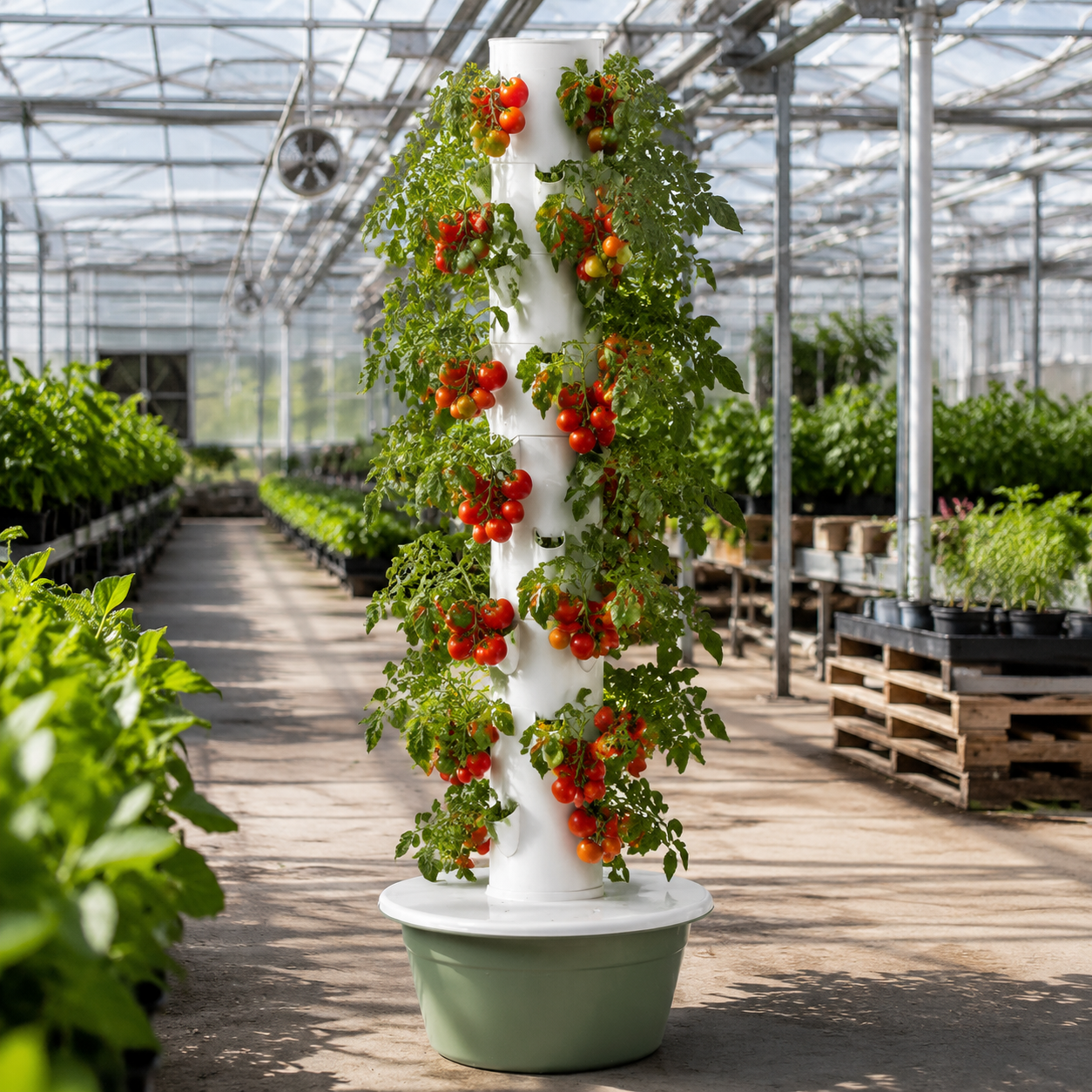
Cherry and grape tomato varieties are ideal for tower systems. They’re heavy feeders — place them in lower tower pockets where they get the most accumulated nutrients. Roma and determinate varieties work best as they stay compact. A single tower with 18 tomato plants can produce 15–25 kg of fruit over 3–4 months. Important: tomatoes need 6–8 hours of direct sunlight or supplemental LED lighting.
Best for: Ethnic cuisine markets, hot sauce producers
Growth cycle: 70–100 days from transplant
Tower density: 15–20 plants per tower
Profitability: ⭐⭐⭐⭐
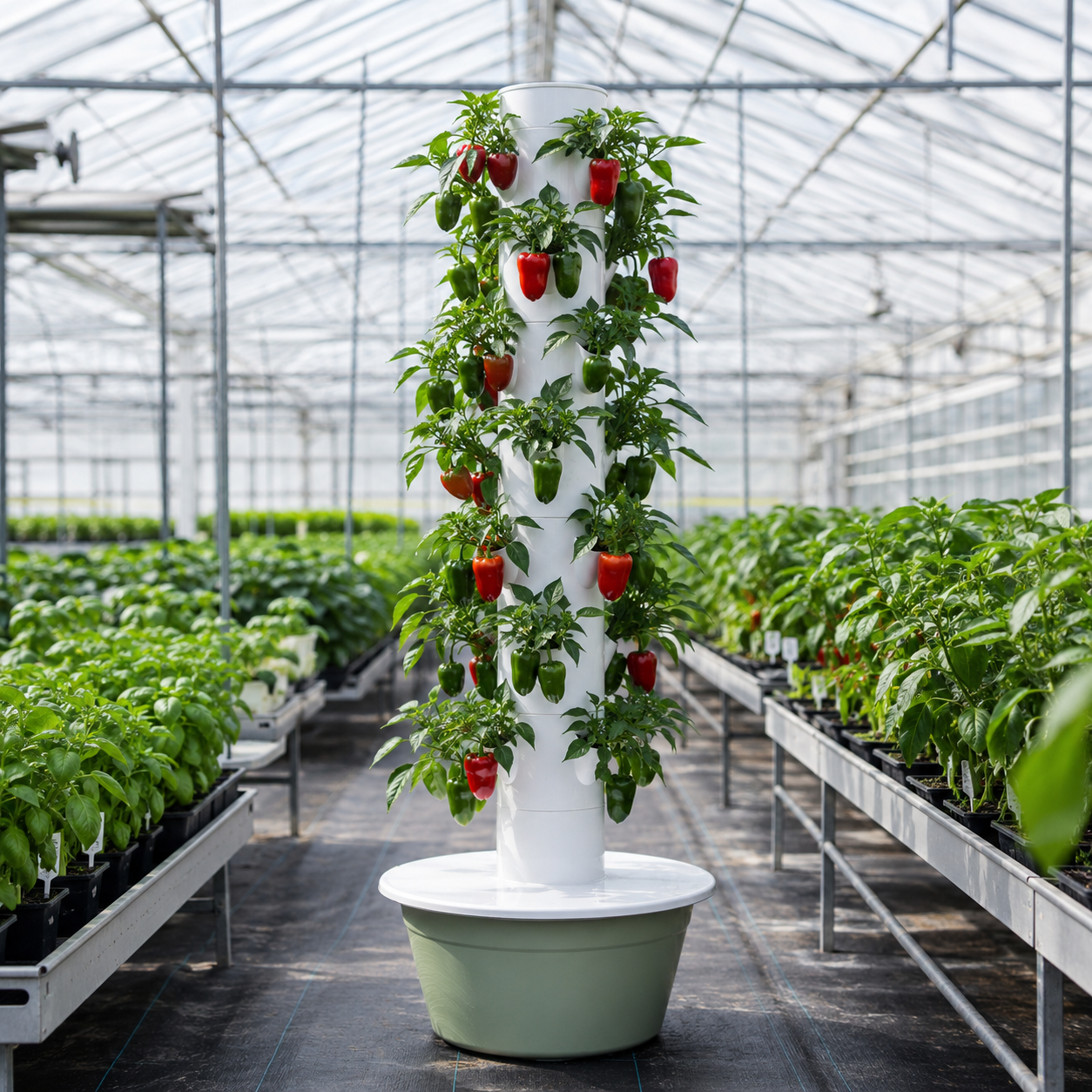
Bell peppers and chili peppers both perform well in towers. Bell peppers need consistent calcium to prevent blossom-end rot (add Cal-Mag supplement). Chili peppers — especially high-value varieties like Habanero, Scotch Bonnet, and Thai Bird Chili — command premium prices of $15–40/kg and are relatively low maintenance.
Best for: Fine dining, gourmet garnish suppliers
Growth cycle: 35–50 days
Tower density: 25–40 plants per tower
Profitability: ⭐⭐⭐⭐
Edible flowers are a niche but extremely profitable crop for tower systems. They sell for $30–80/kg to high-end restaurants and specialty grocers. Nasturtiums are the easiest — they grow quickly, produce prolific blooms, and the leaves are also edible. Flowers add aesthetic appeal to your tower while generating premium revenue.
Best for: CSA boxes, grocery chains, meal prep suppliers
Growth cycle: 20–30 days (baby greens)
Tower density: 40–60 plants per tower
Profitability: ⭐⭐⭐⭐⭐
A mix of arugula, mizuna, mustard greens, tatsoi, and cress creates a premium “mesclun mix” that sells for $30–60/kg. These fast-growing greens can be harvested as baby greens in just 20–30 days, giving you the fastest possible turnaround in a tower system. This is the ideal crop for new operators — rapid harvests mean rapid learning and rapid cash flow.
| Crop | Growth Cycle | Plants per Tower | Profitability | Difficulty |
|---|---|---|---|---|
| Lettuce | 30–45 days | 30–50 | ⭐⭐⭐⭐⭐ | Easy |
| Kale | 35–50 days | 25–40 | ⭐⭐⭐⭐ | Easy |
| Spinach | 25–40 days | 35–50 | ⭐⭐⭐⭐ | Medium |
| Swiss Chard | 40–55 days | 25–35 | ⭐⭐⭐ | Easy |
| Basil | 28–40 days | 30–45 | ⭐⭐⭐⭐⭐ | Easy |
| Mint | 25–35 days | 30–50 | ⭐⭐⭐⭐ | Easy |
| Parsley | 50–70 days | 25–35 | ⭐⭐⭐ | Easy |
| Oregano | 45–60 days | 25–35 | ⭐⭐⭐ | Easy |
| Strawberries | 60–90 days | 20–30 | ⭐⭐⭐⭐ | Medium |
| Tomatoes (cherry) | 70–90 days | 15–20 | ⭐⭐⭐⭐ | Medium |
| Peppers | 70–100 days | 15–20 | ⭐⭐⭐⭐ | Medium |
| Edible Flowers | 35–50 days | 25–40 | ⭐⭐⭐⭐ | Medium |
| Mixed Greens | 20–30 days | 40–60 | ⭐⭐⭐⭐⭐ | Easy |
Not every crop is right for every grower. Here’s a quick decision framework based on your business model:
B2B tip: If you’re purchasing 20+ towers, we recommend dedicating 60% of your tower capacity to lettuce and leafy greens (steady income), 25% to herbs (high margin), and 15% to fruiting crops (premium product for best customers). This split balances cash flow with profitability.
SpaceTree towers are designed to handle all 13 of these crops — and many more — with zero modifications needed. The standard pocket configuration (40 pockets per 6ft tower) is optimized for the root ball size of all crops listed above, from compact basil to sprawling tomato roots.
