Our Location
304 North Cardinal St.
Dorchester Center, MA 02124

304 North Cardinal St.
Dorchester Center, MA 02124

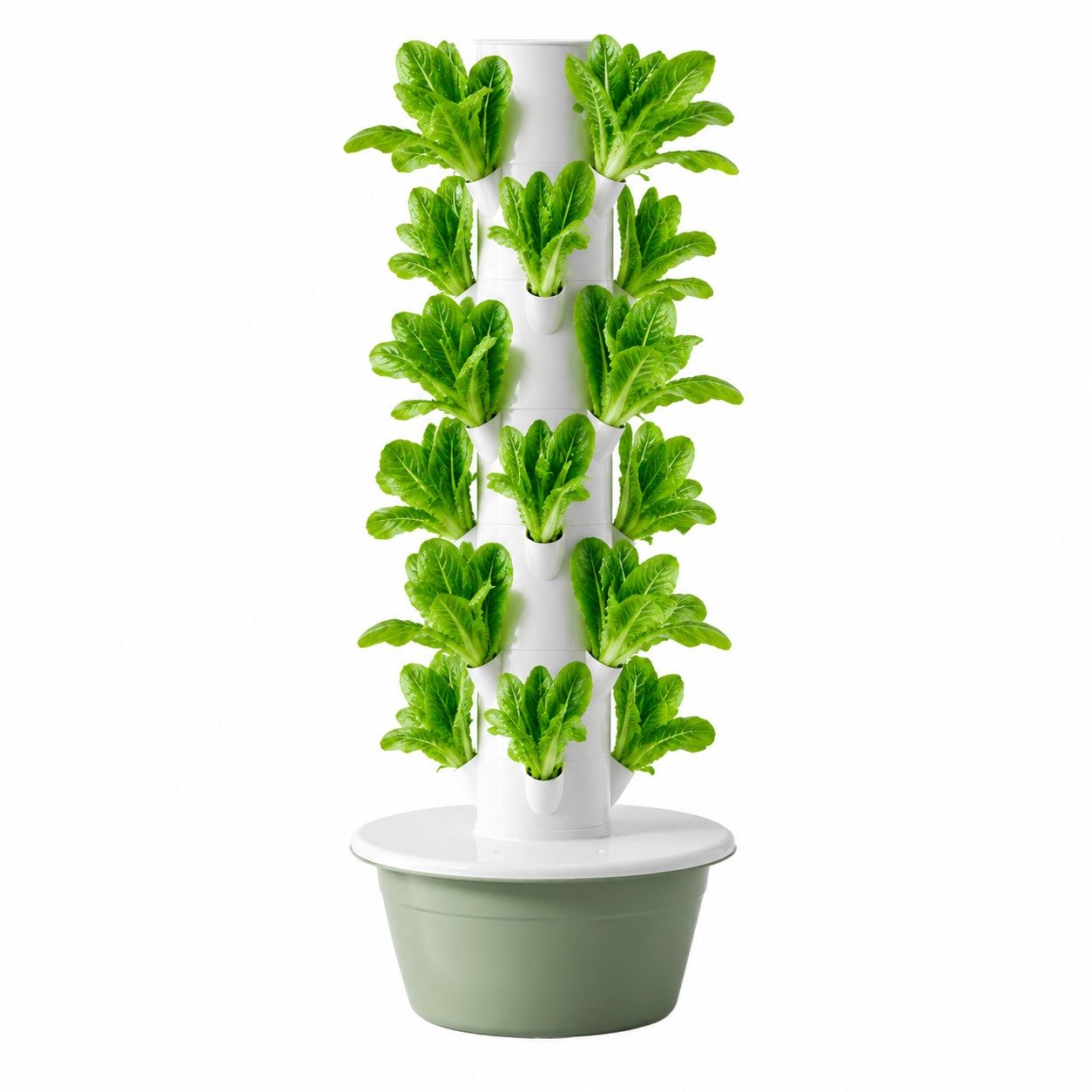
When you evaluate tower suppliers, ask how the system handles sanitation — it is a better long-term predictor of your pest control costs than the initial price per unit.
Getting from “reacting to outbreaks” to “prevention-first” takes one week of setup:
From here, pest control becomes a scheduled routine — roughly 30–45 minutes of labor per week for a 100-tower farm — instead of emergency weekends spent spraying.
The towers you install determine your pest control workload for the life of the farm. Systems with covered pockets, drainable reservoirs, smooth cleanable surfaces, and modular sections make prevention simple and effective; poorly designed systems make every pest problem worse. If you are sourcing towers for a new or expanding farm, ask your supplier for a sanitation walk-through of their design — how a tower handles cleaning tells you more about your future pest control costs than any brochure.
At SpaceTree, every tower is designed with commercial sanitation in mind: recessed planting pockets that protect sponge cubes, reservoirs with no dead zones, and smooth food-grade surfaces that wipe down in minutes. We supply farms worldwide directly from the factory — and we help buyers plan systems that keep pest control simple from day one.
If you run a commercial hydroponic tower farm, pests are the operational problem that keeps growers up at night. Aphids, whiteflies, thrips, and fungus gnats can spread through a vertical system in days, sap plant vigor, and force you into reactive spraying that disrupts your production schedule. The good news: pest control in hydroponic towers is a solvable engineering problem, not a lottery. With the right prevention routine, a simple scouting protocol, and a layered Integrated Pest Management (IPM) plan, commercial growers can keep tower systems nearly pest-free without halting production. This guide walks through exactly how — from the five pests you will actually encounter, to the step-by-step IPM plan that protects crop quality and your bottom line.
Hydroponic towers create a warm, humid, nutrient-rich microclimate around each planting pocket — ideal conditions for plant growth, and unfortunately also ideal for fast-breeding pests. Because towers pack more plants per square foot than soil beds, an infestation that starts on one tower can reach every tower in the room within a week.
But towers have a structural advantage that many growers overlook: no soil. Soil is the reservoir for the most persistent crop pests — fungus gnat larvae, root aphids, and soil-borne pathogens. Remove the soil and you remove their breeding ground. Combined with a vertical layout that makes every leaf visible at eye level, towers are actually one of the easier systems to scout and keep clean. The key is replacing “react and spray” with a prevention-first routine.
Before you can control a pest, you need to identify it correctly — treatment for thrips is different from treatment for spider mites, and the wrong spray wastes money and may harm your crop. This is the diagnostic table every grower should keep posted in the grow room.
| Pest | What It Looks Like | Damage Signature | Where to Check |
|---|---|---|---|
| Aphids | Tiny pear-shaped insects, green/black/yellow; clusters on new growth | Curled, sticky leaves; sooty mold; stunted new shoots | Undersides of young leaves, growing tips |
| Whiteflies | Small white winged insects that fly up in a cloud when touched | Yellow speckling, honeydew, sooty mold, leaf drop | Undersides of mature leaves |
| Thrips | Tiny slender insects (1–2 mm); barely visible to the naked eye | Silver-streaked leaves, black fecal dots, distorted flowers | Leaf surfaces, flower buds, pocket rims |
| Fungus gnats | Small dark flies hovering near the tower base and reservoir | Weak seedlings, root damage (larvae feed on roots) | Reservoir, wet sponge cubes, tower base |
| Spider mites | Microscopic; visible as fine webbing and pale stippling | Yellow-white speckling, fine silk webbing on leaf joints | Undersides of older leaves, dry low-humidity spots |
In practice, whiteflies and aphids account for the majority of commercial tower infestations, followed by thrips. Fungus gnats are the classic “hygiene indicator” — if you see them, there is organic matter or standing water somewhere that should not be there.
Every dollar spent on prevention saves roughly five dollars on treatment — in pesticides, labor, and lost crop. For a commercial tower farm, the prevention routine is a checklist, not a judgment call:
Scouting is not “checking the plants occasionally.” It is a scheduled, standardized inspection that tells you whether your prevention is working. The commercial standard:
Set an action threshold, not a zero-tolerance policy. A commercial rule of thumb: under 5 insects per sticky card per week — continue prevention and monitor. Above that — activate the IPM control layers below.
IPM is the industry-standard framework: use the least disruptive control first, escalate only when monitoring says you must. For hydroponic towers, the layers stack cleanly:
| Layer | Method | Best For | Production Impact |
|---|---|---|---|
| 1. Cultural | Hygiene, airflow, humidity control, reservoir maintenance, quarantine | All pests (prevention) | None |
| 2. Physical | Sticky cards, insect mesh, vacuuming adults, water-wash leaves, removing infested plants | Whiteflies, fungus gnats, aphids (early stage) | Minimal |
| 3. Biological | Beneficial insects: ladybugs (aphids), Encarsia formosa (whiteflies), predatory mites (thrips/spider mites), Bacillus thuringiensis (gnat larvae) | All pests at low–medium levels | None — fully compatible with harvest cycles |
| 4. Chemical (last resort) | Insecticidal soap, neem oil, or registered low-residue sprays applied off-cycle | Outbreaks above threshold | Plan around harvest; check PHI (pre-harvest interval) |
The single most important IPM principle for tower farms: match the control to the stage of the infestation. Most growers spray too early (killing beneficials and wasting money) or too late (losing plants). The sticky-card counts and scouting log tell you exactly which layer to deploy.
Because towers have no soil and a defined plant population, beneficial insects work exceptionally well — there is nowhere for pests to hide and the predator-to-prey ratio is easy to manage. Many commercial tower farms run a “banker plant” system: a small tray of infested (but contained) plants that continuously produces beneficials to patrol the whole room. When biological control is active, you typically never need to reach for the spray bottle.
Here is the fast-action protocol for each of the five common pests. These assume you are already running layers 1–2 (prevention + physical removal).
| Pest | Biological Control | Fast Action |
|---|---|---|
| Aphids | Ladybugs (Aphidius colemani) — 1 per 5 plants | Water-wash infested tips; remove heavily infested plants; insecticidal soap if still above threshold after 7 days |
| Whiteflies | Encarsia formosa — 5 per plant, repeat 2× at 7-day intervals | Vacuum adults at dawn (they are sluggish when cool); yellow cards; neem oil as last resort |
| Thrips | Predatory mites (Amblyseius cucumeris) sachets hung at canopy level | Remove severely damaged leaves; sticky cards at multiple heights; spinosad-based product if outbreak is severe |
| Fungus gnats | Bacillus thuringiensis var. israelensis (Bti) in the reservoir — kills larvae | Eliminate standing water; clean reservoir; cover exposed sponge cubes; yellow cards to monitor adults |
| Spider mites | Predatory mites (Phytoseiulus persimilis) — 2–4 per plant | Raise humidity slightly; water-wash undersides; insecticidal soap; isolate the driest corner of the room |
Not all towers are equal when it comes to pest management. Design details that reduce pest pressure — and that buyers should ask about before purchase:
When you evaluate tower suppliers, ask how the system handles sanitation — it is a better long-term predictor of your pest control costs than the initial price per unit.
Getting from “reacting to outbreaks” to “prevention-first” takes one week of setup:
From here, pest control becomes a scheduled routine — roughly 30–45 minutes of labor per week for a 100-tower farm — instead of emergency weekends spent spraying.
The towers you install determine your pest control workload for the life of the farm. Systems with covered pockets, drainable reservoirs, smooth cleanable surfaces, and modular sections make prevention simple and effective; poorly designed systems make every pest problem worse. If you are sourcing towers for a new or expanding farm, ask your supplier for a sanitation walk-through of their design — how a tower handles cleaning tells you more about your future pest control costs than any brochure.
At SpaceTree, every tower is designed with commercial sanitation in mind: recessed planting pockets that protect sponge cubes, reservoirs with no dead zones, and smooth food-grade surfaces that wipe down in minutes. We supply farms worldwide directly from the factory — and we help buyers plan systems that keep pest control simple from day one.
