Our Location
304 North Cardinal St.
Dorchester Center, MA 02124

304 North Cardinal St.
Dorchester Center, MA 02124

This article analyzes the economic and efficiency advantages of using 100 vertical 13-tier hydroponic towers (52 plants per tower, only 2 m² footprint each) for strawberry cultivation. Compared to traditional soil cultivation, hydroponic systems save 77-85% land, increase yield by 40%, save 80-90% water, and represent a more economic and efficient modern agricultural choice.
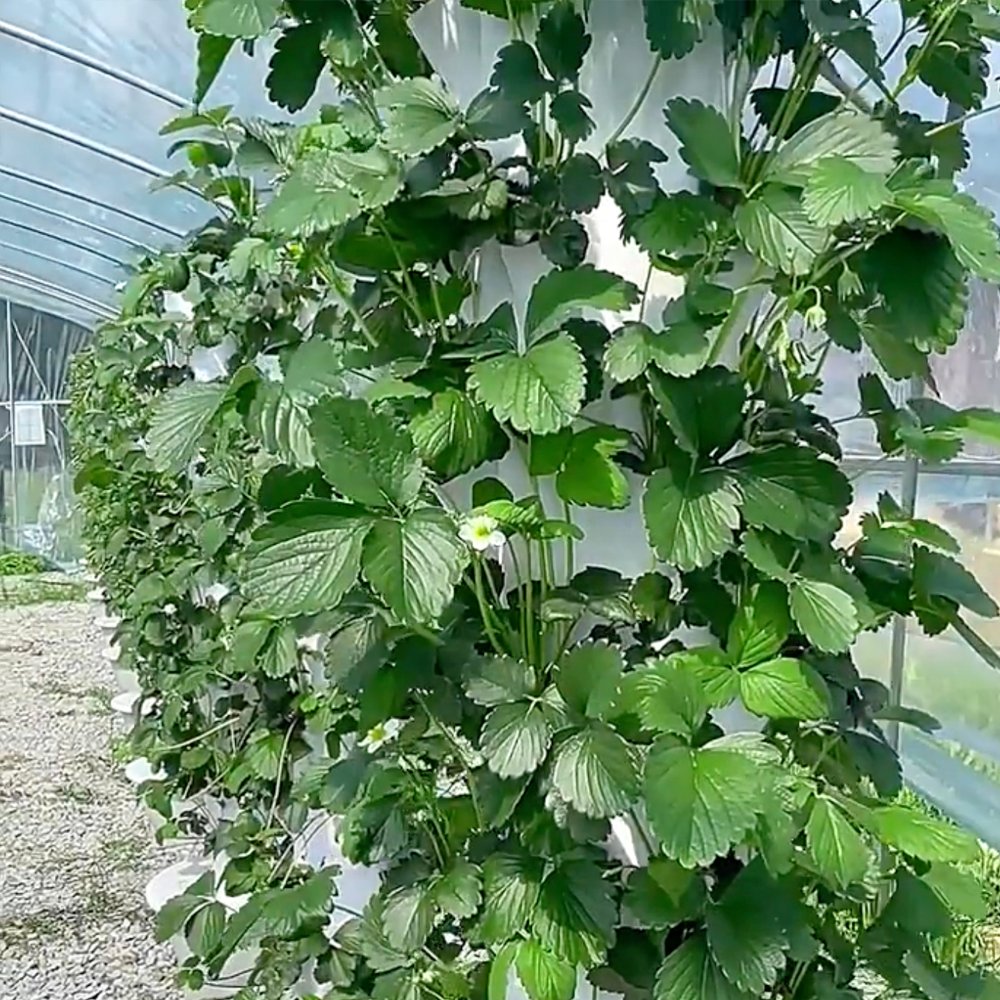
With the continuous development of modern agricultural technology, hydroponic cultivation is becoming a revolutionary choice for strawberry farming. This article analyzes the economic and efficiency advantages of using 100 vertical 13-tier hydroponic towers for strawberry cultivation compared to traditional soil-based methods.
Each hydroponic tower features:
Hydroponic Tower System:
Traditional Soil Cultivation:
Land Savings: The hydroponic tower system saves approximately 77-85% of land area
Hydroponic strawberries, due to controlled environment and precise nutrient delivery, typically produce 20-30% higher yields than soil-grown counterparts. Each hydroponic strawberry plant can produce 1.5-2kg annually, compared to 1-1.5kg for soil cultivation.
Hydroponic systems use circulating irrigation, saving 80-90% more water than traditional soil cultivation. For water-intensive crops like strawberries, this represents a significant cost advantage.
Hydroponic nutrient solutions can be precisely controlled, achieving fertilizer utilization rates of over 90%, compared to only 30-50% in soil cultivation where significant fertilizer loss causes waste and environmental pollution.
The vertical hydroponic tower design is ergonomically optimized, reducing bending and stooping, improving harvesting and management efficiency by 30-40%, significantly lowering labor costs.
Hydroponic systems eliminate soil-borne diseases, reducing pesticide use by 70-80%, which both lowers costs and improves product safety.
The 100-tower 13-tier hydroponic strawberry cultivation system offers significant advantages in land utilization, yield improvement, resource conservation, and operational cost reduction. Compared to the thin profit margins or even loss risks of traditional soil cultivation, hydroponic tower systems provide more stable and substantial economic returns.
For growers pursuing efficient and sustainable modern agriculture, vertical hydroponic tower systems are undoubtedly a more economic and efficient choice than traditional soil cultivation. This represents not just a technological upgrade, but a revolution in agricultural thinking.
(Featured image: 13-tier strawberry hydroponic tower system in a modern greenhouse)
