Our Location
304 North Cardinal St.
Dorchester Center, MA 02124

304 North Cardinal St.
Dorchester Center, MA 02124

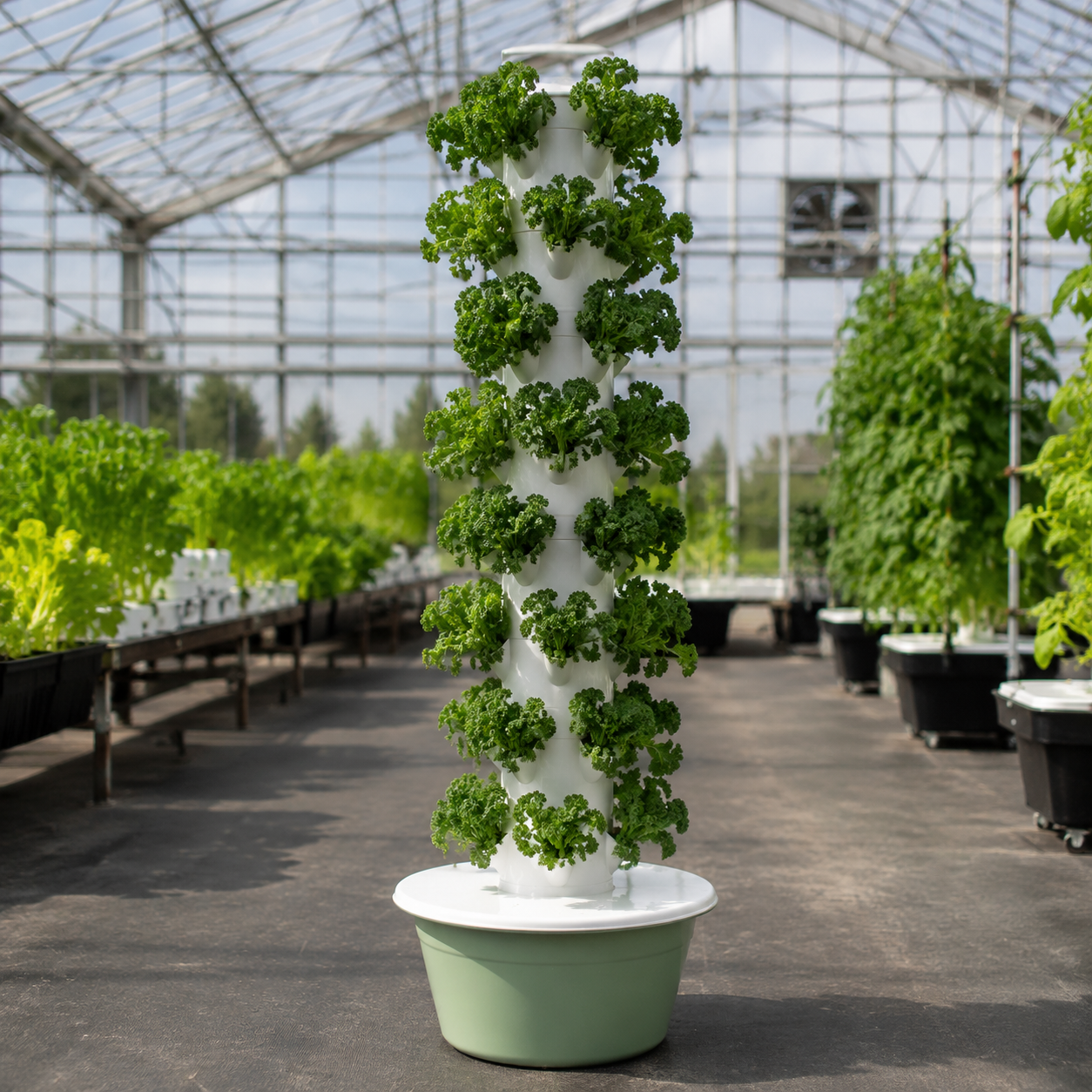
If you’re running a commercial hydroponic tower system, the single most important factor determining your crop quality and yield is the nutrient solution. Get it right, and you’ll see explosive growth, vibrant foliage, and heavy harvests. Get it wrong, and you’ll battle deficiencies, algae, and disappointing results.
This guide covers everything a commercial grower needs to know about hydroponic tower nutrient management — from the essential macro and micronutrients, to pH optimization, to crop-specific feeding schedules. Whether you’re growing leafy greens, herbs, strawberries, or tomatoes, these principles apply across the board.
A hydroponic tower is fundamentally different from other hydroponic systems (NFT, DWC, aeroponics) in one key way: gravity-fed vertical flow. The nutrient solution drips from the top of the tower and cascades down through each planting pocket, delivering water and nutrients to the exposed root systems as it flows.
This means:
Understanding these dynamics will help you dial in your nutrient strategy for maximum tower performance.
Plants need 16 essential elements to complete their life cycle. In soil, many of these are naturally present or provided by organic matter. In hydroponics, every single nutrient must be supplied by you in the correct ratios.
| Nutrient | Symbol | Role in Plant Growth | Common Deficiency Sign |
|---|---|---|---|
| Nitrogen | N | Leaf and stem growth, protein synthesis | Yellowing lower leaves, stunted growth |
| Phosphorus | P | Root development, flowering, energy transfer | Purple stems, weak roots, poor flowering |
| Potassium | K | Fruit quality, disease resistance, water regulation | Brown leaf edges, weak stems, small fruit |
| Nutrient | Symbol | Importance for Tower Systems |
|---|---|---|
| Calcium | Ca | Critical for cell wall strength — tower plants need strong stems to support vertical weight |
| Magnesium | Mg | Core of chlorophyll molecule — essential for photosynthesis in all layers of the tower |
| Sulfur | S | Amino acid and enzyme production |
| Iron | Fe | Chlorophyll synthesis — deficiency shows as yellowing between veins on new growth |
| Zinc & Manganese | Zn, Mn | Enzyme activators — especially important for dense tower planting |
For commercial tower growers, we recommend starting with a complete two-part hydroponic nutrient series (Part A and Part B). These are concentrated liquid or powder fertilizers designed to be mixed with water in specific ratios.
General recommended starting range for tower systems:
| Parameter | Leafy Greens | Fruiting Crops | Herbs |
|---|---|---|---|
| EC (Electrical Conductivity) | 1.2 – 1.8 mS/cm | 2.0 – 3.0 mS/cm | 1.0 – 1.6 mS/cm |
| pH | 5.5 – 6.5 | 5.8 – 6.3 | 5.5 – 6.5 |
| N-P-K Ratio | 3-1-2 (growth focus) | 1-3-3 (bloom focus) | 2-1-2 (balanced) |
| Water Temperature | 18-22°C / 65-72°F | 18-22°C / 65-72°F | 18-22°C / 65-72°F |
Pro tip for B2B operators: When managing multiple towers, use a centralized reservoir with a dosing pump system. This ensures consistent EC/pH across all towers and reduces labor costs. SpaceTower systems are designed to work with standard 50-200L reservoirs depending on your production scale.
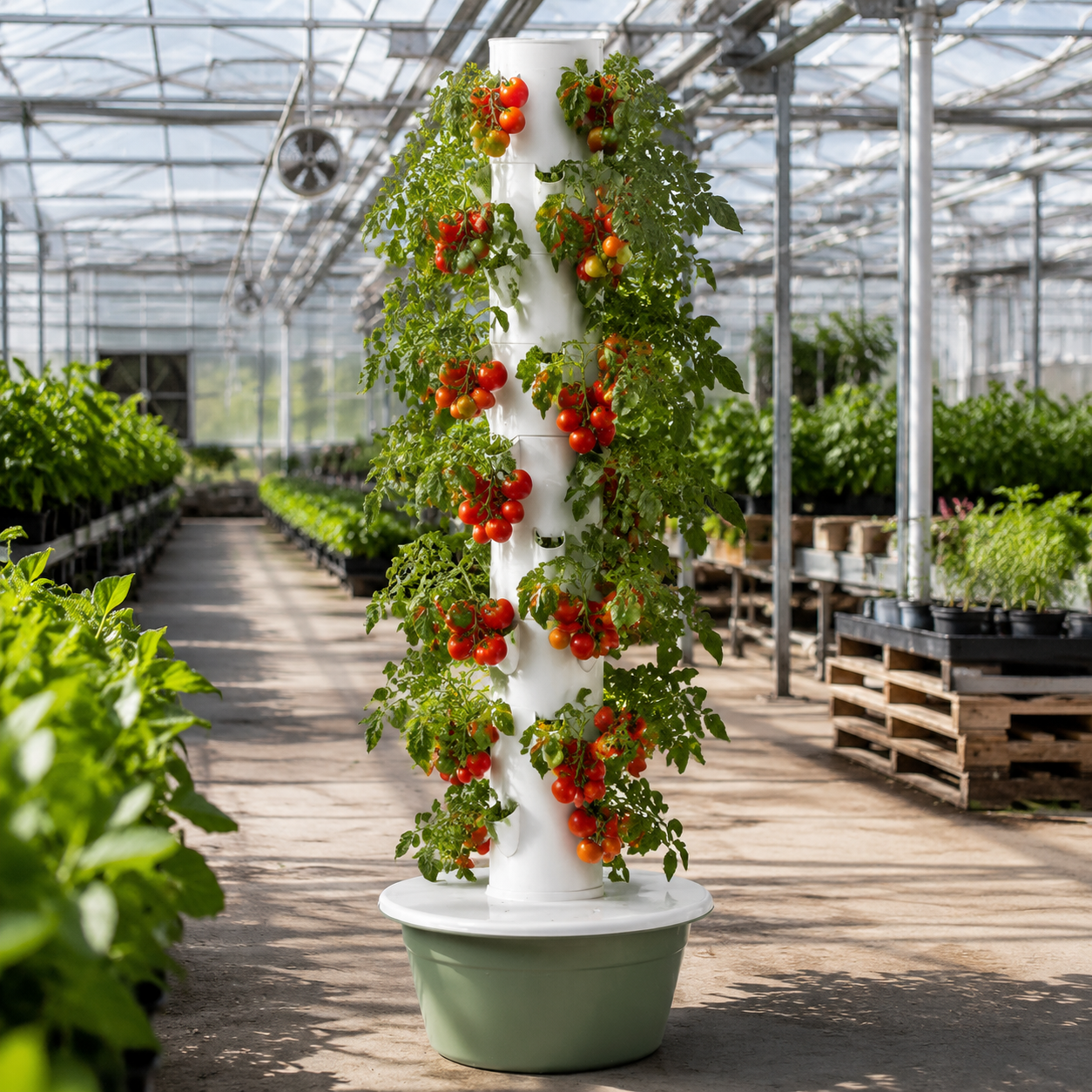
pH determines nutrient availability. If your pH is outside the optimal range, your plants will show deficiency symptoms even though the nutrients are present in the solution.
In a tower system, pH naturally drifts upward (alkaline) over time as plants absorb nutrients. This is because plants release hydroxyl ions (OH⁻) when they take up nitrate (NO₃⁻). In a small-reservoir tower system, this drift can happen faster than in large DWC beds.
Recommended pH management routine:
For commercial operations managing 10+ towers, invest in an automated pH controller. It pays for itself in reduced labor and eliminated crop losses within the first growing cycle.
Different crops have different nutritional demands at each growth stage. Here’s a practical feeding schedule for common tower crops:
| Stage | Duration | EC Target | Notes |
|---|---|---|---|
| Seedling (plugs) | 1-2 weeks | 0.8 – 1.2 mS/cm | Half-strength nutrients, keep gentle |
| Vegetative | 2-3 weeks | 1.2 – 1.6 mS/cm | Full nutrients, 18/6 light cycle |
| Mature / Harvest | 1-2 weeks | 1.4 – 1.8 mS/cm | Maintain levels, watch for tip burn (calcium deficiency) |
| Stage | Duration | EC Target | Notes |
|---|---|---|---|
| Seedling | 2-3 weeks | 0.8 – 1.2 mS/cm | Low strength, focus on root development |
| Vegetative | 3-4 weeks | 1.8 – 2.2 mS/cm | Higher nitrogen for leaf/stem growth |
| Flowering | 1-2 weeks | 2.0 – 2.5 mS/cm | Switch to bloom formula (higher P & K) |
| Fruiting | 4-8 weeks | 2.5 – 3.0 mS/cm | Max EC, increase potassium, watch for blossom end rot |
For mixed cropping towers (different crops on the same tower), aim for a middle-ground EC of 1.8 – 2.2 mS/cm. Position heavy feeders (tomatoes) in lower pockets where they get more accumulated nutrients, and light feeders (herbs) in upper pockets.
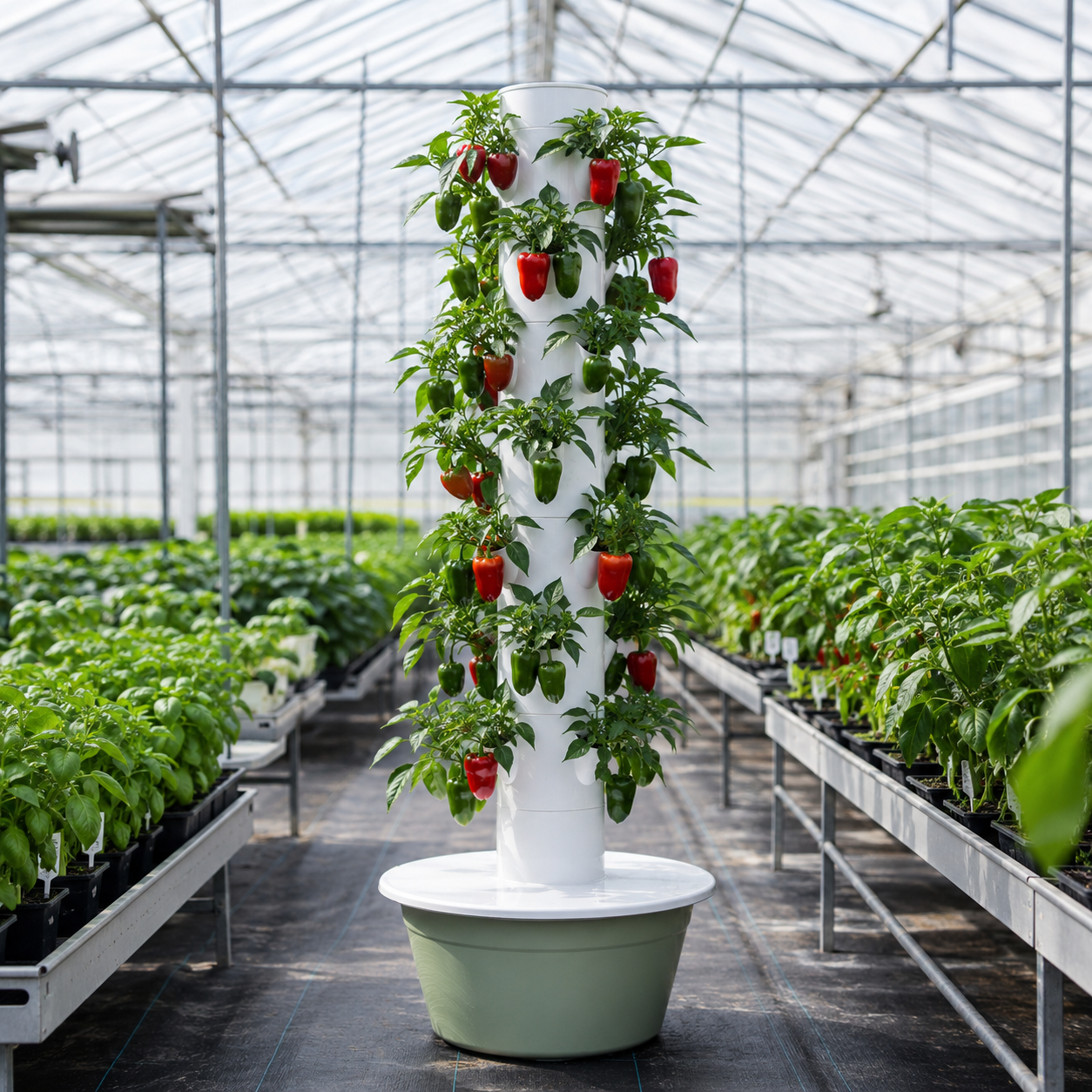
For growers buying their first tower system or expanding to multiple towers, here’s a recommended nutrient starter package that covers 90% of common tower crops:
| Product | Purpose | Qty per 100L Reservoir | Replacement Cycle |
|---|---|---|---|
| Part A (Calcium Nitrate based) | Calcium + Nitrogen | As per manufacturer | Every 7-10 days |
| Part B (Potassium Nitrate + Micros) | Potassium + Phosphorus + Trace elements | As per manufacturer | Every 7-10 days |
| pH Down (Phosphoric Acid 85%) | pH adjustment | ~2-5 mL per 100L | As needed (daily check) |
| Cal-Mag Supplement | Extra calcium + magnesium for fruiting crops | ~5 mL per 10L | Weekly during fruiting |
| Silicon Supplement (Potassium Silicate) | Stronger stems, heat tolerance | ~2 mL per 10L | Weekly, especially summer |
B2B tip: Buying nutrients in bulk (20-50L concentrates) from commercial hydroponic suppliers cuts per-liter cost by 40-60% compared to retail bottles. Ask your SpaceTree account manager about bundled nutrient packages for volume orders.
| Symptom | Likely Cause | Solution |
|---|---|---|
| Yellowing lower leaves | Nitrogen deficiency | Increase EC by 0.2-0.3 mS/cm, check pH |
| Brown leaf tips / edges | Potassium deficiency OR salt burn (too high EC) | Check EC — if too high (>3.0), dilute; if too low, add K |
| Yellow between leaf veins (new growth) | Iron deficiency | Check pH — iron locks out above pH 6.5. Add chelated iron. |
| Stunted growth, purple stems | Phosphorus deficiency | Increase bloom nutrient, check water temp (cold water locks P) |
| Tip burn on lettuce/leafy greens | Calcium deficiency + low transpiration | Add Cal-Mag, increase airflow, lower humidity |
| Algae in reservoir or tower body | Light exposure + warm nutrient solution | Block light on reservoir, add beneficial bacteria, change solution |
Golden rule: Always check pH before adjusting EC. Many apparent nutrient deficiencies are actually pH lockout. Fix pH first, wait 24 hours, then reassess.
The most successful commercial tower growers don’t chase fancy nutrient recipes — they focus on consistency. Check your EC and pH daily. Keep a log. Change your reservoir on schedule. Calibrate your meters. These boring habits are what separate 80%-yield operations from 95%+ operations.
At SpaceTree, every commercial tower system ships with a recommended nutrient protocol tailored to your specific crop mix and climate. We also offer ongoing technical support to help you dial in your solution for maximum yield per square meter.
