Our Location
304 North Cardinal St.
Dorchester Center, MA 02124

304 North Cardinal St.
Dorchester Center, MA 02124

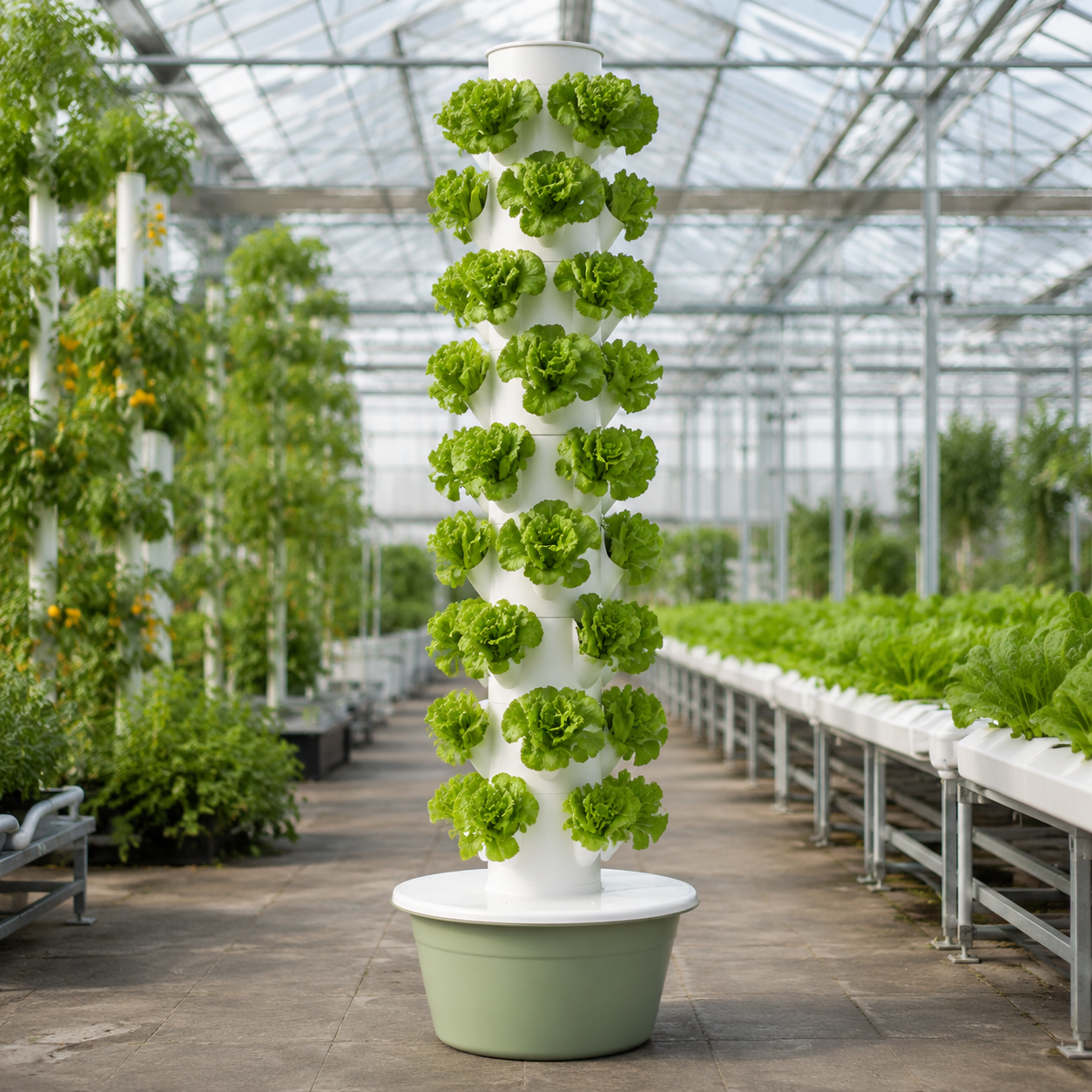
If you’re researching hydroponic farming systems or looking to scale up your produce operation, you’ve likely come across the two main approaches: hydroponic towers vs. traditional soil growing. Both can produce healthy crops, but they differ dramatically in yield, resource efficiency, labor, and scalability — especially for commercial growers.
In this guide, we break down the real differences so you can decide which method fits your farm or greenhouse best.
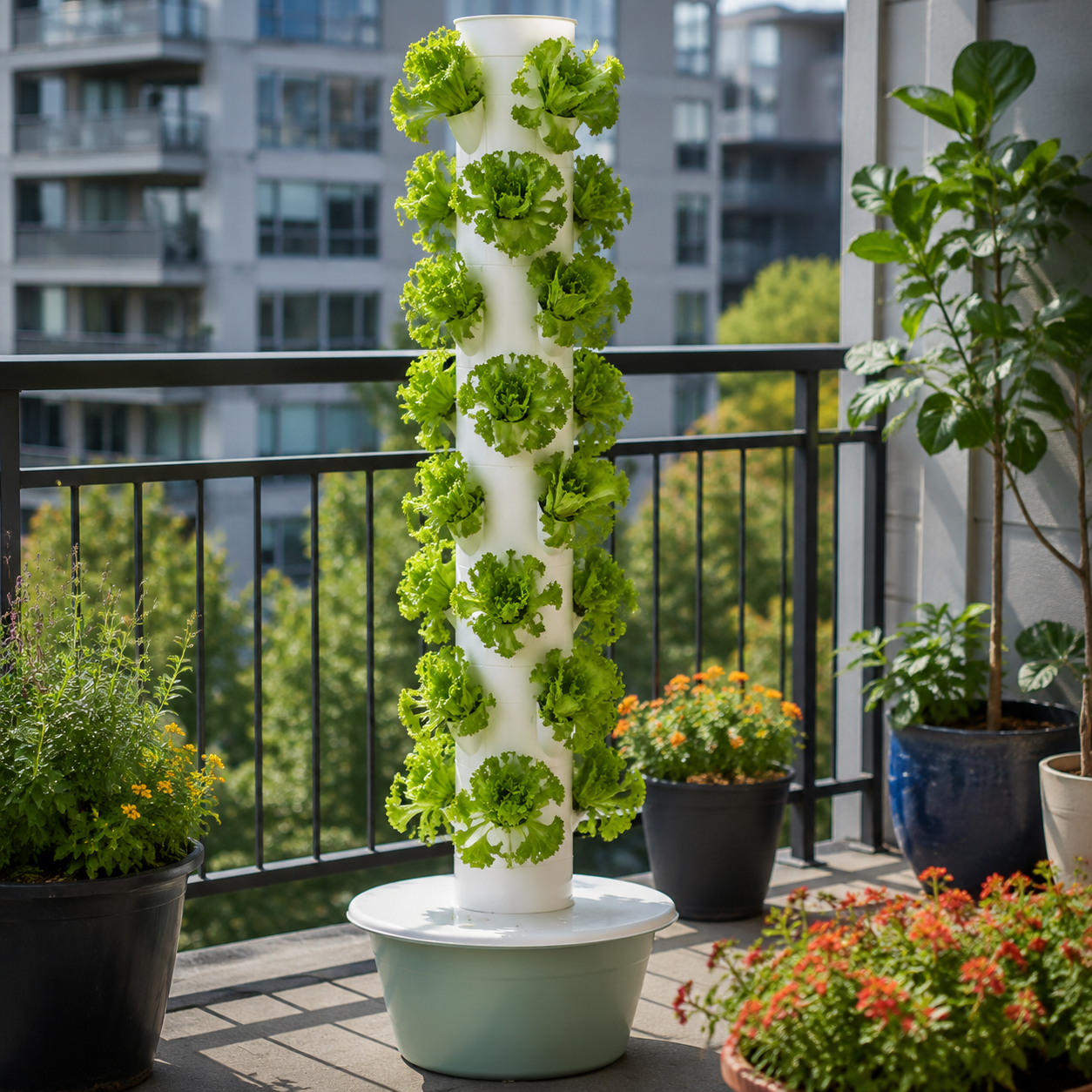
A hydroponic tower is a vertical growing system where plants are stacked in columns. Nutrient-rich water flows from the top down, nourishing each plant as it passes through the root zone. No soil is needed — the roots grow in a lightweight inert medium like clay pebbles or coconut coir.
These towers are designed to maximize growing space: a single tower can hold 5 to 13 layers of plants in a footprint of less than 2 square feet. This makes them ideal for greenhouses, urban farms, rooftops, and even balconies.
Traditional soil growing is the method farmers have used for centuries. Crops are planted in rows in open fields or raised beds, relying on natural soil nutrients, rainfall or irrigation, and manual labor for planting, weeding, and harvesting.
While soil growing is well understood and requires lower upfront investment, it demands significantly more land, water, and labor per pound of produce.
Hydroponic tower: Because plants grow vertically, a single tower (2 sq. ft. footprint) can produce 5–13 times more plants than the same ground area in soil. A 13-layer tower growing leafy greens can yield 50–80 plants in one square meter of greenhouse space.
Soil: A 1m² soil bed typically produces 9–16 lettuce plants, depending on spacing. Vertical space is unused.
Winner: Hydroponic tower — up to 5–8x more yield per square foot.
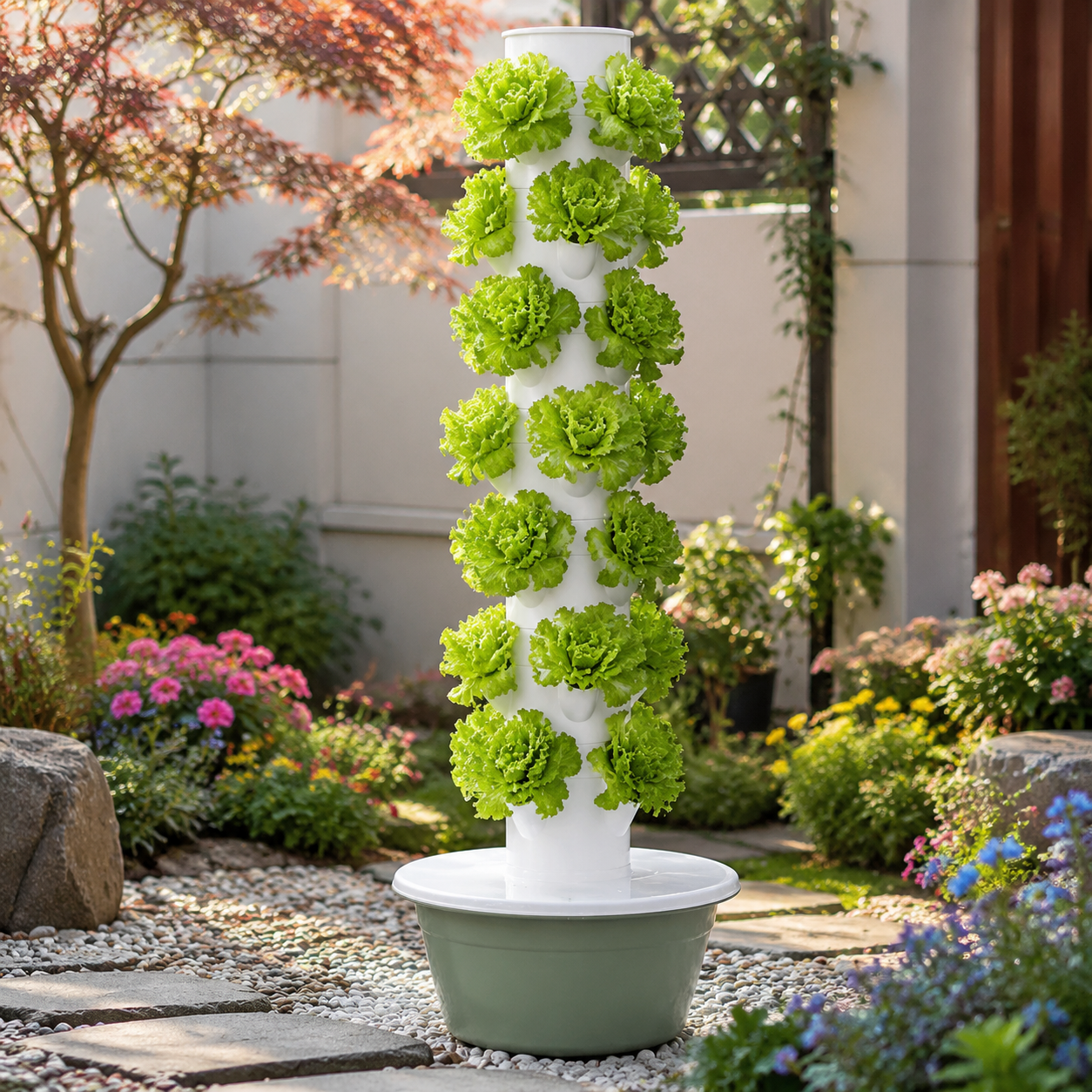
Hydroponic tower: Water is recirculated from top to bottom. Towers use 80–90% less water than soil farming because runoff is captured and reused. A typical tower system uses roughly 1–2 gallons per day for 5–7 towers.
Soil: Traditional irrigation loses a significant amount to evaporation, runoff, and deep percolation. A soil farm can use 5–10x more water for the same number of plants.
Winner: Hydroponic tower — 80–90% less water consumption.
Hydroponic tower: Plants receive nutrients directly at the roots, 24/7. Leafy greens like lettuce, kale, and basil grow 25–50% faster than in soil. From seedling to harvest: lettuce ~45–60 days in towers vs. 70–85 days in soil.
Soil: Plants must expend energy developing root systems to search for nutrients. Slower initial growth, especially in cooler soil temperatures.
Winner: Hydroponic tower — faster growth, more harvests per year.
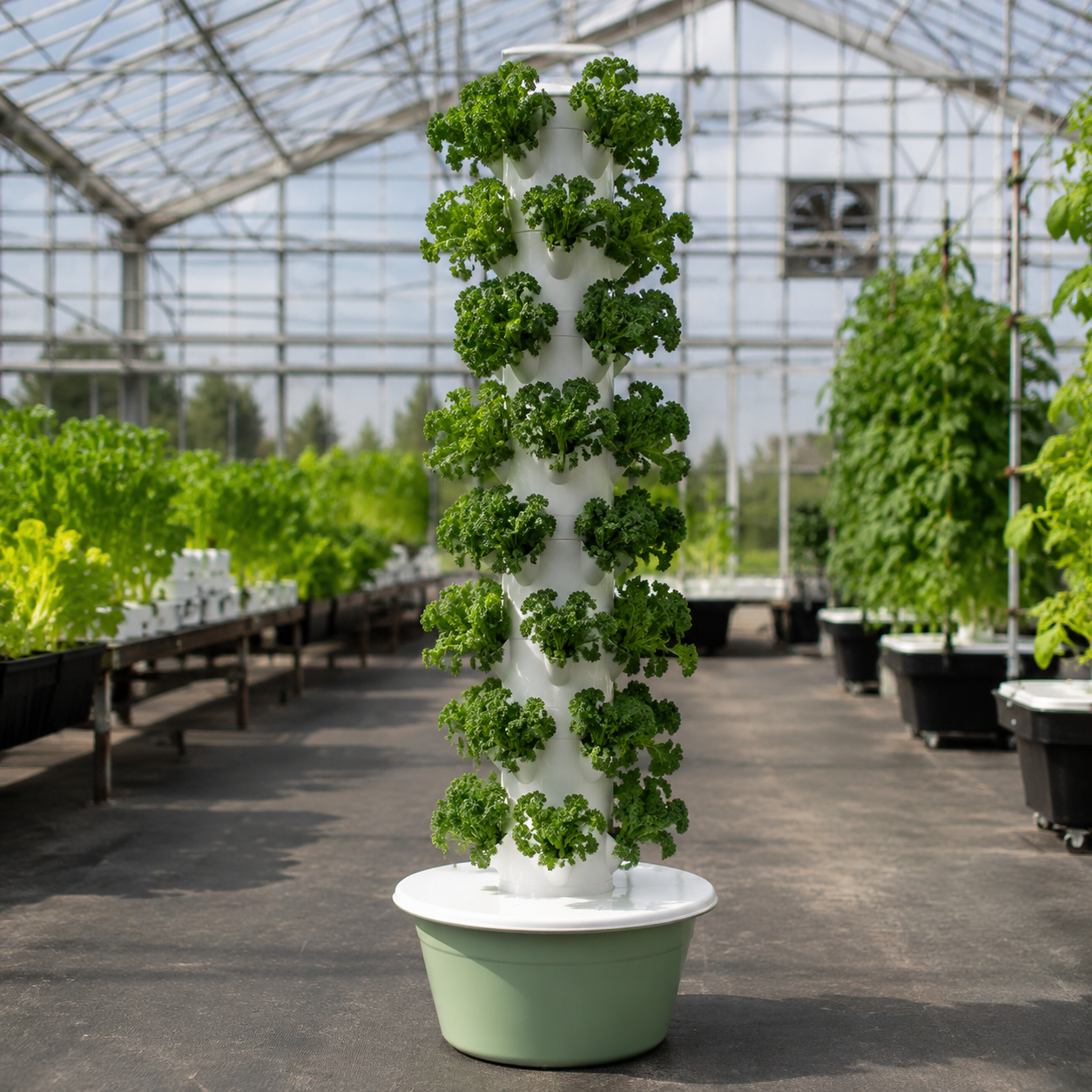
Hydroponic tower: No weeding, no tilling, no soil-borne pest management. Daily tasks: check nutrient levels and pH (5–10 minutes per system). Harvesting is easier because plants are at waist height.
Soil: Requires regular weeding, tilling, crop rotation, and soil amendment. Harvesting involves bending or kneeling. Labor costs are significantly higher per pound of produce.
Winner: Hydroponic tower — far lower maintenance labor.
Hydroponic tower: Excellent for leafy greens (lettuce, kale, spinach, chard), herbs (basil, mint, parsley, oregano), strawberries, tomatoes, peppers, and even edible flowers. Root vegetables and large fruiting plants are less suitable.
Soil: Can grow virtually anything, including root vegetables and large fruiting crops. However, it requires different soil types and crop rotation planning.
Verdict: Soil wins for variety, but towers cover the most profitable high-turnover crops.
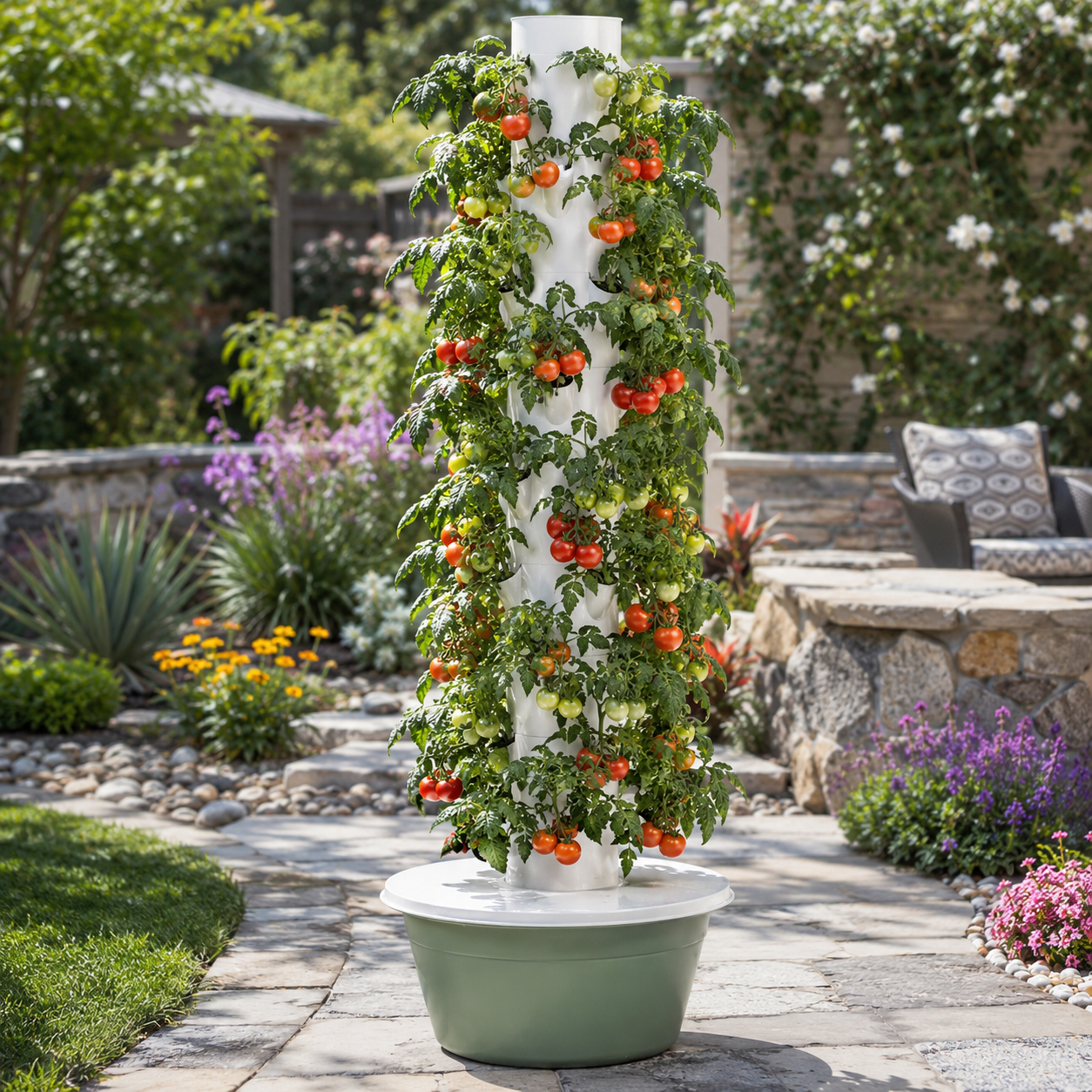
Hydroponic tower: Higher upfront cost — a complete tower system with pump, media, and nutrients ranges from $79–$259 per tower depending on size and features. Scalable: start with a few towers and expand.
Soil: Lower initial cost for small-scale growing. However, commercial soil farming requires land acquisition, irrigation infrastructure, tractors, and more labor — costs that quickly add up.
Verdict: Towers require higher upfront investment but offer faster ROI through higher yield and lower operating costs.
| Factor | Hydroponic Tower | Soil Growing |
|---|---|---|
| Yield per sq. ft. | 5–8x higher | Baseline |
| Water usage | 80–90% less | High |
| Growth speed | 25–50% faster | Baseline |
| Labor | Low (no weeding) | High (weeding, tilling) |
| Setup cost | $79–$259 per tower | Varies (land + equipment) |
| Best for | Leafy greens, herbs | All crops |
| Space needed | Minimal (vertical) | Large (horizontal) |
For commercial growers, greenhouse operators, and urban farms, hydroponic towers offer a clear advantage: higher yield in less space, lower water and labor costs, and faster crop turnover. The initial investment in towers pays for itself within months through increased production.
For small home gardens with plenty of land, soil growing remains a viable low-cost option. But if you’re serious about maximizing output from limited space — whether on a balcony, in a backyard, or across a commercial greenhouse — hydroponic towers are the smarter long-term investment.
Many of our customers use a hybrid approach: towers for high-value leafy greens and herbs, plus some soil beds for root vegetables and larger fruiting crops. This balances variety with efficiency.
SpaceTree has been manufacturing commercial-grade hydroponic towers since 2014. Our towers are used by farms, greenhouses, and home growers across North America, Europe, and Australia. We offer towers from 5 to 13 layers, with or without integrated LED grow lights, all at factory-direct wholesale pricing.
Contact us today for a quote or to discuss which tower configuration fits your growing operation.
