Our Location
304 North Cardinal St.
Dorchester Center, MA 02124

304 North Cardinal St.
Dorchester Center, MA 02124

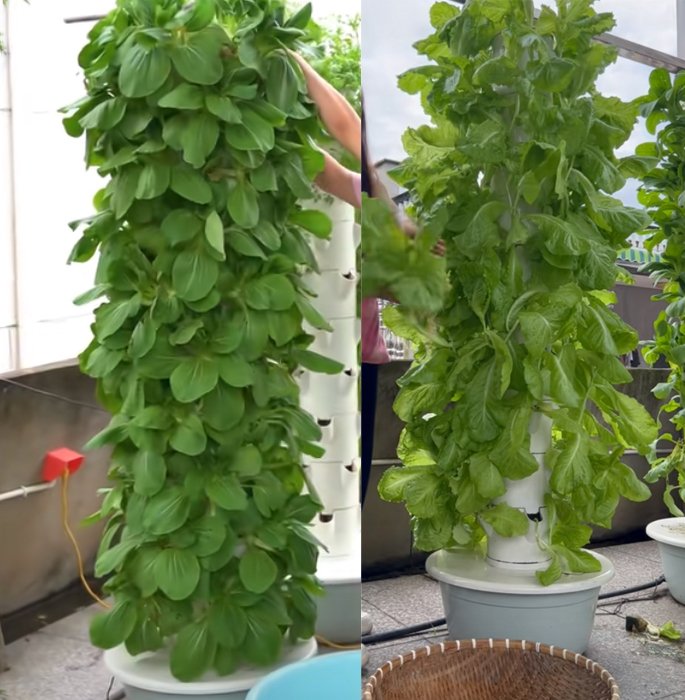
If you run a commercial hydroponic tower setup, the reservoir is the engine of your entire operation. Change the water too often and you waste nutrients and labor; leave it too long and pH swings, salt buildup, and microbial slime quietly cut into yields. This guide gives you a practical, crop-by-crop water change schedule, the warning signs that tell you the reservoir is done, a step-by-step change-out SOP, and the math to keep change costs under control at scale.
For most commercial growers running leafy greens, change the reservoir every 7 to 14 days. In hot summer conditions, tighten that to every 7 days. With a disciplined top-up and monitoring routine, larger operations can safely extend the interval to 3 weeks — but only when EC and pH are tracked daily (see the commercial section below).
The rule that matters more than any fixed number: change water on condition, not on the calendar. EC drift, pH instability, clarity, and root health tell you exactly when the nutrient solution has lost its balance — the table in the next section gives you the safe starting points, and the symptom checklist tells you when to act early.
Different crops draw down nutrients at very different rates. Fast-growing leafy greens strip the solution quickly; fruiting crops tolerate longer intervals but punish you if EC spikes. Use this table as your baseline schedule, then adjust based on your own EC and pH logs.
| Crop Group | Change Interval | Key Considerations |
|---|---|---|
| Leafy greens (lettuce, kale, spinach) | 7–14 days | Fast nutrient uptake; check EC every 2–3 days |
| Herbs (basil, mint, cilantro) | 7–10 days | Sensitive to salt buildup; flush early if leaf tips brown |
| Fruiting crops (tomatoes, peppers) | 10–14 days | Heavy feeders; watch EC during flowering and fruiting |
| Strawberries | 10–14 days | Keep EC stable through fruiting; avoid shock from large swings |
| Mixed / low-demand plantings | 14–21 days | Only with regular top-ups and daily EC/pH checks |
These intervals assume a properly sized reservoir (typically 15–30 liters per tower for our systems) and a complete nutrient solution changed at the same time. If your tower has been running for a full crop cycle, a complete change at each crop turnover is non-negotiable.
Your actual change interval will drift from the baseline table depending on four conditions:
Check these five indicators during your daily rounds. Any one of them means the solution has lost its balance — change it that day, not next week.
| Sign | What It Means | Action |
|---|---|---|
| EC drifts more than 0.5 mS/cm from target | Nutrient imbalance beyond what top-up can fix | Re-test; change reservoir if drift persists |
| pH swings more than 0.5 within 24 hours | Solution buffering is exhausted | Change water; re-calibrate pH |
| Cloudy or slimy water | Microbial or algal growth taking hold | Change and sanitize the reservoir |
| Unpleasant or sour odor | Anaerobic bacteria activity | Change immediately; check aeration |
| Brown or mushy root tips | Oxygen or nutrient stress in the root zone | Change solution; inspect for light leaks |
When you spot these symptoms, also review your water quality and pH management practices — most reservoir failures trace back to measurement habits, not the schedule itself.
A full reservoir change takes about 20 minutes per tower once you have a routine. Follow this sequence every time:
For the surrounding routine — pump checks, tower cleaning, and inspection cadence — pair this with our hydroponic tower maintenance checklist.
Labor is the real cost of water changes. A 100-tower farm changing reservoirs weekly spends significant staff hours just on solution handling. Three practices let commercial operators safely stretch intervals to 2–3 weeks:
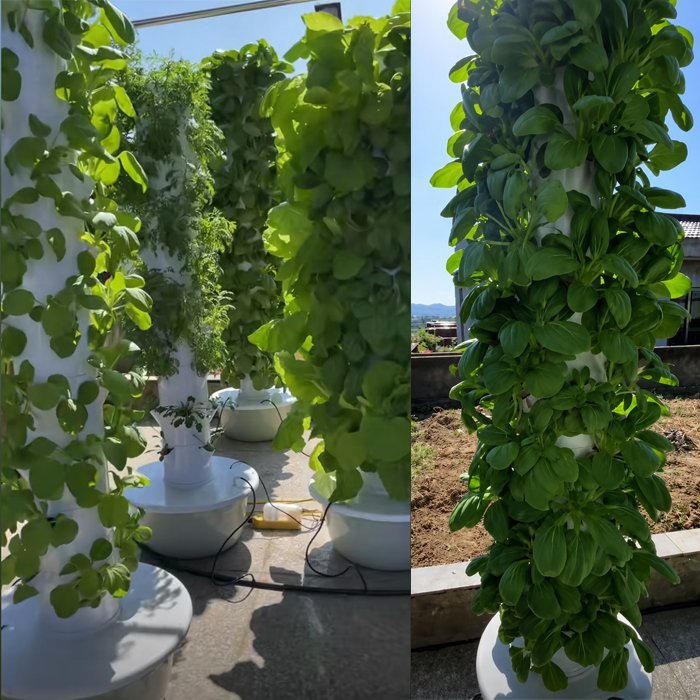
Even with automation, keep a hard rule: a full change at every crop turnover, and at least monthly for any tower in continuous production. Top-ups extend intervals; they do not replace them.
Budgeting for reservoir management is straightforward once you know your volume and frequency. Here is the formula commercial buyers should run before scaling up:
| Cost Component | Calculation | Example (50 towers, 20 L reservoirs) |
|---|---|---|
| Water | Volume × changes per year × water rate | 50 × 20 L × 26 changes × $0.002/L ≈ $52/yr |
| Nutrients | Dose per liter × volume × changes | 1,000 L × 26 × $0.08/L ≈ $2,080/yr |
| Labor | Minutes per change × changes × hourly rate | 50 towers × 20 min × 26 × $15/hr ≈ $6,500/yr |
| Sanitizer & consumables | Monthly sanitize + meter calibration | ≈ $300–500/yr |
Labor is typically 60–70% of total water management cost — which is exactly why the top-up and monitoring practices above matter. Stretching from weekly to biweekly changes cuts labor roughly in half without touching yields.
If you are setting up a new commercial tower system, start conservative and tighten as your data improves:
Pair the schedule with a complete nutrient solution formulation guide so every change starts from a correctly mixed batch — the most common reason growers change water “too often” is an unstable nutrient recipe, not the water itself.
Reservoir management is a small daily habit with an outsized impact on crop health and operating cost. Start with the 7–14 day baseline, watch the five warning signs, log everything, and let your own data set the interval. Done right, water changes become a predictable line item — not a recurring fire drill.
At SpaceTree, every commercial tower ships with a reservoir sized for your crop plan, and our team will walk you through change-out schedules for your specific setup. Send us an inquiry with your tower count and target crops, and we will recommend the reservoir and maintenance plan that fits.
