Our Location
304 North Cardinal St.
Dorchester Center, MA 02124

304 North Cardinal St.
Dorchester Center, MA 02124

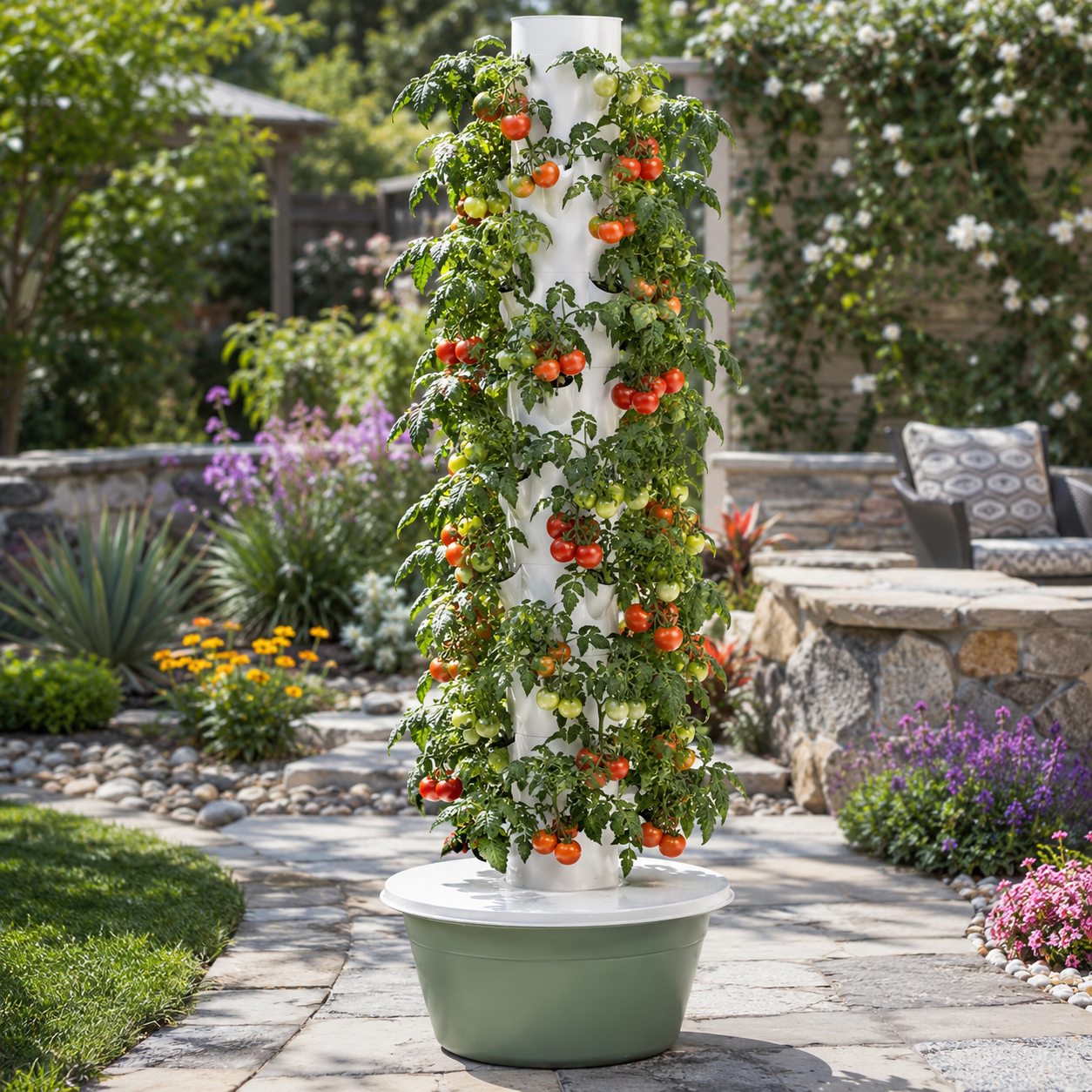
Tomatoes are the second most-searched crop in hydroponics, right behind lettuce — and they are also the crop that surprises first-time tower growers the most. A lettuce plant sits happily in its planting hole for six weeks. A tomato plant wants to climb, branch, lean, and outgrow everything around it. Without the right trellising and pruning strategy, vining crops in a tower become a tangled mess of broken stems, shaded fruit, and disease pressure. This guide covers the support systems, pruning routines, and crop-by-crop training methods that keep tomatoes, cucumbers, beans, and other vining crops productive in vertical towers.
In a tower, plants share a compact root zone and compete for light vertically. Bush-type crops (lettuce, herbs, leafy greens) stay short and predictable. Vining crops keep extending their main stem, and every extra node adds weight, leaves, and fruit demand. The result: if you do not manage the vine, the vine manages you.
| Characteristic | Bush Crops (Lettuce, Herbs) | Vining Crops (Tomatoes, Cucumbers, Beans) |
|---|---|---|
| Main stem growth | Stops after leaf rosette | Continuous, indeterminate |
| Support needed | None | Trellis, clips, or stakes |
| Pruning | Remove outer leaves only | Remove suckers, lower leaves, limit leaders |
| Nutrient demand | Steady, moderate | High potassium and calcium during fruiting |
| Planting density | Every hole | Every 2–3 holes per tower face |
For a broader crop selection strategy, see our guide to the best crops for hydroponic towers.
Variety choice is 80% of the battle. In a tower you want compact, determinate, or short-vined varieties — not the vigorous indeterminates bred for sprawling greenhouse rows. Reliable choices include:
Match the variety to the tower face. A 12-layer tower gives each plant roughly the same footprint as a wall-mounted planter, so think in terms of “one strong leader per hole” rather than “one sprawling plant per hole.”
The tower itself is a rigid vertical column — use it as your anchor. The goal is to keep the main stem upright and the fruit off neighboring plants, without shading the holes below. Here are the trellising options that actually work in towers:
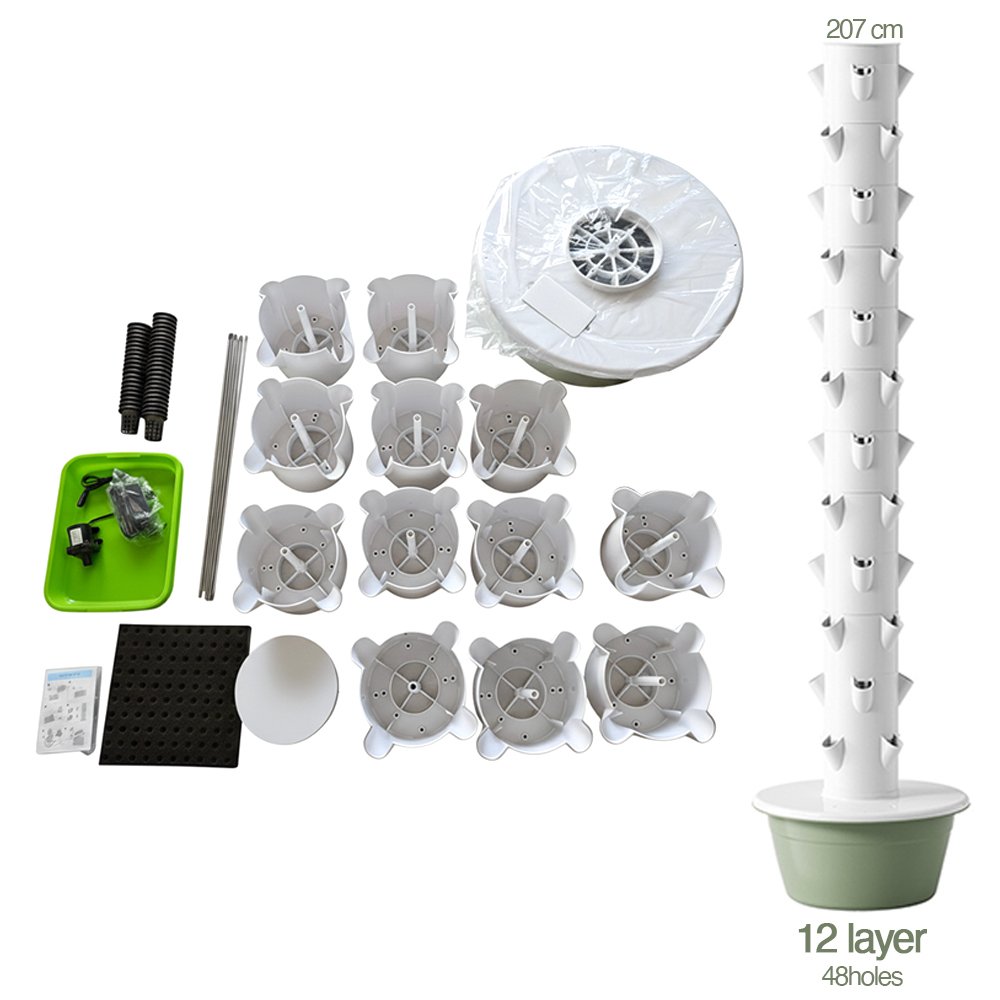
| Method | How It Works | Best For |
|---|---|---|
| Top rail + twine | Run a bamboo pole or wire across the tower top; drop twine to each plant and clip the stem weekly | Tomatoes, cucumbers, heavy fruit loads |
| Bamboo stake per plant | Insert a 60–90 cm stake beside the stem, tie at 20 cm intervals | Small towers, low plant counts |
| Trellis net / tomato rings | Wrap a coarse net or stack rings around the tower upper section | Beans, peas, light vining crops |
| Adjacent-tower crossbars | Connect neighboring towers with a pole and run strings between them | Row layouts, 10+ towers in a line |
Whatever method you choose, train the vine every 2–3 days during peak growth. A stem that leans sideways for a week becomes a stem that breaks under fruit weight. If you are planning a larger layout, our plant capacity and spacing guide helps you calculate holes per tower for vining crops.
Pruning is where tower-grown tomatoes are won or lost. The rules are simple once you know what you are looking at:
A good target: no more than 4–6 fruiting trusses per plant in a tower, depending on variety. That keeps fruit size and flavor quality high instead of pushing quantity that ripens small and late.
| Crop | Trellis | Pruning | Harvest Tip |
|---|---|---|---|
| Tomatoes | Top rail + twine or stake | Single leader, remove suckers, cap at rail | Harvest at color break for longer shelf life |
| Cucumbers | Stake or twine per plant | Remove lateral branches below node 5; keep main stem | Pick daily at 15–20 cm — left longer, the plant slows down |
| Pole beans | Trellis net or crossbar strings | None needed; just guide the leader upward | Harvest every 2–3 days to keep plants flowering |
| Bush zucchini | Light stake to keep fruit off media | Remove oldest leaves as they yellow | Cut fruit at 15–20 cm with a knife, not by twisting |
Fruiting crops change the nutrient math. While the plant is vegetative it needs balanced NPK; once flowering and fruiting begins, potassium and calcium demand climb sharply. Calcium is especially critical — blossom end rot in tower tomatoes is almost always a calcium uptake problem, made worse by irregular watering or high EC swings.
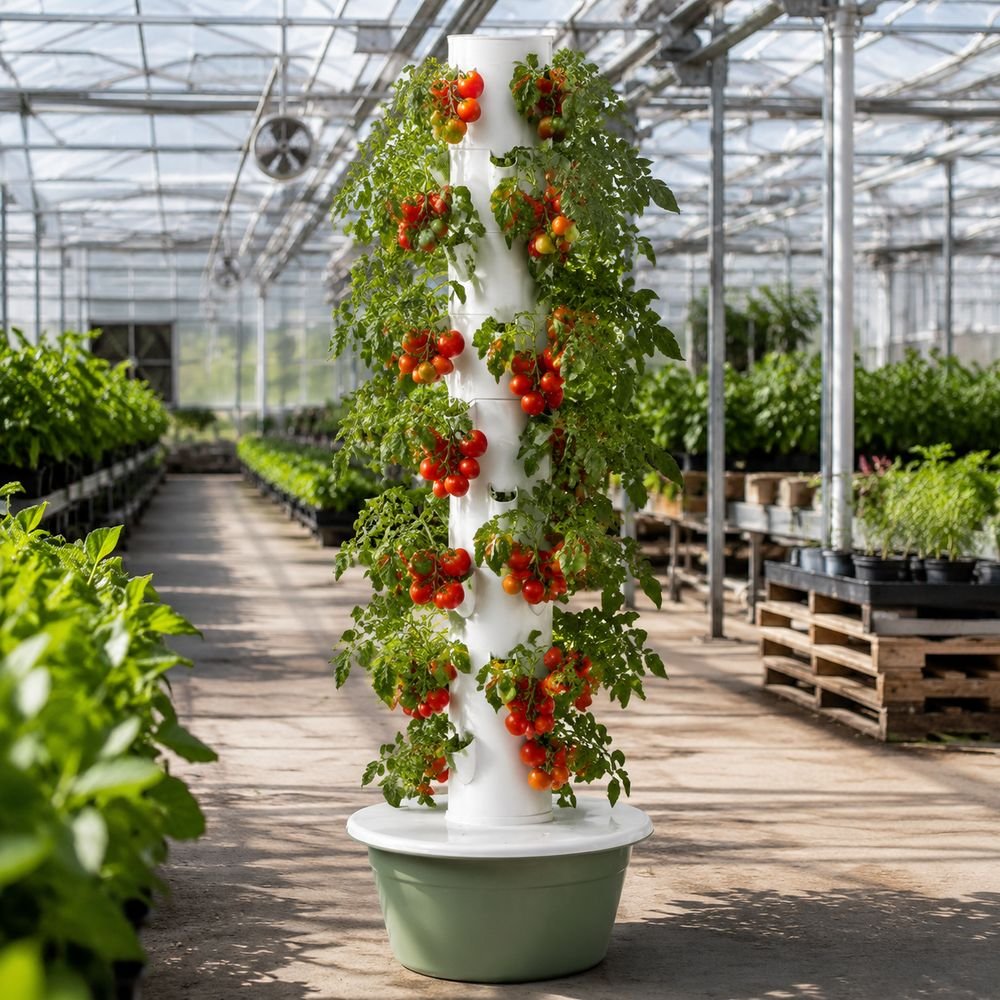
Raise EC by roughly 0.4–0.6 mS/cm compared with leafy greens, keep pH in the 5.8–6.3 band, and never let the reservoir run dry during fruiting. Our nutrient solution guide covers formulation and feeding schedules in detail, and the EC/PPM adjustment guide walks through measuring and correcting strength.
Vining crops reward structure. Trellis them early, prune them weekly, feed them for fruiting, and a tower face growing tomatoes or cucumbers will outperform any flat tray of the same footprint. Start with compact varieties, keep one strong leader per hole, and stay consistent with your weekly training pass — the harvests will speak for themselves.
