Our Location
304 North Cardinal St.
Dorchester Center, MA 02124

304 North Cardinal St.
Dorchester Center, MA 02124

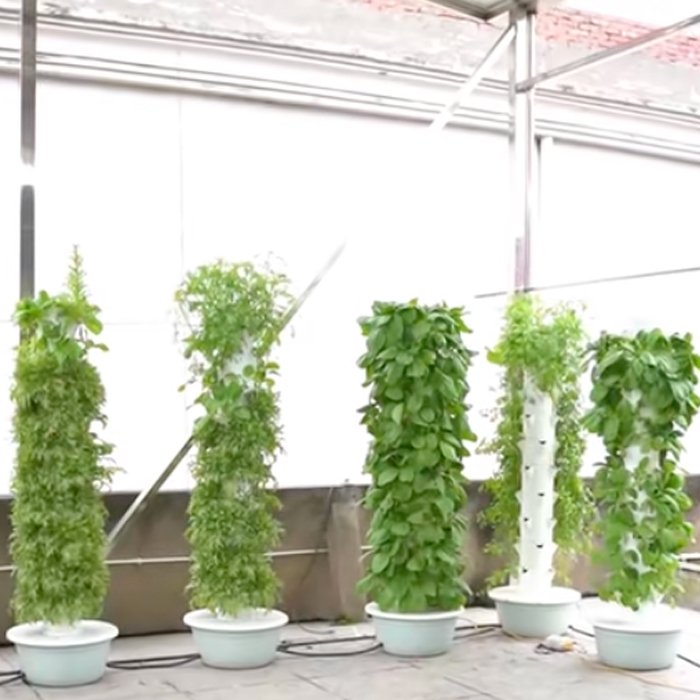
If you are planning a commercial vertical farm, the first number you need is not yield per square foot — it is how many plants fit in a single tower. That figure drives your seedling program, your propagation trays, your nutrient budget, and ultimately how many towers you need to hit your sales targets.
In this guide, we break down the exact plant capacity of each tower configuration, explain how crop choice changes real-world spacing, and walk through the layout math for a multi-tower farm — so you can plan with numbers, not guesswork.
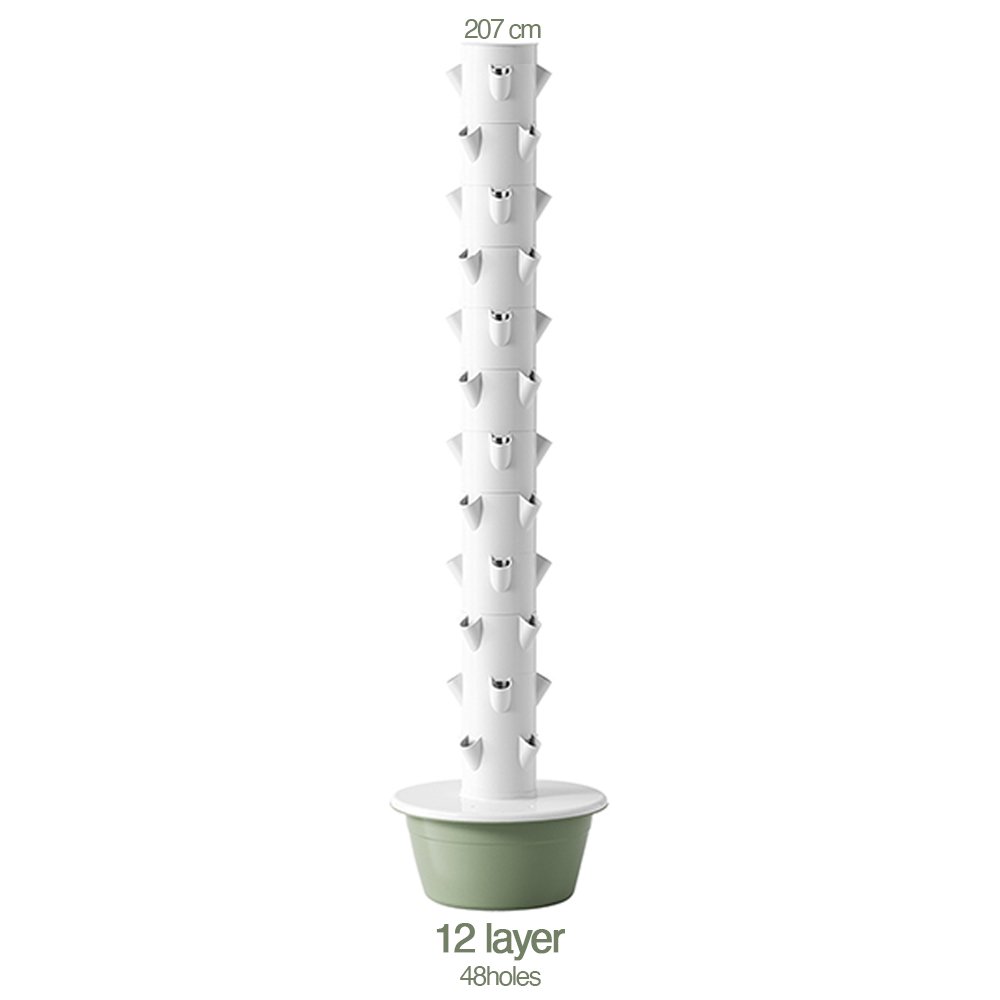
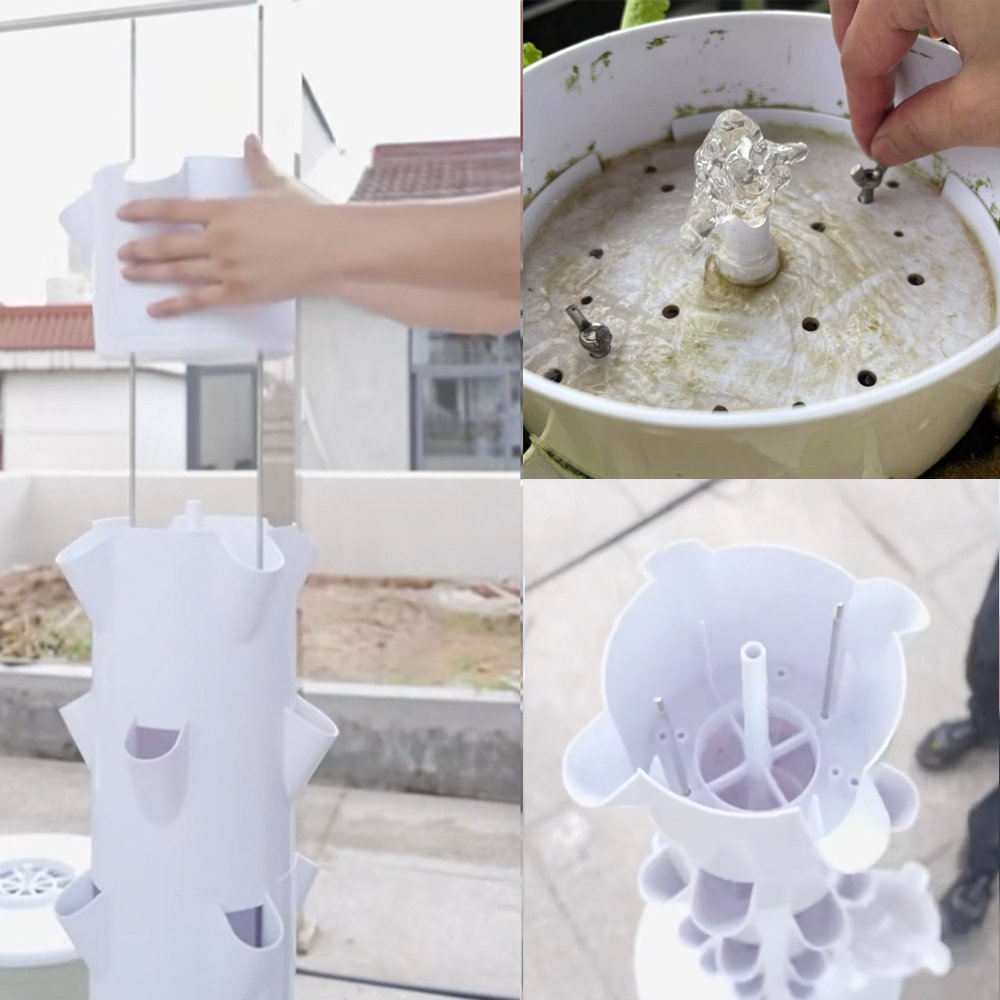
Every SpaceTree tower follows the same architecture: four planting sites per layer. Total capacity is simply layers × 4 sites. That means capacity scales predictably with tower height, which makes farm planning straightforward:
| Tower Model | Layers | Planting Sites |
|---|---|---|
| 5-Layer Tower | 5 | 20 |
| 7-Layer Tower | 7 | 28 |
| 9-Layer Tower | 9 | 36 |
| 10-Layer Tower | 10 | 40 |
| 11-Layer Tower | 11 | 44 |
| 12-Layer Tower | 12 | 48 |
| 13-Layer Tower | 13 | 52 |
| Tower with LED Grow Lights | 5–11 | 20–44 |
A 12-layer tower therefore holds 48 plants at full capacity; a 13-layer tower holds 52. If you run a continuous cycle with staggered plantings, those sites turn over several times per season — which is where real annual production comes from.
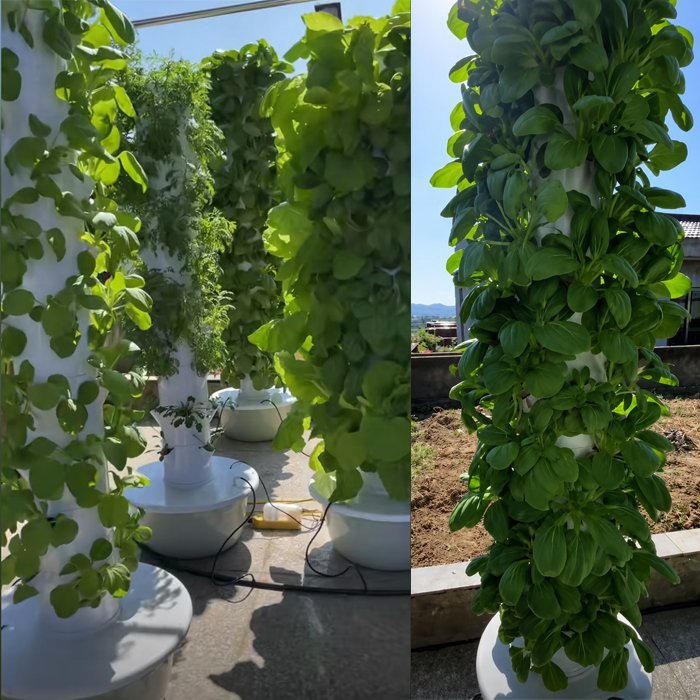
Capacity on paper is one thing; what you can actually grow per site depends on the crop. For leafy greens — lettuce, kale, Swiss chard, bok choy — the rule is one plant per site. Each site is sized for a mature head, so planting two causes crowding, poor airflow, and disease pressure.
Herbs are the exception: basil, mint, and cilantro can be direct-seeded two or three per site and harvested as cut-and-come-again crops, effectively multiplying the yield per site without taking more tower space.
| Crop Type | Plants per Site | Growing Notes |
|---|---|---|
| Leafy greens (lettuce, kale, chard) | 1 | One mature head per site; 4–6 week cycle |
| Herbs (basil, mint, cilantro) | 2–3 | Cut-and-come-again; harvest weekly |
| Strawberries | 1–2 | Train runners outward; perennial cycle |
| Peppers | 1 | Prune lower growth for airflow |
| Tomatoes | 1 | Stake and prune aggressively |
| Microgreens | Tray-based | Grown on top layers; 7–14 day cycle |
If you are comparing crops for your market, our guide to the best crops for hydroponic towers ranks 13 high-yield options by cycle time and commercial value.
Once you know per-tower capacity, farm planning becomes simple arithmetic:
Towers × Planting Sites = Total Plants in Rotation
Example — a 100-tower farm using 12-layer towers:
100 × 48 = 4,800 plants in rotation at any given time. With a 5-week lettuce cycle and weekly staggered harvests, that is roughly 960 plants harvested per week — about 50,000 heads per year from a compact footprint. Real production data for this kind of calculation is covered in our hydroponic tower yield per square foot guide.
Plant capacity per tower matters only if your floor plan lets you scale. Use these spacing benchmarks when laying out rows:
For a full equipment and layout walkthrough — including plumbing, pump sizing, and staging areas — see our 100-tower hydroponic farm setup guide. If you are still deciding between growing environments, our indoor vs. greenhouse vs. outdoor comparison will help you lock in the right setup.
Before ordering towers, run this four-step worksheet:
Example: 500 heads/week of lettuce on a 5-week cycle = 2,500 sites + 15% buffer = 2,875 sites. With 12-layer towers (48 sites), that is 2,875 ÷ 48 = 60 towers.
This is the same math our engineers use when quoting commercial installations — and we can help you run it for your exact crop mix and target volumes.
