Choosing the right hydroponic tower manufacturer is the single most important decision in your vertical farming project. Pick the wrong supplier and you’ll deal with cracked towers, missing parts, delayed shipments, and zero after-sales support. Pick the right one and you get a reliable product at 40-60% below retail — plus a partner who helps you scale. This guide walks through exactly how to vet, compare, and select a wholesale hydroponic tower supplier.
First: Know Who You’re Actually Dealing With
Not everyone selling hydroponic towers online is a manufacturer. The supply chain has three layers, and knowing which one you’re talking to determines your price, quality control, and leverage:
Supplier Type
Price Markup
Quality Control
Customization
Risk
Factory Direct
Lowest (base price)
Full control at source
Yes — molds, colors, branding
Low
Trading Company
+15-30%
Limited (buys from multiple factories)
Limited
Medium
Middleman / Reseller
+40-80%
None (pass-through)
None
High
How to verify a factory-direct claim:
Ask for photos/video of the production floor and molding machines
Request a live video call walkthrough of the workshop
Check if their business license shows manufacturing scope (not just trading)
Look for factory address vs. office address — a real factory has both
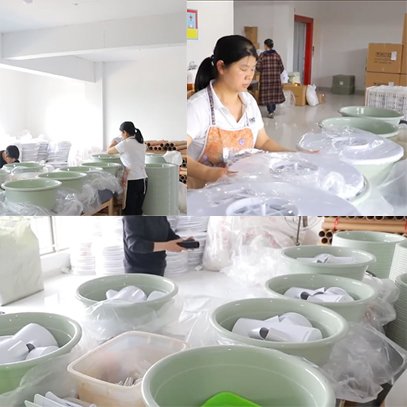
Inside a real hydroponic tower factory — production, assembly, and packing in one facility.
5 Criteria to Evaluate Any Supplier
Regardless of who you talk to, grade every candidate on these five criteria before asking for a quote:
1. Product Quality & Materials
Material grade: food-grade PP or UV-stabilized PVC (ask for material specs and test reports)
Wall thickness: cheap towers are 1.5-2mm; commercial-grade should be 2.5mm+
Load-bearing: ask how much weight a fully planted tower supports
Request a sample unit before any bulk commitment — always
2. MOQ & Pricing Structure
Typical factory MOQ: 50-200 units (lower for sample orders)
Ask for a tiered price list: 50 / 100 / 200 / 500 unit pricing
Confirm what’s included: cups, net pots, pump, plumbing, or just the tower body?
Get pricing in writing — verbal quotes mean nothing
3. Certifications & Compliance
CE and RoHS for EU markets; FDA/FCC documentation for US
Material safety: food-contact grade certificates for PP/PVC
Ask for test reports (SGS, TUV, or equivalent third-party labs)
4. QC & Inspection Process
Do they have an in-house QC team or third-party inspection before shipping?
Can you hire SGS/Bureau Veritas to inspect before payment of balance?
What’s their defect/return policy? Get it in the contract
5. Communication & After-Sales Support
Response time: a serious factory replies within 24 hours
English documentation: assembly guides, troubleshooting manuals
Spare parts availability: can you order replacement cups/pumps later?
Sample Orders: Your Best Due Diligence Tool
Never skip the sample stage. A sample order of 2-5 towers costs $100-300 delivered and answers more questions than a month of emailing:
Assemble it — does everything fit? Are instructions clear?
Run it for 2 weeks — check for leaks, pump noise, water distribution
Grow something — verify cup sizing and root zone performance
Test durability — leave it in sun/rain; check for warping or UV damage
If a supplier hesitates to sell you samples or demands a big MOQ just to try, that’s a red flag.
Payment Terms and Shipping: What to Watch For
Payment Term
What It Means
Risk Level
30% deposit / 70% balance
Standard for manufacturing; balance due before or after inspection
Low-Medium
100% T/T upfront
Pay everything before production starts
High — avoid
L/C (Letter of Credit)
Bank-backed; safer for large orders ($20K+)
Low
Alibaba Trade Assurance
Platform escrow; good for first orders
Low
Logistics tip: ask for both FOB and CIF/DDP quotes. DDP (Delivered Duty Paid) means the factory handles freight, customs, and delivery to your door — the simplest option for first-time importers, even at slightly higher cost.
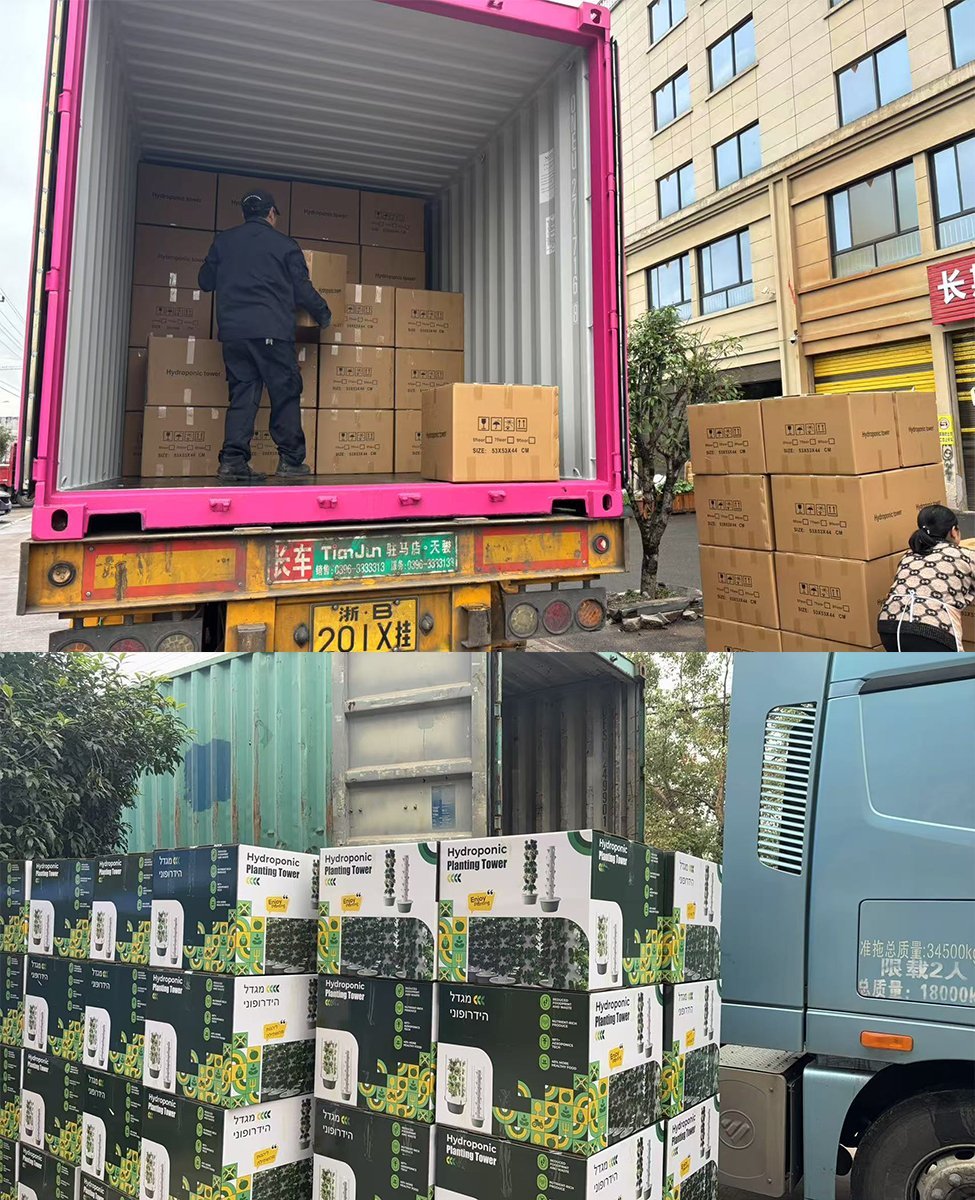
Export-grade packing and container loading — how a reliable factory ships hundreds of towers safely.
Red Flags: When to Walk Away
❌ Can’t provide a factory address or refuses a video tour
❌ Pressure to pay 100% upfront or via personal accounts
❌ Price 30%+ below every other quote — quality is being cut somewhere
❌ No material specs, no test reports, no certifications
❌ Vague answers on MOQ, lead time, or warranty
❌ No English documentation or after-sales contact
Why Commercial Buyers Source Direct from SpaceTree
SpaceTree is a hydroponic tower manufacturer based in China, exporting directly to commercial farms, greenhouse operators, and distributors across North America, Europe, and Australia. What that means for you:
🏭 True factory direct — production, QC, and packing under one roof; no middleman markup
📦 Flexible MOQ — from sample orders to full container loads (300-500 towers)
✅ Export-grade packing — flat-pack cartons designed to survive ocean freight
📋 Full documentation — English assembly guides, growing manuals, and certification files
🔧 Responsive support — a dedicated account manager from quote to delivery
Get a factory-direct quote for your project — tell us your quantity, destination port, and crop plan, and we’ll send a complete cost breakdown within 48 hours.