Our Location
304 North Cardinal St.
Dorchester Center, MA 02124

304 North Cardinal St.
Dorchester Center, MA 02124

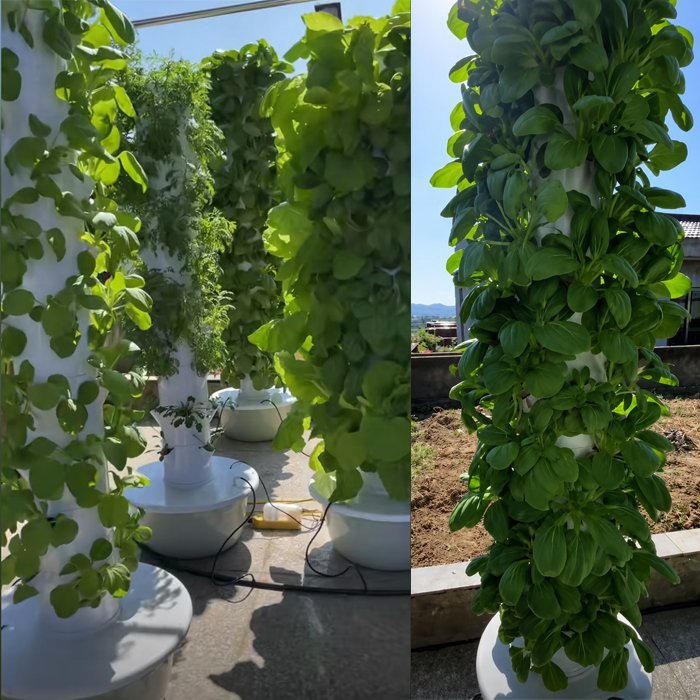
Summer is when tower growers lose the most crops — and it rarely has anything to do with pests or nutrients. The culprit is heat. When air temperatures climb past 30°C (86°F), reservoir water follows, and warm water quietly strangles your root systems: dissolved oxygen drops, root rot takes hold, and leafy greens bolt into bitter flower stalks in a matter of days. The good news is that every one of these failures is preventable with the right water temperature, environment, and feeding strategy. This guide covers exactly what happens to a tower in summer heat and the practical steps to keep it producing through the hottest months.
In soil, roots are insulated by the ground and can stay cool even when the air bakes. In a hydroponic tower, the nutrient solution is the roots’ entire world — and water heats up fast. Warm water holds less oxygen, and plant roots need oxygen as much as they need nutrients. Below are the dissolved oxygen levels at typical reservoir temperatures, and the risk each range carries:
| Water temperature | Dissolved oxygen | Root zone risk |
|---|---|---|
| 18–20°C (64–68°F) | ~9.2–9.5 mg/L | Optimal — strong growth, healthy roots |
| 22–24°C (72–75°F) | ~8.2–8.6 mg/L | Acceptable — monitor on hot days |
| 26–28°C (79–82°F) | ~7.6–7.9 mg/L | Warning — root rot pathogens accelerate |
| 30°C+ (86°F+) | <7.2 mg/L | Critical — root dieback, pythium, plant collapse |
Above 26°C (79°F), pythium and other root pathogens multiply rapidly in the warm, low-oxygen film that coats your roots. Above 30°C (86°F), even healthy varieties start shutting down. Keeping the water cool matters far more than keeping the air cool — target a reservoir temperature of 18–22°C (64–72°F) all summer.
Your tower’s reservoir is the first place heat damage starts. These measures, in order of cost, will keep it inside the safe range:

Even with a cool reservoir, the foliage itself suffers when air temperatures spike. Three environment controls matter most:
Hot weather changes how plants drink and feed. Plants transpire faster, so they pull more water — but their nutrient uptake slows down. Feed the plant, not the temperature:
| Parameter | Normal season | Summer heat (30°C+ air) |
|---|---|---|
| EC (leafy greens) | 1.4–1.8 | 1.2–1.5 — lower EC reduces osmotic stress |
| Water changes | Every 1–2 weeks | Every 3–5 days — warm solution degrades faster |
| Calcium supply | Standard | Boost slightly — heat blocks calcium transport, causing tip burn |
| pH range | 5.5–6.5 | Keep at 5.8–6.2 — stability matters more than ever |
| Feeding time | Anytime | Early morning only — avoid feeding during peak heat |
Tip burn — the browning edges on inner lettuce leaves — is the classic summer signature of calcium transport failure, not a calcium deficiency in the solution. Frequent small top-ups of fresh, cooler solution and slightly lower EC do more for it than any single additive.
Some crops simply refuse to cooperate above 28°C. Lettuce and spinach bolt (run to seed) quickly in heat, turning bitter overnight. Plan summer cycles around crops that thrive when the mercury rises:
If you must grow lettuce through summer, choose slow-bolting varieties and combine every cooling measure above — shade cloth plus a chilled reservoir plus morning feeding can keep quality lettuce on the tower well into July and August.
| Symptom | Likely cause | Immediate fix |
|---|---|---|
| Wilting despite moist cubes | Water too warm, oxygen starvation | Cool the reservoir, add airflow, shade the base |
| Brown, mushy roots | Pythium in warm solution | Change water, chill to below 24°C, clean the system |
| Leaf edges turning brown | Tip burn — calcium transport failure | Lower EC, top up with cool fresh water, boost airflow |
| Flower stalks forming on lettuce | Bolting from heat stress | Harvest immediately, switch to heat-tolerant crops |
| Slow growth, pale leaves | Canopy overheating | Add 30–50% shade cloth, improve ventilation |
Not all towers are built equal when the thermometer climbs. White or light-colored towers reflect sunlight instead of absorbing it into the root zone; generous reservoir capacity buffers temperature swings; and good water distribution keeps every level aerated. When you buy direct from the factory, you can also get honest guidance on which system handles hot climates well — and the technical support to adjust your summer schedule around your specific tower and crop mix. That combination of equipment design and grower support is what separates a tower that survives summer from one that merely endures it.
