Our Location
304 North Cardinal St.
Dorchester Center, MA 02124

304 North Cardinal St.
Dorchester Center, MA 02124

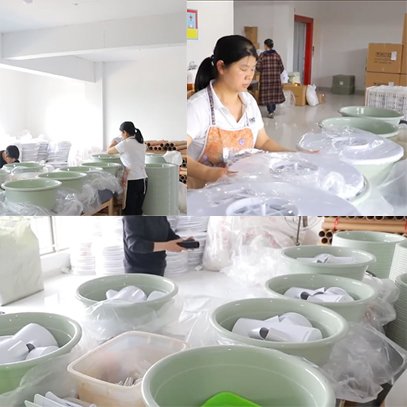
You have the distribution network, the customer relationships, and the market knowledge. What you don’t have is a factory. That is exactly what OEM manufacturing is for. For brands, distributors, and retailers looking to sell hydroponic towers under their own name, working with a factory-direct manufacturer is the fastest path from product idea to shipped container — without the cost and headache of building your own production line. This guide breaks down how hydroponic tower OEM actually works: what you can customize, what MOQs and lead times to expect, how quality is controlled, and how to protect your intellectual property along the way.
Before you contact any custom hydroponic tower manufacturer, it pays to understand the three terms you will see in every quotation. They are often used interchangeably, but they describe very different levels of involvement — and very different price points.
| Model | Who Designs the Product | What You Control | Best For |
|---|---|---|---|
| OEM (Original Equipment Manufacturing) | Factory uses its own proven design; you specify branding and options | Logo, colors, packaging, label, minor spec tweaks | Distributors and retailers entering the market fast with low risk |
| ODM (Original Design Manufacturing) | Factory develops a new design to your brief, or modifies its platform significantly | Dimensions, materials, structure, feature set, branding | Brands that need a differentiated product and have volume to justify tooling |
| Private Label | Factory’s existing product, fully rebranded | Brand name, logo, packaging, manual, box | E-commerce sellers and importers wanting white label vertical farming products |
In practice, most hydroponic tower OEM projects sit between pure private label and full ODM. A typical first order takes a factory’s proven 5-, 7-, 9-, or 12-layer tower, applies your brand, and adjusts a handful of options — tower color, reservoir size, pump specifications, and packaging. That gives you a product that feels like your own while the factory absorbs all the engineering risk of a design that is already mass-production proven.
A reputable custom hydroponic tower manufacturer offers a clear menu of customization options. Understanding exactly what is changeable — and what is not — is the difference between a smooth project and a stalled one. Here is the standard customization scope for tower systems.
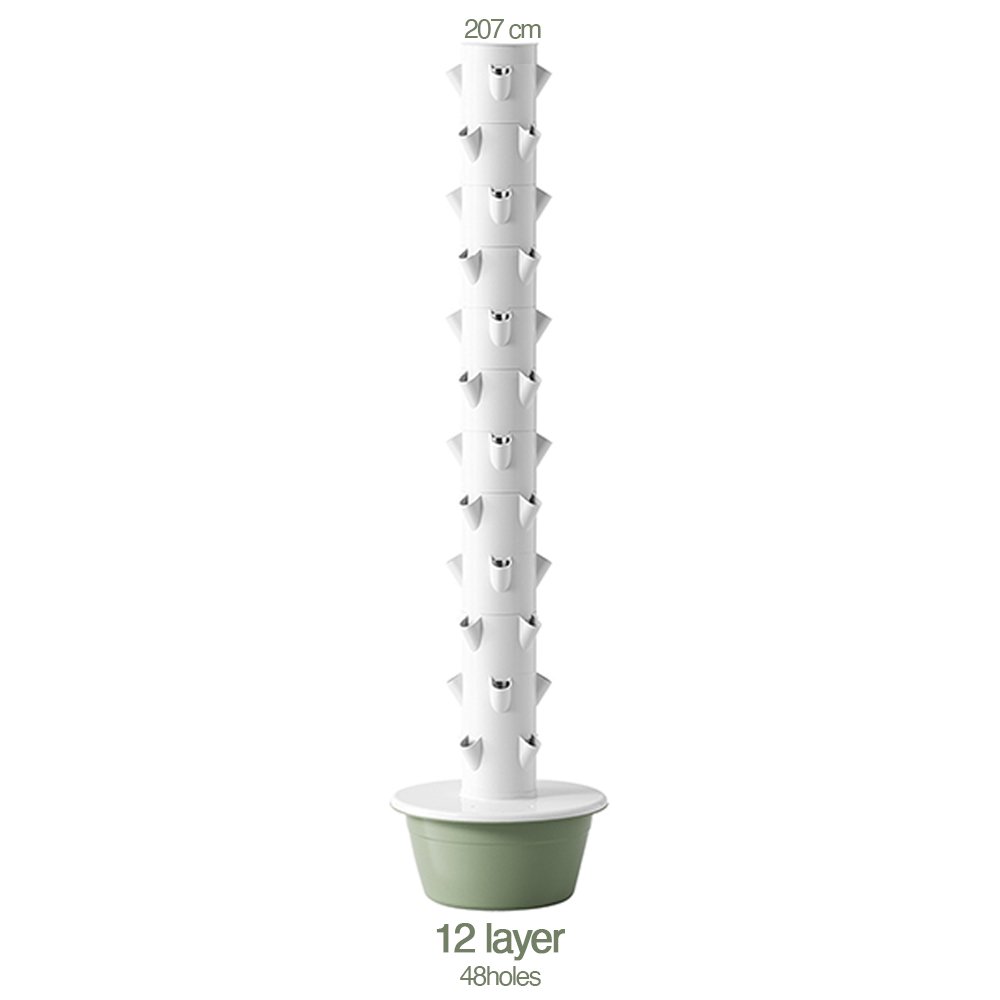
One important note: the cheapest customization is branding-only (private label). Every structural or hydraulic change adds tooling and testing cost, so it only makes sense once your order volume justifies it. A good factory will tell you honestly where the break-even point is rather than happily quoting you an expensive one-off modification.
MOQ (minimum order quantity) is the question every brand asks first, and the answer depends almost entirely on how much customization you want. For a standard private label hydroponic system with logo and packaging changes only, MOQs typically start at 100 to 300 units. Once you move into ODM territory — new colors, new molds, structural changes — the MOQ climbs with the tooling investment, often to 500 to 1,000 units or more.
| Project Type | Typical MOQ | Lead Time (First Order) | Tooling Cost |
|---|---|---|---|
| Private label (branding only) | 100–300 units | 15–25 days | None (standard molds) |
| OEM (color + minor spec tweaks) | 300–500 units | 25–40 days | Low (color tooling, printing plates) |
| ODM (new structure/features) | 500–1,000+ units | 45–75 days incl. sampling | Yes — mold and fixture investment |
Pricing follows a predictable ladder: unit price falls as quantity rises, and the biggest single lever is container economics. A 40-foot container holds far more knock-down tower kits than assembled units, so factories quote aggressively for container-load orders. Always ask for the price break at full-container quantity — that is where factory-direct pricing really shows its advantage over buying through a trading company.
Your brand name is on the product, so quality control is the most important part of any OEM agreement. A professional hydroponic tower factory will have a documented QC process across four stages, and you should ask to see it before signing anything.
Two practical tips from buying experience: first, request pre-shipment photos or a live video call during packing for your first two orders — it builds trust and catches issues early. Second, keep a small percentage of each batch as your own random samples. A factory that happily sends you sample units from your own production run is a factory that has nothing to hide.
IP protection is the concern that keeps brand owners awake at night, and it deserves serious attention. The good news is that standard OEM agreements handle most of it cleanly. Here is what you should negotiate into your contract.
A trustworthy factory will agree to all of these terms without hesitation — they are standard in the industry. If a supplier pushes back on a simple NDA or exclusivity clause, treat that as a red flag and walk away.
Here is what a typical hydroponic tower OEM project looks like from first email to container arrival — so you know what to expect and can plan your launch calendar.
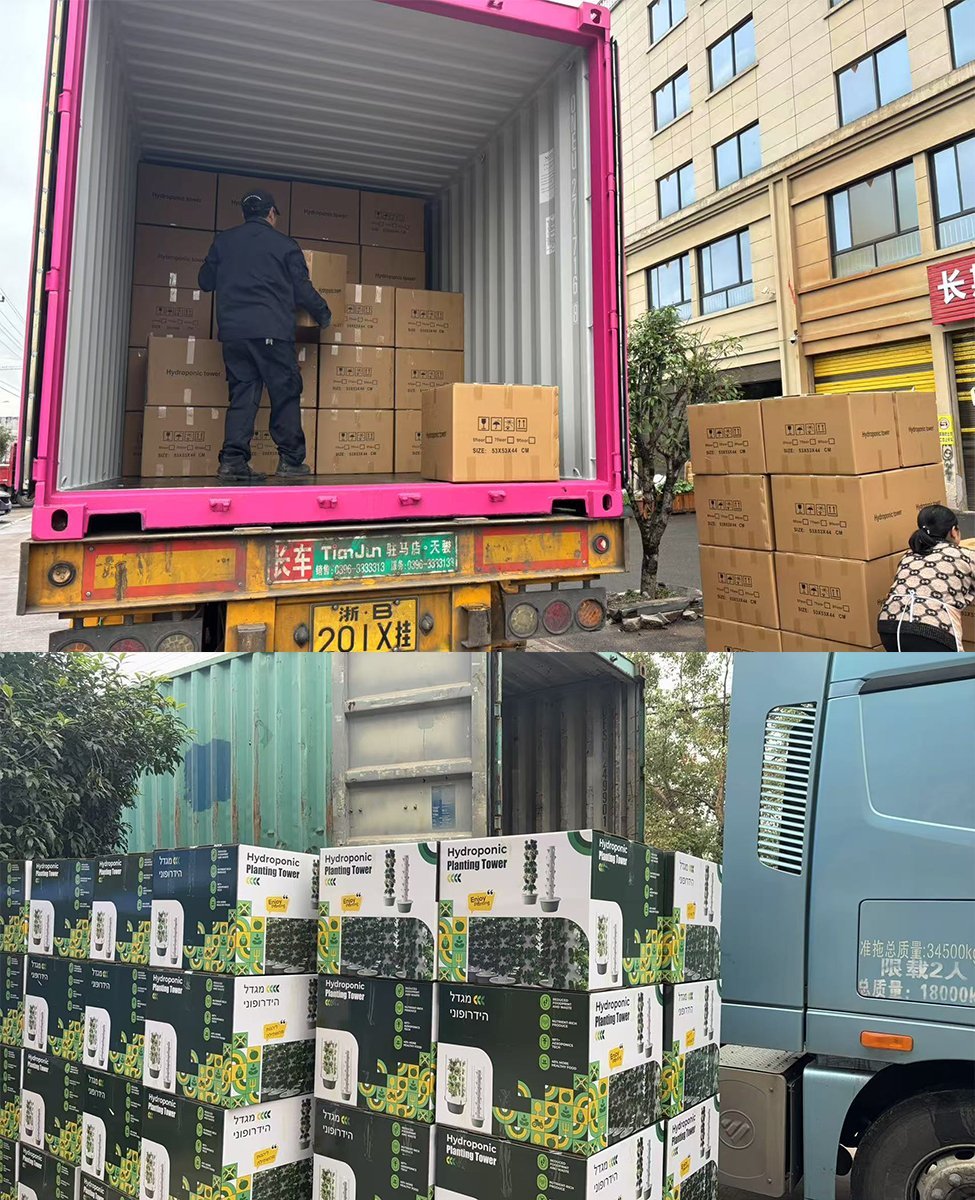
Not every custom hydroponic tower manufacturer is the right fit for your brand. Before you commit, put potential factories through this checklist.
Building your own brand on top of factory-direct manufacturing is one of the most capital-efficient ways to enter the vertical farming equipment market. You keep the margin, the customer relationship, and the brand equity — while the factory carries the production risk. The key is choosing a partner that treats your brand like its own.
SpaceTree is a factory-direct manufacturer of hydroponic towers based in China, shipping private label and OEM orders to distributors and brands worldwide. Tell us your market, your volume, and your customization ideas — we will respond with capability details, MOQ, and indicative pricing within one business day.
