Our Location
304 North Cardinal St.
Dorchester Center, MA 02124

304 North Cardinal St.
Dorchester Center, MA 02124

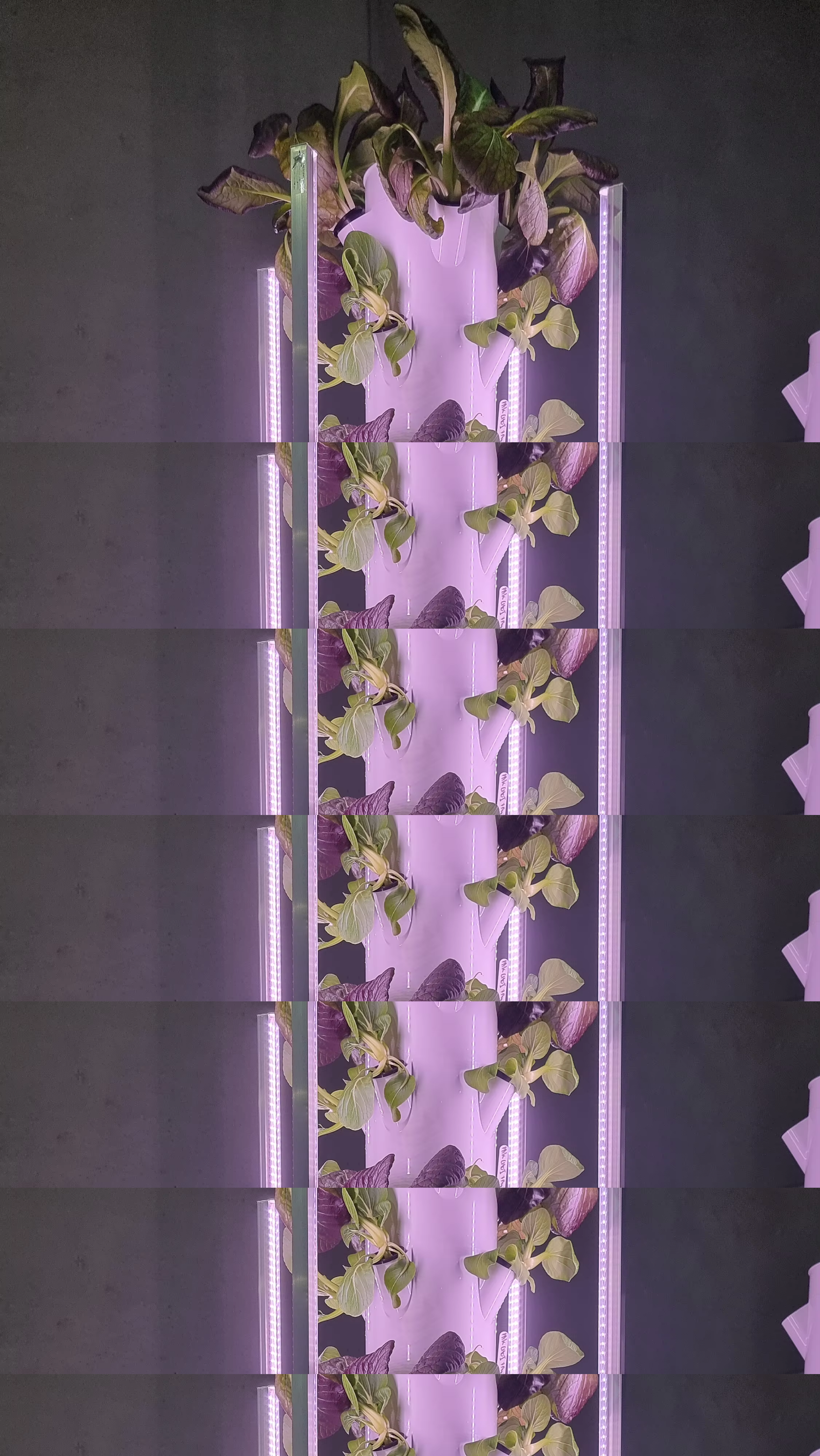
Lighting is the most misunderstood part of growing with hydroponic towers — and the one that costs growers the most money when they get it wrong. Buy too little light and your yields drop 30-50%. Buy too much and you’re wasting electricity on plants that can’t use it. This guide breaks down exactly how much light your towers need, what spectrum to choose, and how many LEDs you actually need per tower.
Unlike flat grow beds, a hydroponic tower is a vertical cylinder — every planting site faces a different direction and receives different light intensity. The top rows get full light; the bottom rows often get shaded. That’s why lighting for towers isn’t just about watts — it’s about coverage and distribution across the whole column.
Ignore wattage claims. A 300W light can outperform a 600W light depending on efficiency. What matters are these three numbers:
| Metric | What It Measures | Typical Range for Leafy Greens |
|---|---|---|
| PPFD (µmol/m²/s) | Light intensity reaching the plant surface | 200-400 µmol/m²/s |
| DLI (mol/m²/day) | Total light accumulated per day (PPFD × hours) | 15-25 mol/m²/day |
| Spectrum | Wavelength mix (blue/red/far-red) | Full spectrum 400-700nm + far-red |
Quick formula: DLI = PPFD × light hours × 0.0036. For example, 250 µmol/m²/s for 16 hours = 14.4 DLI — the low end for leafy greens. Run 18-20 hours and you hit 16-18 DLI, which is where lettuce and herbs really take off.
Different crops have very different appetites for light. Here’s the reference table for the most common tower crops:
| Crop | PPFD Target | Photoperiod | DLI Target | Notes |
|---|---|---|---|---|
| Lettuce & salad greens | 200-300 µmol | 16-18 hrs | 12-17 mol | Low-light champion; bolt resistance improves at cooler temps |
| Kale, chard, spinach | 250-350 µmol | 16-18 hrs | 15-20 mol | Need more intensity for dense leaf structure |
| Basil & culinary herbs | 300-400 µmol | 16-18 hrs | 18-25 mol | High light = higher essential oil content |
| Strawberries | 350-500 µmol | 12-16 hrs | 18-25 mol | Fruiting crops need the most light; consider tier-specific placement |
| Tomatoes / peppers | 400-600 µmol | 14-16 hrs | 20-30 mol | Best grown on towers outdoors or in high-light greenhouses |
Rule of thumb: if you’re mixing crops on one tower, aim for 300 µmol/m²/s at the middle rows and accept slightly lower intensity at the top and bottom — or use a per-tier lighting setup (LED strips between tower sections) for even distribution.

The short answer: for a standard 9-12 layer tower (40-50 planting sites), one 100-150W full-spectrum LED panel per tower is a solid starting point indoors. Here’s the calculation:
For vertical coverage: a single overhead panel hits the top rows hard and the bottom rows weakly. If you want uniform growth down the whole tower, add interior LED strips between tower sections — this is how high-yield commercial towers get 90%+ of their sites to produce at the same quality.
You don’t need a PhD in photobiology — just remember three facts:
For towers, buy full-spectrum white LEDs (3000-5000K) with decent red coverage rather than purple “blurple” lights. Full-spectrum is more pleasant to work under, better for visual inspection of plant health, and modern diodes match or beat blurple efficiency anyway.
| Setup | Lighting Strategy | Recommended Investment |
|---|---|---|
| Outdoor (full sun) | None needed in summer; optional winter extension | $0 – minimal |
| Outdoor (partial shade) | Supplemental LED for 4-6 hrs morning/evening | $30-60 per tower |
| Greenhouse | Supplemental on overcast days + winter; target 12-16 DLI baseline from sun | $60-120 per tower |
| Indoor / warehouse | 100% artificial; 150W panel or interior LED strips per tower | $100-200 per tower |
Most commercial buyers start with towers outdoors or in greenhouses (where sunlight does the heavy lifting) and add lighting later as they scale indoors — which keeps upfront costs low while you validate your market.
Lighting needs vary with your latitude, season, greenhouse glazing, and crop mix. Instead of guessing, get a recommendation matched to your site: tell us your location, tower quantity, and target crops — we’ll spec the right LED configuration (panel wattage, hanging height, photoperiod) for your climate.
New to towers? Start with our Hydroponic Tower Cost Breakdown to budget your whole system, or read Water Quality & pH Management for the other half of the grow equation.
