Our Location
304 North Cardinal St.
Dorchester Center, MA 02124

304 North Cardinal St.
Dorchester Center, MA 02124

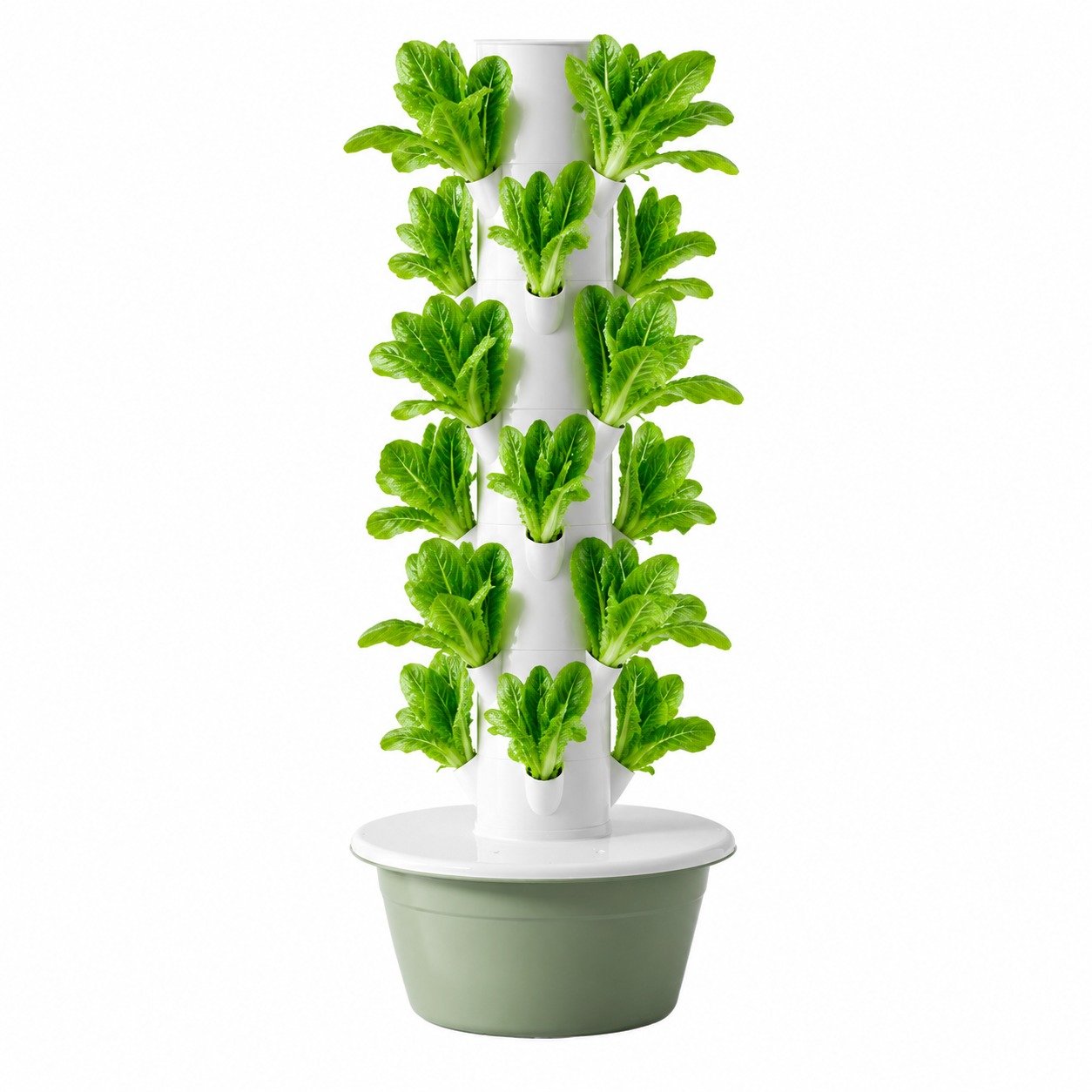
In a field, disease is a slow, patchy problem. In a recirculating tower system it is a delivery mechanism. One infected plant sitting over a channel sheds zoospores into a solution that a pump lifts to every layer of every tower on that reservoir group – in minutes. A root rot that would cost a soil grower a few plants can cost a tower grower an entire cycle of 48 plant sites per tower.
This guide covers the four diseases that do the most damage in commercial tower production – Pythium root rot, Botrytis, powdery and downy mildew, and Fusarium wilt – with a symptom matrix for diagnosis, a treatment matrix for action, a prevention SOP built on root-zone conditions, and an honest section on when the right decision is to stop treating and restart the room. If you have pests rather than pathogens, start with the pest control guide instead; this article is about disease.
Four structural reasons, and they are all inherent to the design rather than the operator:
The practical implication is that control has to be systemic: root-zone conditions first, sanitation second, treatment last. Reactive spraying in a tower is the most expensive way to manage disease, because by the time a symptom is visible, the solution has already distributed the pathogen.
| Disease | Main crops affected | Conditions that drive it | First visible sign | Speed to major loss |
|---|---|---|---|---|
| Pythium root rot | Lettuce, basil, herbs, kale, strawberries | Solution above 22-24 C, dissolved oxygen low, warm stagnant root zone, dirty reservoir | Roots turn brown and slimy, tops wilt in the warmest part of the day | 3-7 days once established |
| Botrytis (gray mold) | Strawberries, tomatoes, basil, dense greens | Low VPD with still air, condensation on stems and fruit, damaged tissue | Fuzzy gray growth at stem junctions, leaf axils or fruit shoulders | 5-10 days, spreads on airflow |
| Powdery mildew | Kale, basil, cucumbers, strawberries | Temperature swings between day and night, poor air movement, crowded canopy | White powdery patches on upper leaf surfaces | 1-3 weeks, chronic without control |
| Downy mildew | Basil, leafy greens, salad crops | High humidity, leaf wetness, cool nights in a warm room | Yellow angular patches on top, gray-purple fuzz underneath | 3-10 days, can be total for basil |
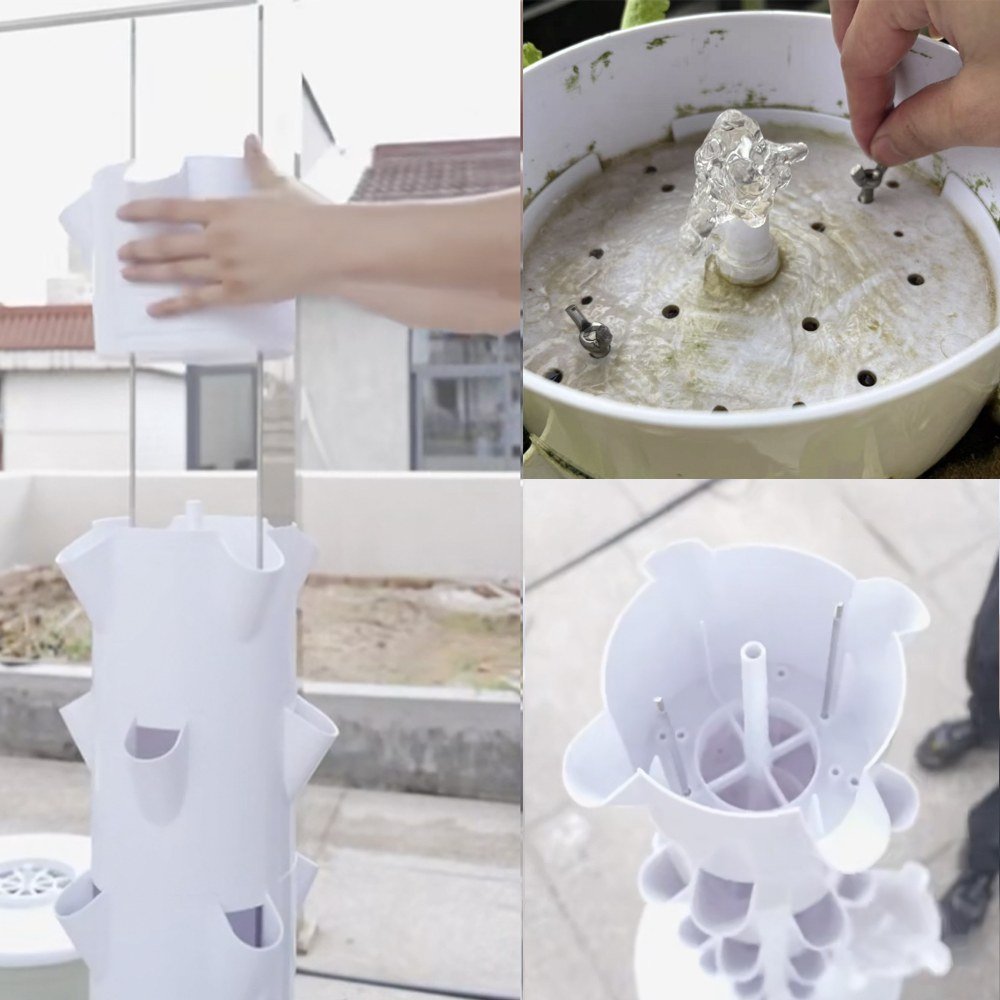
Diagnosis in a tower is a two-part question: what does the shoot look like, and what does the root look like? Pull three plants from three different towers before you decide anything. Shoot symptoms alone misdiagnose more tower problems than any other cause – a Pythium infection looks exactly like overwatering in soil, and a nutrient lockout looks exactly like a pathogen.
| What you observe | Where it appears | Most likely pathogen | How to confirm |
|---|---|---|---|
| Brown, slimy roots with a sour or musty smell; tops wilt at midday | Roots and inner channel | Pythium | Cut a root cross-section: dark cortex, pale core. Check solution temperature and dissolved oxygen |
| Fuzzy gray growth; stems collapse at a node | Stem junctions, leaf axils, fruit | Botrytis | Tap the plant over a dark surface: spores fall in a dust cloud |
| White powdery patches on upper leaf surfaces | Upper surfaces, mid and top layers | Powdery mildew | Patches rub off on a finger; leaf tissue beneath is still intact |
| Yellow angular patches bounded by veins; gray-purple fuzz below | Lower leaf surfaces | Downy mildew | Inspect the underside early in the morning before the room warms |
| One side of a plant wilts permanently; vascular staining in the stem | Whole plant or one side | Fusarium | Slice the stem lengthwise: brown discoloration in the vascular tissue |
| Uniform yellowing on all layers with no root decay | Entire tower, all layers | Not a disease | Check EC, pH and water level trend; compare with the deficiency chart |
| Brown root tips only, tops green and firm | Channel edges near the return | Water chemistry or oxygen | Check pH drift, alkalinity and aeration before treating anything |
Five minutes with three plants tells you more than a week of watching leaves. Do this whenever you see the first symptom:
What it is. A water mold that infects root tips and spreads as swimming zoospores. It does not need an insect vector, a wound or a stressed plant – it needs warm water and low oxygen, and a tower system is where both are easiest to create by accident.
How it reaches you. Transplanted plugs from an infested propagation area, contaminated source water, dirty channels from the previous crop, or media reused without treatment. Once in the reservoir, the pump does the rest.
Treatment. Pythium is managed, not cured. The immediate actions are to drop solution temperature into the 18-21 C (65-70 F) band, raise dissolved oxygen through added aeration, remove and destroy affected plants with their media, and dose an oxidizer appropriate to your system. Biocontrol products based on Bacillus and Trichoderma work as a root-zone protectant in a clean system, not as a rescue treatment in a contaminated one – the sequencing of oxidizers and beneficials matters more than the product choice, and is covered in beneficial microbes in towers. If you dose oxidizers, respect the re-inoculation intervals: hydrogen peroxide 48-72 hours, hypochlorous acid 24-48 hours, bleach 48-72 hours plus dechlorination, ozone 72 hours.
Prevention. Four things, in this order: keep solution temperature at or below 22 C (72 F) as a hard ceiling, keep dissolved oxygen in the 6-8 ppm range, prevent standing solution in channels with correct leveling and drain slope, and run a documented between-crop deep clean. Oxygen and temperature control eliminate most of the risk before any product is opened: see heat management in tower systems.
What it is. A fungal pathogen that requires free moisture and still air on plant tissue. In a tower, the succulent stems and the microclimate of a dense canopy are exactly what it wants.
Where it hits first. Stem junctions and leaf axils in the middle and lower layers, where airflow collapses, and on fruit shoulders in strawberries where condensation forms against the channel edge.
Treatment. Remove infected tissue at the first sign – cut below the lesion and take the material out of the room in a closed bag. Increase air movement through the columns and lower humidity at canopy level, working to a target vapor pressure deficit rather than a humidity number, since humidity alone does not describe the drying force at the leaf surface (see VPD, humidity and airflow). Avoid overhead watering and any practice that leaves leaf wetness into the dark period; time irrigation so the canopy dries before lights-out.
Prevention. Airflow and canopy management do more than any spray: thin the crop to the density the tower is designed for, keep ventilation running into the night, avoid nitrogen-heavy feeding that produces soft tissue, and remove dead or damaged plant material promptly – Botrytis is an opportunist that colonizes wounded tissue first.
Powdery mildew is the white, flour-like growth on upper leaf surfaces. It tolerates moderate humidity and is driven more by day-night temperature swings and still air than by wetness, which is why it appears in rooms that look dry. Downy mildew is the opposite: yellow angular patches on top with gray-purple growth underneath, driven by high humidity, leaf wetness and cool nights. Confusing the two wastes a cycle, because the conditions that suppress one can favor the other.
Treatment. For both, remove affected leaves, correct the driving condition (airflow and temperature stability for powdery; humidity and leaf wetness for downy), and treat the crop with an appropriate registered product for your market. Confirm what is legal and residue-compliant for your buyers before spraying anything on a food crop – and check the interval required before harvest.
Prevention. Varietal choice matters: basil, kale and cucumber varieties differ substantially in mildew tolerance, and selecting for resistance is free. Beyond that, keep the canopy ventilated, avoid over-dense planting, and keep the room’s day-night temperature spread moderate. Downy mildew on basil can destroy a crop in days, so treat it as an emergency, not a chronic condition.
What it is. A soil-borne fungus that enters through the roots and blocks the plant’s vascular system. It causes one-sided wilting that does not recover overnight, and it persists in media, in channel surfaces and on equipment.
Why it is the worst case. There is no chemical rescue for an infected plant, and infected media is a permanent source of inoculum. If you see vascular browning in a stem slice, the plant is already lost and the priority shifts from treatment to containment.
Treatment. Remove the entire plant with its media, bag it, and remove it from the room. Do not compost on site. Disinfect tools between towers, and step up the sanitation schedule for the affected reservoir group. Increase beneficial microbial competition in clean zones where the pathogen has not yet been detected – see Bacillus and Trichoderma in root zones – and, critically, do not replant the same crop into the same tower group without a full clean.
| Pathogen | Immediate action (first 24 h) | Root-zone action | Do not |
|---|---|---|---|
| Pythium | Cull affected plants with media, remove from room; drop solution temperature | Raise aeration to hold 6-8 ppm oxygen; oxidizer dose with correct re-inoculation interval; protect with Bacillus or Trichoderma after the interval clears | Do not re-dunk, reuse or compost the affected media; do not combine oxidizers and biocontrols simultaneously |
| Botrytis | Cut out infected tissue below the lesion, bag and remove | Raise airflow through columns; dry the canopy before lights-out; reduce nitrogen push | Do not leave infected material in the room or on the floor; do not overwater into a dark period |
| Powdery mildew | Remove the worst-affected leaves; stabilize day-night temperature | Improve air movement; adjust density; use a product registered and residue-compliant for your buyer | Do not assume low humidity means safe – still air is the real driver |
| Downy mildew | Treat as an emergency: remove affected leaves immediately | Cut humidity and leaf wetness; verify airflow; review variety choice for next cycle | Do not confuse with powdery mildew – the wrong corrective condition makes it worse |
| Fusarium | Remove whole plant with media, bag, leave the room | Disinfect tools between towers; deep clean the affected reservoir group before replanting | Do not replant the same crop into the same tower without a full sanitation cycle |
Prevention in a tower is not a product list; it is a set of conditions you maintain continuously. These are the levers that remove most disease risk before an outbreak starts:
| Lever | Target | How you keep it there |
|---|---|---|
| Solution temperature | 18-21 C (65-70 F) target, 22 C (72 F) hard ceiling | Reservoir siting away from heat, chilled or shaded reservoir, night purge of warm air |
| Dissolved oxygen | 6-8 ppm in the reservoir | Aeration sized to layer count (12-layer systems need roughly double the baseline), plus correct return flow to avoid stagnant channels |
| Source water quality | Zero total coliform; alkalinity, sodium and chlorine within range | Test before design, then treat or blend: source water decisions belong to the design stage, not the outbreak stage |
| Airflow and VPD | Air movement through the canopy in all layers, moderate VPD, dry canopy at lights-out | Anemometer checks at multiple heights, VPD logging, night ventilation setpoints |
| Plant density | No more than the tower and the climate system were designed for | Fewer, healthier plants outperform an overfilled tower; density decisions are covered in capacity planning |
| Sanitation rotation | Between-crop deep clean on a written schedule; tools disinfected between tower groups | Deep clean procedure executed every cycle, not only after a problem |
| Monitoring | Twice-weekly scouting with root checks; daily EC, pH, water level and temperature logs | Root symptoms appear before shoot symptoms; written logs are how you catch the trend early |
Align the whole plant-protection program by reading this alongside the pest control guide, the between-crop deep clean procedure, beneficial microbes in the root zone, and the daily-to-monthly routine in tower maintenance checklists.
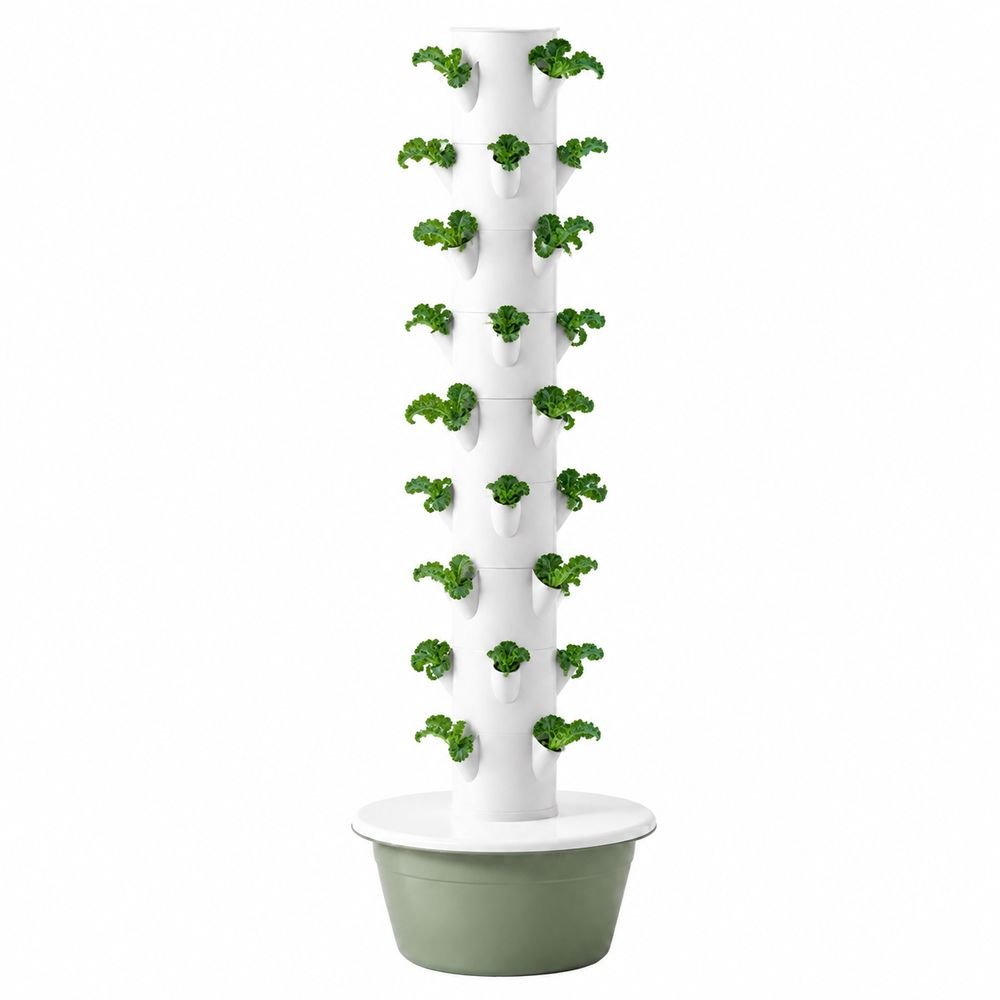
The most expensive decision in disease management is treating a room that cannot be saved. Treating a system-wide infection usually costs more in labor, product and lost cycle time than the crop was ever worth – and it leaves inoculum in the plumbing for the next cycle.
| Situation | Decision | Why |
|---|---|---|
| One or two affected plants, roots elsewhere clean | Treat and monitor | Containable; cost of treatment is low |
| One tower group affected, other groups clean | Isolate the group, clean at cycle end | Protects the rest of the facility |
| More than 30-40% of plants in a reservoir group showing root decay | Terminate the cycle for that group and reset | Yield is already lost; treat the system, not the plants |
| Vascular browning (Fusarium) detected in multiple towers | Full clean, full reset, no replant of the same crop | The pathogen persists in media and surfaces |
| Repeat outbreak across two consecutive cycles | Stop and audit root-zone conditions and sanitation, not the crop | Recurring disease is a system problem, not a plant problem |
If you are converting a building or adding capacity, this is also the moment to fix the underlying conditions rather than repeat them: the retrofit planning guide covers climate, drainage and layout decisions during a conversion, and the 25 common production mistakes covers the operational ones that raise disease pressure.
Look at the roots and read the trend. Root rot shows brown, translucent or slimy roots with a sour smell, often with a solution temperature above 22 C. A nutrient problem shows intact white roots with symptoms appearing on specific leaf positions and matching an EC or pH trend. When in doubt, compare three plants from three towers: pathogens produce patchy, progressive patterns, while chemistry problems track the whole reservoir group at once.
No. They are different organisms with opposite environmental preferences. Powdery mildew is favored by still air and temperature swings; downy mildew by high humidity, leaf wetness and cool nights. Correcting for the wrong one can accelerate the other. Confirm which you have by looking at the leaf underside early in the morning, and then match both the environmental correction and the product to that pathogen.
Plan on hydrogen peroxide 48-72 hours, hypochlorous acid 24-48 hours, bleach 48-72 hours plus full dechlorination, and ozone about 72 hours. UV treatment belongs on the return line, after which microbes are dosed into the reservoir. Dosing both at once wastes the biocontrol product and gives you no protection from either.
Usually not, once more than a third of the plants in that group show root decay. Root rot in a recirculating system is a system condition, and the yield has already been lost. Terminating the cycle, cleaning the hardware and correcting temperature, oxygen and drainage then pays back faster than a partial rescue that leaves inoculum in the plumbing.
Yes. Taller towers concentrate more biomass into the same air volume and need more aeration and more deliberate airflow through the bottom layers, where humidity accumulates. A 12-layer tower holds twice the plant sites and roughly double the baseline aeration demand of a 6-layer tower in the same footprint – design the climate and oxygen systems for the final tower count, not for the first phase.
Most of the conditions that decide whether you get a disease outbreak are set before the first crop: solution volume per plant site, aeration capacity relative to layer count, airflow through the lowest layers, drain behavior and how easy the system is to clean between cycles. SpaceTree builds towers factory-direct with layer count, layer spacing and hole density specified against your crop plan, and can configure aeration, reservoir capacity and channel geometry for the disease pressure your crops and climate actually produce. Send us your crop list and building conditions and we will specify a system that is easier to keep clean than to rescue.
