Our Location
304 North Cardinal St.
Dorchester Center, MA 02124

304 North Cardinal St.
Dorchester Center, MA 02124

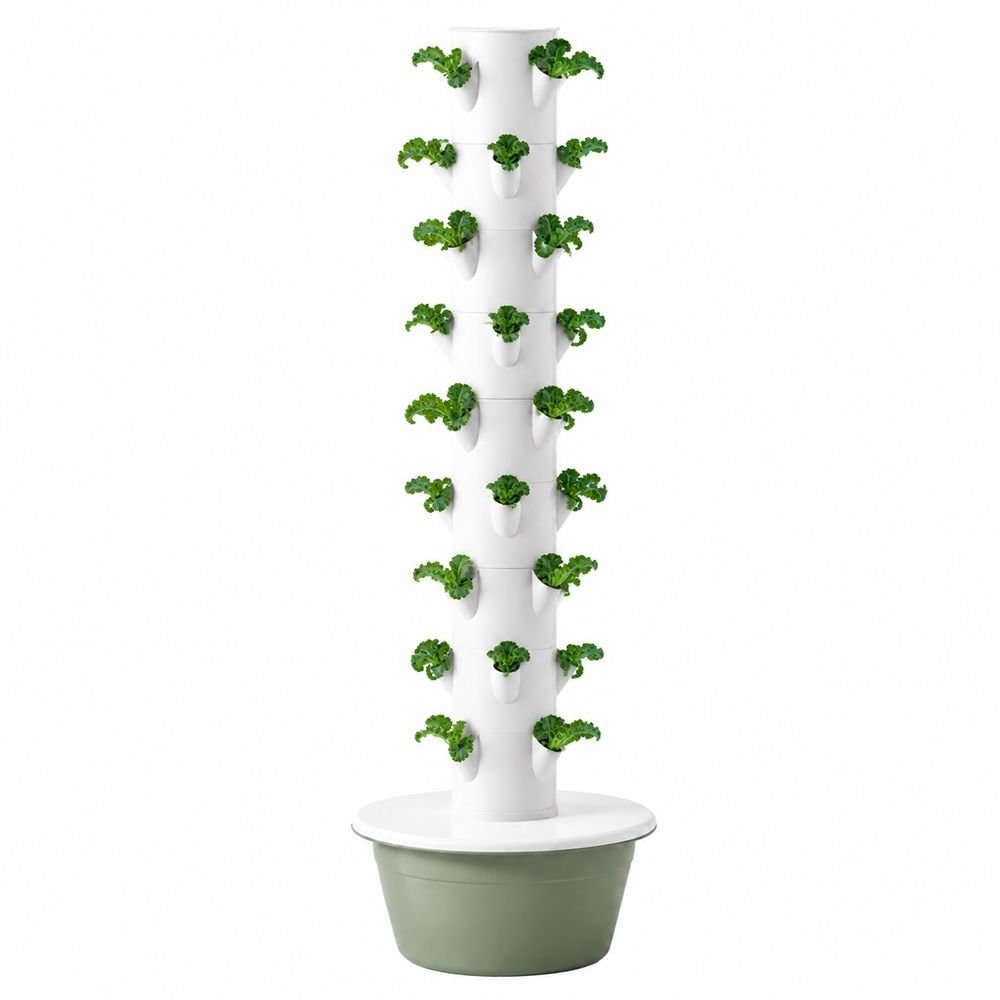
If your tower room is planted top to bottom with head lettuce, you are running the safest crop in the industry and the least profitable one. Lettuce pays roughly $7-11 per plant site per year across 5-6 turns. Pea shoots and sunflower microgreens turn 10-16 times a year at $22-34 per site. Edible flowers sit in a different category altogether: they occupy very little space, sell in grams rather than pounds, and the buyers who use them – chefs, pastry kitchens, caterers, and high-end grocery produce managers – treat them as a line item they cannot substitute. Most commercial growers never test these crops. The reason is not agronomy. It is that nearly every microgreen guide online is written for someone with a $60 rack in a spare bedroom, and every edible flower guide assumes an outdoor cutting garden. Neither one answers the question a tower operator actually has: how do I fit these crops into 48 planting sites per tower, and what does the revenue per site look like next to what I am already growing?
This guide is the commercial version. It covers the two ways to run microgreens and edible flowers inside a tower operation, the crops that genuinely work in a vertical column and the ones that quietly fail, seeding density per net pot, media thickness, blackout and light windows, the harvest and grading steps that decide whether chefs reorder, packaging sizes and shelf life, a channel pricing table so you know what to charge each buyer type, and a payback model that shows what happens to a 10-tower room when you move 20% of its sites into fast-turn crops.
The economics of a tower come down to one number: revenue per plant site per year. Every site you own costs the same in hardware, water, nutrient, and light. The only thing that changes is how many times a year that site converts seed into a sellable unit, and what a sellable unit is worth. Microgreens and edible flowers win on the first axis and, in the case of flowers, on the second one as well.
| Crop | Days per turn | Turns per year | Revenue per site / year | Buyer type |
|---|---|---|---|---|
| Pea shoots & sunflower microgreens | 10-21 | 10-16 | $22-34 | Chefs, specialty retail, food service |
| Fine-seed microgreens (radish, broccoli, mustard) | 8-14 | 12-18 | $20-32 | Chefs, juice bars, grocery |
| Edible flowers | Continuous / seasonal | Ongoing cut | $14-26 | Restaurants, pastry, catering, retail |
| Specialty salad greens | 25-30 | 8-10 | $16-26 | Broadline distributors, retail |
| Fresh-cut basil | 21-28 | 10-12 | $28-42 | Distributors, retail, restaurants |
| Romaine / butterhead lettuce | 30-35 | 5-6 | $7-11 | Broadline distributors, retail |
| Strawberries | 12-18 months | Continuous | $5-9 | Farmers markets, chefs |
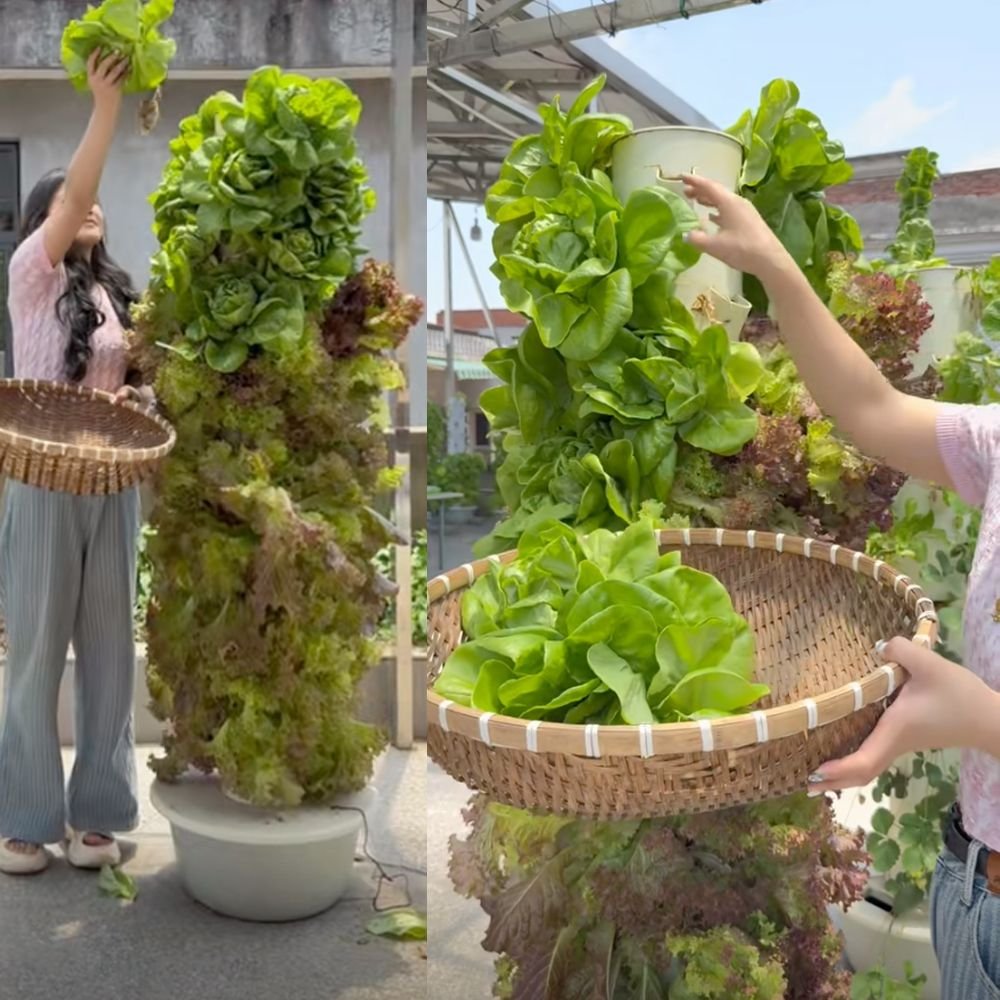
Read the table again with the turnaround column in mind. A site growing pea shoots is harvested and replanted more than twice as often as a site growing lettuce, and the per-site value is two to three times higher. That does not mean you should replace your lettuce program – lettuce is what fills consistent weekly orders and keeps a distributor relationship alive. It means a portion of the room should be dedicated to crops that carry the margin, while the rest carries the volume. The mix that repeatedly works in commercial tower rooms is roughly 60% greens and lettuce for cash flow, 30% basil and culinary herbs for gross margin, and 10% specialty items such as microgreens, edible flowers, and strawberries for differentiation and premium pricing. As always, keep trial blocks small: 10-20% of total capacity until you have a signed buyer.
There is a second reason these crops matter for a factory-direct tower operation. Microgreens and flowers are sold in small, frequent, high-value deliveries. A chef who buys 400 g of mixed microgreens and 60 blooms every Tuesday and Friday becomes a repeating account with almost no price resistance, because the volume is trivial for their kitchen and the visual impact of the plate is not. Volume accounts negotiate hard. Garnish accounts negotiate once and then stop.
There is a right way and a wasteful way to add these crops to a vertical operation, and the distinction is about airflow and seed size rather than nutrients.
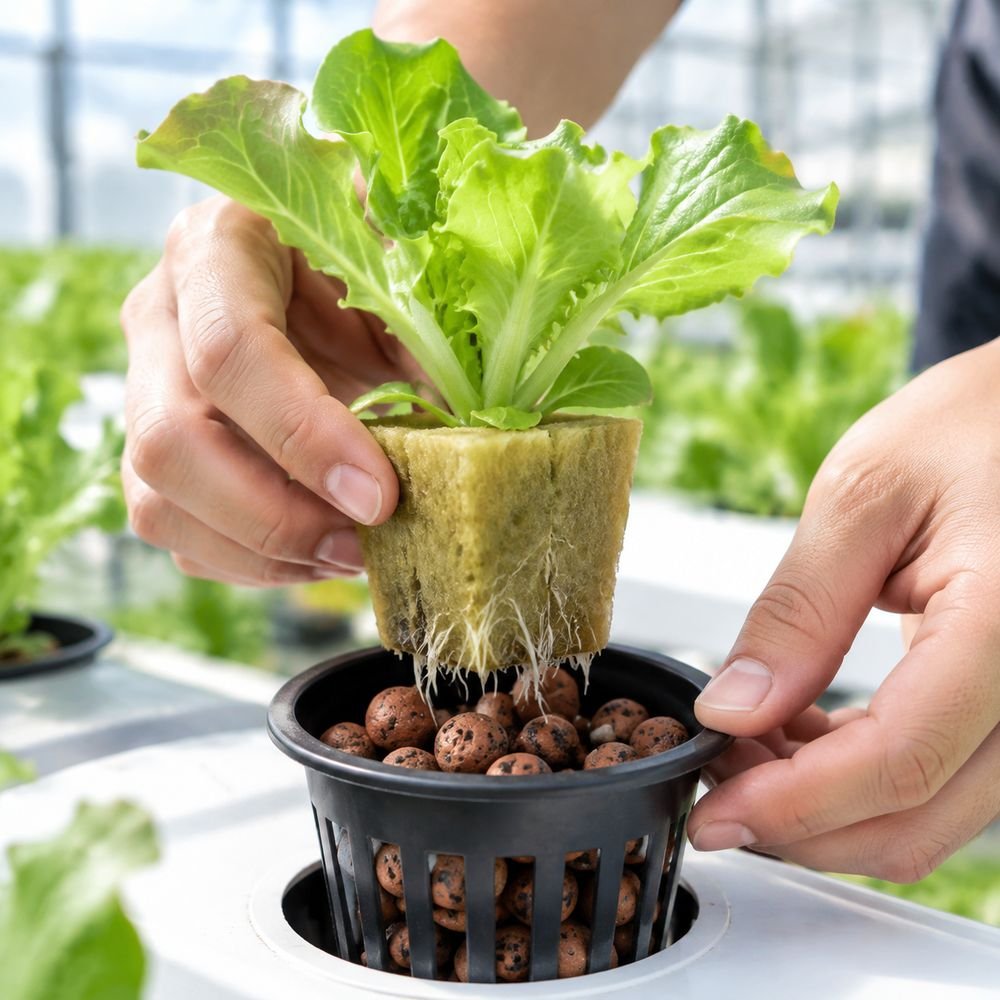
Sturdy, large-seeded crops grow beautifully directly in the tower’s net pots with a shallow media layer. Sunflower shoots, pea shoots, radish, and broccoli microgreens all work this way because the seed carries enough energy to push through 10-14 cm of growth without competing for space, and their stems are thick enough to hold the cluster upright in a vertical column. Harvest is a single cut 2-3 cm above the media line, and the media is reused or composted depending on how heavily it has rooted.
Fine-seeded varieties – amaranth, mustard, kale, basil, clover, and most edible flowers started in trays – do better on shallow propagation trays at 2-4 cm media depth, stacked on a rack in the same room, under the same LED canopy, plumbed to the same reservoir loop. This is not abandoning the tower; it is using the tower as the nutrient and environmental backbone of the room while giving delicate seed the flat surface it needs. The flowers, in particular, want to be started flat and then moved to the tower once they have a stem, where they can be harvested continuously for weeks.
Whichever route you take, the plumbing, nutrient dosing, and climate control you already own do the work. You are not building a second business – you are changing what is planted in part of the one you have. If you are still designing the room, this is the moment to talk to your supplier about planting site spacing and layer height, because fast-turn crops are harvested young and short, while fruiting crops need vertical clearance. Layer spacing is a factory parameter, not a catalog choice, and it is set before the towers ever leave the line.
Not every microgreen or flower translates to a vertical system. The crops below are the ones that commercial tower growers return to season after season.
The pattern is simple: if the crop is harvested young and short, the tower is a great use of vertical space. If the crop is harvested heavy and tall, the tower rents you the most expensive square meter in the building for the slowest payback in the catalog. We covered that comparison in detail in our guide to crops that are not worth growing in a tower.
Seeding rate is where new microgreen growers lose their margin. Too thin and you waste site space; too dense and you invite damping off, because 40 seeds in a 5 cm net pot sitting on constantly wet media in still air is a fungus nursery. The densities below are the ones that hold up in a vertical system with typical tower-layer airflow, where each pot sits above another and moisture migrates upward.
| Crop | Seeds per net pot (5 cm) | Media | Blackout | Days to first cut |
|---|---|---|---|---|
| Sunflower shoots | 18-25 (pre-soaked 8-12 h) | Coco coir or rockwool 2.5 cm | 48-60 h | 10-12 |
| Pea shoots | 20-30 (soaked 10-12 h) | Coco coir 3-4 cm | 24-48 h | 12-21 |
| Radish / broccoli / mustard | 40-60 (sow dense) | Coco coir 2 cm | 24-48 h | 8-14 |
| Amaranth | 50-70 (surface sow) | Coco coir 1.5 cm | 48 h | 10-14 |
| Viola / pansy | 1-2 per pot | Rockwool or coco 3 cm | Light needed | First bloom 45-60 |
| Calendula / marigold | 1-2 per pot | Coco coir 3-4 cm | Light needed | First bloom 50-65 |
Two rules apply across the table. First, media is a working surface, not a growing medium – microgreens draw almost all of their nutrition from the nutrient solution below, so keep the layer thin enough that the roots reach open water quickly. Media that stays permanently saturated in the dark is the single biggest cause of damping off in vertical microgreen production. If you are choosing between rockwool, coir, pebbles, and Oasis cubes for a fast-turn crop, our breakdown of tower growing media compares water holding, reusability, and cost per site. Second, blackout is a phase, not a system setting. Cover the column for 24-60 hours after sowing, then expose it. Pea and sunflower need the dark to stretch; flowers do not and should be visible from day one.
A light schedule designed for butterhead lettuce will produce leggy, thin microgreens and pale flowers. Fast-turn crops want more hours and more intensity than a heading crop, and flowers want a slightly cooler night than greens to keep blooms from stretching.
| Crop | Photoperiod | Target PPFD | Day / night temp | RH |
|---|---|---|---|---|
| Microgreens (all types) | 14-16 h | 200-300 umol/m2/s | 20-24 C / 17-19 C | 50-60% |
| Pea & sunflower shoots | 14-16 h | 180-280 umol/m2/s | 19-23 C / 16-18 C | 50-65% |
| Edible flowers | 12-14 h | 300-450 umol/m2/s | 18-22 C / 14-17 C | 45-55% |
| Mature lettuce (reference) | 12-14 h | 150-250 umol/m2/s | 18-22 C / 15-18 C | 60-70% |
Airflow deserves more attention than it gets. In a tower room, each layer sits in the wake of the layer below and humidity accumulates toward the middle of the column. A horizontal airflow across the face of the towers, running continuously at low speed, is what keeps microgreen canopies dry and flowers free of botrytis. If you are already managing vapor pressure deficit for your greens, keep the same discipline for these crops – the target sits at the drier end of the range, particularly during the last three days before harvest. Related reading: pythium, botrytis, and powdery mildew control in tower systems.
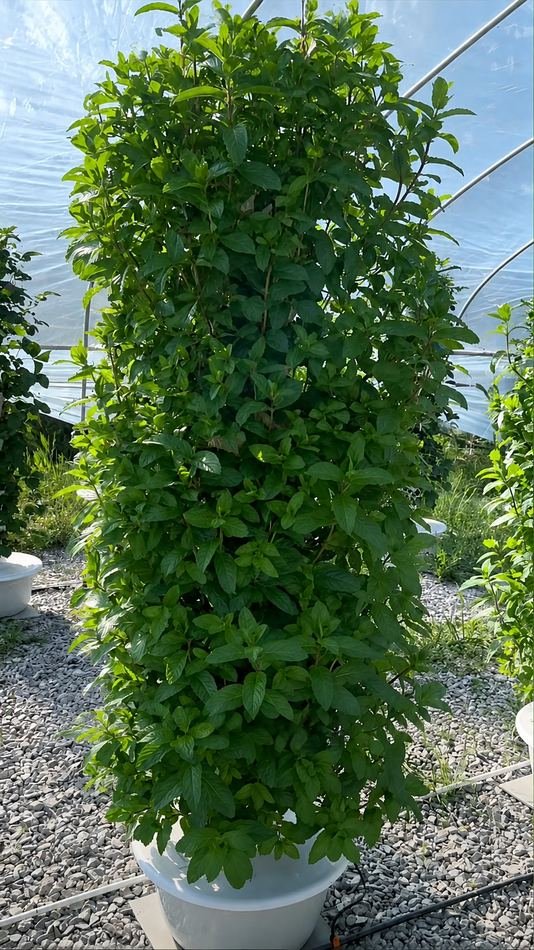
Harvest timing for microgreens is a narrow window. Cut too early and the flavor is flat and the shelf life is short; cut too late and the stems lignify, the seed hulls appear, and the product photographs badly. The commercial standard is the first true-leaf stage at 8-14 cm, cut with clean scissors or a sharp blade 2-3 cm above the media line so no grit or fiber travels with the product. Many growers harvest the whole net pot at once and move directly to cooling; the pots are then washed, recharged, and returned to the seeding bench.
Grading is what most small operations skip and what every chef notices. Grade into three counts: premium (uniform stem length, no hulls, full color) for restaurant accounts, standard for retail clamshells, and a mixed grade for value boxes and caterers. Doing this costs you ten minutes per harvest and roughly doubles the price you can hold on the premium tier, because you are selling consistency, not volume.
| SKU | Pack size | Typical wholesale price | Shelf life | Primary channel |
|---|---|---|---|---|
| Sunflower shoots, premium grade | 100 g clamshell | $3.50-5.50 | 7-9 days | Restaurants, specialty retail |
| Mixed microgreens, standard | 100 g clamshell | $2.80-4.20 | 5-7 days | Broadline distributors, retail |
| Pea shoots, bulk | 500 g bag | $7.00-11.00 | 6-8 days | Food service, catering |
| Edible flower mix | 30-50 blooms | $6.00-12.00 | 4-6 days | Restaurants, pastry, catering |
| Flower petals (calendula, marigold) | 20 g | $4.50-8.00 | 5-7 days | Bakers, caterers, retail |
Channel choice moves your realized price more than any cultivation decision. Relative to a wholesale baseline of 100, broadline food service distributors pay 110-140%, restaurant direct sales pay 150-250%, specialty retail pays 180-300%, and farm stands or direct-to-consumer pay 200-350%. A distributor takes a margin in exchange for trucking and invoicing; a chef pays full price in exchange for a Tuesday delivery and a phone call you answer. Most tower operations should run both: distributors for the volume base, direct restaurant accounts for the premium tier. The full channel breakdown, including how much of the price is eaten at each step, is in how to sell hydroponic produce.
Here is the exercise that convinces growers to test these crops. Assume ten 12-layer towers at 48 planting sites each: 480 sites total. Reserve 20% of those sites – 96 of them – for fast-turn specialty crops, and leave the rest in a lettuce and herb mix.
| Site allocation (96 sites) | Site/yield value | Annual revenue |
|---|---|---|
| 48 sites – pea shoots and sunflower | $28 average | $1,344 |
| 28 sites – fine-seed microgreens | $26 average | $728 |
| 20 sites – edible flowers | $20 average | $400 |
| Specialty subtotal | – | $2,472 |
| Same 96 sites in romaine lettuce (comparison) | $9 average | $864 |
| Incremental revenue from the same hardware | – | +$1,608 / year |
On a typical ten-tower room, that is an extra $1,600 a year from sites you have already paid for – and it does not account for the fact that specialty crops are often sold direct, at 150-250% of the wholesale baseline used above. It also does not account for the extra harvesting labor, which is real: microgreens are hand-cut and hand-packed, and you should assume higher minutes per pound than lettuce. The honest version of this calculation is that specialty crops raise revenue per square meter and raise labor per square meter at the same time. They win when labor is scheduled in blocks – one cutting session, many crops – and lose when they are squeezed between other tasks.
Yes for large-seeded varieties. Sunflower, pea, radish, and broccoli microgreens grow well in tower net pots with a thin media layer, harvested as a single cut above the media line. Fine-seeded varieties and edible flowers do better started in shallow trays on a rack that shares the tower room’s reservoir and lighting. The tower remains the nutrient and climate backbone either way.
As a small share of production, yes. Edible flowers return a lower annual revenue per site than microgreens ($14-26 versus $22-34) but they sell in grams at prices that a lettuce buyer would never accept, and they lock in restaurant and pastry accounts that order every week. The right allocation is 5-10% of planting sites, not a dedicated tower room.
They run lower, not higher. Because the crop is harvested at 8-14 days, it needs less total nutrient per cycle – a diluted solution in the 0.8-1.4 mS/cm range is typical, depending on species and water source. Running greens-strength EC on a 10-day crop mostly wastes salt and shortens media life. Our nutrient solution formulation guide covers the mixing math, and the EC and ppm guide covers measurement.
Start with three restaurants inside a 20-minute drive and offer a free 100 g sample box with a printed harvest date and a price list. Chefs buy on consistency, so hold the delivery day for four consecutive weeks before you pitch a fifth account. For retail, a 100 g clamshell with a clear harvest-date label sells on the shelf next to imported product with a two-week-old date. If you need more than a few accounts, work the distributor channel instead of driving a van.
Fast-turn crops change what you need from a tower. Microgreens are cut short, so layer spacing can be tighter and site density higher; edible flowers need a long harvest window with clean airflow and slightly more headroom. Both are factory parameters. We build towers to order for commercial growers and distributors – custom layer counts, hole density by crop mix, spare parts packed with the container, and documentation your team can actually run the room with. Tell us your crop mix and target markets and we will size the layout, the reservoir, and the light canopy to match. See how to evaluate a factory-direct supplier before you compare quotes.
