Our Location
304 North Cardinal St.
Dorchester Center, MA 02124

304 North Cardinal St.
Dorchester Center, MA 02124

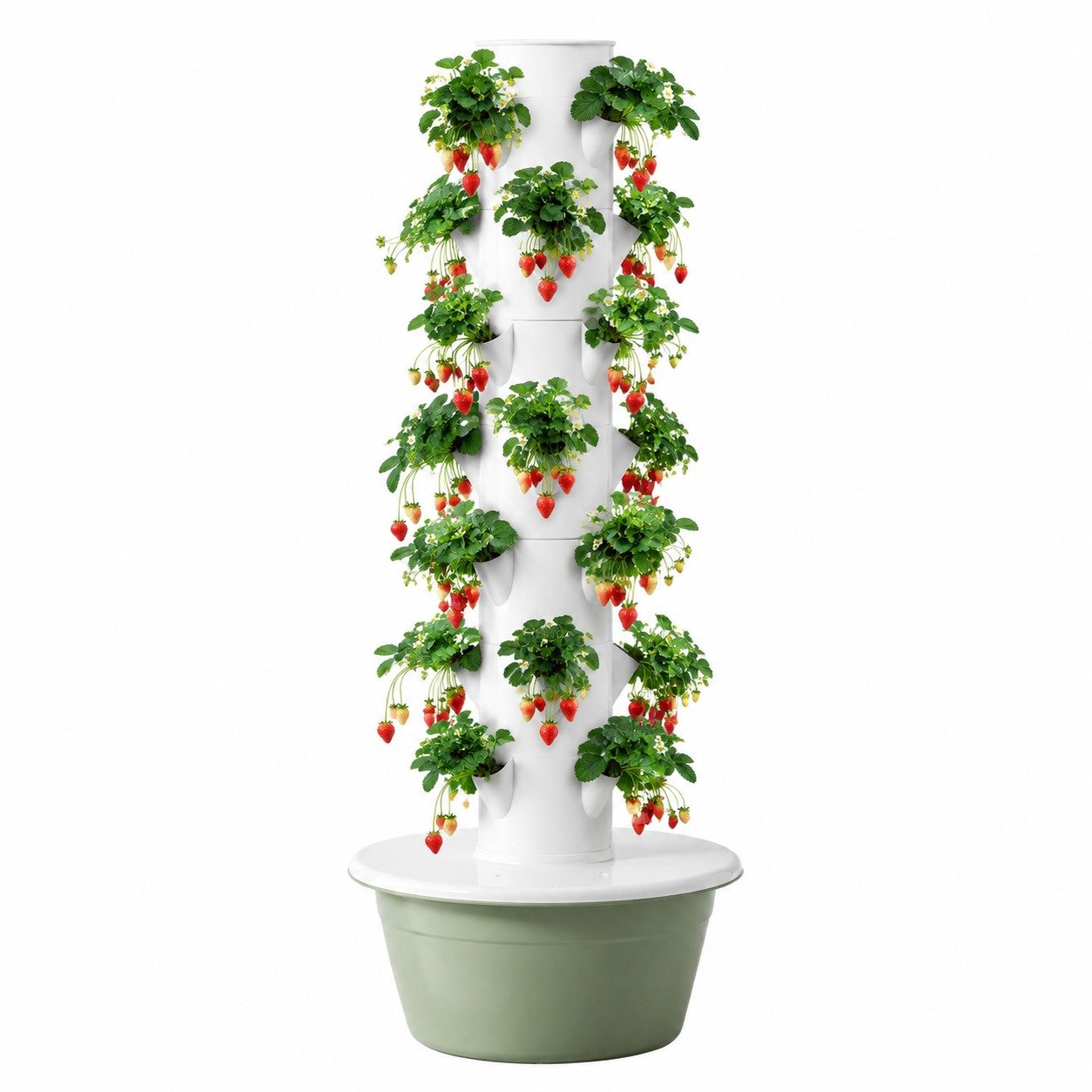
If you are evaluating vertical hydroponic towers for your commercial farm, the single most important question is: how much can I actually grow per square foot? Yield per square foot determines your ROI, your production capacity, and whether vertical towers make economic sense compared to NFT, DWC, or traditional soil growing.
In this guide, we provide real-world yield data for the most common crops grown in 7-layer hydroponic towers — lettuce, herbs, strawberries, and leafy greens — based on commercial-scale production across controlled-environment farms. Every number is grounded in actual grower results, not theoretical maximums.
Before diving into numbers, it helps to understand the metrics used in commercial hydroponic production:
A standard 7-layer tower has 42–56 planting sites (6–8 ports per layer) and occupies approximately 2.5–3 square feet of floor space. This vertical density is the key advantage — stacking 7 growing layers in the footprint of a single shelf.
| Crop | Days to Harvest | Cycles/Year | Yield/Tower/Year | Yield/sq ft/Year |
|---|---|---|---|---|
| Butterhead Lettuce | 50–60 | 6–7 | 280–390 heads | 95–130 heads |
| Romaine Lettuce | 55–65 | 5–6 | 230–330 heads | 75–110 heads |
| Basil | 30–40 | 8–10 | 65–95 lbs (29–43 kg) | 22–32 lbs/sq ft |
| Mint | 28–35 | 9–12 | 55–80 lbs (25–36 kg) | 18–27 lbs/sq ft |
| Cilantro/Coriander | 30–40 | 8–10 | 50–70 lbs (23–32 kg) | 17–23 lbs/sq ft |
| Strawberries | 60–75 (first) | N/A (perennial) | 85–120 lbs (39–54 kg) | 28–40 lbs/sq ft |
| Kale | 40–50 | 7–8 | 180–260 bunches | 60–87 bunches |
| Swiss Chard | 45–55 | 6–7 | 160–230 bunches | 53–77 bunches |
These numbers assume optimized conditions — adequate lighting (DLI of 14–17 mol/m²/day for leafy greens), balanced nutrient solution, proper pH (5.5–6.5), and consistent temperature (65–75°F / 18–24°C). Results in real farms vary based on these variables.
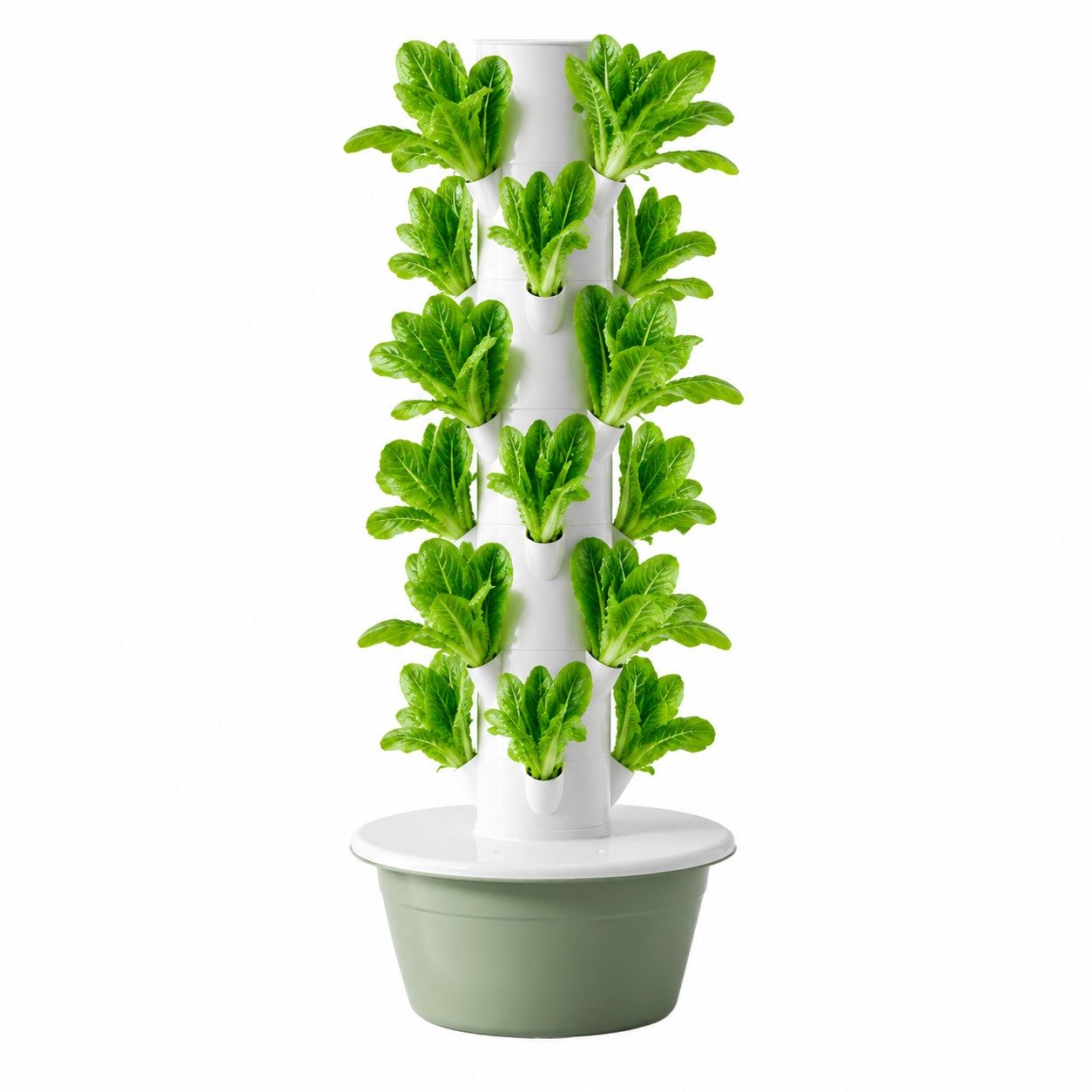
Lettuce is the most commonly grown crop in hydroponic towers for good reason — it has a predictable growth cycle, consistent demand, and excellent space efficiency. In commercial greenhouse settings, a single 7-layer tower can produce over 300 heads of butterhead lettuce per year.
To put that in perspective: a 1,000-square-foot greenhouse with 330 towers (allowing for walkways and workspace) can theoretically produce 100,000+ heads of lettuce annually. That is roughly 4–6 times the yield of traditional soil farming on the same footprint.
Key drivers for high lettuce yield:
Herbs command higher prices per pound than lettuce and grow faster, making them an excellent choice for maximizing revenue per square foot in hydroponic towers.
Basil is the standout performer. With a 30–40 day growth cycle and 8–10 harvests per year, a single tower can yield 65–95 pounds annually. At wholesale prices of $8–12/lb for fresh basil, that translates to $520–$1,140 in gross revenue per tower per year — significantly higher than lettuce.
Mint and cilantro follow closely, with fast turnaround times and strong restaurant demand. Their compact growth habit is well-suited to the vertical layout of tower systems.
Pro tip for herb growers: Harvest herbs by cutting stems 2–3 inches above the growing medium rather than pulling whole plants. This allows for 3–4 regrowth cycles from the same planting before replacement is needed, extending your effective yield per growing site.
Strawberries are a high-value crop that performs well in hydroponic towers, particularly everbearing and day-neutral varieties like Albion, Seascape, and San Andreas. Unlike lettuce and herbs, strawberries are perennial — a single planting produces fruit continuously for 8–12 months.
A 7-layer tower with 42 planting sites can yield 85–120 pounds of strawberries per year, with peak production in months 3–8. The vertical tower design is especially advantageous for strawberries because the cascading growth habit uses vertical space naturally, and the elevated planting sites reduce soil-borne diseases and slug damage.
Strawberry runners from lower planting sites can be trained downward to create a living curtain of fruit — a productive and visually striking setup that also serves as a marketing asset for farm tours and social media.
Leafy greens thrive in hydroponic towers thanks to their shallow root systems and high tolerance for close spacing. Kale and Swiss chard can be harvested as “cut-and-come-again” crops — removing outer leaves every 7–10 days while leaving the growing center intact.
With this approach, a single tower can produce 180–260 bunches of kale per year. Baby leaf mixes (spinach, arugula, mizuna) grow even faster, with a 21–28 day cycle from seed to harvest in optimal tower conditions.
For commercial growers targeting the bagged salad market, dedicating entire towers to baby leaf production in a staggered planting schedule ensures a continuous weekly harvest without gaps in supply.
| System Type | Plants per Tower | Footprint (sq ft) | Lettuce Heads/sq ft/Year | Est. System Cost |
|---|---|---|---|---|
| 7-Layer Hydroponic Tower | 42–56 | 2.5–3 | 95–130 | $ (lowest) |
| NFT Channel System | 12–20 per channel | 3–4 per channel | 60–90 | $$ |
| DWC (Deep Water Culture) | 6–12 per 4×4 tank | 16 | 30–50 | $$-$$$ |
| Vertical Rack + LED | 30–50 per rack | 4–6 | 80–120 | $$$$ |
Hydroponic towers offer the best yield-to-footprint ratio among budget-friendly systems. While vertical rack systems with LED arrays can match or slightly exceed tower yields, their capital cost is 3–5x higher — making towers the clear choice for growers who want high density without a six-figure equipment investment.
The numbers above represent optimized commercial production. Here is what separates average results from top-tier yields:
For commercial growers planning a facility, here is a simple formula to estimate annual lettuce production:
Annual heads = Towers x Sites per tower x Cycles per year x Success rate
Example: 200 towers x 48 sites x 6 cycles x 90% success rate
= 51,840 heads of lettuce per year
With an average wholesale price of $2.50–3.50 per head, that is $130,000–$180,000 in gross annual revenue from a facility footprint of approximately 1,500–2,000 square feet (towers + walkways + workspace).
For comparison, the same footprint in field soil farming would produce roughly 8,000–12,000 heads per year — meaning hydroponic towers deliver 4–6x the production density in the same space.
Not all hydroponic towers are built the same. Factors that affect real-world yield include:
At SpaceTree, our 7-layer hydroponic towers are engineered for uniform water distribution and maximum planting density — every tower is tested before shipping to ensure consistent flow across all 7 layers. Our factory-direct model means commercial growers get the best price-to-performance ratio in the market.
Here are the key numbers to take away:
Whether you are starting a 50-tower greenhouse or scaling an existing operation beyond 500 towers, the yield-per-square-foot advantage of vertical hydroponic towers gives you a clear path to profitable, space-efficient production.
SpaceTree is a factory-direct manufacturer of 7-layer hydroponic towers based in China. We supply commercial growers worldwide with high-density vertical growing systems at wholesale prices. Contact us for volume pricing, custom orders, and technical support.
