Our Location
304 North Cardinal St.
Dorchester Center, MA 02124

304 North Cardinal St.
Dorchester Center, MA 02124

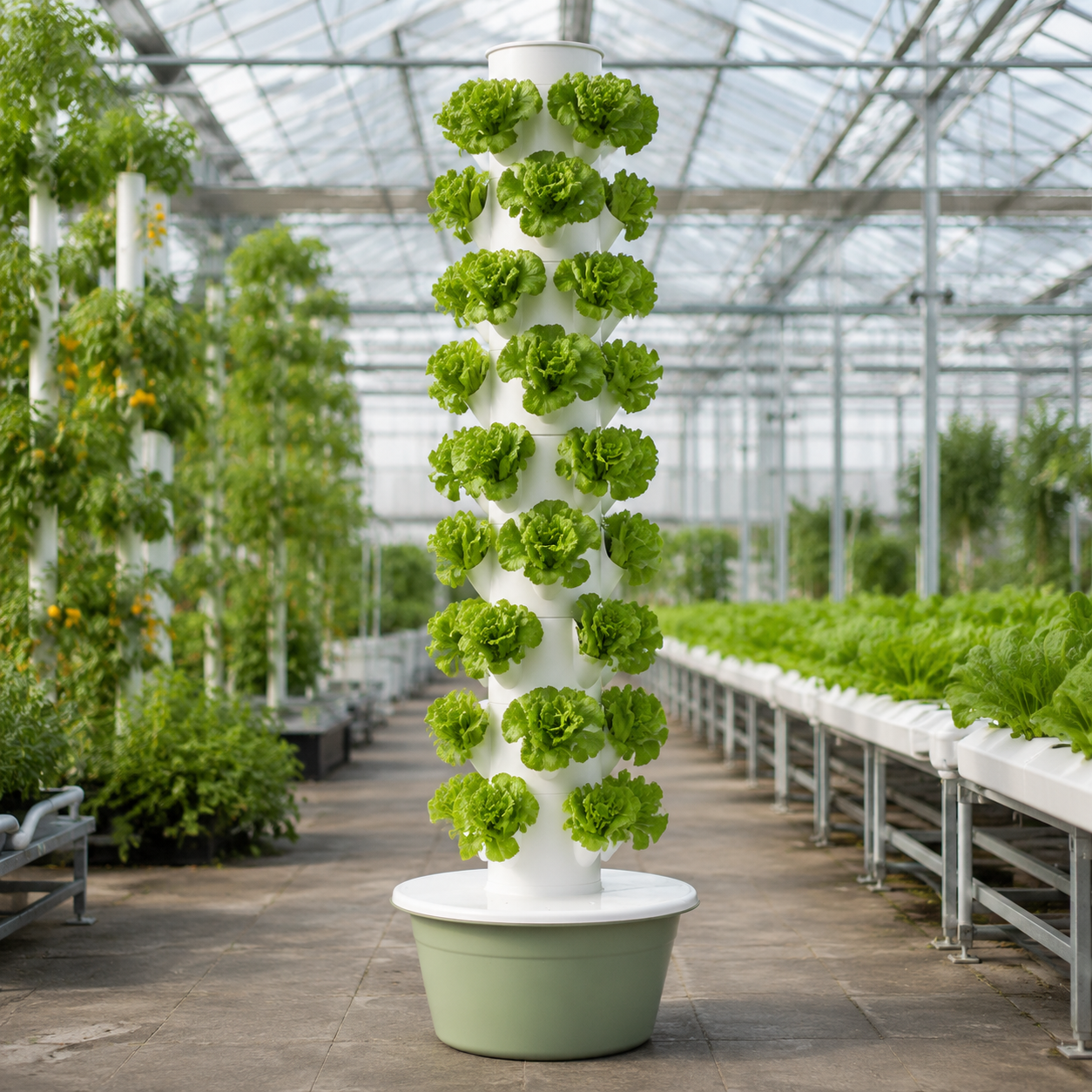
Every hydroponic tower catalog in the world makes the same silent promise: with enough nutrient solution and enough light, you can grow anything. Technically, that is true. Commercially, it is one of the most expensive sentences in controlled-environment agriculture. A vertical tower is not a small field stacked on its side. It is a fixed number of plant sites, each one holding a specific volume of root zone, under a fixed ceiling height, on a fixed cycle clock. Crops that ignore those constraints do not fail loudly. They just quietly return less money per site per year than the crops standing right next to them.
This guide is the honest counterpart to our list of the 13 best crops for hydroponic towers. Here we look at the seven crop groups that consistently fail the profitability test in tower geometry, explain the mechanics behind each failure, and give you a direct replacement crop for every one of them, plus a 90-day pilot protocol so you can test any new crop without risking a full tower.
A tower has three hard limits that a field or a deep-water raft does not:
None of this stops a determined grower from planting corn in a tower. It just means the tower is now a very expensive trellis. The right question is not "can I grow it" but "what does this site earn per year, and what else could that same site earn instead?"
Run any candidate crop through these four filters before you commit a single layer of production to it:
| Filter | The question | What a failing crop looks like |
|---|---|---|
| Site efficiency | Does one plant site produce one sellable unit per cycle, or does it need two or three sites of space to be worth harvesting? | Melons, pumpkins, and large squash — one fruit needs the light and airflow of an entire layer. |
| Cycle speed | How many harvests per site per year? | Perennials and long-season crops: one harvest a year, or a partial one, on a site that rotates five to ten times with the right crop. |
| Unit value | Is the crop worth $0.30 or $8.00 per harvested unit at wholesale? | Field staples — corn, potatoes, carrots, dry beans — where the wholesale price assumes mechanized field harvest and free sunlight. |
| Root zone fit | Will the mature root mass sit comfortably inside a tower channel without blocking the flow? | Tubers and long taproots: the harvestable part is the root, and the root is the part the system is not designed to hold. |
A crop that fails one filter can sometimes be saved by growing it small or selling it young. A crop that fails three filters is a hobby — and hobbies belong on a balcony tower, not in a commercial bay.
Corn is the classic example of a crop that succeeds in a tower and still loses money. A single corn stalk wants 1.5 to 2.5 m (5 to 8 ft) of vertical height and produces one or two ears after 70 to 100 days. In a tower, you would have to dedicate an entire vertical run of layers to a single plant, blocking the sites around it, and you would end up with one ear worth roughly $0.30 wholesale. That same footprint of 12 plant sites, planted to fresh-cut basil or baby leaf, will gross $30 to $60 or more across the same period. Corn also has a very high light and water demand per unit of edible mass, which means you pay top-of-market electricity prices for a commodity that field growers harvest with a combine.
Replacement: baby corn is the one exception worth a trial. Harvested at ear-set, it fits in a tower layer and can be sold to specialty restaurant accounts at $8 to $14 per kg — but only if you already have a chef customer asking for it.
Tubers fail the root zone filter completely. A potato plant produces its crop underground, in a stolon zone that needs volume, darkness, and a hilling medium. Tower channels give you 12 to 18 cm of depth and a flowing film of nutrient solution. You can keep a potato plant alive in a tower; you cannot give it a marketable harvest, and the root mass it develops will restrict solution flow for every plant downstream in that channel. Meanwhile, a single potato plant occupies a site for 90 to 120 days to yield $0.50 to $1.60 of product.
Replacement: if you want a starchy, high-carbohydrate crop with a premium story, look at sweet potato greens — a fast-cut leafy crop that fits tower geometry and sells to Asian and specialty markets at premium leaf prices.
Same structural problem as tubers, different shape. Carrots need 25 to 30 cm (10 to 12 in) of loose, uninterrupted depth for a straight, marketable root. In a tower you will get short, forked, or curled roots — the kind that get downgraded to processing at a fraction of the retail price. Beets and turnips behave the same way. This is one of the few crop groups where our advice is unambiguous: grow them in a raised bed outdoors, where a $0.04 seed can produce a $0.60 root without competing for a $15 plant site.
Replacement: radishes and salad turnips harvested at 21 to 28 days as micro or baby roots are a legitimate tower crop for high-end accounts. Full-size storage roots are not.
These are the worst offenders on the site efficiency filter. One watermelon needs a full season, a long trellis run, and the light interception of an entire layer to produce a single 5 to 10 kg fruit. In a tower that means one saleable unit per layer that could otherwise be holding four plant sites rotating through three cycles of greens. Weight loading is the second problem: a 10 kg fruit suspended from a tower frame is a mechanical load the structure was never designed for, and it puts lateral stress on the joints every time someone walks past it. Pumpkins and winter squash add long vines that wrap around the tower and shade the layers below.
Replacement: snack cucumbers and mini peppers. Both are compact, trellisable, sell at real premiums, and fit a standard layer clearance if you manage the vine weekly.
These are the crops that surprise people, because they are high-value vegetables in the field. The problem is timing and space. A broccoli plant needs 60 to 90 days in place, occupies a site with a wide leaf canopy that shades its neighbors, and yields one head. Per site per year, that is roughly $2 to $4 of revenue against a 60 to 90 day occupancy. Fast-turn salad greens will run three to four cycles in that same window on the same site. Head cabbage has an even wider footprint, and all three crops are notorious for demanding consistent temperatures — bolt or button in a heat spike and the crop is a total loss rather than a partial one.
Replacement: baby kale, komatsuna, and broccolini-harvest brassica greens, which are cut young, cycled fast, and priced as premium salad ingredients rather than commodity vegetables.
Legumes are cheap to grow and cheap to sell. A bush bean plant in a tower occupies a site for 50 to 70 days and yields $0.60 to $1.20 of pods. Peas are worse: low yield per site, a trellising requirement, and a wholesale price that rarely covers the labor of picking. The nitrogen-fixing benefit that makes legumes valuable in field rotation is meaningless in a fertigated system — you are already supplying nitrogen in the nutrient solution, so the plant performs an expensive trick that earns you nothing.
Replacement: snow peas and sugar snap peas grown for the shoot market, harvested at 14 to 21 days as pea shoots. Same seed, credible premium price, one-third of the cycle time.
Perennials break the cycle speed filter in a way that cannot be engineered around. Asparagus needs two to three establishment years before the first real harvest, then produces for weeks, not months. Rhubarb wants a cold dormancy period that most controlled-environment facilities cannot economically provide, and yields a partial-season stalk crop worth very little per site. A tower is a rotation machine: its financial model depends on the same square meter producing 60 to 200 grams of premium product every three to five weeks. Perennials turn that machine into real estate.
Replacement: if you want a perennial, grow strawberries. They are technically perennial, but they are managed as a 12 to 18 month production cycle in towers, crop every 2 to 3 days during the main flush, and command $4 to $7 per pound wholesale. See our full strawberry guide for tower systems.
Here is what a single plant site earns per year at typical US wholesale prices, assuming good management and a realistic number of cycles. The differences are not marginal — they are the difference between a farm that services its debt and one that does not.
| Crop grown in one plant site | Cycle length | Cycles per year | Revenue per site per year |
|---|---|---|---|
| Fresh-cut culinary basil | 21-28 days | 10-12 cuts | $28 – $42 |
| Specialty baby leaf / salad mix | 25-30 days | 8-10 | $16 – $26 |
| Head lettuce (romaine, butterhead) | 30-35 days | 5-6 | $7 – $11 |
| Bunched kale | 35-45 days | 5-6 | $6 – $10 |
| Strawberries | 12-18 month cycle | continuous flush | $5 – $9 |
| Broccoli | 60-90 days | 2-3 | $2 – $4 |
| Watermelon | 80-100 days | 1 (whole layer) | $2 – $4 per layer |
| Bush beans | 50-70 days | 3-4 | $0.60 – $1.20 |
| Potatoes | 90-120 days | 1-2 | $0.50 – $1.60 |
| Carrots | 70-80 days | 1-2 | $0.25 – $0.50 |
| Sweet corn | 70-100 days | 1 | under $0.50 |
Read the top line against the bottom line. Basil earns roughly 60 to 80 times more per plant site per year than sweet corn, in the same tower, under the same lights, using the same nutrient solution. Crop selection is not a detail of vertical farming. It is the entire financial model. For the capital side of that model, see our tower cost and ROI breakdown.
| Instead of | Grow this | Why it works in a tower |
|---|---|---|
| Sweet corn | Baby corn (only with a confirmed chef account) | Compact ear set inside one layer; $8-$14/kg niche pricing |
| Potatoes | Sweet potato greens / leaf amaranth | Fast-cut leafy crop, premium ethnic-market pricing |
| Carrots and beets | Radishes and salad turnips harvested at 21-28 days | Baby root harvest fits channel depth; fast cycle |
| Melons and pumpkin | Snack cucumbers and mini peppers | Compact, trellisable, real wholesale premium |
| Broccoli and cabbage | Baby kale, komatsuna, broccolini greens | 28-35 day cycle, cut-and-come-again, salad pricing |
| Bush beans and peas | Pea shoots and sunflower shoots | 14-21 day cycle, high price per kilo, tiny footprint |
| Rhubarb and asparagus | Strawberries or culinary herbs | Continuous harvest, high value per site |
Notice the pattern: every replacement is either a leaf, a shoot, a small fruit, or a micro crop. Towers reward crops you harvest often, sell by the gram, and never have to wait a season for.
You do not have to take anyone’s word for which crops work in your facility, including ours. Run this pilot before you scale any new crop:
Nine times out of ten, this pilot ends with the grower keeping their existing leafy green or herb program and using the new crop as a small specialty line for one or two buyers. That is a good outcome: a 10% specialty block selling at premium prices alongside a 90% core block with a known cycle is a healthier business than a bay full of experiments.
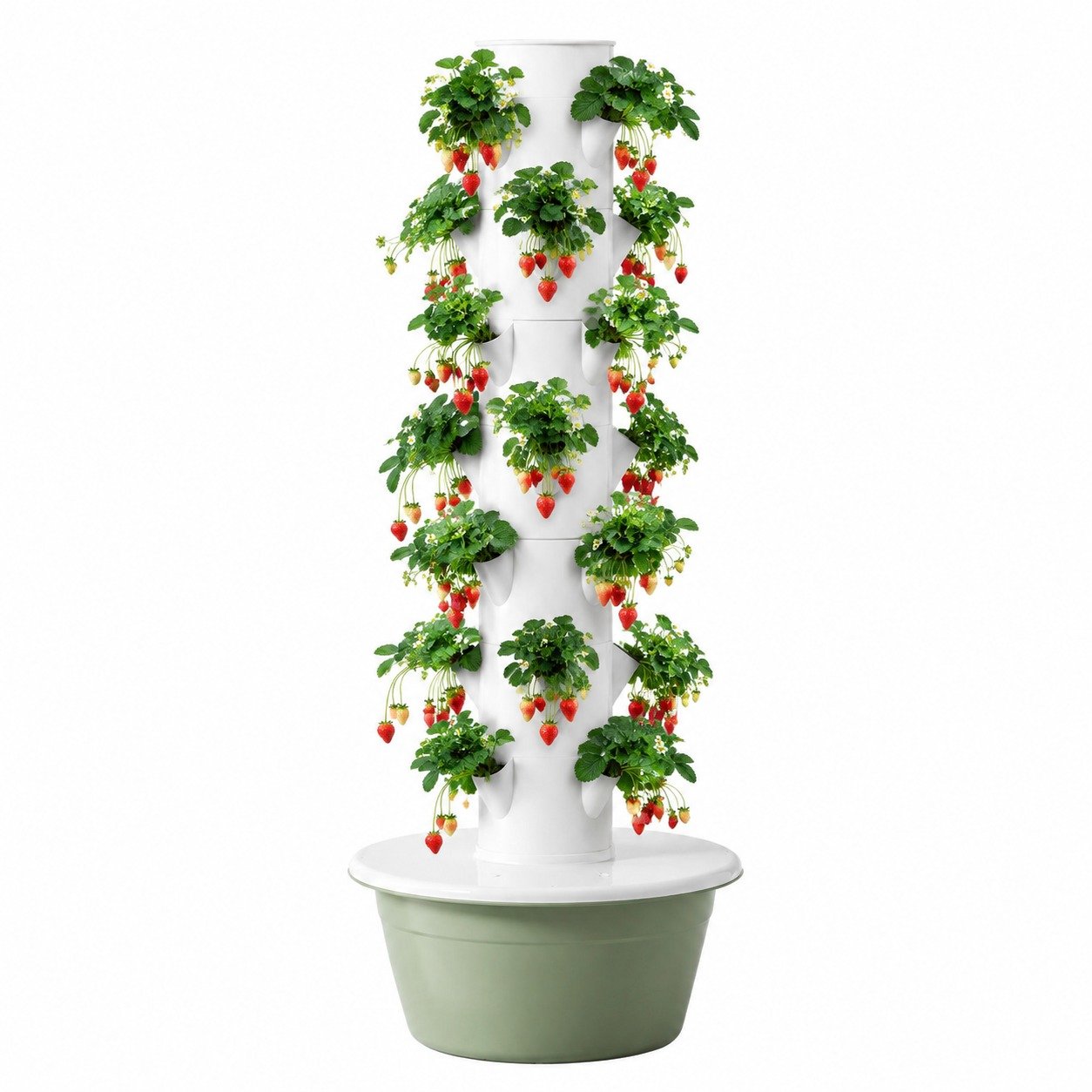
Once you know which crops pass the filters, the tower specification follows from the crop mix, not the other way around. Site density, layer count, and channel depth are all selected around the answer to three questions: what is the root mass of your primary crop, how tall does it grow before harvest, and how many harvests per year does your buyer want?
This is where most first-time buyers get the order backwards. They buy a tower, then try to find a crop that fits it. The growers who scale cleanly do the opposite: they bring us a crop list and a target buyer, and we configure layer count and plant site density to match. Because we manufacture the towers rather than resell them, changing layer count or hole spacing is a production decision, not a catalog limitation. Start with our plant capacity and spacing planning guide to size the layout, then talk to us about the configuration.
A practical starting mix for a commercial bay looks like this: 60 to 70% fast-turn leafy greens and herbs for cash flow, 20% a premium specialty crop for margin, and 10 to 20% trial space that rotates. Keep the trial space honest — if a crop has been in trial for two full cycles and has not earned its site, replace it. That single discipline has saved more vertical farms than any piece of equipment.
You can keep the plant alive, but you will not get a marketable tuber harvest. The tower channel does not provide the volume, darkness, or hilling medium a potato needs, and the maturing root mass will restrict solution flow to plants downstream. Grow potatoes in containers or raised beds outdoors, and put your tower sites into greens and herbs.
For most commercial growers it is fresh-cut culinary basil, followed closely by specialty baby leaf. Both have short cycles, shallow root systems, high wholesale prices, and steady restaurant or retail demand. Basil can be cut every 21 to 28 days, which means 10 or more harvests per site per year.
Yes — anything harvested young and sold by the gram. Pea shoots, sunflower shoots, microgreens, edible flowers, and baby brassica greens are marginal field crops and excellent tower crops because they turn in two to three weeks and carry premium pricing.
Fewer than most new growers expect. Two or three core crops with reliable cycles and buyers will outperform six crops grown in small volumes. Add specialty crops only when a specific buyer has asked for them in writing.
