Our Location
304 North Cardinal St.
Dorchester Center, MA 02124

304 North Cardinal St.
Dorchester Center, MA 02124

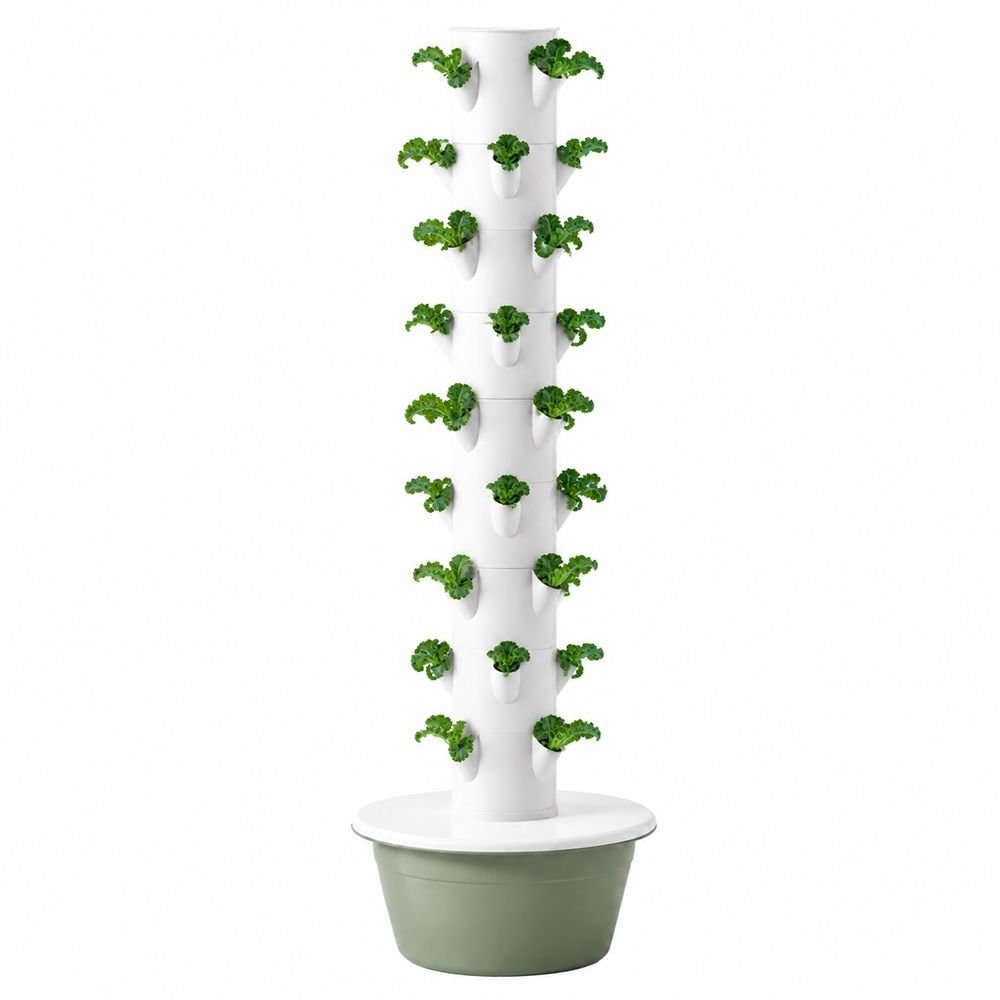
A restaurant that spends $4,000 a month on herbs and microgreens is paying retail for the one category of produce that grows fastest, takes the least space, and travels worst. A hotel with 200 covers a day wants the lobby to say something about the kitchen. A school wants 400 students to see where food comes from without a field trip. A corporate campus wants a cafeteria amenity that shows up in recruiting materials. Four different buyers, one shared requirement: a compact, quiet, clean growing system that fits a building people already occupy.
That is a fundamentally different brief from a commercial farm, and it is why generic hydroponic advice fails these projects. Nobody in a hospitality or campus setting wants to become a grower. They want a program: a defined footprint, a crop list that supports the menu or the curriculum, a budget that survives a finance review, and a named person responsible for keeping it alive on week three. This guide works through site constraints first, then tower and plant-count selection by venue type, budget bands, the maintenance question, and how to source a system when nobody on your team has bought growing equipment before.
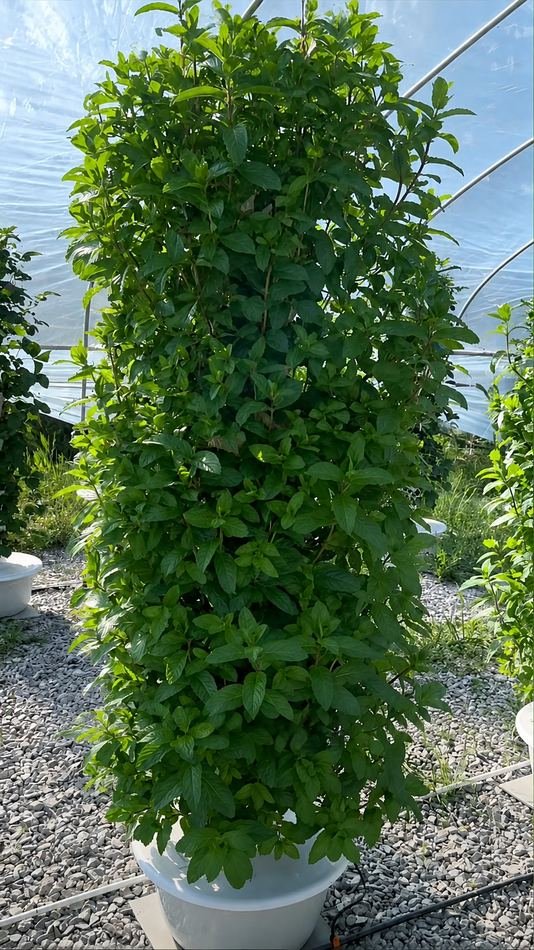
Four pressures have converged, and none of them is about saving the planet in the abstract.
The failure pattern across all four is identical: the equipment gets bought as a capital item, nobody owns it operationally, and it becomes a decorative object with dead plants by month four. Everything below is written to avoid that outcome.
These are the items that kill projects after the quote is signed. Walk the actual space with a tape measure and a facilities contact — not a floor plan.
| Constraint | What to check | Practical threshold | Common failure |
|---|---|---|---|
| Ceiling height | Floor to lowest obstruction (sprinkler head, duct, light) | 12-layer tower ~207 cm (6.8 ft) plus ~90 cm clearance for lighting and service: 3.0 m net | Tower ordered for a room with a 2.6 m ceiling and sprinkler drops |
| Floor load / structure | Existing slab vs. suspended floor; point loads | Treat each filled tower as a concentrated point load; spread with a plinth | Installed on a mezzanine design-rated for light storage |
| Power | Circuit capacity, distance to panel, GFCI protection | Pumps, lighting and any chiller on dedicated, protected circuits | Pump, lights and a chiller sharing one undersized branch circuit |
| Water supply | Nearest potable tap, hose-bib availability, backflow protection | A fill point within hose reach of the reservoir | Reservoir filling via jugs carried across a dining room |
| Drainage | Floor drain or slop sink within gravity reach | Every overflow path needs somewhere to go that is not carpet | Drainage plan deferred to installation day |
| Humidity and air | Room RH, air changes, HVAC return location | Growing adds moisture; confirm the space can shed it | Enclosed, low-air-change room develops condensation and odor |
| Noise and vibration | Air pumps, circulation pumps, fans audible to guests or students | Specify low-noise pumps; isolate with rubber feet; locate air pumps remotely | Air pump audible in a dining room at 3 m |
| Splash and finish | Floor material, wall finish, adjacent guest or food-contact surfaces | Drip trays, perimeter curbing, washable finishes | Nutrient splash staining untreated wood or grout in a lobby |
| Fire and egress | Sprinkler clearance, exit path width, emergency lighting | Keep clearances and egress widths intact | Tower placed inside an egress path "temporarily" |
| Access for delivery | Door widths, elevator size, staircase turns | Confirm the largest tower column fits the tightest turn | Crated towers cannot physically reach the intended room |
Two of these deserve emphasis. First, egress and sprinkler clearance are non-negotiable and are usually the reason a beautiful lobby wall plan gets redrawn. Second, the delivery path is checked last and cancelled first; a courtyard patio system has to fit through the door that leads to the courtyard.
Tower sizing for hospitality and campus use is a footprint question, not a yield question. The measured plant counts below use a standard 4 sites per layer, with aisle allocation of roughly 0.8 m² (8.6 sq ft) of floor per tower position.
| Model | Plant sites | Tower height | Recommended net height | Site per tower | Typical venue use |
|---|---|---|---|---|---|
| 6-layer | 24 | ~105 cm (3.4 ft) | 2.2 m | ~0.8 m² | Counter-adjacent installs, classroom stations, low ceilings |
| 9-layer | 36 | ~157 cm (5.2 ft) | 2.6 m | ~0.8 m² | Restaurant kitchen-adjacent rooms, mid-size hotel, school labs |
| 12-layer | 48 | ~207 cm (6.8 ft) | 3.0 m | ~0.8 m² | Full-menu hotels, campus cafeterias, corporate amenity rooms |
Layer count is a factory production parameter, not a fixed catalog option — layer spacing can be set for your crop. A kitchen that mainly wants herbs wants tighter layer spacing and more sites per column; a school that wants students to see root systems wants fewer, taller-spaced sites so the media and root zone are visible from a standing child’s eye level. Layer selection logic is worth reading before the site visit, because it determines how many positions fit in the room you actually have.
As a sizing rule for hospitality, work backward from the menu. If a kitchen uses one 1 lb (450 g) clamshell of fresh basil every two days, and a single basil site yields roughly 3 to 5 oz (85-140 g) per cut cycle of 21 to 28 days in a tower, then a nine-layer tower at 36 sites keeps that requirement covered with spares. That is a much better sizing method than buying the biggest tower that fits, which is how sites end up composting more than they serve.
| Venue | Primary crops | Secondary | Plant-site mix (per 48 sites) | Cycles per year |
|---|---|---|---|---|
| Restaurant / chef’s garden | Basil, mint, cilantro, parsley, chives, microgreens | Edible flowers, specialty lettuces, arugula | 24 basil/soft herbs, 12 microgreens or edible flowers, 12 lettuces | Herbs 8-12, microgreens 10-16, lettuce 5-6 |
| Hotel (kitchen plus lobby feature) | Soft herbs, edible flowers, tender lettuces | Cherry tomatoes for garnish, strawberries | 20 herbs, 12 lettuces, 8 flowers, 8 fruiting or berry | Herbs 8-12, lettuce 5-6 |
| School / district nutrition program | Lettuces, kale, chard, radishes, peas | Herbs for a teaching kitchen; edible flowers | 24 lettuces/greens, 12 leafy brassicas, 12 herbs or quick crops | Lettuce 5-6, microgreens 10-16 |
| Corporate campus | Lettuces, kale, herbs, microgreens | Snack crops: strawberries, cherry tomatoes | 20 lettuces/greens, 16 herbs, 12 microgreens or berries | Herbs 8-12, lettuce 5-6 |
Two crop choices carry outsized value. Fresh cut basil is the fastest-payback crop in any on-site program at $28 to $42 per site per year in wholesale terms, which is why it appears in every venue mix. Microgreens and edible flowers turn in 10 to 21 days, which is what makes a school program satisfying for students who need to see visible progress inside a term — see the microgreens and edible flowers guide for the fast-turn workflow, and the basil and culinary herb guide for serving-quality cut cycles.
One practical warning: do not let the menu dictate a crop list that includes vining crops in a hospitality footprint. Tomatoes and cucumbers in a guest-visible room need trellising, pruning labor and far more light than herbs or greens. Keep fruiting crops in a back-of-house room with dedicated lighting, or leave them out entirely. Environment choice drives this more than crop choice does, and it is covered in indoor versus greenhouse versus outdoor.
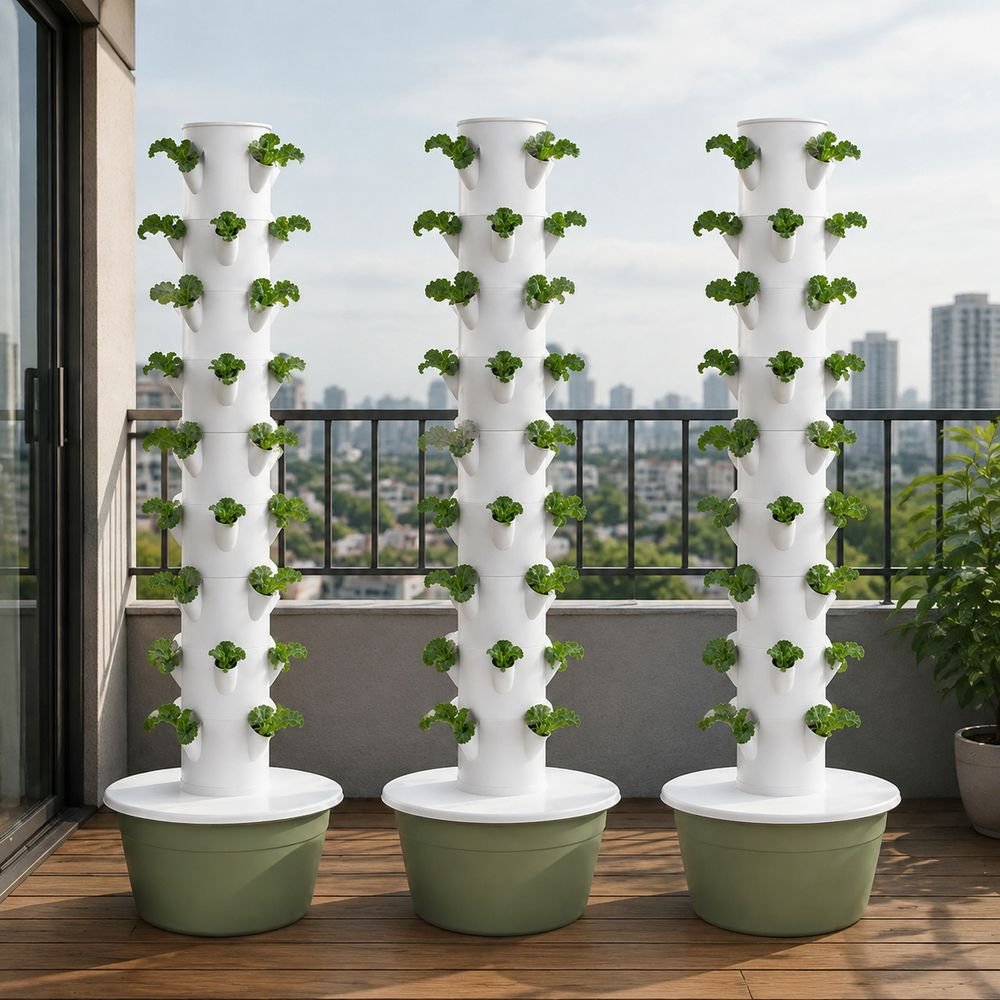
These are planning ranges for a single-room program, intended for a finance conversation rather than as a quotation. Site conditions, lighting scope and freight move the numbers materially.
| Program level | What it includes | Towers | Indicative capex | Annual operating drivers |
|---|---|---|---|---|
| Pilot / feature | 2-4 towers, basic LED lighting, hand-dosed nutrients, staff-managed | 2-4 | Entry five figures (USD) | Nutrient concentrate, replacement pump and nozzles, labor 3-5 h/week |
| Working kitchen garden | 6-10 towers in one back-of-house room, matched lighting, reservoir and dosing basics, service contract | 6-10 | Mid five figures | Power for lighting, nutrients, quarterly service, labor 4-8 h/week |
| Full campus or hotel program | 12-24 towers across two rooms, climate handling, monitoring and dosing, delivery into the kitchen workflow | 12-24 | Low-to-mid six figures | Power, nutrients, service contract, dedicated part-time grower role |
Capex is driven by three things in this order: lighting scope, climate handling (dehumidification and cooling in an enclosed room), and instrumentation. Freight and installation are often underestimated for a non-agricultural building — a hotel loading dock and a service elevator are not a farm gate. Operating cost is dominated by electricity for lighting, which is why specifying efficient fixtures and running crops that tolerate a 14 to 16 hour photoperiod matters more than shaving equipment cost. The cost breakdown guide gives the component-level view if you need to defend the number line by line.
For a nonprofit or public school, the funding path is usually a grant or a district capital line rather than a hospitality budget, and it changes what the supplier has to document. Specify energy figures per tower position and per lighting zone, because those two numbers are almost always required in an application.
The single best predictor of whether a program survives year one is whether a specific person’s name is in the operating plan. Ownership beats enthusiasm.
| Task | Frequency | Time per 12-tower room | Who |
|---|---|---|---|
| Visual check, flow confirmation, remove dead leaves | Daily | 10-15 min | Trained staff (anyone) |
| EC, pH and reservoir level reading; top-up | 2-4 times per week | 15-25 min | Designated grower staff |
| Nutrient mixing and dosing adjustment | Weekly | 30-45 min | Designated grower staff |
| Harvest and replant a crop block | Weekly to biweekly | 1-3 h | Designated grower staff plus kitchen staff |
| Nozzle inspection, filter clean, pump check | Monthly | 1-2 h | Facilities or service contractor |
| Reservoir drain, deep clean, media handling | Per crop turnaround | 3-6 h | Service contractor or trained team |
| Probe calibration and controller review | Monthly | 30-60 min | Service contractor |
| Lighting and pump replacement | As needed (pumps 2-4 years) | 1-2 h | Service contractor |
A realistic staffing model for a 12-tower room is one trained staff member at 6 to 10 hours per week plus a quarterly service visit. That is the number to put in a budget request. Programs that assume "the kitchen will handle it" without allocated hours are the ones that fail, because the task has no owner when the room gets busy. If the venue cannot commit that time, a service contract that includes weekly grower visits is the honest alternative — and it should be priced into the decision, not added later.
Where the venue intends to rely on staff, a documented standard operating procedure pays for itself. A deep clean and sanitation turnaround between crop blocks is the step most often skipped, and it is the direct cause of the root-zone disease problems that arrive in month four. The between-crop sanitation procedure and the daily, weekly and monthly maintenance checklist are both written to be handed to non-farm staff.
Installing in a building is a different discipline from installing on a farm, and the surprises are almost always logistical.
For multi-floor buildings, pump head matters: the pump must lift water from the reservoir to the top channel across your actual installed configuration. On a 12-layer tower that is a lift of roughly 2.3 m (7.5 ft) within the column, and it is worth confirming the supplied pump’s rated head against that number rather than assuming.
A last note on scale. These projects start small and grow for a good reason: the first tower teaches the site how much labor it really takes. Expanding from 4 towers to 12 is straightforward when the supplier treats layer count and footprint as variables, and painful when the original purchase locked the site into sizes it cannot extend. Buy the design flexibility even if you only buy four towers today. The plant capacity and layout planning guide covers how to reserve room for that expansion.
A meaningful program for a single restaurant fits in roughly 3 to 6 m² (32-65 sq ft) of back-of-house or service-corridor space, holding 4 to 8 towers. The binding constraint is usually ceiling height and drainage, not floor area. If herbs are intended as a guest-facing feature rather than a kitchen supply, plan a separate, larger footprint with proper lighting and finishes.
Yes, with two conditions: a named staff member with 6 to 10 allocated hours per week per room, and a quarterly service visit from a contractor or the supplier. Programs without an allocated owner fail at a high rate regardless of equipment quality. If no internal hours can be committed, budget for a weekly service contract instead.
Microgreens and edible flowers first, then lettuces. Microgreens turn in 10 to 21 days and lettuces in 30 to 35 days, so a class can follow a full cycle inside a term. Keep the mix weighted toward lettuces and greens for volume so the cafeteria actually uses the harvest.
Circulation pumps are quiet; air pumps for reservoir aeration are the usual offender and are audible at close range. Request noise figures at 1 m, choose low-noise air pumps, isolate them on rubber feet, and place air pumps in a service space with tubing run to the reservoir rather than leaving the pump under the tower.
On-site growing works for these buyers when it is treated as a program with a footprint, a crop mix, an owner and a budget line — not as a piece of equipment that gets installed and admired. Decide the room first, size from the menu or the curriculum second, and buy from a supplier that treats layer count, footprint and containment as customizable production parameters. Factory-direct suppliers ship towers with the layer count and spacing your room actually allows, and can hold matched spare pumps, nozzles, seals and float valves as a container kit so a failed pump becomes a same-week swap instead of a dead tower.
