Our Location
304 North Cardinal St.
Dorchester Center, MA 02124

304 North Cardinal St.
Dorchester Center, MA 02124

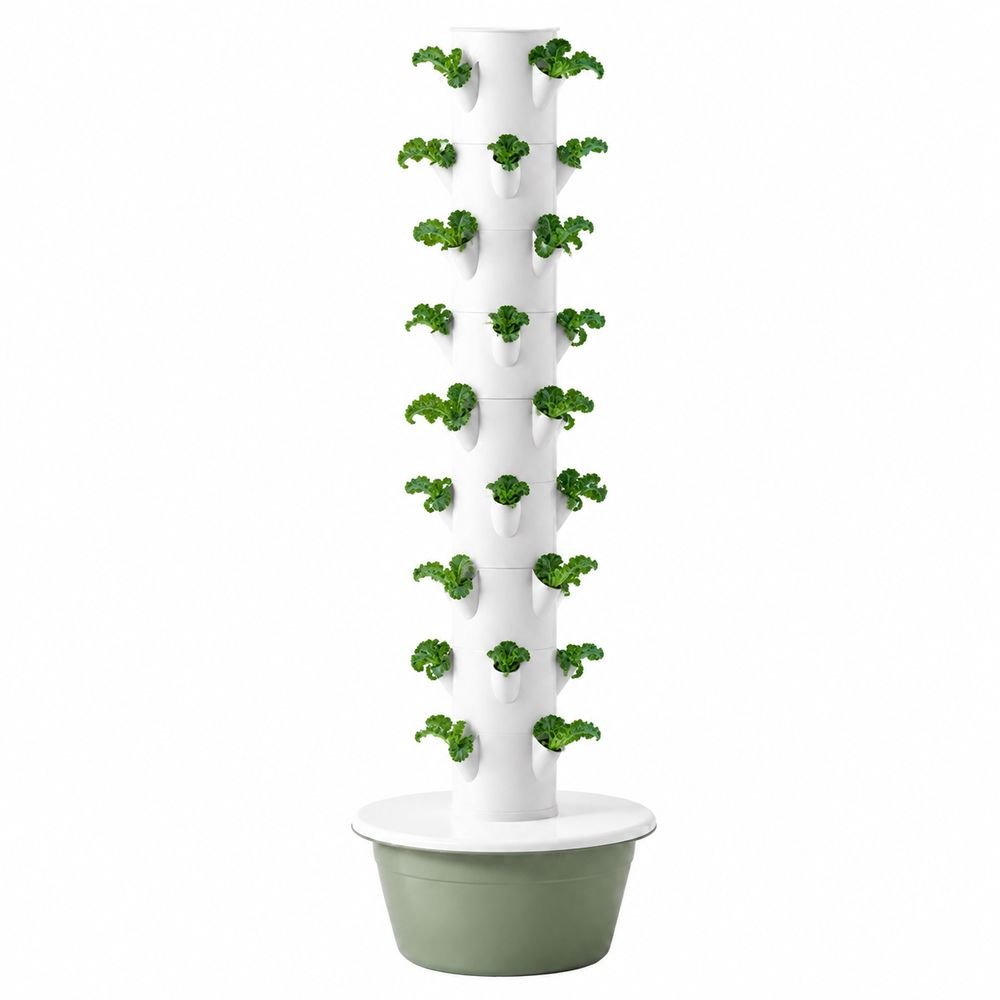
A grower reports the classic pattern: EC is on target, pH is stable, the nutrient recipe is the one that worked last season, the water is clean, and the crop still stalls. Leaves have a dull, slightly dark cast. Tips scorch. Roots look tan rather than white. Some channels wilt in the warmest part of the afternoon and recover overnight. Everything in the recipe is right, and the crop is still underperforming by 15 to 30%.
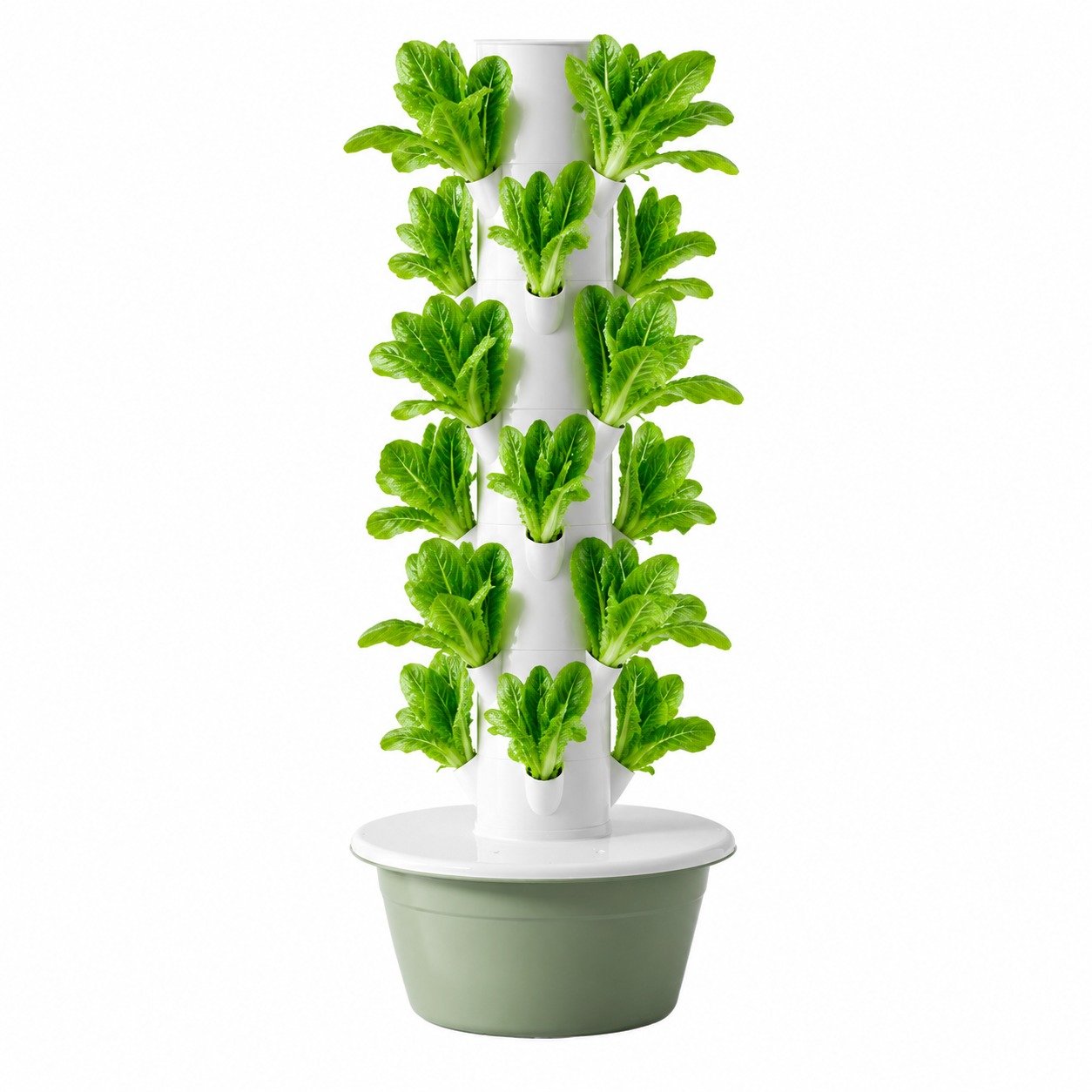
In tower systems, that presentation is very often a dissolved oxygen problem. Tower geometry works against you: a thin film of solution runs down a channel at warm greenhouse temperatures, providing a large air-exposed surface area but a very small volume of water relative to the root mass and biofilm clinging to it. The solution that reaches the bottom of the column has already given up oxygen to the roots above it. This article gives you target values by crop and water temperature, the physics that caps what aeration can achieve, a comparison of aeration methods with sizing math, field measurement methods, a symptom table to separate low oxygen from root disease and from nutrient deficiency, and a 10-minute audit you can run today.
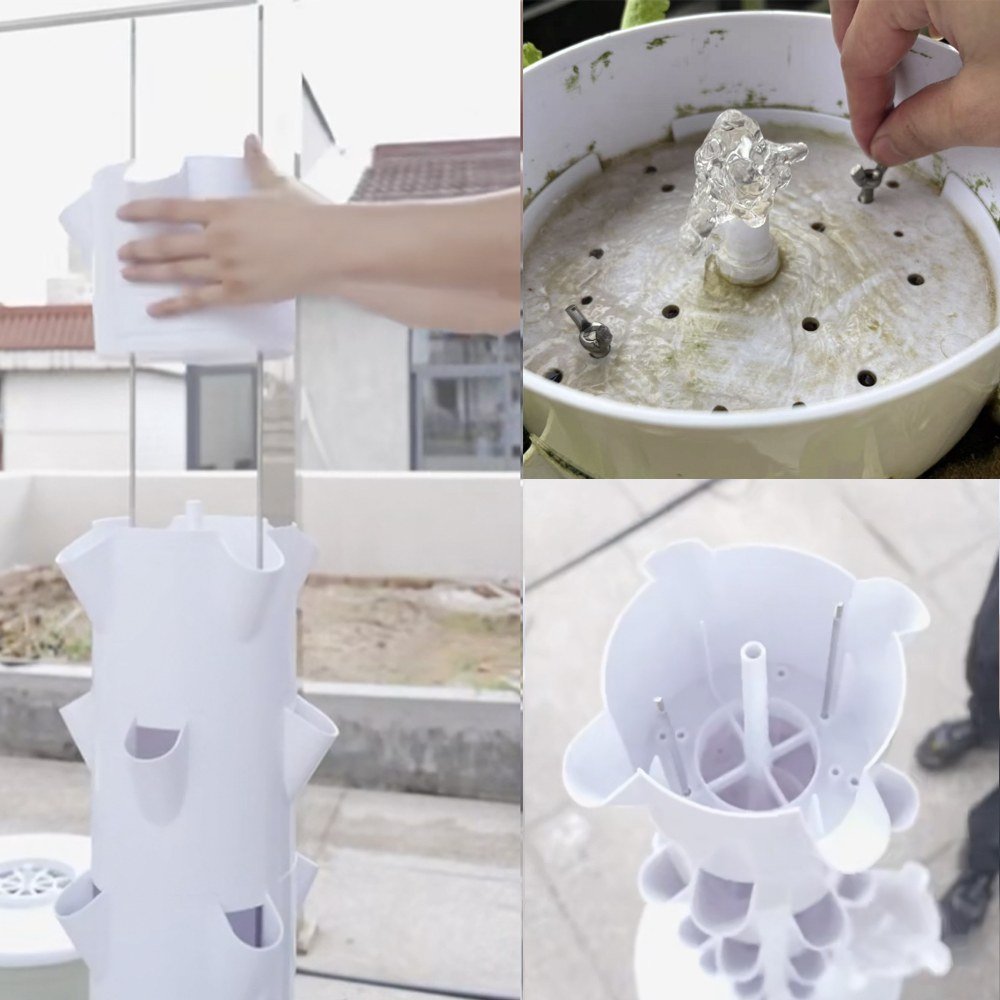
Dissolved oxygen is measured in milligrams per liter (mg/L), which is the same as parts per million, and it occupies a different position from every other root-zone variable: it is consumed continuously and cannot be stored.
This is also why it pairs so tightly with root disease. Pythium and similar water molds thrive in warm, low-oxygen solution, and the same conditions that let them establish also suppress the roots’ ability to defend themselves. If you have already worked through the plant disease guide and still see recurring root rot, oxygen is the missing upstream lever.
These are practical operating targets in mg/L for recirculating tower systems, assuming solution temperatures in the 18 to 24 °C (65 to 75 °F) band and reasonable sanitation. Below the "watch" level, expect measurable growth loss; at the "trouble" level, expect root damage and disease pressure.
| Crop group | Target DO | Watch level | Trouble level | Notes |
|---|---|---|---|---|
| Lettuce, leafy greens, herbs (cool season) | 7-9 mg/L | < 6 mg/L | < 4.5 mg/L | Sensitive to root-zone temperature spikes in summer |
| Basil, culinary herbs (warm season) | 7-9 mg/L | < 6 mg/L | < 5 mg/L | Fast-growing, high respiration; responds strongly to aeration |
| Microgreens and shallow-flow crops | 8-9 mg/L | < 7 mg/L | < 5.5 mg/L | Thin flow, low volume per root — aeration matters most here |
| Tomato, pepper, cucumber (fruiting) | 7-9 mg/L | < 6 mg/L | < 4.5 mg/L | Large root mass; consider dedicated aeration in the main tank |
| Strawberry | 8-10 mg/L | < 7 mg/L | < 5.5 mg/L | Historically prone to root disease; keep the upper end |
| Propagation and seedling stages (all crops) | 8-10 mg/L | < 7 mg/L | < 6 mg/L | Young roots are less tolerant of low oxygen than mature roots |
Treat these as a band, not a setpoint. A well-aerated system in a cool room often sits above 9 mg/L and there is no benefit in chasing the top of the range — the goal is staying clear of the watch level through the warmest, highest-load period of the day, not maximizing a number.
This table is the reason aeration alone cannot fix a warm reservoir. Figures show oxygen saturation in fresh water at standard atmospheric pressure; nutrient solution carries slightly less because dissolved salts reduce solubility.
| Water temperature | DO at saturation (fresh water) | Realistic recirculating target | What it means in practice |
|---|---|---|---|
| 15 °C / 59 °F | ~10.0 mg/L | 8-9 mg/L | Comfortable; low disease risk; ideal for lettuce |
| 18 °C / 64 °F | ~9.5 mg/L | 8-9 mg/L | Near-ideal for most tower crops |
| 20 °C / 68 °F | ~9.1 mg/L | 7-9 mg/L | Good; monitor as load increases |
| 22 °C / 72 °F | ~8.7 mg/L | 7-8 mg/L | Upper limit for cool-season greens |
| 25 °C / 77 °F | ~8.3 mg/L | 6.5-8 mg/L | Heat stress band: Pythium pressure rises sharply |
| 28 °C / 82 °F | ~7.8 mg/L | 6-7.5 mg/L | Aeration cannot compensate; cooling or a shade strategy is required |
| 30 °C / 86 °F | ~7.5 mg/L | 5.5-7 mg/L | Unworkable for most lettuce and herb production without chilling |
The practical conclusion: aeration raises dissolved oxygen toward saturation, but it cannot push a solution past what its temperature allows. Two mistakes follow from ignoring this. The first is buying a larger air pump to solve a summer problem that a chiller, shade cloth, or reservoir relocation out of direct sun would actually solve. The second is oversizing aeration in a warm tank until surface agitation raises evaporation and water temperature further, cancelling part of the gain. If your solution temperature is running above 24 °C (75 °F) in peak summer, read the hot weather management guide and fix temperature first.
| Method | How it works | Effectiveness | Operating notes |
|---|---|---|---|
| Air stone / diffuser plus air pump | Fine bubbles in the reservoir; oxygen transfers at the bubble surface and at the resulting surface agitation | High — the default choice for reservoir aeration | Use coarse to medium diffusers; fine-pore stones clog fastest in nutrient solution. Replace or clean every 4-8 weeks. |
| Venturi / jet injector | Recirculation pump drives solution through a narrowing, drawing air into the stream and shearing it into fine bubbles | High — no separate air pump | Costs pump head, so confirm your circulation pump has margin. Requires a minimum flow to work at all. |
| Cascade return / waterfall | Solution returns to the reservoir from height, breaking the surface and entraining air | Moderate — free if your plumbing already allows it | Effective and free; the simplest single upgrade in many retrofits. Guard against splash on equipment. |
| Surface agitation by pump orientation | Return nozzle aimed at the surface rather than into the bulk volume | Moderate | Free; often the fastest 5-minute improvement available |
| Chilling | Lowers solution temperature, which raises oxygen saturation | High — addresses the cause rather than the symptom | Real energy cost. Justified for high-value crops or chronic summer problems |
| Hydrogen peroxide (H₂O₂) | Releases oxygen chemically and acts as an oxidizer | Short-lived chemical boost | Not a substitute for aeration. Wait 48-72 h before re-inoculating beneficial microbes — see beneficial microbe guidance. |
| Ozone | Strong oxidizer, kills pathogens in the loop | Indirect for oxygen; strong for sanitation | Dangerous without off-gassing and dosing controls. Wait 72 h before adding microbes. |
Sequence the fixes by cost and disruption: aim the return at the surface, allow a cascade return, then add an air pump and diffuser, then consider a venturi, then chilling. Most sites solve the problem in the first three steps.
Sizing rules that hold up in practice for reservoir volumes typical of tower systems, where a standard tower base holds around 30 L (7.9 gal):
| Reservoir volume | Air volume target | Diffuser count | Typical use |
|---|---|---|---|
| 30 L (standard tower base) | 5-10 L/min | 1-2 | Single tower or small cluster, 6-layer tower |
| 60-100 L | 12-25 L/min | 2 | A few towers sharing a base tank, small shop |
| 150-250 L | 20-45 L/min | 2-3 | 12-layer multi-tower loop, classroom or kitchen program |
| 400-600 L | 50-100 L/min | 3-4 | Commercial room with several tower loops |
| 1,000 L+ | 120-200 L/min | 4-6 | Main bulk tank on a production site; consider venturi plus diffusers |
Aeration capacity has to exceed consumption, and consumption grows through the crop block without any change in equipment settings.
This is why low oxygen and root disease travel together. Warm, slow-moving, high-organic-load solution with a large biofilm surface is exactly the environment where root pathogens establish, and the same conditions reduce the plant’s ability to resist them. Fixing oxygen rarely fixes an active infection, but it usually stops the next one.
If a DO meter is not in the budget, use proxies that predict the same problem: solution temperature logged daily, flow at each loop’s return, root color and turgidity at weekly inspection, and how quickly roots turn from white to tan after a reservoir change. Sites that eliminated summer root losses usually did it with temperature data and a return-flow check, not with a DO probe. If you are already running monitoring and automated dosing hardware, adding a DO probe and an aeration relay is a small increment on an existing platform.
| Symptom | Low dissolved oxygen | Root pathogen (Pythium-type) | Nutrient deficiency / imbalance |
|---|---|---|---|
| Root appearance | Tan to light brown, firm, intact | Brown-black, soft, sloughing outer layer, foul smell | Roots may look normal or slightly stunted |
| Wilting pattern | Afternoon wilt that recovers overnight | Permanent wilt that worsens daily | No wilting typical unless severe |
| Crop uniformity | Whole channels or zones affected, tied to position or temperature | Spreads outward from one point or one channel | Often uniform across the room, following the recipe |
| Earliest leaves affected | Lower and internal leaves, dull dark cast | Lower leaves first, collapsing abruptly | Deficiency-specific: older or newer leaves depending on mobility |
| Reservoir smell | Slightly stale, no sulfur | Foul, sulfurous or musty | Normal, or a sharp nutrient odor |
| Response to aeration | Visible improvement in 24-72 h | None, or minimal; needs sanitation and removal | None — aeration is not the limiting factor |
| EC / pH behavior | May drift upward as water uptake slows | pH often drops as roots decay | EC or pH out of band, or correct with visible symptoms |
Run the aeration test before you dose anything. Adding nutrients or a biostimulant to a root zone that cannot take them up wastes money and can raise EC into a stress range. If the aeration test produces improvement, you have found the constraint; if it does not, pick up the deficiency reference — the nutrient deficiency chart — or the troubleshooting guide.
Run this on every reservoir once a month, and immediately any time you suspect slow growth, afternoon wilt, or heat stress.
Practically, no. Oxygen saturation is the ceiling: extra air simply off-gasses at the surface. The real costs of over-aeration are indirect — surface agitation increases evaporation and can raise water temperature, and excess air movement can drive solution splash onto equipment. Size diffusers generously, but place them so agitation does not work against your temperature control.
Maybe not full-time, but you should confirm it with data rather than assuming. A cascade return adds oxygen at the point of re-entry into the reservoir, which is genuinely useful and costs nothing. It is weakest exactly when you need it most: warm days, late crop stage, and large root mass. Measure the daily minimum at the end of the dark period on a warm week before deciding the cascade is sufficient.
18 to 22 °C (65 to 72 °F) is the practical target for most crops grown in towers. Cool-season greens and strawberries do best at the lower end. Above 24 °C (75 °F), oxygen saturation drops and root disease pressure rises sharply. Above 28 °C (82 °F), aeration cannot compensate and temperature control becomes the only real fix.
No. Hydrogen peroxide releases oxygen over hours and acts as an oxidizer, which can be useful as a sanitation step, but it is not a continuous oxygen supply and it is incompatible with beneficial microbe programs unless you allow a 48 to 72 hour interval. Treat aeration and peroxide as separate tools with separate jobs.
Inspect diffusers every 4 to 8 weeks and plan on replacing them on roughly a quarterly cycle in nutrient solution — fine-pore stones clog fastest. Air pumps typically last 2 to 4 years in continuous duty. Replace air line tubing annually, since nutrient solution and ozone degrade it gradually.
Dissolved oxygen is the quiet variable that decides whether a technically correct recipe actually produces a saleable crop. The good news is that the fixes are cheap and mostly structural: point the return at the surface, let the solution cascade, add distributed aeration, keep solution temperature down, and clean between crops so biofilm stops eating the oxygen you are paying for. Check your numbers against your yield per square foot across seasons — a running gap that widens every summer is the signature of an oxygen limit, not a nutrient one. When you specify towers, the aeration story starts at the factory: reservoir geometry, return-line design, and whether diffuser ports and an air-line chase are already provisioned determine how easily a loop can be oxygenated later. Factory-direct suppliers can pre-fit aeration ports and cascade returns, and ship air pumps, diffusers and check valves as consumables alongside the container so a failed air pump is a same-day swap.
