Our Location
304 North Cardinal St.
Dorchester Center, MA 02124

304 North Cardinal St.
Dorchester Center, MA 02124

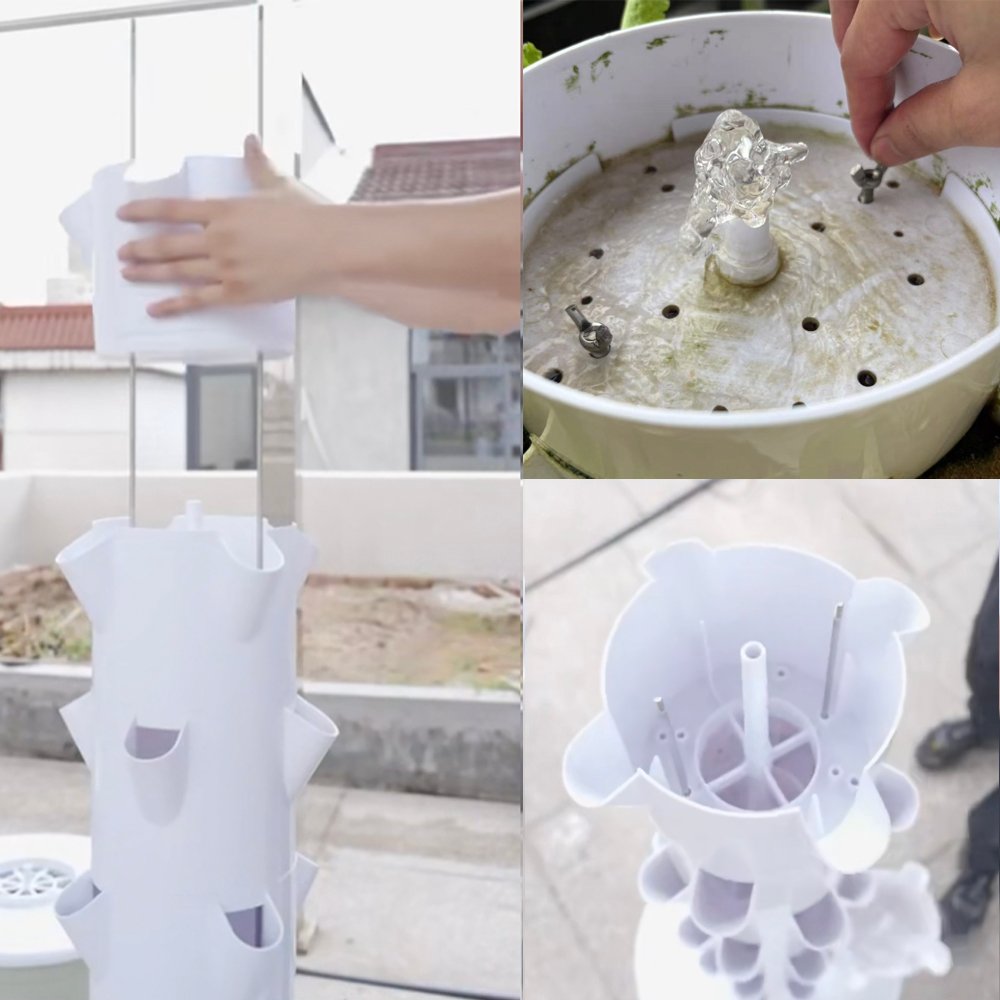
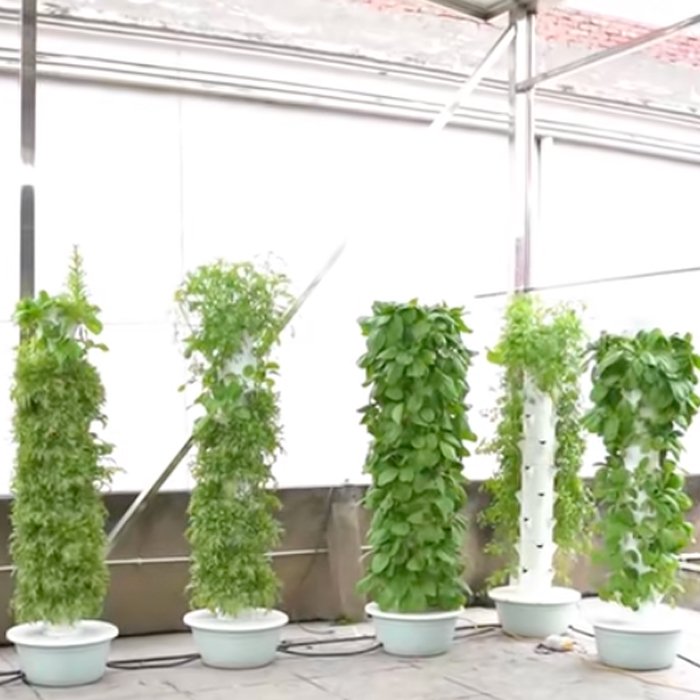
A 100-tower farm holds 4,800 plant sites, one shared nutrient loop, and — on a bad week — a dozen small problems that all look identical from the aisle: pale leaves, slow growth, soft roots. By the time a grower can see a problem, the batch is already 4 to 6 days past the point where a reading would have flagged it. That is the real case for smart hydroponic towers, and it has nothing to do with dashboard aesthetics.
The gap between "automated" and "smart" catches a lot of buyers. A timer-and-pump setup is automated: it does the same thing forever whether or not conditions changed. A smart system senses several variables continuously, acts on them without a human typing a number into a controller, and tells someone when it cannot fix the problem itself. This article breaks down what that stack actually consists of, what hardware each layer requires, which parts are worth retrofitting versus specifying at the factory, and what a realistic payback story looks like. It closes with the interface checklist worth writing into a purchase order, because the interfaces — not the dashboards — are what determine whether your sensors, dosing system and alarms can talk to each other three years from now.
Four functions define the category. If a system does fewer than three of them, it is a remote-controlled timer, not a monitoring platform.
The economics come almost entirely from the third and fourth functions. Sensing is cheap. Sensing without alerting just produces a bigger log file. In a tower system, where the water film inside each channel is thin and total reservoir volume is small — a standard tower base holds about 30 L (7.9 gal) — EC and pH can drift materially within 24 to 36 hours during peak transpiration. Catching that drift automatically is worth far more than any efficiency gain from automating the pump itself.
Buyers routinely overspend on the sensor that looks impressive (dissolved oxygen) and underspend on the ones that actually drive daily decisions (level, flow, EC per zone). The table below ranks the stack by decision value per dollar for a commercial tower operation.
| Measurement | Typical hardware | Where to install | Log interval | Priority |
|---|---|---|---|---|
| EC / nutrient strength | Inline contacting or toroidal EC probe | Return line or recirculation manifold | 5-15 min | 1 — critical |
| pH | Glass or ISFET pH probe + temp compensation | Same manifold as EC, downstream of dosing tee | 5-15 min | 1 — critical |
| Reservoir level | Ultrasonic, float switch stack, or pressure transducer | Supply tank | 1-5 min | 1 — critical |
| Water temperature | NTC thermistor (often part of EC/pH probe) | Supply tank + one far-end channel | 5-15 min | 2 — high |
| Flow / pressure | Paddlewheel flow meter or differential pressure sensor | Pump discharge header | Continuous | 2 — high |
| Ambient temp / RH / VPD | Combined digital sensor | Canopy mid-height, 2-3 points in large rooms | 1-5 min | 2 — high |
| Light (PPFD / DLI) | Quantum sensor, or logged fixture dimming state | Canopy height, per lighting zone | 15 min | 3 — medium |
| Dissolved oxygen | Optical (luminescent) DO probe | Reservoir, mid-depth, away from aeration outlet | 15-60 min | 3 — medium |
| Channel-level moisture / root-zone temp | Optional spot probes | Representative sample channels only | 15 min | 4 — nice to have |
Two practical rules. First, place EC and pH probes in the return line so they read the mixed bulk solution rather than a locally concentrated pocket right after the dosing injection point; a probe sitting 200 mm downstream of a nutrient tee will report an oscillation that does not exist in the tank. Second, do not instrument every zone on day one. One well-placed probe set per hydraulic loop plus a portable handheld to spot-check channels gives you most of the value at a fraction of the capital cost.
Sensor maintenance is the hidden cost. Contacting EC probes need cleaning every 2 to 4 weeks in hard or high-bicarbonate water; pH probes need calibration every 2 to 4 weeks and replacement every 6 to 18 months depending on water quality and duty cycle. Budget consumables into your 5-year cost of ownership rather than treating probes as a one-time purchase.
| Architecture | How it works | Best for | Weak point |
|---|---|---|---|
| Standalone controller per zone | Local device reads sensors and drives pumps/valves with no network. Rules live in the unit. | Single-room operations, unreliable internet, sites needing certified independence | No remote visibility; retrieving history means visiting the panel |
| Controller + local gateway | Local control loop stays on-site; a gateway buffers data and syncs to cloud when connectivity exists | Most commercial farms from roughly 20 towers up | Gateway itself becomes a spare-part item to stock |
| Cloud-first / fully managed | Cloud platform holds the logic; on-site hardware mostly relays I/O | Multi-site operators with good connectivity and staff who use the platform daily | Compliance and reliability risk if connectivity or the vendor’s service fails |
For a production farm, the middle option is the correct default: keep the safety-critical loop local, and treat the cloud as a monitoring and reporting layer. Sites that intend to sell into retail or institutional accounts should also confirm their chosen platform can export readings to CSV with timestamps, because buyers of fresh produce increasingly ask for batch records covering irrigation and nutrient history.
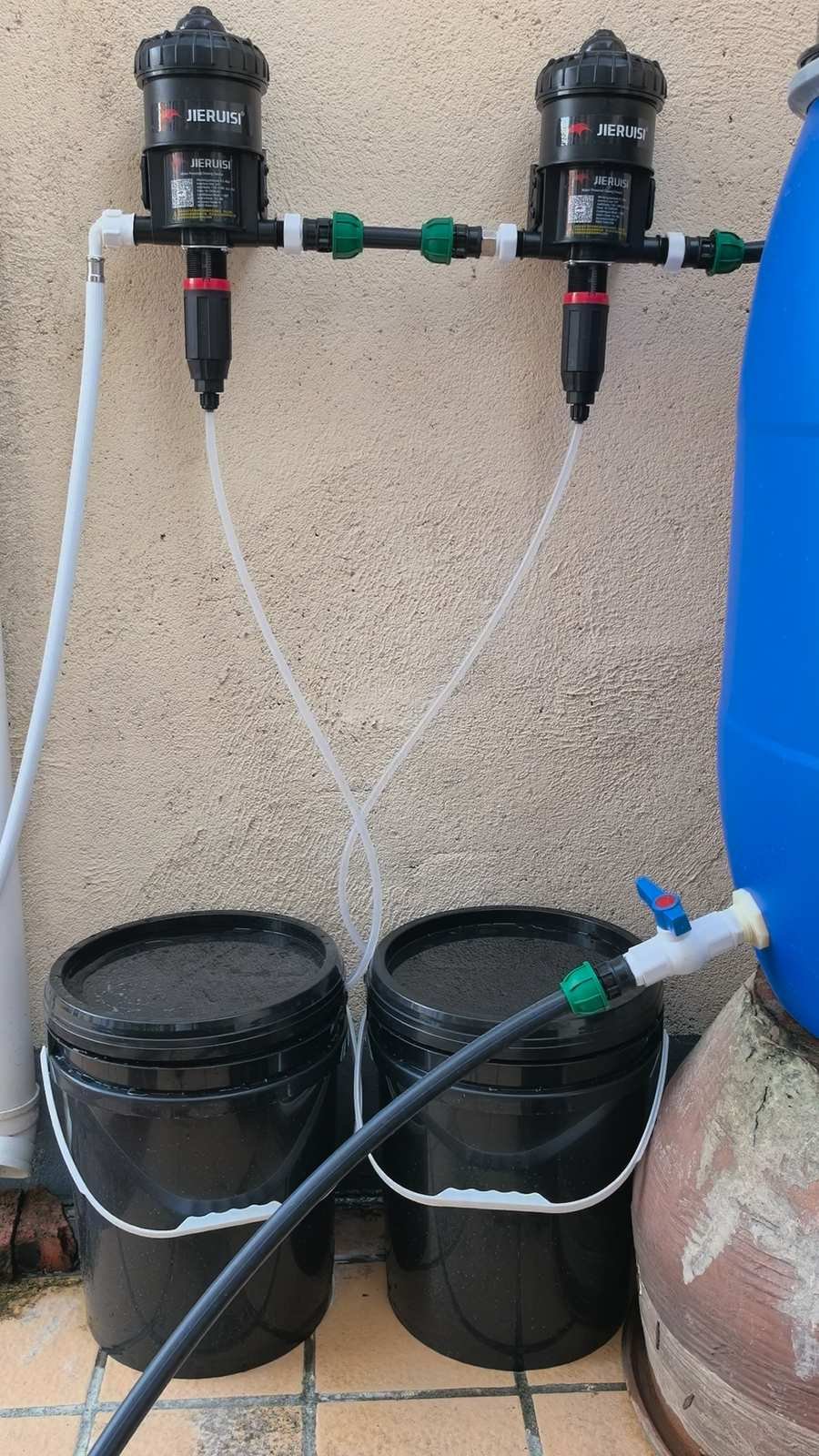
Dosing is where automation earns its keep and where it does the most damage when misconfigured. A proportional system injects concentrate in a fixed ratio to the volume of water moving through the feed line — commonly a 1:100 to 1:200 stock-to-water ratio with separate A (calcium nitrate and iron) and B (all other salts) tanks, because calcium and sulfate/phosphate concentrates cannot share a vessel.
If your EC and pH routine is still manual, the discipline you built doing it by hand is what you are programming into the controller. Read the EC and PPM measurement guide first, then automate the same logic rather than inventing a new one.
An alarming system is only as good as its routing. The failure mode growers describe most often is not a missing alarm but an alarm nobody saw: it fired at 02:40, landed in an inbox that gets checked at 08:00, and by then the pump had been dry for five hours.
Cameras are now a reasonable add-on rather than a gimmick. A fixed overhead camera per aisle lets a remote manager confirm a channel is flowing, spot wilting before a sensor would move, and verify a harvest count. Vision-based plant counting and size grading work acceptably for lettuce and herbs at fixed camera distance; they are less reliable for dense vining crops where leaves overlap. Treat vision as an auditing tool for a human decision, not as a replacement for the sensor loop.
This is the section most vendors skip, and it is the one that decides whether a smart tower survives a normal bad week. Design for four failures explicitly.
Specify all four in writing. A vendor that cannot describe flatline detection and an independent high-EC cutout is selling telemetry, not safe automation.
| Path | What you buy | Relative cost | When it makes sense |
|---|---|---|---|
| Retrofit kit on existing towers | Gateway, sensors, dosing skid, relays; installed on site | Lowest hardware cost, highest labor and integration risk | You already run towers and only need visibility plus dosing |
| Controller-ready towers | Towers shipped with sensor ports, pre-drilled probe bosses, conduit runs and a labeled terminal block | 5-15% above standard tower price | New build or phased expansion — cheapest point to add the wiring path |
| Integrated smart system | Towers plus matched controller, dosing, telemetry and alarm package from one supplier | Highest upfront, lowest integration risk | Multi-room commercial projects, single-point warranty and support |
The middle path is the one buyers underrate. Adding a probe boss, a cable gland and a conduit chase at the factory costs a few dollars per tower. Retrofitting the same three items into a fully assembled 12-layer tower on site costs an hour of skilled labor and introduces a leak path. If there is any chance the site will be monitored within three years, have the plumbing and sensor ports prepared at the factory.
| Capability | Hardware required | Indicative cost per control zone | Sensible scale |
|---|---|---|---|
| Remote EC/pH/temp + level logging | Gateway, 3 sensors, cloud plan | Low hundreds of dollars | Any size; the entry point |
| + Outbound alerting and heartbeat | Same hardware, licensed alerting or local SMS modem | Small monthly or per-device fee | From the first production batch onward |
| + A/B dosing control | Two peristaltic pumps, stock level switches, flow meter | Low thousands of dollars | Roughly 20+ towers, or any site without staff on site daily |
| + Flow, VPD and climate interlocks | Flow meter, climate sensors, relay outputs | Adds hundreds to low thousands | Closed rooms and greenhouses with active climate control |
| + DO monitoring and aeration control | Optical DO probe, aeration pump relays, possibly a chiller interlock | Adds hundreds | Sites that have lost a batch to root disease, or run warm water |
| + Vision scouting per aisle | Fixed cameras, edge compute, per-aisle mounting | Thousands per aisle | Large multi-aisle farms with remote management |
Payback should be argued from avoided loss, not from labor savings, and the arithmetic is easy to understate. A single lost cycle on one 48-site tower is roughly $120 to $160 in wholesale herb value. Preventing three to five such events per year across a 100-tower farm pays for a full monitoring and dosing package in one to two seasons, before any credit for reduced labor or tighter nutrient control. Add the maintenance checklist work the system replaces — walking the aisles to read handheld meters — and the case strengthens further.
One caveat worth stating plainly: automation does not reduce headcount at small scale, and any vendor promising otherwise is overselling. What it changes is when work happens and how many things a single person can supervise. A grower who currently handles 40 towers well can handle 90 to 120 with monitoring and dosing in place, because the job shifts from measuring and correcting to reviewing exceptions.
This is the list to send to a supplier before price negotiation, because these items decide whether the system can grow with the site or has to be thrown away in two years.
| Specification | Ask for | Why it matters |
|---|---|---|
| Fieldbus / protocol | Modbus RTU (RS-485) or Modbus TCP; document register map | Lets a second controller or a building system read the same sensors |
| Dry contacts | At least 2 volt-free relay outputs and 2 digital inputs, rated 24 V DC | Interlocks with chillers, exhaust fans, or a site alarm panel |
| Analog inputs | 4-20 mA or 0-10 V inputs for third-party probes | Swap in a different probe brand without replacing the controller |
| Probe ports | Standard probe boss thread size, plus spare ports per tank | Avoids drilling sealed tanks later |
| Ingress protection | IP65 or better for wet-room mounting; IP54 minimum for control cabinets | Tower rooms are humid and splash-prone by nature |
| Power | Wide-input 100-240 V AC with documented draw per unit | Simplifies export variants and UPS sizing |
| Data export | CSV or JSON export with timestamps; documented local API | Batch records and any future analytics depend on it |
| Connectivity | Ethernet plus optional 4G module; outbound-only connections | Outbound-only works through most farm and campus firewalls |
| Spares and firmware | Published spare-part list, off-line firmware update path | Cloud-locked firmware ages badly on a farm |
No. Below roughly 20 towers with a grower on site every day, a timer-based irrigation system plus handheld EC and pH checks is a defensible operating model. The case for monitoring and dosing strengthens as tower count, room count, or time without staff on site increases — and it becomes close to mandatory once you are running multiple rooms with shared labor.
Usually yes, with two limits. The controller, sensors, dosing skid and relays are all add-on hardware, so they can be installed on an existing farm. The constraint is inside the tower: adding probe bosses and cable glands to a fully assembled column is invasive. If the existing towers have no spare fittings, plan on instrumenting the reservoir and loop level rather than per-channel, which covers most of the decision value anyway.
Keep the safety-critical loop — irrigation timing, dosing limits, high-EC cutout — running locally on hardware you control. Use the cloud for visibility, alerting, history and reporting. This split means a connectivity outage becomes an inconvenience instead of a crop loss, and it also means the farm still runs if a subscription lapses.
A reservoir level sensor paired with a heartbeat alert. Dry-run pump failures and overflowing or drained tanks cause more fast, total losses than slow nutrient drift does, and the sensor costs a fraction of a full probe package. EC and pH come next; dissolved oxygen is worth adding after you have lost a batch to root disease or once you start running warm nutrient solution.
A tower that reports on itself is not a luxury feature — it is the difference between finding out about a problem in minutes and finding out about it at harvest. If you are specifying towers for a new room or phasing an expansion, decide the monitoring scope early: sensor ports, conduit runs and a labeled terminal block cost very little at the factory and are expensive and disruptive to add later. Factory-direct suppliers can pre-install probe bosses, dose-line tees and control cable chases to your drawing, and hold spare pumps, probes and dosing tubing as a matched spare set that ships with the container.
