Our Location
304 North Cardinal St.
Dorchester Center, MA 02124

304 North Cardinal St.
Dorchester Center, MA 02124

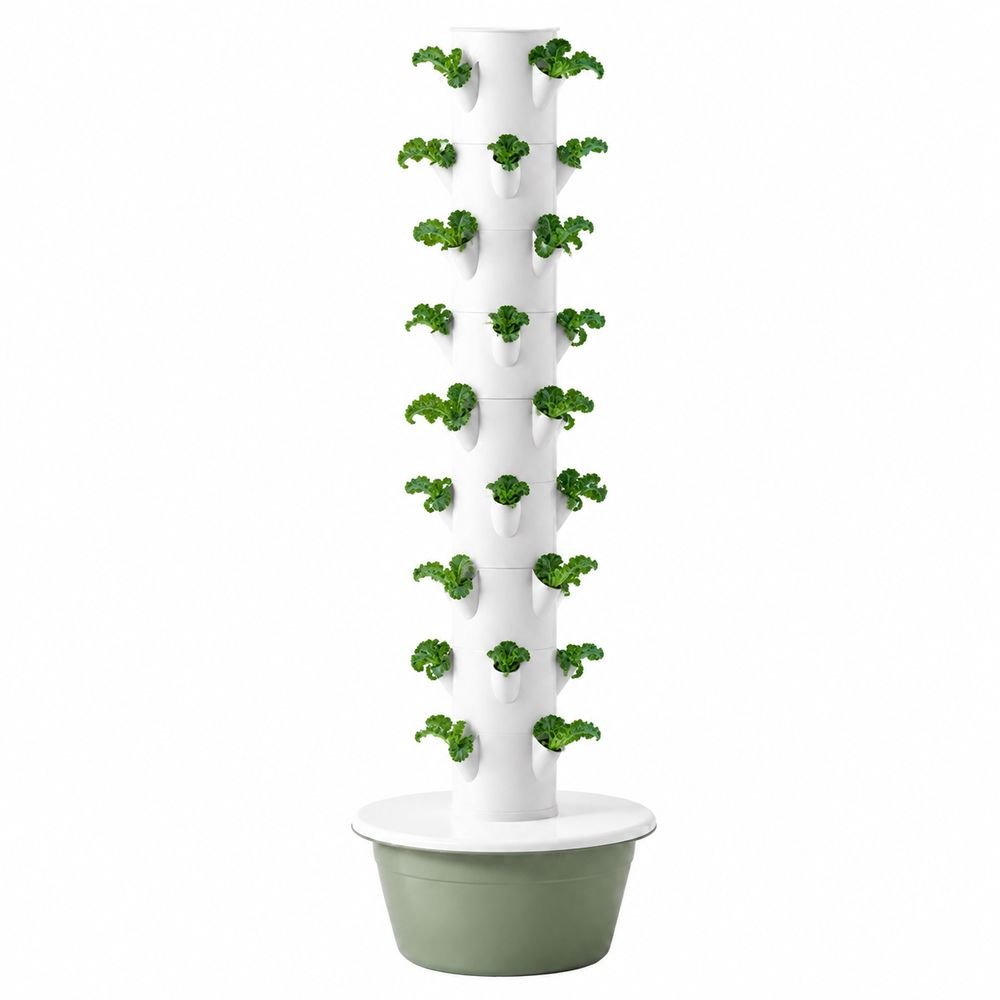
A bin of romaine comes out of the grow room with brown, papery margins on the inner leaves. EC is 1.6, pH is 5.9, dissolved oxygen is 8 mg/L, and the root systems are white and clean. The grower adds calcium to the reservoir, then adds a calcium foliar, then sprays for a fungal disease that is not there. Two weeks later a different tower starts pushing flower stems, and the first bin of that crop is unsellable for a completely unrelated reason.
Tipburn, bolting and edema are physiological disorders: the plant is responding correctly to an environment that is wrong for the product you are trying to sell. None of them is a pathogen, none of them is cured by a bottle, and all three are routinely misdiagnosed as nutrition or disease because the visible damage looks like both. This guide separates the three, gives the checks in the order that costs the least money, and explains why the same setpoint can produce different results in two different towers.
The three disorders get confused because all of them appear as damaged leaf tissue on a plant that otherwise looks healthy, and because all three are worst in the same two situations: fast growth and a climate the room cannot hold steady. The difference is where the damage appears, when it appears, and whether it spreads. Those three questions resolve the diagnosis before any meter is switched on.
| Disorder | Where it appears | When it appears | Pattern | Tell |
|---|---|---|---|---|
| Tipburn | Inner and upper young leaves, margins only | Last 7-10 days before harvest, during rapid sizing | Necrosis stops at the margin, tissue behind it stays green | Roots are white; older outer leaves are unaffected |
| Bolting | Center of the plant, new growth elongates | Any time after the plant has 5-6 true leaves | Stem lengthens, head opens, leaves turn bitter | A visible growing point rising above the crown |
| Edema | Older, lower leaves, undersides first | Overnight to a few days after a humid, still night | Raised blisters or bumps, corky or watery, never spreading like a lesion | Damage is physical swelling, not decay, and does not smell |
A single tower can show two of these at once, and that combination is itself diagnostic: tipburn on the inner leaves of the top two layers plus edema on the lowers usually means the room is cycling between a dry, bright afternoon and a saturated, still night, with the tower column holding the two extremes at the same time.
Before changing anything, eliminate the look-alikes. The cost of a wrong diagnosis here is not just wasted chemicals; it is two weeks of production spent solving the wrong problem while the real one keeps running.
| Looks like | What it actually is | How to tell in one check |
|---|---|---|
| Tipburn | Calcium deficiency in the solution | A true deficiency shows on all new growth across every tower, and usually as distorted or hooked tips, not marginal scorch alone |
| Tipburn | Salt burn from over-strength EC | Salt burn starts at leaf tips and edges on older leaves too, and follows a recent EC spike |
| Tipburn | Botrytis or bacterial soft rot | Lesions are soft, spreading and smell; tipburn is dry, papery and sharply bounded |
| Bolting | Stretching from low light | Low-light stretch is uniform and slow with pale color; bolting is a distinct stem with a growing point |
| Edema | Powdery mildew or aphid damage | Mildew wipes off; aphids and cast skins are visible with a hand lens; edema does not wipe off |
| Edema | Oedema-related root disease | Pythium browns and sloughs the roots; edema leaves roots white |
One shortcut is worth the thirty seconds: press the damaged tissue between your fingers. Tipburn is dry and does not smear. Edema feels like a bump under the skin and does not rupture. Disease smears. That single test removes most of the wrong branches from the decision tree. A fuller symptom atlas for genuine pathogens is in our tower plant disease guide, and the mineral side is in the nutrient deficiency chart.
Calcium is delivered by the transpiration stream and it does not move back out of tissue once deposited. Young, tightly enclosed leaves inside a head transpire very little, so they receive very little calcium exactly when they are growing fastest and need it most. The margins collapse, and the damage never repairs itself because the cells are dead. This is why adding calcium to a reservoir that already contains adequate calcium changes nothing, and why foliar calcium is close to useless on leafy greens: the problem is delivery to a tissue that is not transpiring, not supply to the plant.
In a tower, delivery is decided by airflow and by how the plant sits in the column. Sites on the outer face of the column sit in moving air and transpire well. Sites facing an adjacent tower, or the inner positions on a dense layout, sit in a boundary layer that barely moves. The result is the signature pattern of tower tipburn: the same cultivar, the same solution, some sites clean and some sites scorched, consistently on the same face of the same columns.
| Driver | Target | What it does | What to change |
|---|---|---|---|
| Airflow at canopy | 0.3-0.5 m/s, measurable at the tower face | Restores transpiration in sheltered inner leaves | Add horizontal fans at mid-height; open the aisle side |
| VPD, vegetative | 0.8-1.2 kPa | Below 0.6 kPa transpiration stalls; above 1.3 kPa stomata close | Adjust temperature and RH together, not RH alone |
| VPD, final 10 days | 1.0-1.2 kPa | Keeps calcium moving during the fastest sizing phase | Slightly warmer, slightly drier finishing room |
| Root zone temperature | 18-22°C | Warm roots push top growth faster than calcium can follow | Cool the reservoir; insulate channels; avoid warm make-up water |
| EC | 1.2-1.8 mS/cm for leafy greens | High EC competes with calcium uptake at the root | Step EC down as heads size, do not step it up |
| Light intensity | Seasonally stable DLI | A sudden jump in light accelerates growth and outruns calcium | Ramp intensity over 5-7 days after a change |
| Cultivar | Tipburn-tolerant selections | Genetic susceptibility dominates once environment is adequate | Change variety before changing hardware |
The VPD numbers above are the same ones used across this site and are explained, with the measurement method and sensor placement, in the VPD, humidity and airflow guide. The heat-driven version of the same failure, where summer temperatures block calcium transport outright, is covered in managing towers in hot weather.
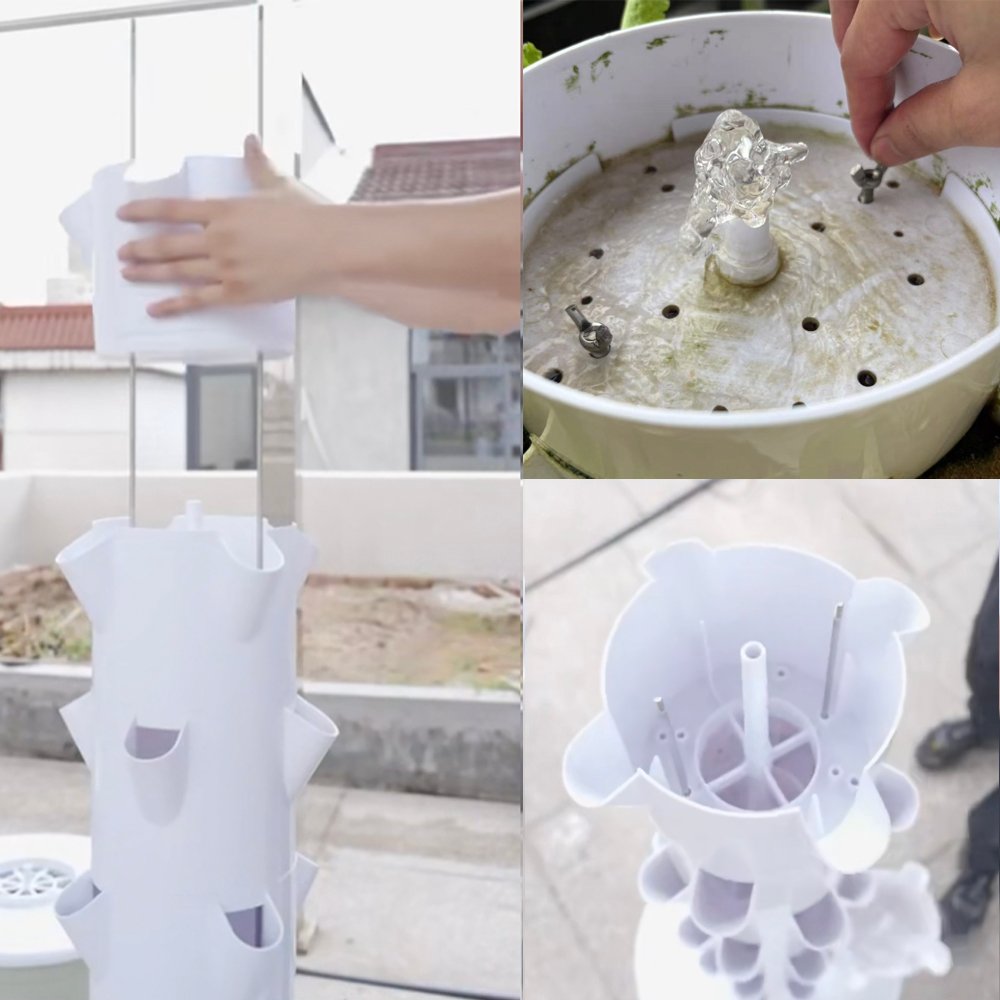
Bolting is the plant switching from vegetative to reproductive growth. It is not reversible, and no product stops it once the stem has begun to extend. What a grower controls is the trigger set and the harvest decision.
Four triggers matter in a tower system. Root zone temperature above roughly 24°C is the strongest, and it is the one towers make worse: a column stacked under lights accumulates heat at the top, and the solution feeding the upper layers is warmer than the reservoir probe reports. Photoperiod above 14 hours, a high daily light integral, and transplant stress each add pressure. Nitrogen form and rate modulate the response, but they rarely cause bolting on their own in a solution that is otherwise in range.
| Crop | Primary trigger | Early signal | Correct response |
|---|---|---|---|
| Lettuce | Root zone above 24°C, long days | Head starts to elongate and loosen at the crown | Harvest within 3-5 days at a smaller head size |
| Cilantro | Heat and long days, very sensitive | Internodes lengthen, leaf shape narrows | Cut whole plants and sell as bunch; do not wait for regrowth |
| Arugula | Heat above 24°C, water stress | Leaves sharpen and turn pungent | Harvest early; move to a cooler slot in the rotation |
| Spinach | Long days above 14 h, warm roots | Leaf stalks lengthen, new leaves small and upright | Shorten photoperiod or accept a short harvest window |
| Basil | Long days and warm nights | Flower buds at the growing tips | Pinch tips weekly; plan on 4-6 cuts, not 12 |
The commercial decision is usually simpler than the horticulture. A bolting crop is still edible for a short window: smaller heads, tighter harvest, different pack. Fighting the switch costs more in labor and lost days than harvesting early and re-planting with a heat-tolerant cultivar. The order that matters is: detect the early signal, harvest the whole tower bay rather than the individual plants, and replant with the variety that suits the season. Crop-by-crop timing sits in the 12-month planting calendar.
Edema is a water-balance failure in the opposite direction. Roots take up water faster than leaves can transpire it, internal pressure builds, and cells in the lower leaf expand until they rupture and heal as corky blisters. Cool, humid, still nights are the classic setup: root zone still warm from the day, air at saturation, almost no transpiration demand. In a tower, the lower layers are the worst case, because they sit in the coolest, most sheltered air in the room and receive solution from the same warm reservoir as the top.
This is why edema is almost never a nutrient problem and why fungicides do nothing. The fix set is short and mechanical:
Every one of these disorders responds to environment changes and almost none of them responds to a purchase. Work down this list in order; each step is cheaper than the one below it and resolves more cases than the one below it.
| Order | Check | Typical finding | Expected response | Cost |
|---|---|---|---|---|
| 1 | Confirm it is physiological, not pest or pathogen | Roots white, no lesions, no smell | Immediate: you stop wasting sprays | Minutes |
| 2 | Airflow at the affected face, measured not assumed | Below 0.2 m/s in the inner positions | New growth clean in 7-10 days | Low: fans and repositioning |
| 3 | VPD and root zone temperature, logged through the night | Night VPD under 0.5 kPa or roots above 24°C | 3-7 days | Low to moderate: control, cooling |
| 4 | EC and pH against the crop stage | EC stepped up as heads sized | 2-4 days | Free |
| 5 | Light uniformity across layers and photoperiod | Top layer at 1.5x the intensity of the bottom | One cycle | Moderate: fixtures or dimming |
| 6 | Cultivar and sowing schedule | Susceptible variety in the wrong season | One cycle | Seed cost only |
| 7 | Tower configuration: layer spacing and hole pitch | Crowded inner sites with no air path | One cycle, permanent | Capital: part of the next order |
Note what is missing from the list: calcium additives, anti-bolting products applied after the stem has moved, and fungicides. In a commercial room those are the three most common purchases made in response to these symptoms and the three least likely to change the outcome. Root cause first; the bottle is a last resort that rarely earns its place.
Two growers with identical rooms get different tipburn rates because they planted different genetics. Susceptibility is not a small effect; in lettuce it can be the difference between a clean crop and a 15 percent cull in the same week, on the same solution.
| Crop | Tipburn | Bolting | Edema | Practical note |
|---|---|---|---|---|
| Butterhead and batavia lettuce | High | Moderate | Low | Widest margin burn risk; needs the strongest airflow |
| Romaine lettuce | Moderate | Moderate | Low | More upright habit, better inner-leaf airflow |
| Kale and Swiss chard | Low to moderate | Low | Low | Most forgiving greens in a tower |
| Spinach | Low | High | Moderate to high | Bolts on long days before it tipburns |
| Arugula | Low | High | Low | Heat is the limiting factor, not calcium |
| Basil | Low | Moderate | Low | Pinching is the real bolting control |
Two rooms with the same setpoints and the same cultivar can produce different disorder rates because the hardware underneath them is different. Three design variables matter, and all three are production parameters rather than fixed catalog options.
This is also why a disorder that appears after a new tower model is installed often is not a nutrition problem at all. The room controls did not change; the geometry did. When you specify towers for a crop that is prone to tipburn or edema, say so, and ask for the layer spacing and hole pitch that suit it. The layer and density trade-offs are covered in plant capacity and spacing and choosing between 6, 9 and 12 layers.
Almost never, if the solution already contains adequate calcium. Tipburn is a distribution problem: the inner leaves do not transpire enough to pull calcium into the tissue that is burning. Confirm the solution is in range, then work on airflow, VPD and root zone temperature, which is what actually moves water through the plant.
It can be sold, but not reversed. Once the stem extends, quality declines quickly: heads loosen, leaves turn bitter and shelf life drops. The practical move is to harvest the affected bay within three to five days at a smaller size and replant with a seasonally appropriate cultivar, then look at photoperiod and root zone temperature to find what triggered it.
Because the lower layers sit in cooler, stiller air while receiving solution from the same warm reservoir. Warm roots plus a saturated, motionless night means water uptake exceeds transpiration. Low-level horizontal airflow and a shorter final irrigation before lights-off address both halves of that imbalance.
The climate drivers overlap; the diagnostic layer does not. The VPD guide explains how to measure and hold the climate setpoints, and the hot-weather guide covers heat-driven calcium failure. This guide exists to separate three disorders that get treated as one, and to put the fix sequence in cost order so a room is not rebuilt to solve a problem that a fan would have solved.
If you are specifying towers for a crop that is prone to tipburn, bolting or edema, send the crop list and the room conditions. Layer spacing, hole pitch and water distribution to the upper layers are set at the factory, and they decide how much of this guide you will ever have to use.
