Our Location
304 North Cardinal St.
Dorchester Center, MA 02124

304 North Cardinal St.
Dorchester Center, MA 02124

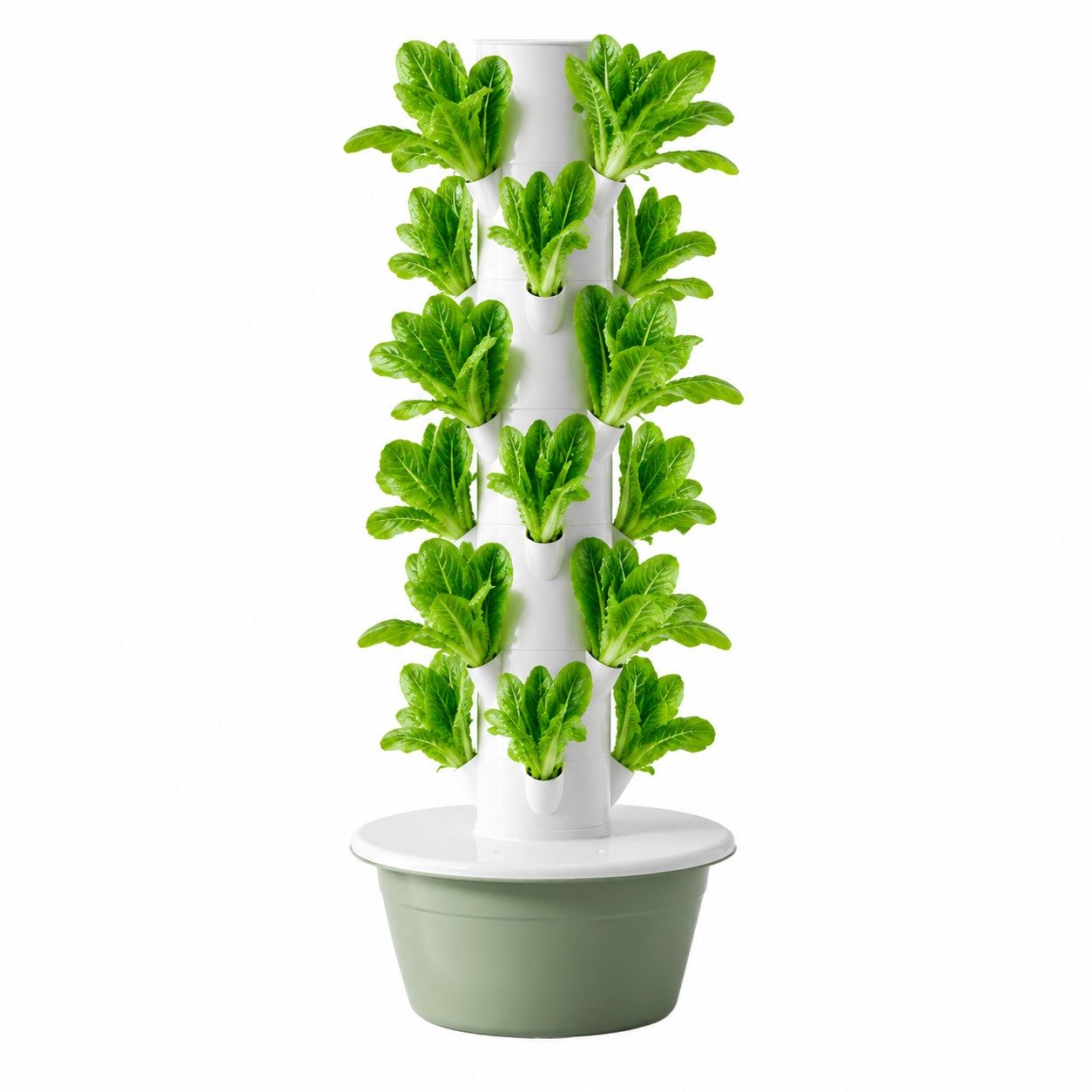
Yellowing leaves. Curled edges. Brown spots that spread overnight. If you grow with hydroponic towers, you have seen these signs — and you already know they rarely mean pests. They mean your plants are starving, even while the reservoir sits full.
Nutrient deficiencies are the most common cause of poor growth in vertical hydroponic systems, and for commercial growers the cost is real: one misdiagnosis can cost you a full harvest cycle. The good news is that deficiencies in tower systems are fast to identify, fast to fix, and almost entirely preventable. This guide gives you the complete hydroponic nutrient deficiency chart — symptom by symptom, cause by cause — plus the exact fix for each one and a prevention routine that keeps your towers in the green zone.
Soil releases nutrients gradually from organic matter, so a soil plant has a buffer. A hydroponic tower has no buffer: everything the plant eats comes from the nutrient solution, delivered straight to the roots. That makes the system incredibly efficient — and incredibly unforgiving. When the solution is out of balance, the plant has nowhere else to draw from.
Four causes sit behind almost every deficiency in tower systems:
If you have not measured your EC and PPM recently, that is where every diagnosis starts. The chart below assumes you have baseline numbers to work from.
Use this chart the way you would use a handbook: find the symptom, read across, apply the fix. We have split it into macronutrients (needed in large amounts) and micronutrients (needed in trace amounts) — both are equally common failure points in towers.
Golden rule for every row: confirm with an EC and pH test before adding anything. Dosing nutrients into a solution with the wrong pH makes the problem worse, not better.
| Symptom | Deficiency | Most Likely Cause | Fast Fix |
|---|---|---|---|
| Old leaves turn uniformly yellow, starting at the bottom; growth slows | Nitrogen (N) | Solution too weak — EC below target range | Raise EC to target; add calcium nitrate or potassium nitrate per your formula |
| Old leaves turn dark green then purple-red, especially on veins and undersides; stems stay thin | Phosphorus (P) | Water temperature below 18°C, or pH below 5.5 | Warm the reservoir to 20–22°C; adjust pH to 5.8–6.2; add monopotassium phosphate |
| Old leaf edges scorch, brown, and curl upward; interveinal yellowing | Potassium (K) | Exhausted solution (EC dropped), or heavy transpiration in hot conditions | Change the reservoir or top up with potassium sulfate; bring room temperature down |
| New leaves are twisted, crinkled, or dead at the tips; blossom end rot on tomatoes and peppers | Calcium (Ca) | pH below 5.5, or low transpiration (high humidity / weak light) | Adjust pH up; add calcium nitrate; improve airflow and lighting intensity |
| Old leaves show yellowing between green veins, like tiger stripes | Magnesium (Mg) | Soft water, or a reservoir past its change date | Add 1 g/L Epsom salt (magnesium sulfate); reset your reservoir schedule |
| New leaves yellow evenly, before old leaves do | Sulfur (S) | Incomplete one-part formula, or long-term reuse of the same concentrate | Switch to a complete nutrient line; refresh the reservoir |
| Symptom | Deficiency | Most Likely Cause | Fast Fix |
|---|---|---|---|
| New leaves yellow between green veins; in severe cases they turn almost white | Iron (Fe) | pH above 6.5 — the #1 lockout in towers | Drop pH to 5.8–6.2; add chelated iron (EDDHA form works best at higher pH) |
| New leaves stay small, stems bunch up (rosette look), interveinal yellowing | Zinc (Zn) | pH too high, or high phosphorus blocking uptake | Adjust pH down; add zinc sulfate; review phosphorus levels |
| New leaves yellow between veins with small brown specks | Manganese (Mn) | pH above 6.5, or excess iron competing | Adjust pH down; add manganese sulfate; cut back iron if overdosed |
| Growing tip dies back; new leaves deformed and brittle | Boron (B) | Low boron in source water, or wide pH swings | Add 0.1–0.3 ppm borax; stabilize pH in range |
| New leaves wilt, tips die back | Copper (Cu) | Copper locked out by high pH, or absent from the formula | Add a trace copper source; check and correct pH |
Not sure which group your symptom falls into? The next section cuts the list in half in about thirty seconds.
The fastest way to narrow down a deficiency is to ask where it started. In a tower, that means looking at the top of the tower versus the bottom.
If the whole tower looks pale and stunted, the problem is usually systemic — EC too low, pH out of range, or a reservoir long overdue for a change. When you see localized patterns instead, the symptom position tells you which half of the chart to read. For a broader run-through of plant problems, our tower troubleshooting guide covers yellow leaves, root rot, and slow growth side by side.
You test the solution and every element is in range — yet the plants still show classic deficiency symptoms. This is nutrient lockout: the nutrients are present, but the roots cannot absorb them. It is the most frustrating failure mode in hydroponics, and it is almost always a pH problem.
pH acts as a gatekeeper. In tower systems the working range is 5.5–6.5, with 5.8–6.2 the sweet spot for most crops:
This is why the golden rule matters: always adjust pH first and re-test before you add a single gram of fertilizer. Dosing into a locked-out solution wastes product and masks the real problem. Our water quality and pH management guide walks through testing and adjusting in detail.
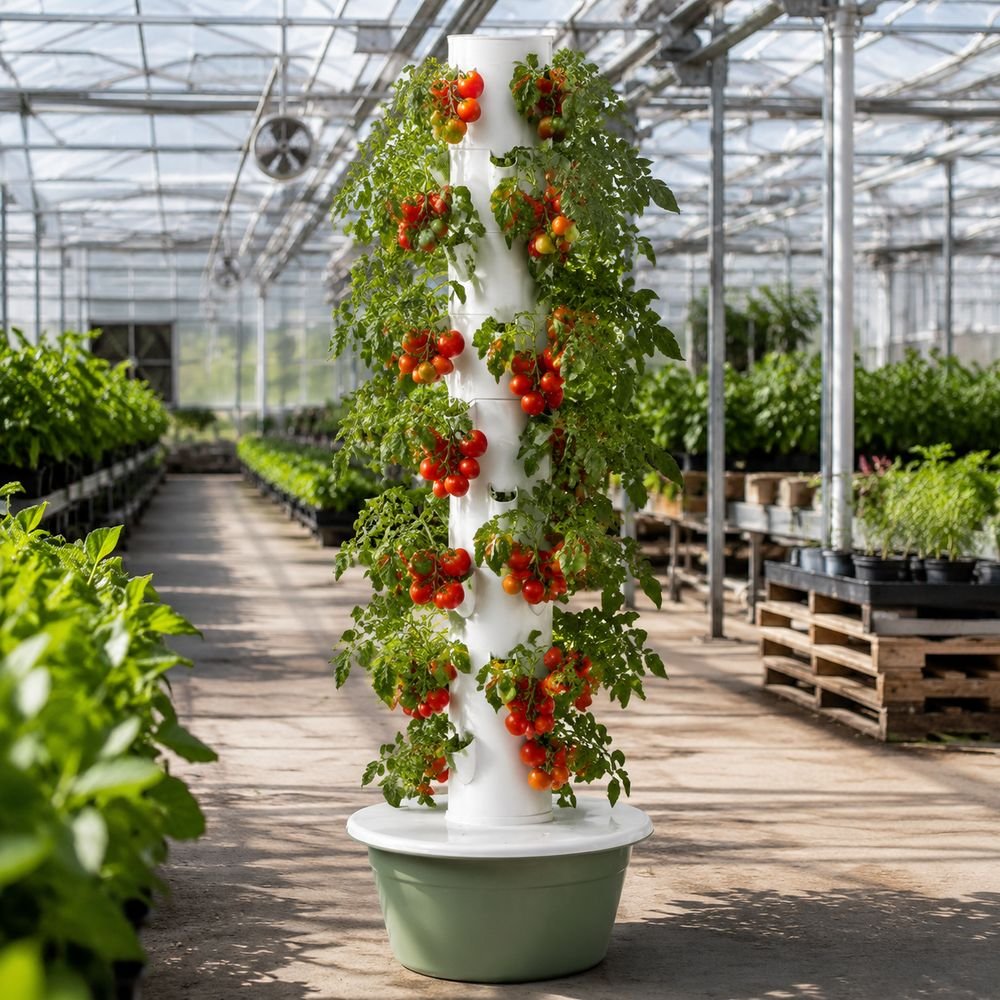
Prevention is a routine, not a product. Commercial growers who run hundreds of towers rarely chase deficiencies — they check the same numbers on a schedule and catch drift early, while it is still a 10-minute fix.
Deficiencies are a symptom of system drift, and in a closed-loop tower the drift is almost always measurable before it shows up on the leaves. Build the 10-minute testing habit and the chart above will spend most of its time gathering dust.
Every tower you run is a bet on your nutrient program — and your system design. Factory-direct towers with closed-loop circulation give you the most controllable growing environment there is: a sealed reservoir, consistent flow, and no soil variables to fight. If you are setting up a new farm or expanding an existing one, talk to our team about matching towers to your crop plan and water conditions.
