Our Location
304 North Cardinal St.
Dorchester Center, MA 02124

304 North Cardinal St.
Dorchester Center, MA 02124

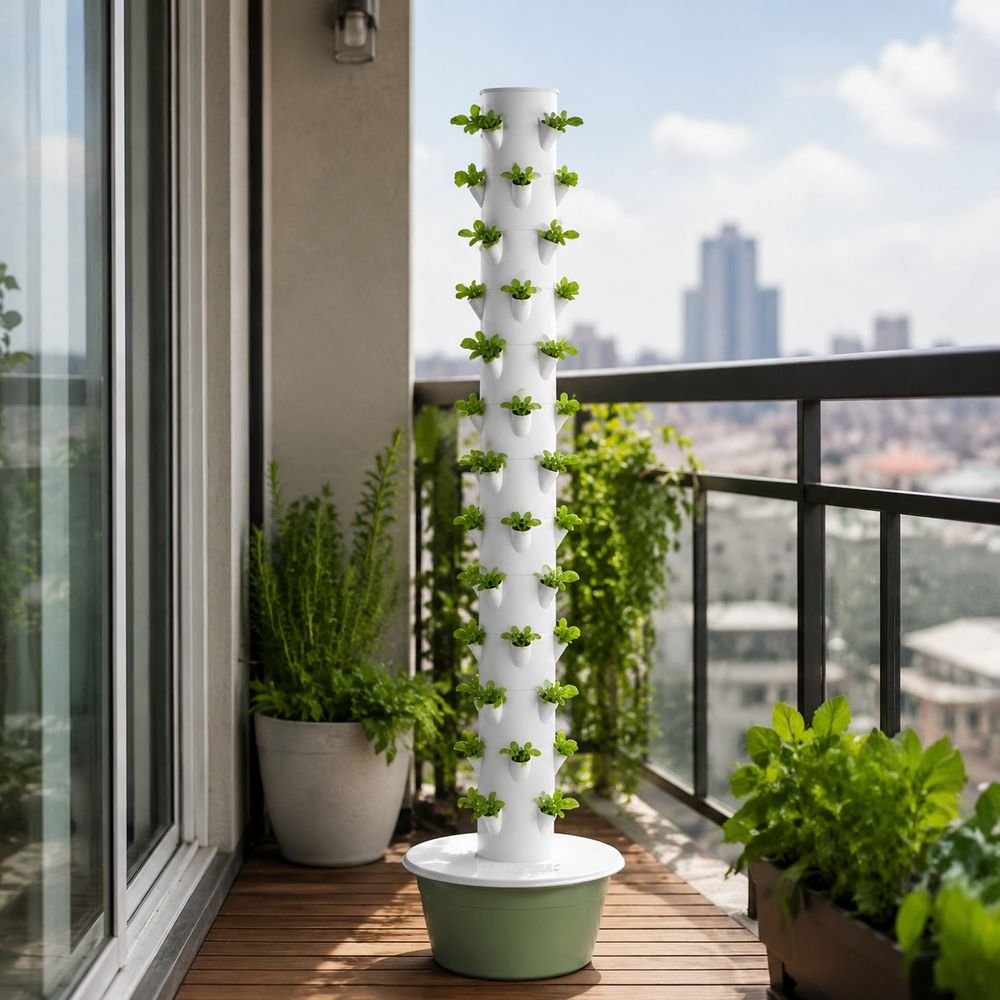
Supermarkets and restaurants do not buy peak harvests — they buy consistency. A retail chain sets its fresh produce plan months in advance, and a supplier who cannot deliver every single week of the year loses the contract to one who can. That is the biggest reason commercial growers move to controlled-environment systems: not higher peak yield, but predictable weekly supply. With hydroponic towers, that predictability is built into the system. This guide shows you how to build a 12-month planting calendar that keeps every tower producing — and turns your schedule into a sales argument.
Produce buyers work on fixed supply cycles. A supermarket category manager allocates shelf space based on a 52-week supply plan, and a restaurant group commits to a menu that needs the same ingredients in January as in July. When a grower misses a week, the buyer does not wait — they fill the gap from another source, and winning that shelf space back is far harder than keeping it.
Soil growing makes consistency nearly impossible to promise: seasons shift, weather disrupts planting windows, and field crops mature in unpredictable waves. Growing indoors removes both causes of supply gaps. Temperature, light, and water are controlled, so crop timing becomes a calculation instead of a gamble — which is exactly what a 12-month planting calendar exploits.
A planting calendar starts with one number: the volume you must deliver every week. Everything else — tower count, seed orders, labor — flows from that target. Here is how the math works for a 200-heads-per-week lettuce commitment on 7-layer towers.
| Planning input | Value |
|---|---|
| Weekly delivery target | 200 heads of lettuce |
| Planting sites per 7-layer tower | 28 |
| Growing cycle (seedling to harvest) | ~5 weeks |
| In-production plants required (5 weeks × 200) | 1,000 |
| Towers required (1,000 ÷ 28) | ~36 towers |
| Seedlings to start every week | 200 |
The same arithmetic works for any crop once you know its cycle length — see our complete growth timeline for lettuce and nine other crops. The takeaway: a continuous supply is simply a matter of sowing every week what you plan to harvest every week.
Different crops thrive at different temperatures, and a well-designed calendar rides that rhythm instead of fighting it. Cool-season greens fill the winter months; warm-season herbs take over in summer. The table below is a working framework for a temperate-climate greenhouse — adjust sowing dates to your local conditions.
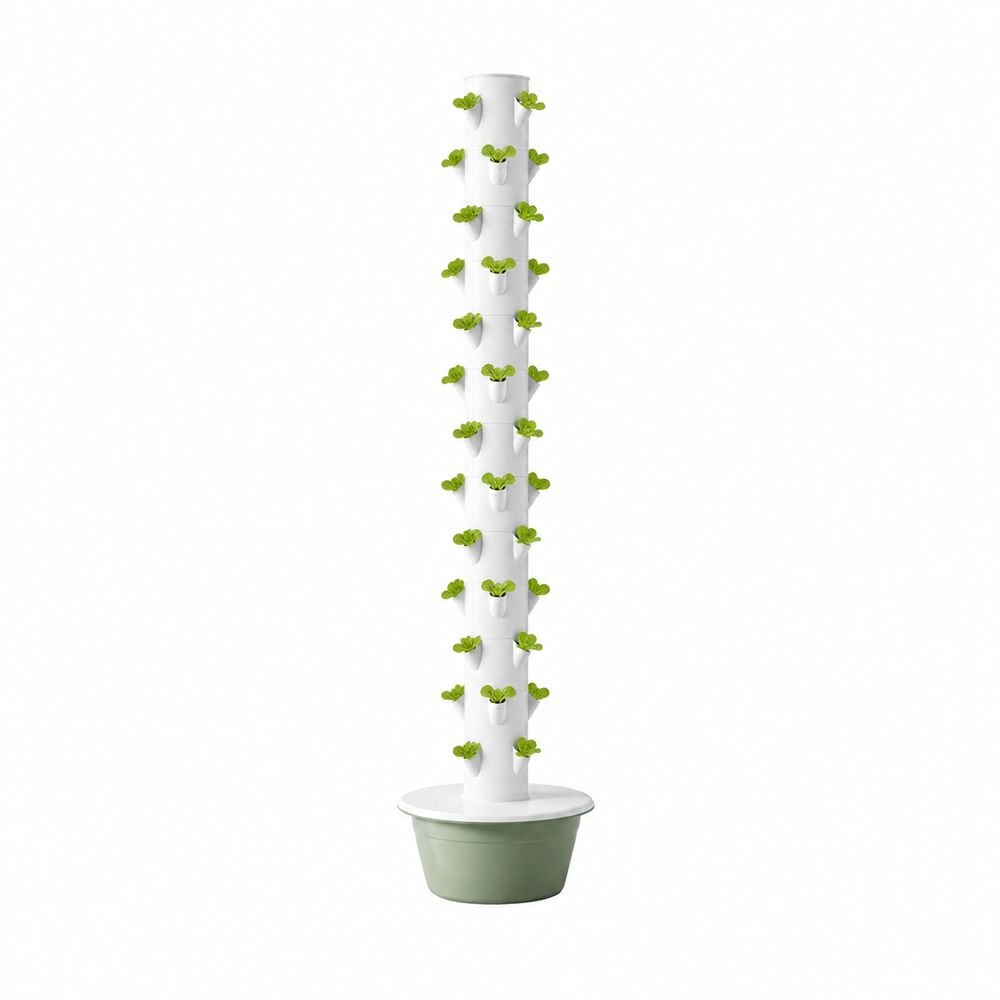
| Months | Harvest focus | Sow weekly | Notes |
|---|---|---|---|
| Jan–Mar | Lettuce, kale, spinach, arugula | Lettuce + spinach | Cool-season peak; minimal shading needed |
| Apr–Jun | Lettuce, basil, cilantro, mint | Lettuce + basil | Warm herbs come online; watch airflow |
| Jul–Sep | Lettuce (shaded), basil, Swiss chard | Lettuce + chard | Heat management: shade cloth, cool reservoir |
| Oct–Dec | Lettuce, kale, spinach, mustards | Lettuce + kale | Transition back to cool-season mix |
For a full crop-by-crop breakdown of what grows best in towers, see our guide to the 13 best tower crops. The goal is a mix where at least two crops are in harvest every week — that protects you if one variety underperforms.
The most common planning mistake is sowing everything at once. If all 36 towers are planted in the same week, you harvest nothing for five weeks — then 1,000 heads at once, with no buyer and no shelf space. The fix is staggered sowing: split your towers into five blocks, plant one block per week, and each week one block reaches harvest while another is being sown.
This rotation does three things. It flattens labor into a steady weekly rhythm instead of harvest surges. It keeps your reservoir and nutrient system running at a constant load. And it means a crop failure in one block costs you one-fifth of a week’s supply — not the whole season. For the day-by-day routine, start with our seed-to-harvest tower planting guide, and match block sizes to your tower capacity with our plant capacity and spacing guide.
Here is the part buyers notice: show up with a spreadsheet. A simple supply commitment table — crop, weekly volume, months available, and price band — signals professionalism before you say a word. Field growers cannot offer this; they hedge with words like “weather permitting.” You can put real numbers on the table, week by week, for the entire year.
Restaurants, in particular, value a fixed weekly order that never varies. It simplifies their purchasing, and it locks them to you. Pair the commitment table with a short menu of what you can add on short notice — arugula, microgreens, edible flowers — and you become the supplier they plan around, not the one they replace. For the full playbook on pricing and channels, read our guide to selling hydroponic produce.
Every year-round plan begins with one honest figure: what can you reliably deliver each week, 52 weeks a year? Start smaller than your ambition and grow the commitment as your towers prove themselves. A calendar you can keep beats a bigger one you cannot.
Tell us your target weekly volume and market, and we will size the tower system and draft a planting calendar for your climate — free, from the factory.
