Our Location
304 North Cardinal St.
Dorchester Center, MA 02124

304 North Cardinal St.
Dorchester Center, MA 02124

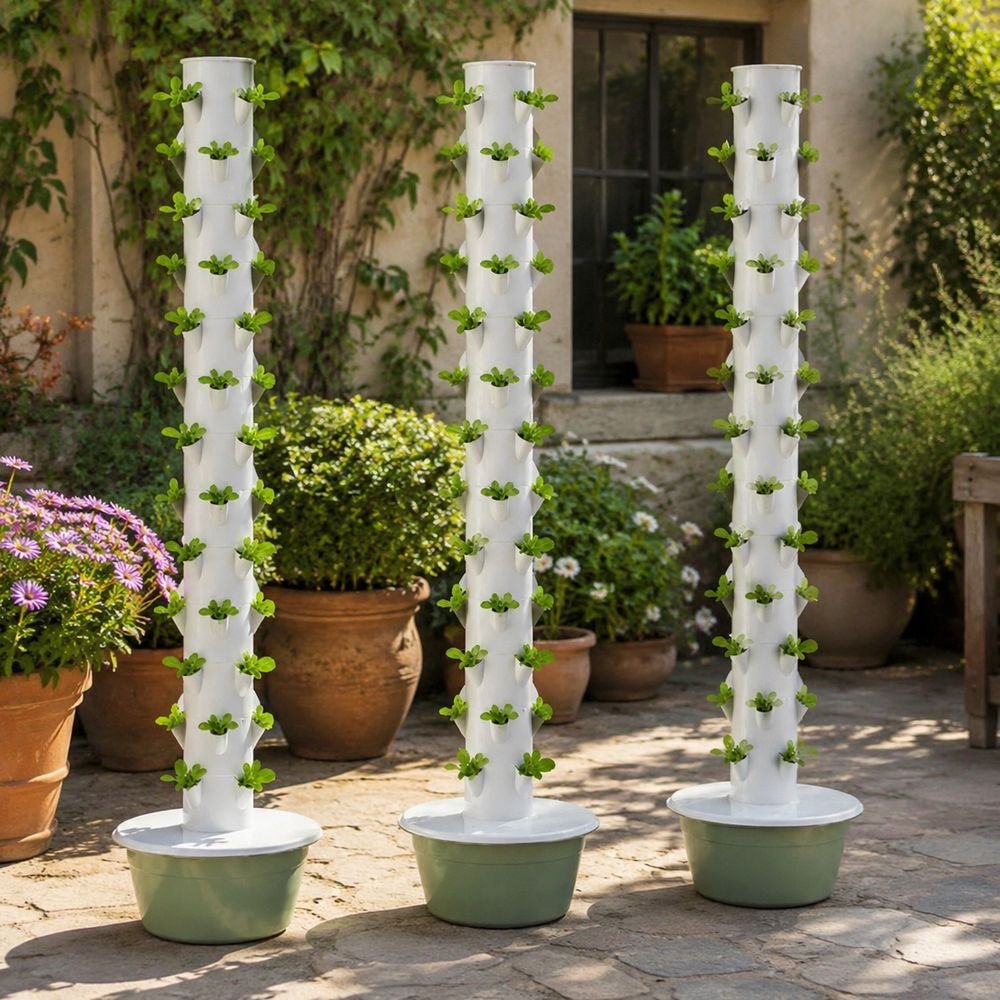
Greenhouse floor space is the most expensive asset you own. Whether you pay rent per square meter or amortize the structure itself, every empty cubic meter of air above your growing beds is money you are not earning. Hydroponic towers change that equation: they convert unused vertical space into productive growing area. In this guide, we break down the real numbers — yield per square meter, practical layout planning, and what the switch actually means for a commercial greenhouse operation.
Most greenhouse crops are grown flat. Soil beds, NFT gutters, and flood tables all occupy roughly one square meter of floor for one square meter of canopy. Your total growing capacity is capped by your footprint, and expanding means building, buying, or leasing more structure — at $50 to $200+ per square meter depending on region and greenhouse type.
The result is a bad trade: growers spend the most on the thing they use the least efficiently. Light, air, and water are abundant in the vertical dimension, but flat growing never touches them. The fastest way to add growing capacity without expanding your footprint is to grow up instead of out.
A hydroponic tower stacks planting pockets around a vertical column — a typical 7-layer tower carries 28 planting sites in a footprint of roughly 0.25 square meters. Nutrient solution is pumped to the top and cascades down through every pocket, so each plant gets its own steady supply of water, oxygen, and dissolved nutrients while the tower itself takes up almost no floor space.
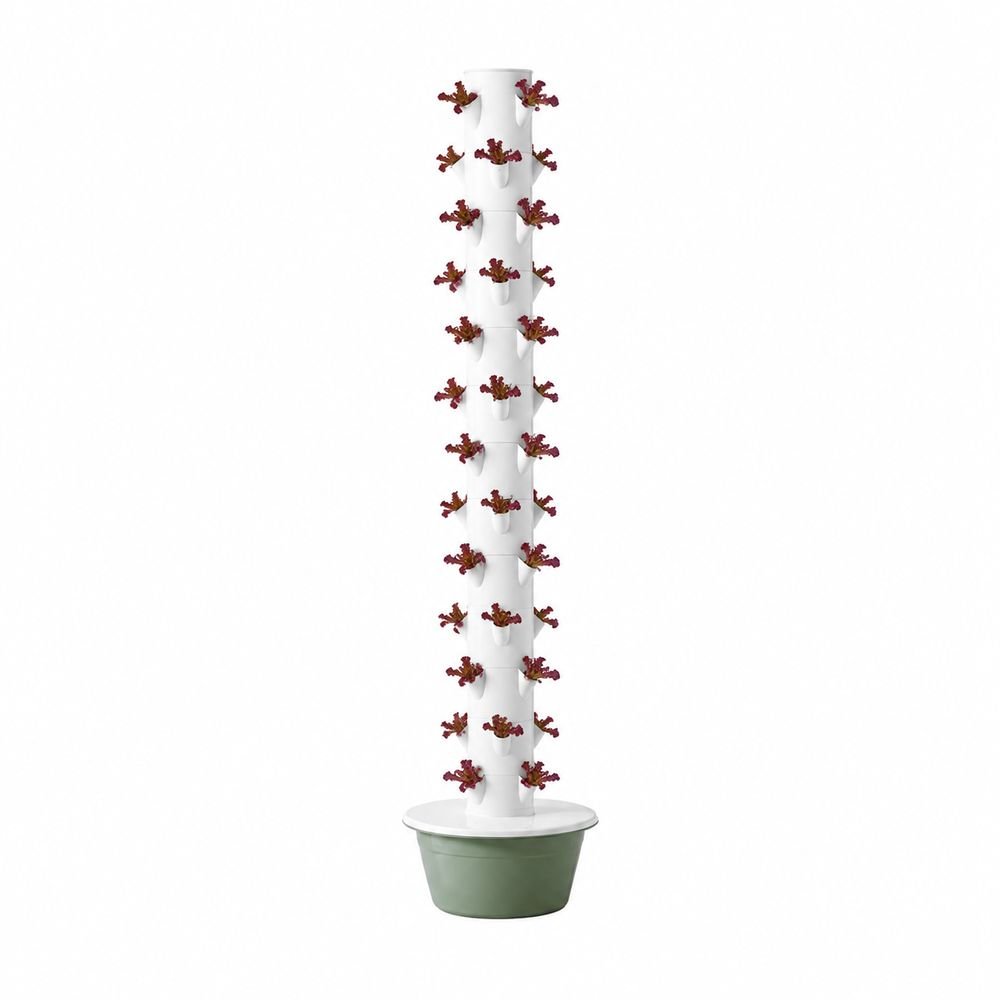
Every pocket is a full growing position with its own airflow and light exposure. That is the core advantage: you are no longer renting horizontal space, you are renting the whole volume of the greenhouse. The same aisle that holds one flat bed can hold a row of towers with four times the plant count.
To see what towers actually deliver, compare the same greenhouse area planted three ways. The table below uses lettuce as the reference crop — the most common commercial greenhouse crop — with realistic spacing for each system.
| Metric (per m² of floor) | Soil beds | NFT gutters | Hydroponic towers |
|---|---|---|---|
| Plants growing at once | 20–25 | 25–35 | 56–84* |
| Lettuce growing cycle | 50–70 days | 35–45 days | 28–35 days |
| Harvests per year | 5–7 | 8–10 | 10–13 |
| Estimated plants harvested per year | ~150 | ~280 | ~700 |
Two effects compound here. First, towers fit more plants per square meter of floor. Second, faster growing cycles mean more harvests per year. Together they push annual output to roughly three times what the same floor area produces in soil — which is why the 3x yield figure is not marketing, it is arithmetic.
For deeper production data across multiple crops, see our hydroponic tower yield per square foot analysis.
Yield math only matters if the layout works in practice. A standard working layout uses 1.2 m rows with 0.6 m between towers in the row — enough room for harvest carts and daily tending. In a 100 m² greenhouse with a 10 m × 10 m usable floor, that spacing fits roughly 100 towers: about 2,800 growing sites where flat growing would have managed 2,000–2,500 plants at best.
Towers also unlock space that flat systems simply cannot use: aisles, corners, and wall edges. Because they grow upward, a row of towers can run along a greenhouse wall or between benches without stealing canopy light from the crops beside them. Many operators start with a trial row in an unused aisle and expand from there once they see the numbers.
Need a full-scale plan? Our 100-tower farm setup guide covers equipment lists, layout, and scaling in detail, and our cost breakdown shows the payback timeline.
Switching part or all of a greenhouse to towers changes more than the plant count. In practice, operators see five compounding benefits:
Before you commit, check our plant capacity and spacing guide to match tower density to your crop mix, and our environment guide for greenhouse-specific considerations like airflow and shading.
The lowest-risk way to capture this upside is to start small: install a single row of towers in an aisle or underused corner, run one crop cycle, and compare the harvest against an equivalent flat bed. The math is simple enough to verify in a single season — and most operators find the towers pay for themselves before the second cycle is in the ground.
Tell us your greenhouse footprint and target crops, and we will send you a layout with tower counts, spacing, and a factory-direct quote.
