Our Location
304 North Cardinal St.
Dorchester Center, MA 02124

304 North Cardinal St.
Dorchester Center, MA 02124

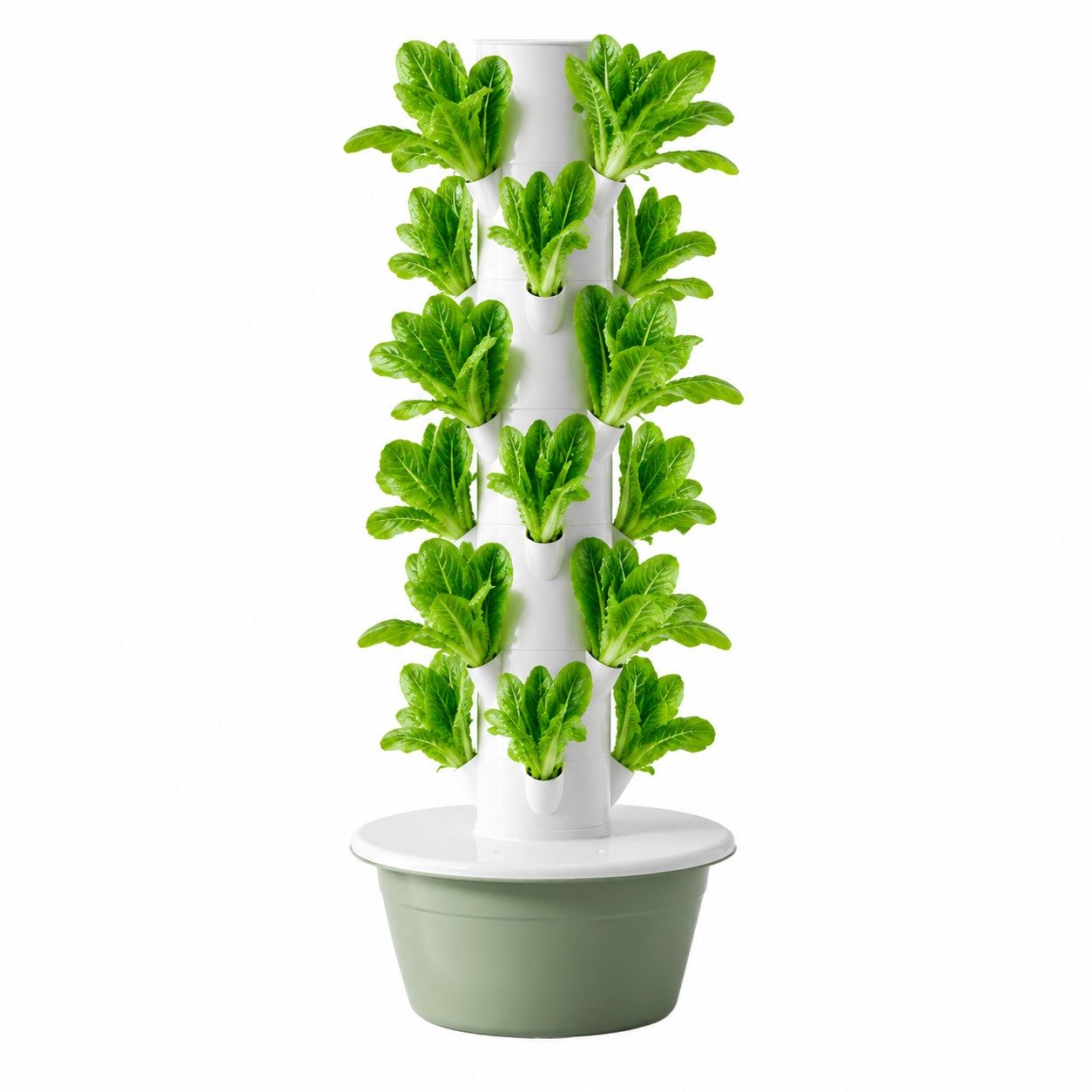
Your hydroponic tower was growing beautifully for weeks. Then, one morning, the lower leaves start turning yellow. A few days later, the roots smell wrong, and the plants have stopped putting on size. You are not sure which problem you are looking at — or where to start fixing it.
The good news: almost every hydroponic tower problem falls into one of three categories — yellow leaves, root rot, and slow growth. All three are fixable when you catch them early. This guide is a practical troubleshooting manual for commercial growers: it walks through each symptom, the most likely causes, how to confirm the diagnosis, and the exact fix — including a quick-reference table you can print and keep at the farm.
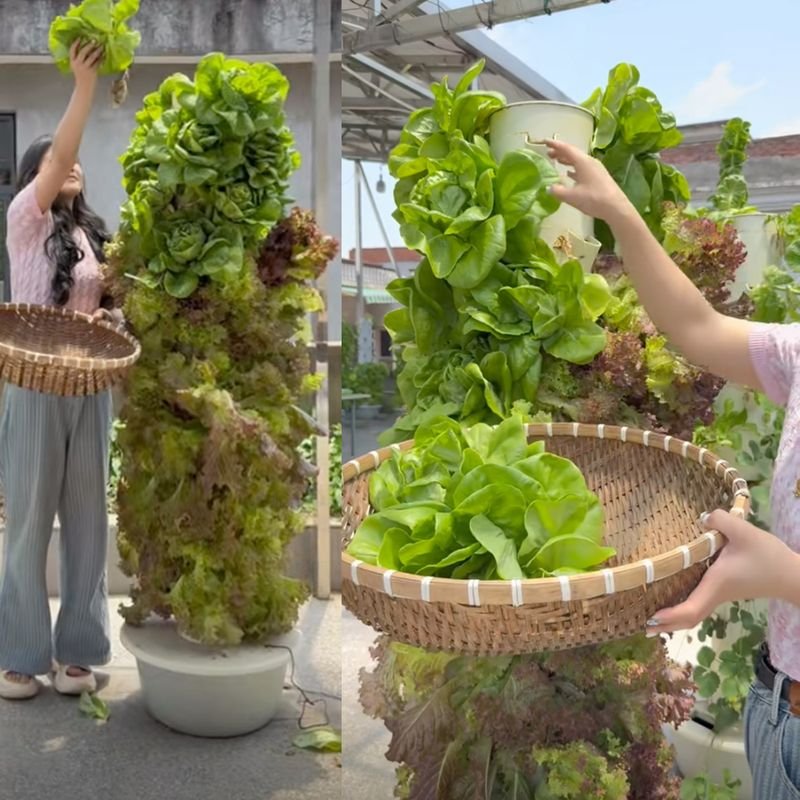
Start here. Find the symptom that matches what you are seeing, check the most likely cause, and take the first action. The detailed sections below explain each fix in depth.
| Symptom | Most Likely Cause | First Action |
|---|---|---|
| Lower leaves turning pale yellow | Nitrogen deficiency | Top up nutrient solution; raise EC by 0.2–0.4 mS/cm |
| New leaves yellow with green veins | Iron deficiency / high pH | Check pH (target 5.5–6.5); use chelated iron |
| Yellow leaves + soft, brown roots | Root rot | Stop feeding, trim roots, treat reservoir (see below) |
| Brown, crispy leaf edges | High EC (salt burn) | Flush with plain water, then re-feed at lower EC |
| Curled leaves + stunted growth | pH out of range | Calibrate meter; adjust pH slowly to 5.5–6.5 |
| Pale, stretched, slow growth | Insufficient light | Lower light closer or increase PPFD / hours |
| Wilting despite wet media | Clogged pump or nozzle | Clean pump, check drip lines and spray heads |
If your problem is not in the table, the sections below cover every common failure in detail.
Yellowing leaves — chlorosis — is the most common issue growers report, and it is almost always a nutrient or environment problem rather than a disease. The pattern of yellowing tells you which nutrient is missing.
| Yellowing Pattern | Deficiency | Fix |
|---|---|---|
| Whole lower leaves turn pale yellow, starting at the bottom of the tower | Nitrogen (N) | Top up with grow-stage nutrient; raise EC by 0.2–0.4 mS/cm; expect recovery in 3–5 days |
| Newest leaves yellow between green veins (veins stay green) | Iron (Fe) | Verify pH is below 6.5 (iron locks out above 6.5); add chelated iron |
| Yellowing between veins on older leaves, sometimes with brown spots | Magnesium (Mg) | Add magnesium via Epsom salt foliar spray or Mg in nutrient mix |
| Yellow edges with green center, older leaves | Potassium (K) | Switch to a complete nutrient formula with balanced K; check EC is not too low |
Rule of thumb: deficiencies start on old leaves (mobile nutrients like nitrogen, potassium, magnesium), while problems on new growth usually mean iron or a pH issue. If multiple symptoms appear at once, test your nutrient solution before adding anything.
When pH drifts outside 5.5–6.5, nutrients stop being absorbed even when they are present in the solution — a condition called nutrient lockout. Plants look deficient, but the real problem is the water chemistry. Fix it by calibrating your pH meter first (a dirty or uncalibrated probe is the #1 cause of false readings), then adjusting the reservoir slowly with pH up or down solution. Never adjust more than 0.5 at a time, and re-check after an hour. For the full protocol, see our water quality and pH management guide.
Towers growing indoors under LED commonly show pale, stretched growth when the light is too far away or too weak. Move the fixture closer in steps of 10 cm until leaf color deepens, or extend the photoperiod to 16 hours. Outdoors, yellowing on the shaded side of the tower usually means the tower needs rotation. See our LED lighting guide for intensity and coverage targets.
Root-zone temperature above 26°C (79°F) slows nutrient uptake and invites root disease; below 15°C (59°F) it stalls growth entirely. Keep the reservoir between 18–24°C (64–75°F). In hot climates, shade the reservoir and top up with cooler water in the morning rather than midday.
Root rot is the most serious problem a tower grower can face — it spreads fast and, left untreated, can collapse an entire crop. The cause is almost always Pythium or similar pathogens taking hold in warm, low-oxygen water. Catching it in the first 48 hours is the difference between a treatment and a full replant.
Check roots weekly by pulling one grow cup per tower and inspecting the root ball. By the time leaves look bad, the root system is already severely damaged.
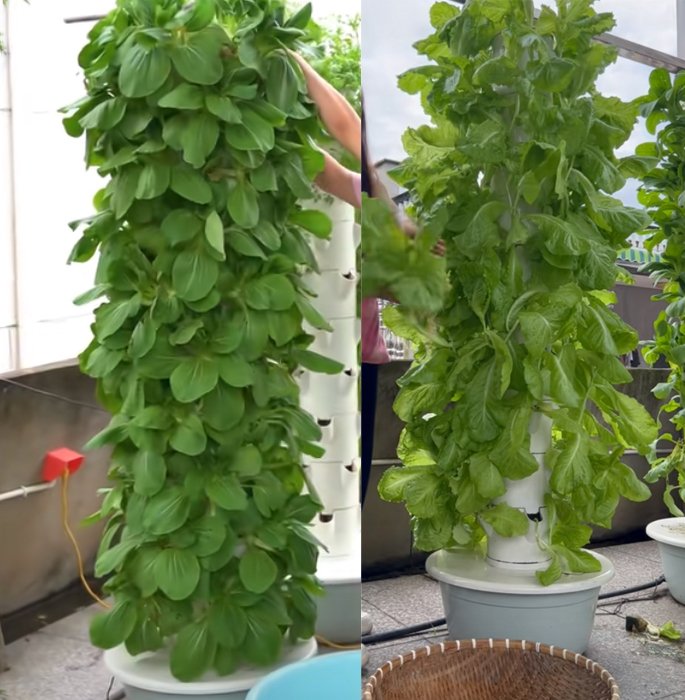
Slow growth is harder to diagnose than yellow leaves because the cause is usually a combination of small problems rather than one obvious failure. Work through this checklist in order — it covers 90% of cases.
| Check | Target Range | What to Do If Off |
|---|---|---|
| EC / nutrient concentration | 1.5–2.5 mS/cm (seedlings lower) | Dilute if too high; add nutrient if too low — see the nutrient solution guide |
| pH | 5.5–6.5 | Adjust slowly; recalibrate your meter first |
| Pump and flow | All spray heads dripping evenly | Clean the pump, unclog nozzles, check for air locks |
| Grow cup drainage | No water pooling in cups | Replace compacted media; trim overgrown roots |
| Root health | White, firm, sweet-smelling | Treat root rot if brown or slimy (above) |
| Light | 16 h/day, correct height | Lower light or extend photoperiod |
| Crop variety | Tower-suitable variety | Switch to compact or dwarf varieties — see our best crops guide |
A common commercial mistake is chasing yield by cranking up nutrient strength — which pushes EC too high and slows growth through salt stress. When in doubt, a slightly diluted solution grows faster than an over-concentrated one.
Not every plant is worth saving. As a rule of thumb for commercial operations:
Replanting a single grow cup is a 10-minute job; a full tower cycle is not. For young plants, replanting is almost always the faster path to a healthy harvest.
Every tower problem in this guide is easier to prevent than to fix. Build this routine into your farm day — it takes 10 minutes per 20 towers:
For the full maintenance schedule — daily, weekly, and monthly tasks across a commercial operation — see our Hydroponic Tower Maintenance 101 guide. And if you are fighting pests alongside these issues, our pest control guide covers prevention and elimination.
Running a tower farm and want equipment that is built to stay problem-free? Our factory-direct hydroponic towers use food-grade materials, reliable submersible pumps, and tool-free assembly — and we support commercial buyers with detailed growing documentation. Tell us about your setup and we will help you spec the right system.
