Our Location
304 North Cardinal St.
Dorchester Center, MA 02124

304 North Cardinal St.
Dorchester Center, MA 02124

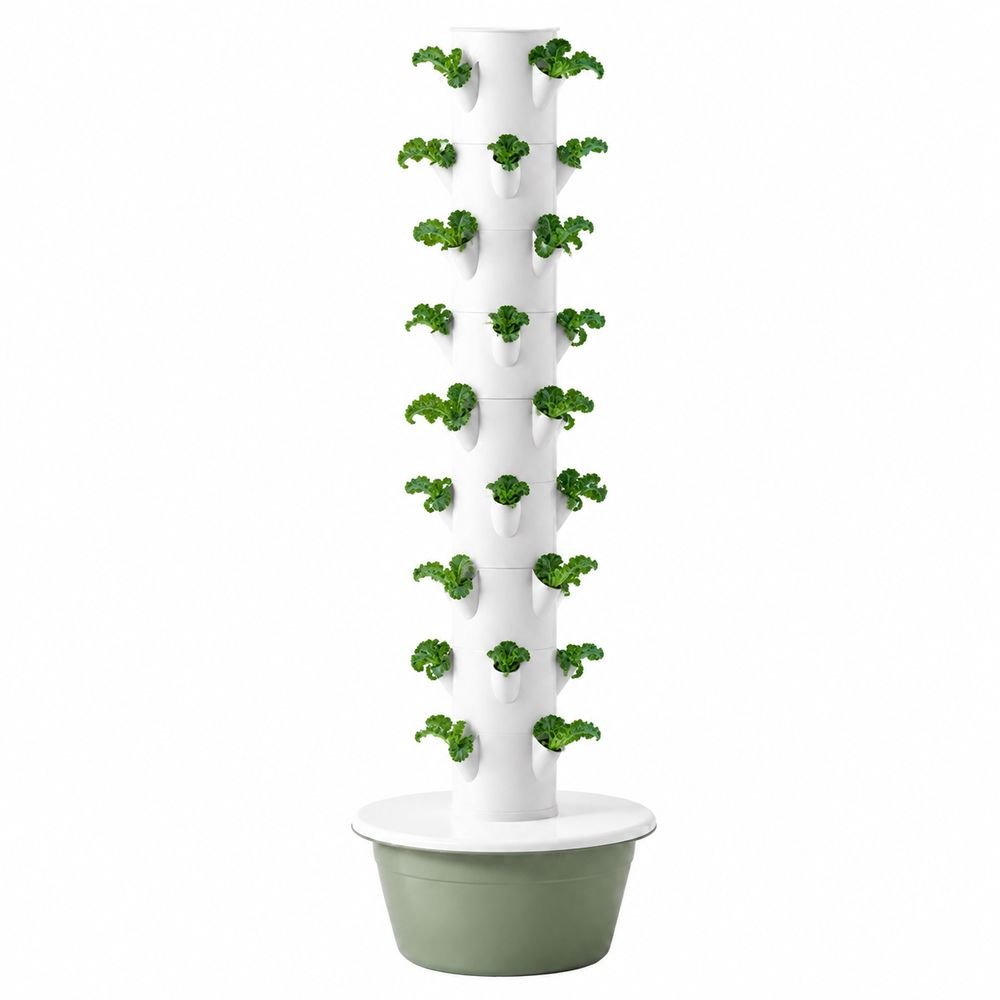
Every tower system has one input that arrives with no specification sheet and no warning label: the water. Growers spend months choosing crops, towers, lights, and nutrient programs, then fill the reservoir from whatever tap, well, or tank is on site and spend the next year fighting pH drift, nutrient precipitation, mysterious root problems, and EC that will not settle. In most cases the cause is not the nutrient program. It is the water.
This guide compares the four practical water sources for commercial tower systems — municipal tap, well, harvested rainwater, and reverse osmosis — with the numbers that actually matter: alkalinity, hardness, sodium, chlorine, and microbial load. It includes an eight-point test to run before you fill a single tower, the treatment option that fixes each problem, and blend ratios for mixing two sources to hit a target water profile without buying RO capacity you do not need.
A tower is a recirculating system with a small solution volume and a large root mass, which means whatever is in your water accumulates rather than drains away:
None of this is unsolvable. But the solution depends entirely on which source you have, and the cost difference between treating the right thing and treating the wrong thing is measured in thousands of dollars of equipment. For the downstream half of the problem, see our water quality and pH management guide.
| Municipal tap | Well water | Harvested rainwater | Reverse osmosis (RO) | |
|---|---|---|---|---|
| Typical alkalinity | 40 – 200 ppm as CaCO₃ | 100 – 400+ ppm | near zero (0 – 20 ppm) | near zero |
| Typical hardness (Ca + Mg) | 60 – 180 ppm | 120 – 400+ ppm | very low | near zero |
| Typical source EC | 0.2 – 0.6 mS/cm | 0.3 – 1.2 mS/cm | 0.01 – 0.05 mS/cm | 0.00 – 0.02 mS/cm |
| Sodium / chloride | low to moderate | variable; can be high | very low (coastal areas excepted) | very low |
| Iron, manganese, sulfur | negligible | common — the main well risk | negligible | removed |
| Microbial risk | low (disinfected) | moderate (iron bacteria, coliform) | moderate to high (dust, birds, storage tank) | low; membrane rejects most organisms |
| Residual disinfectant | chlorine 0.5 – 2 ppm, or chloramine | none | none | none |
| Effect on pH stability | stable but alkalinity pushes pH up | variable; can swing seasonally | very stable once remineralized | very stable and predictable |
| Treatment typically needed | carbon filtration and/or acid dosing | testing first, then iron/sulfur filtration and often RO blending | pre-filtration, UV or hypochlorous dosing, tank hygiene | remineralization (Ca, Mg, micros) required |
| Approx. cost per 1,000 L (264 gal)* | $1.50 – $5.00 | $0.20 – $1.00 (pumping, testing, treatment) | $0.30 – $1.50 (collection, filtration, storage amortized) | $2.50 – $8.00 incl. reject water and membranes |
*Indicative ranges only. Municipal water prices vary by more than tenfold between regions, and well and rainwater costs are dominated by your local energy price and the capital cost of collection or treatment.
Send one sample to a laboratory for the full panel, and confirm the cheap parameters on site with meters. This is the single highest-return hundred dollars in a new tower project.
| Parameter | Target for tower systems | Why it matters | If out of range |
|---|---|---|---|
| Alkalinity (as CaCO₃) | 40 – 100 ppm | Directly controls how fast reservoir pH rises | Acid injection, or blend with RO/rainwater |
| Hardness (Ca + Mg) | 60 – 150 ppm | Calcium and magnesium are nutrients, but excess scales the system | Blend with RO; avoid softeners that swap in sodium |
| Source water EC | under 0.3 mS/cm | Source EC consumes part of your nutrient budget before you add a single gram | Blend with RO or rainwater |
| Sodium (Na) | under 50 ppm | Accumulates with every top-up; stunts growth at elevated levels | Blend with a low-sodium source; plan periodic drain and refill |
| Chloride (Cl) | under 70 ppm (under 50 for sensitive crops) | Same accumulation problem, sharper toxicity threshold | Blend; check your fertilizer sources for chloride too |
| Iron (Fe) and Manganese (Mn) | Fe under 0.5 ppm, Mn under 0.5 ppm | Precipitate as sludge, clog nozzles, coat roots, block micronutrient uptake | Oxidizing filter followed by sediment filtration; often RO |
| Chlorine / chloramine | chlorine under 0.1 ppm at the reservoir | Kills beneficial microbiology and stresses roots | Carbon block filtration sized for your flow rate; chloramine needs catalytic carbon |
| Microbial load (total coliform, generic bacteria) | total coliform absent | Introduces Pythium and Fusarium into a recirculating system | UV sterilization or hypochlorous acid dosing, plus tank hygiene |
Two additional parameters are worth ordering if you are on a well: boron (target under 0.5 ppm) and sulfide (target zero). Both appear in specific geological regions, both cause symptoms that growers misdiagnose as nutrient deficiency, and both are expensive to remove after the fact.
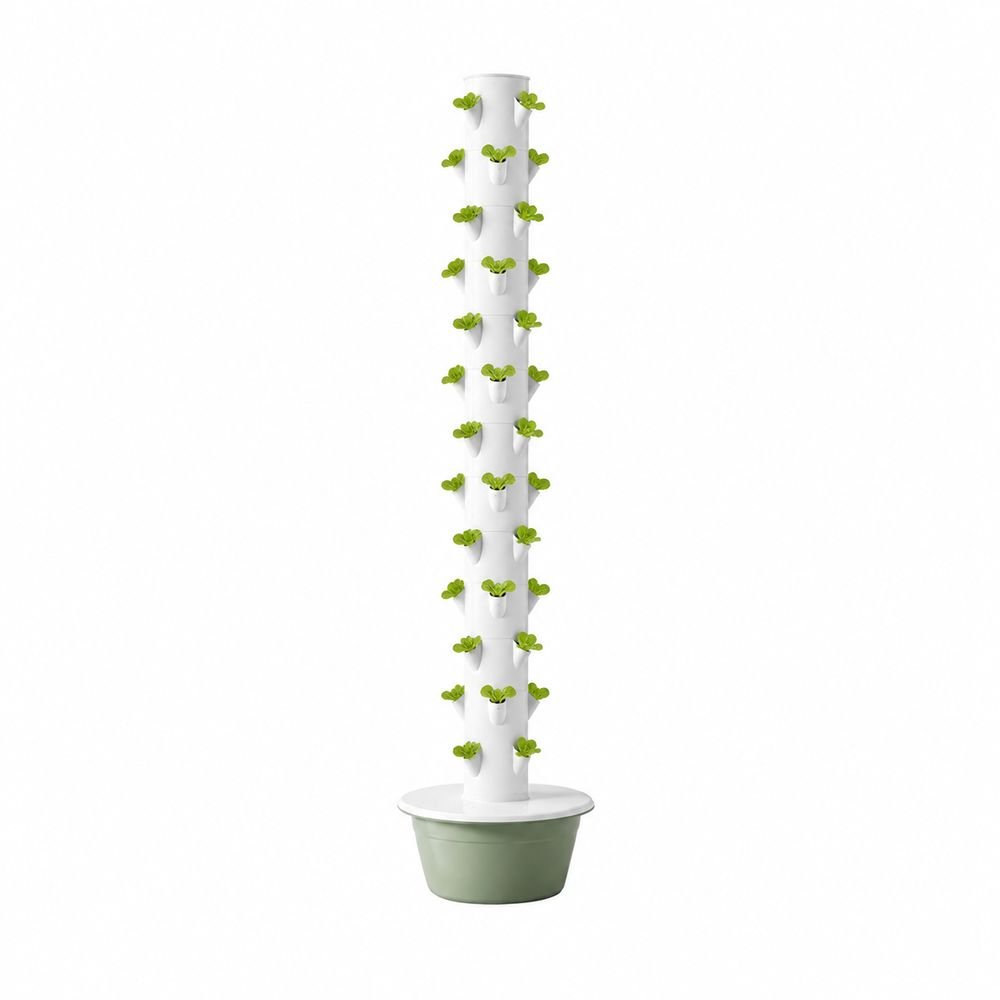
| Treatment | Removes | Does not remove | Notes |
|---|---|---|---|
| Sediment filtration (5 – 50 micron) | Particulate, rust, sand | Dissolved minerals, salts, organisms | Cheap insurance; protects downstream filters and nozzles |
| Carbon block filtration | Chlorine, organics, some off-tastes | Chloramine (unless catalytic carbon), minerals | Size for flow rate and contact time — undersized carbon passes chlorine through |
| Water softener (ion exchange) | Hardness (Ca, Mg) | Sodium — it adds sodium | Generally the wrong choice for hydroponics; if used, blend back or use potassium-based resin |
| Reverse osmosis | 90 – 99% of dissolved salts, sodium, iron, manganese | Nothing important; but it also removes the calcium and magnesium you want | Requires remineralization; produces 25 – 50% reject water |
| Acid injection | Alkalinity (neutralizes bicarbonates) | Salts, organisms, iron | The correct fix for high-alkalinity tap water; use food-grade acid and monitor pH and EC together |
| UV sterilization | Microorganisms passing the lamp | Anything dissolved; organisms in the channels | Requires clear water — put it after filtration, not before |
| Hypochlorous acid or chlorine dosing | Microorganisms in the reservoir and lines | Dissolved salts and minerals | Incompatible with beneficial bacteria programs; needs a residual target and a re-inoculation interval |
| Aeration / degassing | Dissolved CO₂, hydrogen sulfide | Salts and metals | Also raises dissolved oxygen, which is why it does double duty in towers |
The most common mistake on this list is installing a water softener because hardness readings look high. A softener exchanges calcium and magnesium for sodium, and sodium is the one ion you are trying to keep out of a recirculating tower system. If your water is hard and your source EC is acceptable, you usually need acid dosing for alkalinity and nothing else.
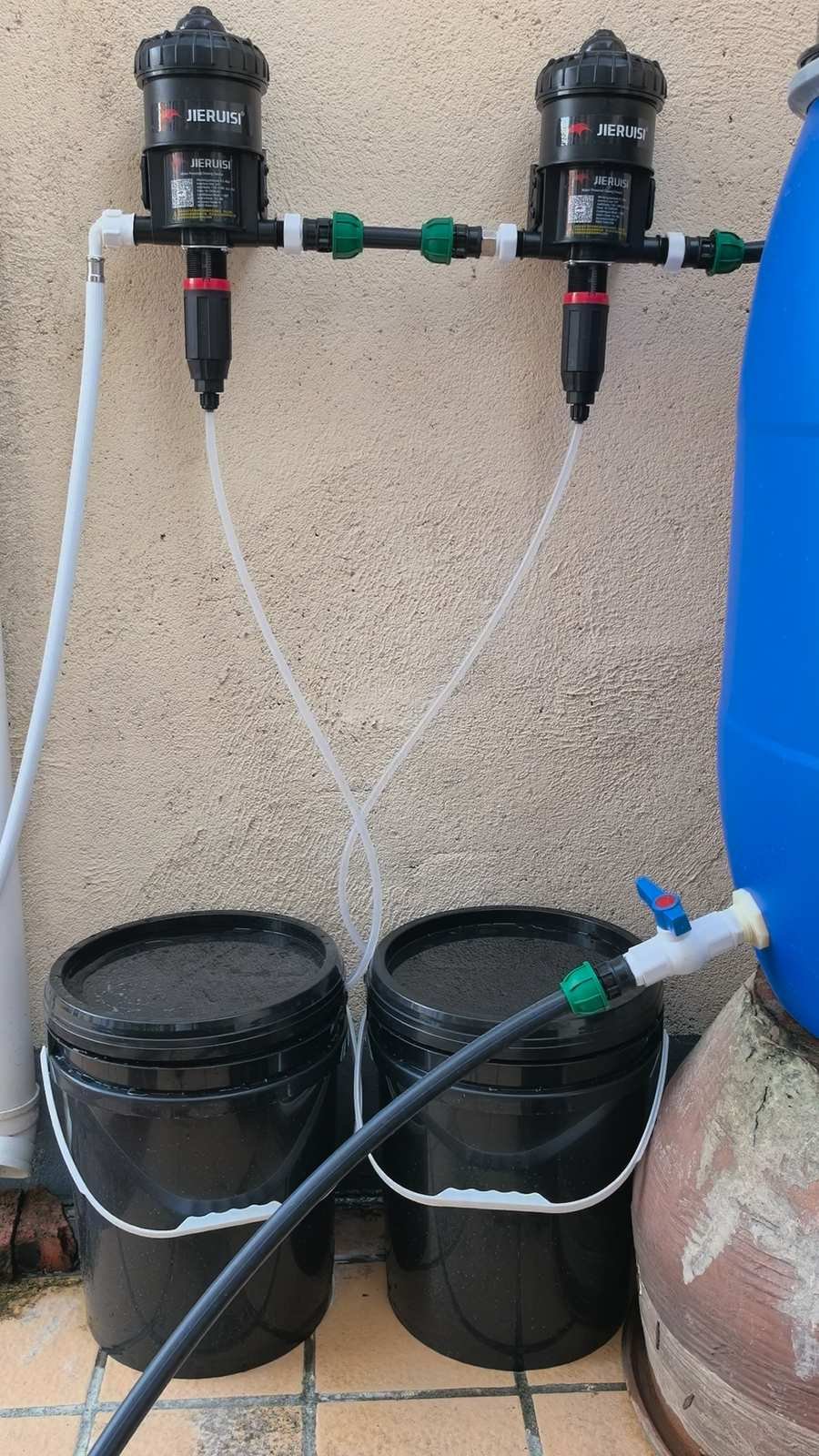
Full RO treatment of every liter is expensive and unnecessary for most facilities. Blending two sources to hit a target alkalinity and source EC costs a fraction of treating everything to zero and then adding minerals back.
The math is simple. To hit a target alkalinity, blend by proportion:
Fraction of low-alkalinity water needed = (source alkalinity − target alkalinity) ÷ (source alkalinity − low-alkalinity source alkalinity)
For example, tap water at 160 ppm alkalinity blended with rainwater at 10 ppm, targeting 60 ppm: (160 − 60) ÷ (160 − 10) = 67% rainwater, 33% tap. That single change typically eliminates daily acid dosing.
| Scenario | Blend | Result | Why it works |
|---|---|---|---|
| High-alkalinity municipal water (150 – 200 ppm) | 60 – 70% rainwater or RO + 30 – 40% tap | Alkalinity 40 – 70 ppm, source EC 0.1 – 0.25 mS/cm | Keeps the calcium and magnesium, removes the bicarbonate load |
| Hard well water with acceptable sodium | 50% RO + 50% well | Hardness and alkalinity roughly halved | Cheaper than full RO and preserves natural minerals |
| Well water with high sodium or iron | 70 – 100% RO, remineralized | Full control of every parameter | Iron and sodium cannot be blended down far enough to be safe |
| Rainwater-dominant supply | 80 – 100% rainwater + remineralization | Alkalinity under 20 ppm, EC controlled by you | Excellent stability; requires calcium, magnesium, and micronutrient addition |
| Good municipal water (alkalinity under 80 ppm, sodium under 50 ppm) | 100% tap | No treatment beyond carbon filtration | Do not spend money on a problem you do not have |
If you run RO or rainwater as your main source, a standard remineralization starting point is 120 to 150 ppm calcium and 40 to 50 ppm magnesium in the final solution, delivered as calcium nitrate and magnesium sulfate so the anions come along with useful nutrients rather than as inert salts. Micronutrient blends formulated for RO water are worth the small premium because they are already adjusted for near-zero source EC.
Rainwater is the best quality source available to most farms and the only one that is effectively free at the point of collection. The sizing calculation is straightforward:
Annual harvestable volume (L) = roof area (m²) × annual rainfall (mm) × 0.8 (the 0.8 accounts for evaporation, first-flush diversion, and system losses)
| Roof area | Annual rainfall | Harvestable volume per year | Towers this can support* |
|---|---|---|---|
| 100 m² (1,076 sq ft) | 600 mm (24 in) | 48,000 L (12,700 gal) | approx. 130 – 480 towers |
| 200 m² (2,150 sq ft) | 600 mm (24 in) | 96,000 L (25,400 gal) | approx. 260 – 960 towers |
| 200 m² (2,150 sq ft) | 1,000 mm (39 in) | 160,000 L (42,300 gal) | approx. 440 – 1,600 towers |
| 500 m² (5,380 sq ft) | 1,000 mm (39 in) | 400,000 L (105,700 gal) | approx. 1,100 – 4,000 towers |
*Assuming 1 to 3 L of consumptive use per tower per day, which covers a 12-layer tower with 48 plant sites under typical greenhouse conditions. Your actual figure depends on crop, climate, and VPD.
Three practical rules for rainwater systems: divert the first 20 to 30 minutes of rainfall after a dry spell (that is where dust, pollen, and bird droppings concentrate), keep storage tanks opaque and covered to prevent algae growth, and treat stored water with UV or hypochlorous acid before it reaches the reservoir because a warm storage tank is a microbial incubator. A 10,000 to 20,000 L tank gives most commercial facilities several weeks of buffer and turns rainfall variability into a manageable planning problem rather than a crisis.
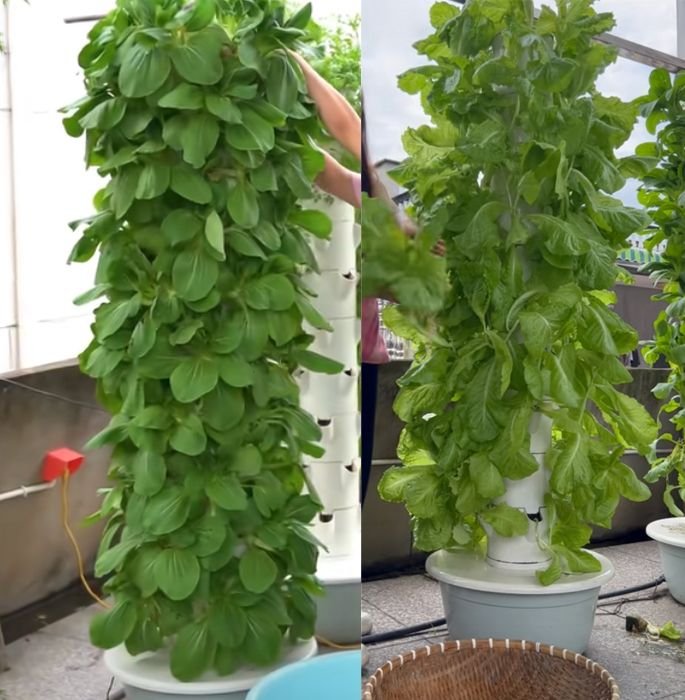
Water quality is not constant, and a system tuned in spring can drift out of range by midsummer without any change on your side:
The operational answer is a quarterly water test plus a written action threshold for each parameter. When alkalinity exceeds your target band, the response should be a pre-agreed change — a blend adjustment or an acid dose change — not a diagnosis performed under pressure while a crop is struggling.
Water quality is a system design variable, which is why we ask about your source before we quote a configuration:
Tell us your water source and we will spec the filtration, aeration, and reservoir configuration around it. It is a five-minute conversation at the quoting stage that routinely saves customers the cost of a treatment system they did not need — or a season spent fighting water they could have treated for a few hundred dollars. If your source is already causing problems, the symptoms map cleanly in our troubleshooting guide, and the biological side of reservoir management is covered in our beneficial microbes guide.
Yes, for most municipal supplies — with one condition. Test alkalinity and chlorine first. If alkalinity is under 80 ppm, sodium under 50 ppm, and total chlorine under 0.1 ppm after carbon filtration, tap water is a perfectly good source and you do not need RO. High-alkalinity tap water is the common case where growers conclude that tap water does not work, when what they actually need is acid dosing or a rainwater blend.
Chemically, rainwater is the best source most farms can get: near-zero alkalinity, very low EC, and no sodium. Biologically it needs management. Divert the first flush, keep storage tanks opaque and covered, and treat stored water with UV or hypochlorous acid before it enters the reservoir. The main nutritional adjustment is remineralization, since rainwater supplies almost no calcium or magnesium.
Only if your source water requires it — high sodium, high iron or manganese, or alkalinity so high that blending cannot bring it into range. RO costs $2.50 to $8.00 per 1,000 L including membranes and reject water, and it strips the calcium and magnesium you then have to buy back as nutrients. For most facilities with municipal or rainwater-dominant supply, blending plus acid dosing is cheaper and equally stable.
A full laboratory panel once at commissioning, then quarterly thereafter, plus a daily or weekly check of source EC and pH with handheld meters. Quarterly testing catches seasonal source changes — the most common cause of a system that was stable for months and then suddenly was not.
