You have decided on hydroponic towers. You have compared them against NFT and DWC systems, worked through the cost breakdown, and checked the yield per square foot. One question remains before you commit to a tower farm setup: where do you put them?
The same tower can perform completely differently depending on its environment. Indoor, greenhouse, and outdoor placements each change your lighting strategy, climate control needs, disease pressure, seasonality, and — most importantly — your payback period. This guide breaks down the three environments side by side and gives you a practical decision framework so you can pick the right one for your climate, budget, and target market.
The Three Environments at a Glance
Before we dig into the details, here is the honest summary. Indoor growing gives you total control and year-round production at the highest energy cost. Greenhouses offer the best balance of natural light and protection for most commercial growers. Outdoor growing has the lowest upfront cost but the most seasonality and weather risk. None of these is universally “best” — the right answer depends on your business model, and that is exactly what we will help you work through below.
Factor
Indoor
Greenhouse
Outdoor
Light source
100% LED
Natural + supplemental LED
Full sun
Climate control
Full (HVAC)
Partial (vents, fans, shade)
None
Growing season
Year-round
Extended, 9–12 months with heating
Seasonal
Upfront investment
Highest
Moderate
Lowest
Operating cost
High (electricity)
Moderate
Low
Pest & disease pressure
Lowest
Moderate
Highest
Yield consistency
Very high
High
Weather-dependent
Now let us look at each environment in detail, starting with the most controlled option.
Indoor Hydroponic Towers: Total Control, Higher Energy Cost
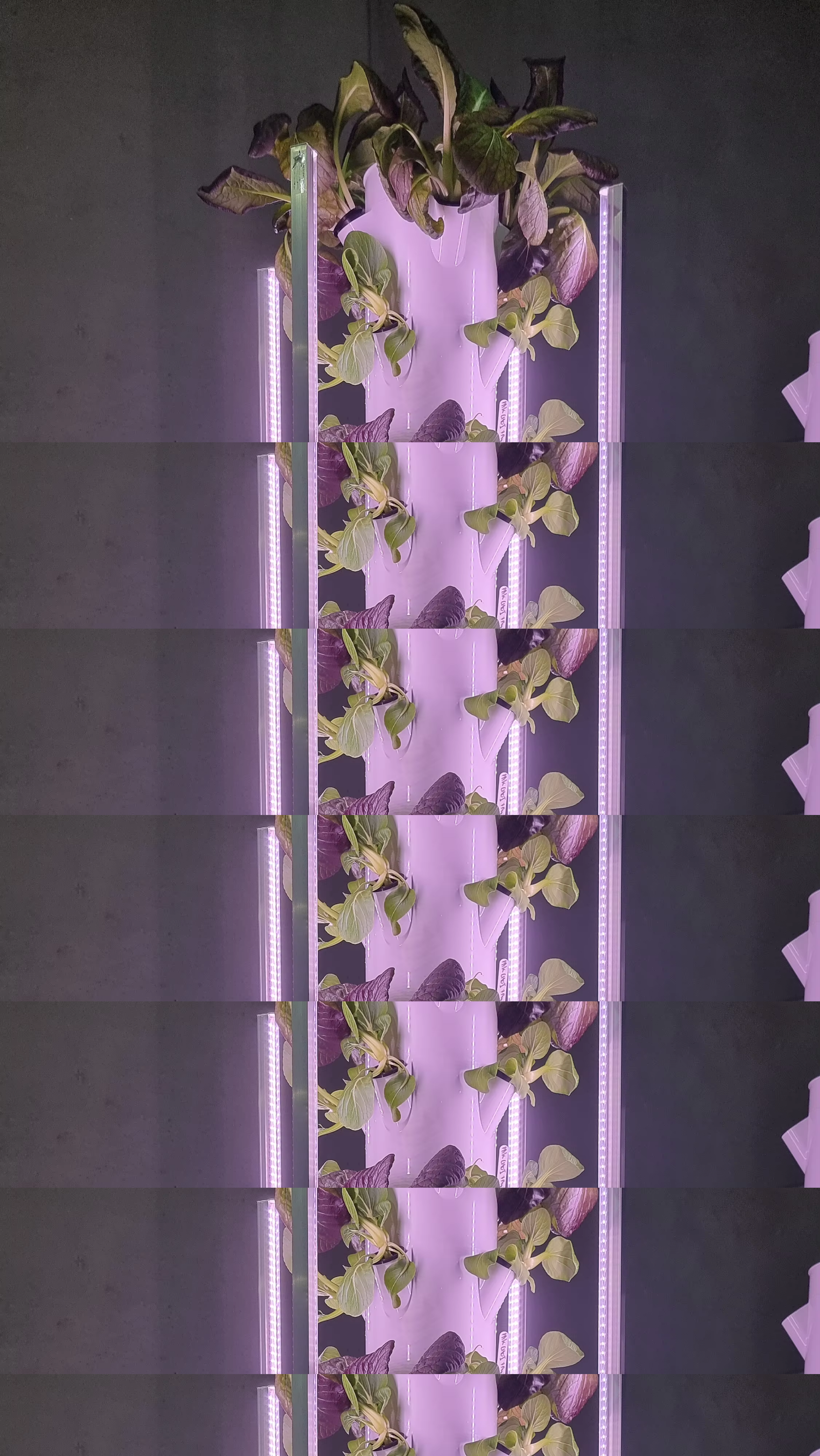
Indoor towers rely on LED grow lights, giving growers full control over light intensity and photoperiod.
Indoor setups are the most common choice for growers who need year-round, weather-proof production — think restaurants with fixed weekly contracts, or urban farms in cold climates where outdoor growing is impossible for half the year. Towers are placed in a warehouse, shipping container conversion, or dedicated grow room with LED lighting and climate control.
What indoor growing gives you
Predictable production. No weather events, no heat waves, no frost. You can sign supply contracts with confidence because your harvest dates do not move.
Lower pest and disease pressure. A closed room keeps aphids, caterpillars, and fungal spores out far more effectively than any screen can. This matters because pest pressure is the #1 killer of tower crops (see our complete pest control guide).
Precise light management. You control intensity, spectrum, and photoperiod. Seedlings get 18 hours of light, leafy greens get their ideal DLI, and you can push crops like basil and arugula for premium prices in winter.
Space efficiency. Towers already use vertical space well; indoors you can stack them in rows with narrow aisles since you do not need to design around sun angles.
What indoor growing costs you
Electricity is your biggest line item. LED lighting plus HVAC can add 30–50% to operating costs compared with a greenhouse in the same climate. Our LED lighting guide explains how to size lights so you are not overpaying.
Higher upfront cost. You need grow lights, insulation, HVAC, and often dehumidification. Budget for roughly 2–3x the equipment cost of an outdoor setup for the same tower count.
Your electricity rate matters. If you pay $0.30+/kWh, indoor leafy greens can struggle to be profitable unless you sell into premium channels (restaurants, direct-to-consumer). At $0.10/kWh, the math looks very different.
Best fit: cold climates, high-value crops, year-round supply contracts, and growers who want the lowest operational risk — accepting the highest energy cost in return.
Greenhouse Hydroponic Towers: The Commercial Sweet Spot
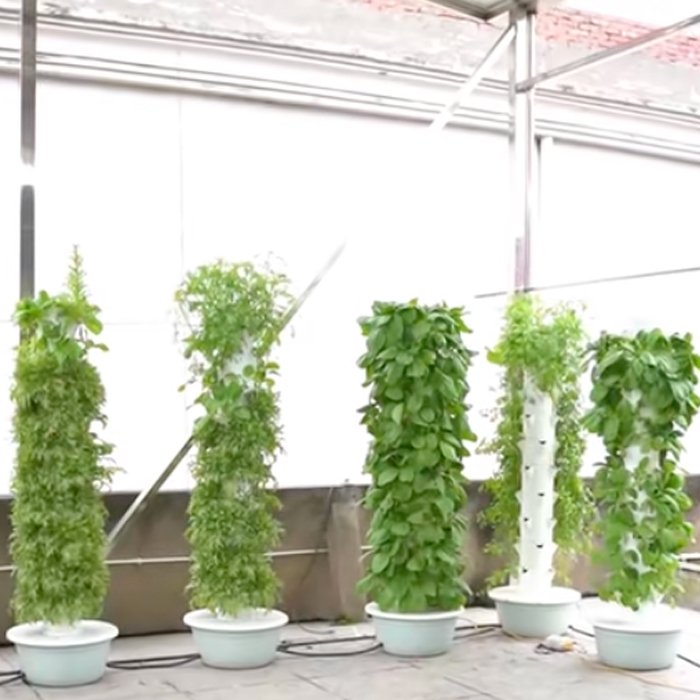
Greenhouses combine natural sunlight with protection, the most popular environment for commercial tower farms.
For most commercial buyers, a greenhouse is the environment that balances everything: free natural light, protection from the weather, and a much lower energy bill than indoor growing. This is why greenhouse lettuce and strawberry operations dominate the case studies we see from successful tower farms (here is a greenhouse lettuce case study from our customers).
Why greenhouses win for most growers
Free sunlight. The sun does the heavy lifting on photosynthesis. You only add LED supplement during winter months or on overcast stretches, cutting lighting electricity by 60–80% versus indoor.
Extended season, not full season. With passive heating and row covers, many growers reach 9–12 months of production even in temperate climates. In mild climates (USDA zones 8+), year-round production is realistic without HVAC.
Dramatically lower operating cost. No grow-room HVAC load, no dehumidifiers running 24/7. Your electricity bill becomes a fraction of an indoor setup.
Flexible investment. You can start with a simple hoop house and upgrade to a climate-controlled glasshouse as revenue grows — the towers themselves stay the same.
Greenhouse trade-offs to plan for
Seasonal light quality. Winter DLI drops fast in northern latitudes. Plan your crop mix so low-light months grow hardy greens (lettuce, kale) rather than light-hungry fruiting crops.
Heat management in summer. Unvented greenhouses can hit 40°C+ in July, which stresses towers and spikes reservoir temperatures. Budget for fans, shade cloth, and — in hot climates — evaporative cooling.
Pests can still get in. Ventilation openings are pest highways. Insect netting on vents and a weekly scouting routine are non-negotiable at commercial scale.
Best fit: the majority of commercial farms — market gardeners, restaurant suppliers, CSA operations, and growers scaling from a pilot to dozens of towers. If you are unsure which environment to choose, start here.
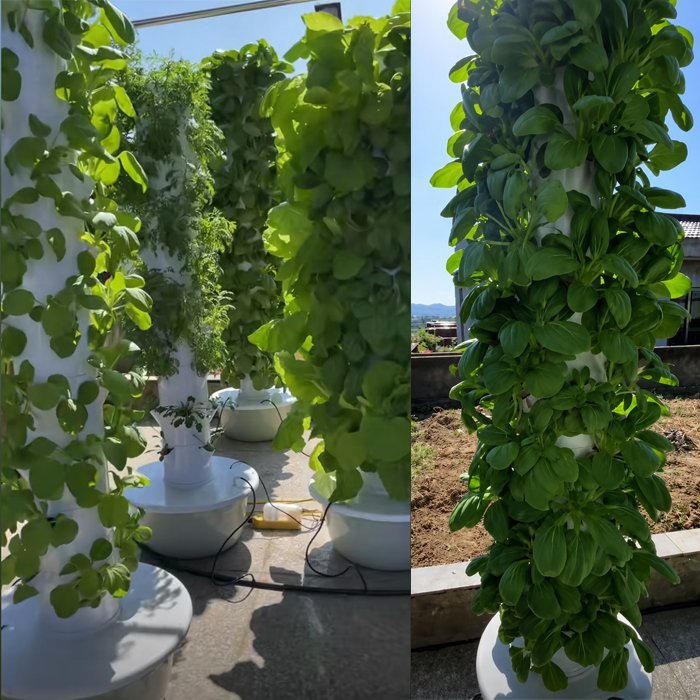
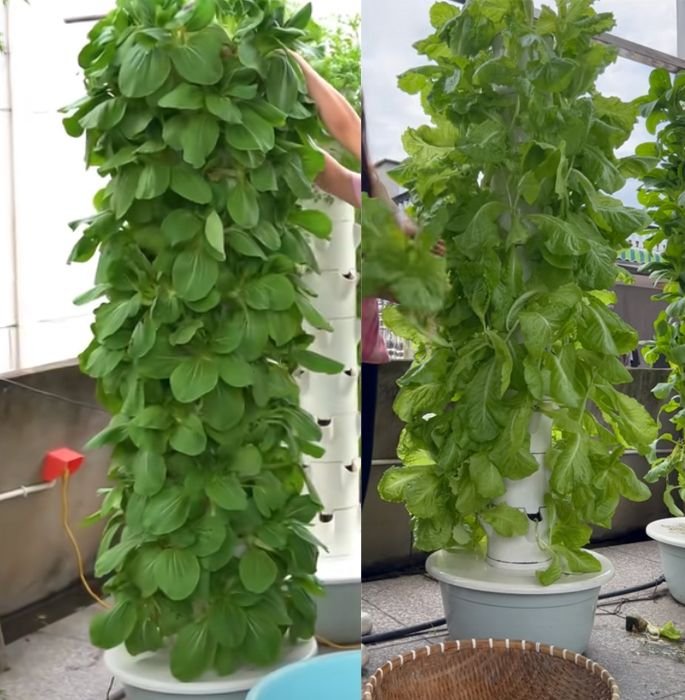
Outdoor towers run on full sun with the lowest upfront cost — ideal for mild climates and seasonal production.
Outdoor tower farming is exactly what it sounds like: towers placed on open ground, patios, or rooftops, running on natural sunlight with no climate control. It is the fastest way to start a tower farm on a small budget, and for mild climates it can work remarkably well for most of the year.
Why growers choose outdoor
Lowest cost to start. No grow lights, no greenhouse structure, no HVAC. Your investment goes almost entirely into the towers themselves — which is what you actually sell produce from.
Full sun intensity. Outdoor DLI in summer beats any indoor lighting setup. Crops grow fast, and fruiting crops like tomatoes and peppers actually perform better outdoors in season.
Simple maintenance. No fans to clean, no light fixtures to replace, no climate sensors to calibrate. The tower system itself — reservoir, pump, and plumbing — is the only equipment.
The hard limits of outdoor growing
Seasonality is real. Freezing temperatures stop production cold. In hardiness zones 6 and below, outdoor towers realistically produce 5–7 months per year unless you move them indoors for winter (many growers do — towers are portable).
Weather is your risk manager. Hail, high winds, and torrential rain can damage crops and knock towers over. Anchor towers properly and consider windbreak netting in exposed locations.
Highest pest and disease pressure. Outdoor towers face the full insect buffet. Our pest control guide covers the outdoor-specific strategies — row covers, beneficial insects, and spray rotations.
Reservoir temperature swings. Direct sun heats reservoirs in summer, risking root-zone temperatures above 24°C where disease and oxygen issues multiply. Position towers with afternoon shade or use white reservoirs that reflect heat.
Best fit: mild climates (zones 8+), seasonal businesses like farmers markets, and growers who want to validate the tower model with minimal capital before upgrading to a greenhouse.
Side-by-Side: Investment and Operating Economics
Numbers matter more than opinions when you are planning a commercial tower farm. The ranges below reflect real-world installations of 10–50 tower systems and assume you already own the towers — the comparison is about the environment around them.
Stop comparing specs and answer these five questions in order. Each answer narrows your choice until one environment is the obvious fit.
What is your hardiness zone? Zones 8 and warmer: outdoor is viable for 9+ months and greenhouses can run year-round. Zones 6 and colder: plan on a greenhouse or indoor space for winter production — outdoor alone will not fill contracts from November to March.
Do you have signed contracts that require year-round supply? Restaurants, grocers, and CSA commitments do not pause for winter. If yes, indoor or a heated greenhouse is mandatory — outdoor is off the table.
What is your electricity rate? Above $0.20/kWh, indoor leafy greens get squeezed. Below $0.10/kWh, indoor becomes competitive. In between, greenhouse wins on economics almost every time.
What is your capital position? Under $10k for the facility: start outdoor and reinvest profits. $10k–$50k: a hoop house or poly greenhouse. $50k+: you can build a climate-controlled greenhouse or a small indoor grow room.
What are you growing? Premium winter basil and microgreens justify indoor costs. Lettuce and kale for wholesale are greenhouse crops. Tomatoes, peppers, and cucumbers in season are happiest outdoors or in an unheated greenhouse.
If you answered “greenhouse” to two or more questions, you are in good company — it is the most common recommendation for first-time commercial tower farms. If you already run an indoor operation and are expanding, compare the ROI against container farms in our container farms vs. towers analysis.
One More Factor: The Tower Itself
Whichever environment you choose, the tower’s design determines how well it performs there. Three specifications matter most:
UV-stabilized materials. Outdoor and greenhouse towers face constant sun exposure. UV-stabilized food-grade plastic resists yellowing, brittleness, and micro-cracking that shorten the life of cheap towers.
Drainage and reservoir design. A well-designed tower sheds water quickly and keeps the reservoir shaded — both reduce the root-zone disease pressure that outdoor and greenhouse growers face.
Modularity. If you plan to start outdoors and graduate to a greenhouse, choose a tower system that moves easily between environments without re-plumbing. This is a hidden cost many buyers miss.
Factory-direct tower suppliers can build for your specific environment — UV-grade materials for outdoor, light-mounting options for indoor, and custom tower counts for greenhouse layouts. Planning your full setup? Our 100-tower farm setup guide walks through equipment lists and layout planning from day one.
Your Next Step
Choosing the environment is the first decision — the second is choosing a tower system that fits it. Tell us your climate, target market, and tower count, and we will help you spec the right configuration: UV-stabilized towers for outdoor, LED-ready towers for indoor, or greenhouse layouts scaled to your space. Factory-direct pricing starts at the container, so your investment goes into the towers — not middlemen.