Our Location
304 North Cardinal St.
Dorchester Center, MA 02124

304 North Cardinal St.
Dorchester Center, MA 02124

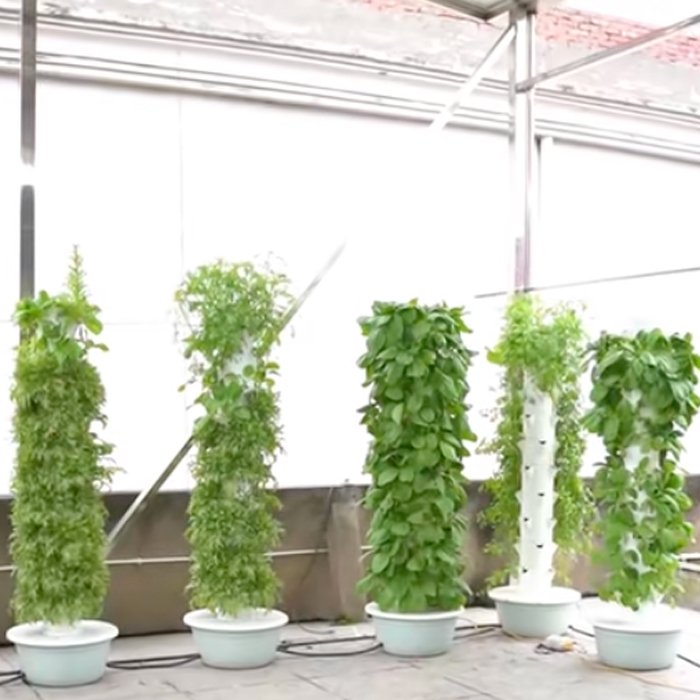
Your nutrient solution can be perfect, your pH dialed in, and your lights running at full power — yet your leafy greens still come out bitter, leggy, or covered in powdery mildew. More often than not, the culprit is invisible: the climate inside the canopy. This guide explains vapor pressure deficit (VPD), humidity, and airflow in plain terms, gives you exact targets for leafy greens, and walks you through the fixes commercial growers actually use to keep quality consistent, batch after batch.
Vapor pressure deficit (VPD) is the difference between the amount of moisture in the air inside a plant’s leaves and the amount of moisture in the surrounding air, measured in kilopascals (kPa). Think of it as the “drying power” of the air. When VPD is too high, air pulls water out of leaves faster than roots can supply it — stomata close, growth stalls, and leaf edges scorch. When VPD is too low, air is so humid that plants barely transpire — nutrients stop moving up the stem, calcium deficiency appears, and fungal diseases thrive.
Hydroponic towers are especially sensitive to VPD because they pack 30–50 plants into a single vertical column. The dense canopy traps humidity in a microclimate that can drift far from what your wall-mounted hygrometer reports. A reading of 60% RH at eye level can easily be 75% RH inside the tower core. If you are not measuring at canopy level, you are flying blind.
Leafy greens are not one-size-fits-all. Seedlings prefer a gentler climate; mature plants can handle — and actually need — a stronger drying force to drive nutrient uptake and crisp texture. These are the targets professional vertical farms run:
| Growth Stage | VPD Target | Temperature | Relative Humidity |
|---|---|---|---|
| Seedlings / clones (days 1–14) | 0.4 – 0.8 kPa | 20–24°C (68–75°F) | 65 – 75% |
| Vegetative growth (days 14–35) | 0.8 – 1.0 kPa | 20–24°C (68–75°F) | 60 – 70% |
| Finishing / pre-harvest (days 35+) | 1.0 – 1.2 kPa | 18–22°C (64–72°F) | 55 – 65% |
For most leafy greens — lettuce, kale, Swiss chard, basil, and similar crops — the sweet spot sits between 0.8 and 1.2 kPa. Below 0.6 kPa you invite disease; above 1.3 kPa you stress the plants. If you only remember one number from this article, make it this range.
You do not need a $500 climate computer to start. A reliable thermometer-hygrometer combo plus a VPD chart (or a free online VPD calculator) is enough for a small operation. Enter temperature and relative humidity, and the calculator returns your VPD in kPa. The math is simple, but the placement is not:
Automated controllers that tie a dehumidifier or exhaust fan to a VPD setpoint are worth the investment above roughly 10 towers — they remove the human error that causes most quality swings.
High humidity is the number one climate problem in tower systems. Open reservoirs and dense canopies keep releasing moisture into the air, and in a sealed or poorly ventilated room, RH creeps to 75–85%. The results: powdery mildew, botrytis, stretched stems, and weak flavor. The fixes, in order of effectiveness:
Low humidity (below 45% RH) is less common but equally damaging — it pushes VPD above 1.5 kPa, stomata slam shut, transpiration stops, and calcium stops moving to new leaf tissue. You will see tip burn on young leaves and curling leaf margins on mature ones. Raise humidity with a cool-mist humidifier or by reducing exhaust fan runtime, and check that your water temperature stays below 24°C (75°F) to avoid excess heat buildup.
Airflow does three jobs in a tower room: it carries CO₂ to leaves, it breaks up stagnant humid pockets inside the canopy, and it strengthens stems so plants stand upright instead of flopping. A room with zero air movement will fail at VPD control no matter how good your dehumidifier is.
Airflow also works hand-in-hand with your pest control program — moving air makes it harder for fungus gnats and thrips to settle, and dry leaf surfaces are far less attractive to disease pressure.
When quality slips, work backwards from the symptom. This table covers the climate-related failures we see most often in commercial tower operations:
| Symptom | Most Likely Climate Cause | Fix |
|---|---|---|
| Tip burn on young leaves | VPD too high / transpiration stalled by heat | Lower VPD to 1.0–1.1 kPa, cool the room, check calcium uptake |
| Leggy, stretched plants | VPD too low + weak airflow | Raise VPD toward 1.0 kPa, add fans, check light intensity |
| White powdery patches on leaves | High humidity + stagnant air | Dehumidify, run night fans, remove infected leaves |
| Gray mold at the tower base | RH above 80% near the reservoir | Cover the tank, add bottom airflow, reduce watering cycles |
| Curling leaf margins | Humidity below 45% | Add humidifier, reduce exhaust runtime |
| Slow growth despite perfect nutrients | VPD outside the 0.8–1.2 kPa band | Recalculate VPD at canopy level and correct |
If yellowing or root issues appear alongside any of these, the problem may not be climate alone — our tower troubleshooting guide covers nutrient and root-zone causes, and the water quality and pH guide covers the reservoir side.
Climate control is not a set-and-forget exercise. Summer heat drives humidity up and VPD down; winter heating dries the air out and pushes VPD up. Each season needs its own playbook:
Consistent quality is what separates a farm that sells every harvest from one that discounts half of it. Yield data from real tower operations shows that growers who master climate control routinely outproduce those who only chase nutrients and lights.
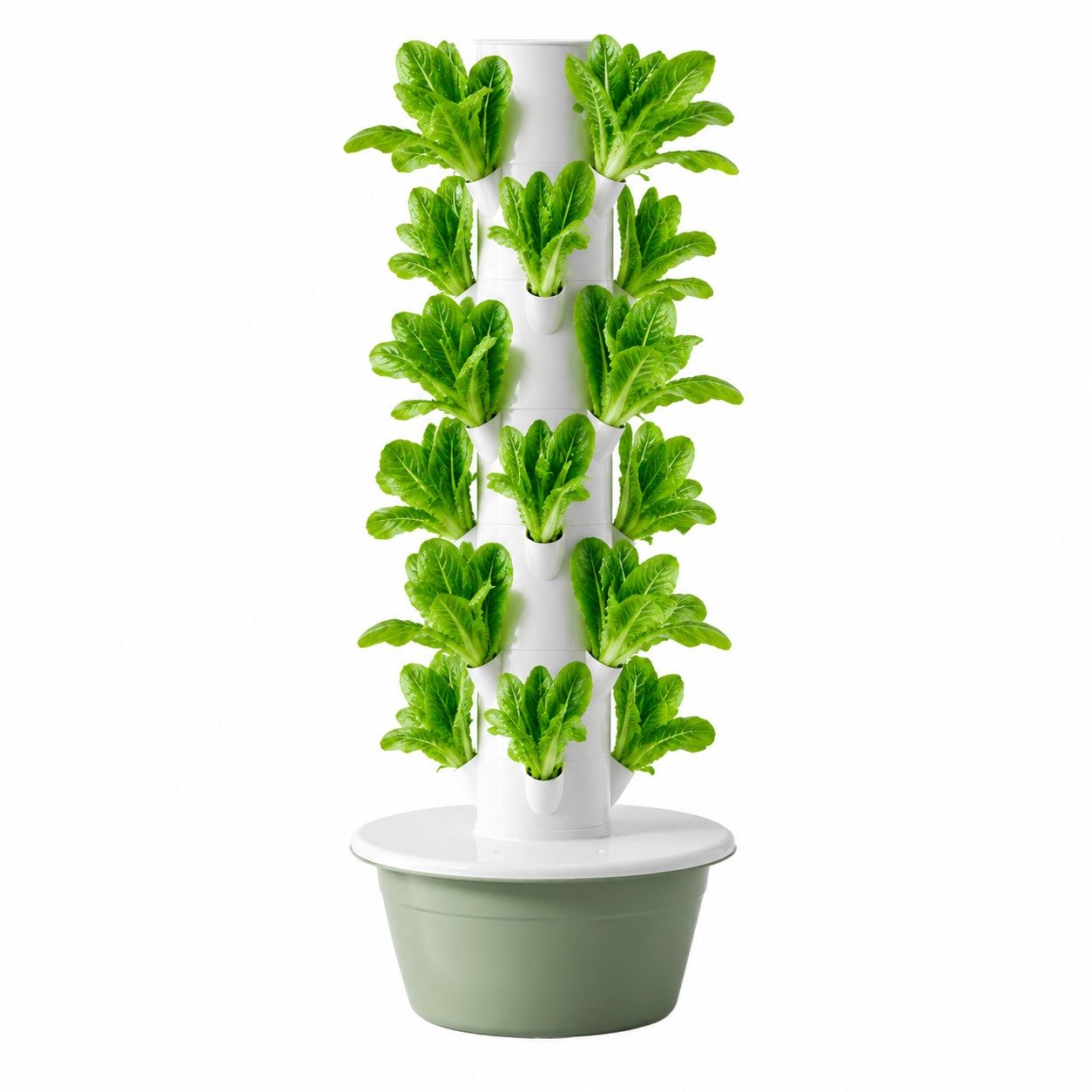
If you are planning a commercial tower installation and want a system matched to your climate — from greenhouse layouts to fully indoor setups — our engineers can help you spec the right configuration. Send us your growing space details and we will come back with a recommendation.
