Our Location
304 North Cardinal St.
Dorchester Center, MA 02124

304 North Cardinal St.
Dorchester Center, MA 02124

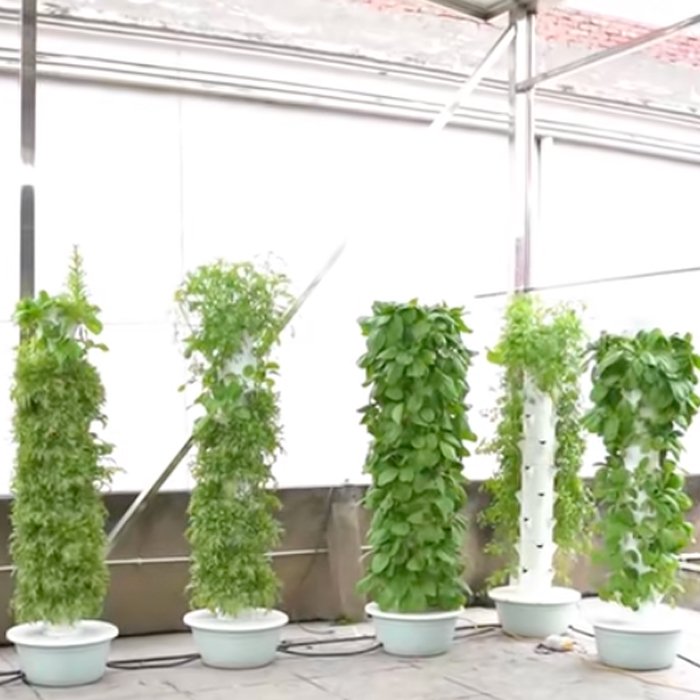
Minute 0: the circulation pump stops. Nothing wilts. Nothing alarms, unless someone planned for it. In a 12-layer tower, the first place to show stress is layer 11 or 12 — the top of the stack, furthest from the reservoir, fastest to lose the thin film of water that keeps a root zone alive. By the time a grower walking the aisle notices dry media in the top row, the outage is already 45 to 90 minutes old, and the clock on the rest of the stack started at minute zero.
Most commercial tower rooms are built around the assumption that the grid stays on. That assumption is usually right, and it is also the single largest uninsured risk in the building: a pump that stops for four hours can cost a full cycle across every tower on that circuit, and a dead pump on one zone looks exactly like a nutrient problem for the first two days.
This guide does two things. First, it puts a realistic number on the window you have — by layer position, crop and air temperature — so you stop guessing whether you need to act. Second, it lays out the four-layer protection stack that commercial growers use (circuit split, pump redundancy, generation, alarms), with the sizing math for a solar plus battery system that can actually carry the pump, and an honest comparison against a diesel generator.
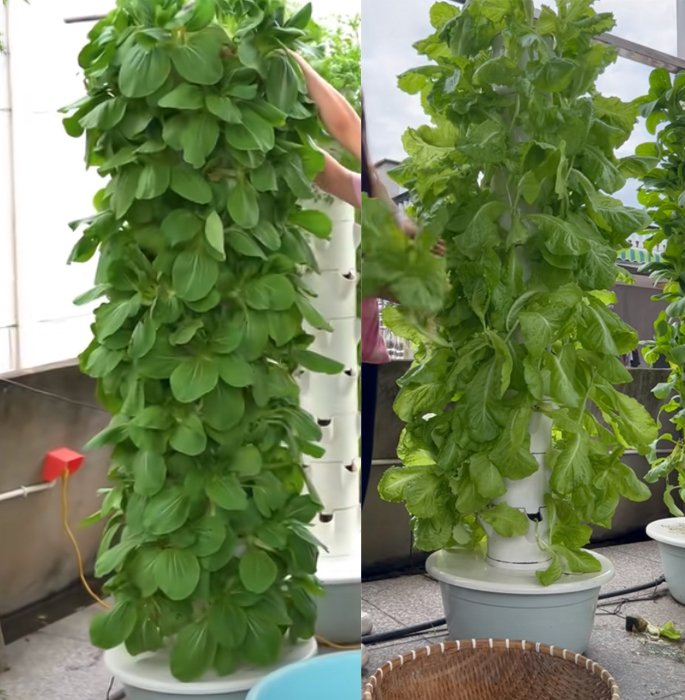
A tower does not dry evenly. Water sits in the media by capillary action, and the top of the stack is the thinnest, warmest and best-ventilated part of the column. Every tower room we have walked for flow and cycle verification shows the same pattern: the top two layers are the first to show dry media, and the last to recover when cycles resume.
Air temperature drives the size of the window more than anything else in the room. Warm air moving across a canopy pulls water out of the media and off the leaf surface; the same media in cool, still, high-humidity air holds its moisture far longer. A room at 30 °C (86 °F) with fans running has roughly half the window of a room at 18 °C (64 °F) with vents closed.
Use the table below as a planning baseline for a 12-layer, 48-site tower with rockwool or coco plugs. It is not a promise about your room — media type, root mass and airflow all move the numbers — but it gives you the correct order of magnitude for a decision that normally gets made by panic.
| Position or condition | Time before media visibly dries | Time before root damage becomes irreversible | What it means in practice |
|---|---|---|---|
| Layers 11–12 (top of stack) | 45–90 min at 24–27 °C (75–81 °F) | 2–3 h | First visual warning; check this row first in any outage |
| Layers 7–10 | 2–3 h | 4–6 h | Still partly wetted by drainage from above |
| Layers 1–6 | 4–6 h | 8–12 h | Last to dry, first to recover without yield loss |
| Air temperature 30 °C+ (86 °F+) | Half the times above | Half the times above | Fans and open vents dry media fastest |
| 18 °C (64 °F), high humidity, fans off | About 50% longer | About 50% longer | Cooling the room buys time as well as quality |
| Microgreens and shallow-media crops | Often under 60 min | 1–2 h | Thin media, high surface-to-volume ratio |
| Leafy greens (lettuce, kale, spinach) | 45–90 min in top layers | 2–4 h | Most exposed commercial category |
| Basil and culinary herbs | 60–120 min in top layers | 3–5 h | Slight edge over lettuce |
| Strawberries | 2–4 h | 6–10 h | Larger root mass holds moisture longer |
| Tomatoes and vining crops | 3–5 h | 8–12 h | Deepest root volume in a tower system |
Two warnings that cost real money. First, damage is delayed: plants that re-wet inside the window often look normal for 48 to 72 hours and then collapse, because the outage also crashed dissolved oxygen in the reservoir and opened the door for Pythium. If the reservoir also went unaerated, treat the next three days as a root zone recovery case, not a return to normal. Second, reservoir temperature rises quickly without circulation — solution sitting still in a warm room is the worst possible combination for root health.
The cheapest change in the entire stack is electrical separation. If the controller, the dosing pumps and the circulation pump all share one breaker, then tripping that breaker takes down irrigation, dosing and monitoring together — and there is nothing left to tell you what happened.
What to specify: one dedicated circuit per pump zone, a separate circuit for the controller and sensors, and a small UPS (or a battery-backed DC supply) on the controller only. That way an outage leaves you with a live controller that can still log, alarm and — if the pump is on a battery-capable circuit — sequence zones through the battery.
Put the wall between the load and the generator: the pumps are the load, the controller is the decision-maker. A 100-tower room with pumps on four zones and the controller on a single small UPS is a system that knows it is in trouble. The same room with everything on one breaker is a system that finds out at harvest.
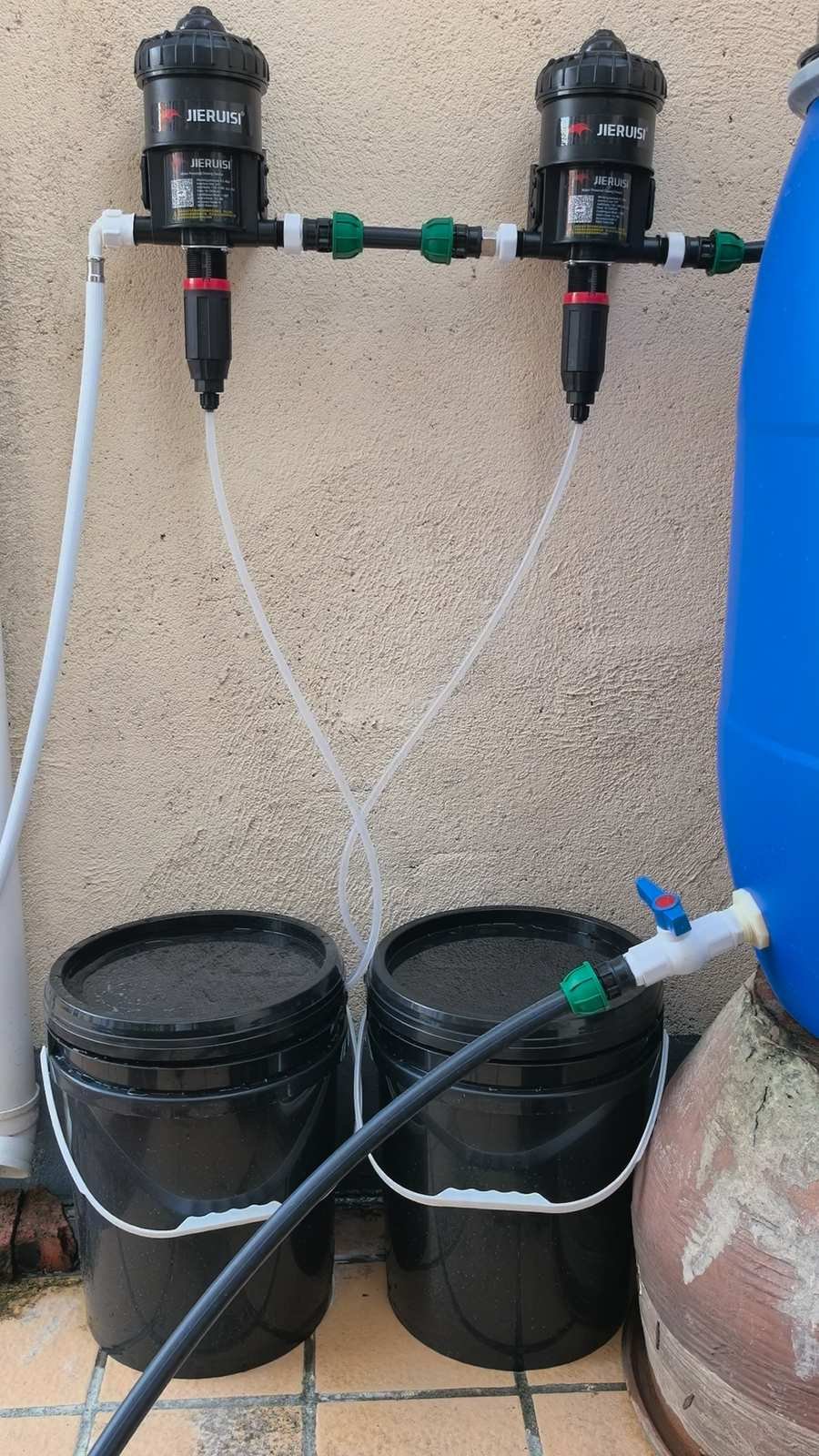
Pumps are wear items, not permanent equipment. A commercial pump running 25% duty in a tower room is typically a 2 to 4 year component, and the failure mode is usually a slow loss of flow rather than a dramatic stop — which is why flow verification belongs in the weekly routine. A pump that is 20% down does not alarm anyone; it just quietly under-irrigates the top layers until the crop tells you.
Three things make the difference between a bad afternoon and a lost cycle:
That last item is the one growers skip and then improvise at 2 a.m. Wetting the top two layers of a tower takes seconds per tower with a sprayer; leaving them dry for three hours takes out the whole column’s most productive sites.
Backup generation has one job in a tower room: keep the pump cycling and the controller alive until the grid returns. It does not need to run the lighting, and sizing it for lighting is how projects get quoted at five times the necessary capital. Start from the pump and control load only.
The load basis is smaller than most buyers expect. In our own eight-tower build, eight small pumps running at roughly 25% duty came to about 0.5–0.9 kWh a day. Per tower, a 12-layer, 48-site column with a 10–18 W magnetic-drive pump running the same duty cycle lands at roughly 0.1 kWh a day. Scale that to a room and add aeration and controls, and you are planning in single-digit kilowatt-hours — the range a modest solar array covers comfortably.
There are only two signals worth waking someone for: no flow, and no power. Everything else in a tower room can wait until morning. A flow or current sensor on the pump circuit catches the slow failure; a loss-of-power contact on the controller circuit catches the outage. Controllers with remote monitoring can push both to a phone, along with the reservoir level if your room is monitored remotely.
Route the alert to a named person with a phone number, not to a group channel. Test it once a quarter by pulling the breaker and timing how long it takes for the text to arrive — an alarm that reaches nobody is not protection, it is a log entry.
The math is four steps, and each one has a decision hidden in it: daily critical energy, array size, battery size, and inverter surge capacity.
That last point is worth more than it sounds. Pump inrush is typically about three times running current. Start four zones simultaneously and you need an inverter built for four surges at once; sequence the zones one at a time through the controller and your backup only ever carries one. Sequencing shrinks the battery, the inverter and the cost of the whole system — and the crop does not notice, because the top layers stay wet either way.
| Critical load | Target ride-through | Battery energy at 85% inverter efficiency | 48 V battery bank |
|---|---|---|---|
| Controller only (10–20 W) | 4 h | ≈ 90 Wh | 48 V × 3 Ah |
| Controller plus one pump zone (≈ 250 W) | 4 h | ≈ 1,200 Wh | 48 V × 30 Ah |
| Controller plus four zones started at once (≈ 1,020 W) | 2 h | ≈ 2,400 Wh | 48 V × 60 Ah |
| Controller plus zones sequenced one at a time (≈ 270 W) | 4 h | ≈ 1,270 Wh | 48 V × 30 Ah |
| Room size | Daily critical energy | PV array (4 peak sun hours, 75% derate) | Battery (12 h autonomy, 20% margin) | Hybrid inverter | Indicative hardware cost |
|---|---|---|---|---|---|
| 25 towers | ≈ 3.5 kWh (2.5 pump + 1.0 aeration/controls) | 1.2 kW | 3 kWh LiFePO4 | 3 kW / 6 kW surge | $4,500–7,500 |
| 50 towers | ≈ 6 kWh | 2.0 kW | 5 kWh LiFePO4 | 4 kW / 8 kW surge | $7,000–11,000 |
| 100 towers | ≈ 12 kWh | 4.0 kW | 8 kWh LiFePO4 | 6 kW / 12 kW surge | $11,000–17,000 |
Hardware costs only, before any incentive and before installation labor. In the United States, commercial solar plus storage may qualify for a federal investment tax credit; eligibility and the current percentage depend on your entity and tax position, so confirm it with your accountant rather than assuming it.
A generator is the default answer at most farms, and for a short outage it is a perfectly reasonable one. The comparison changes once you count fuel, service, exercise runs and the siting constraints of running combustion equipment near a sealed grow room.
| Line item | Solar + battery | Diesel generator (5–8 kW standby) |
|---|---|---|
| Upfront hardware | $11,000–17,000 (PV, battery, hybrid inverter, racking, wiring) | $2,500–7,000 (unit, transfer switch, pad, fuel tank) |
| Fuel | $0 | $150–900 a year, depending on outage hours plus weekly exercise runs |
| Routine maintenance | Panel cleaning 2–4× a year; connector and torque checks | $200–500 a year: oil, filters, coolant, fuel stabilizer, exercise runs |
| Replacements inside 5 years | Battery typically 8–12 years at 3,000–6,000 cycles | Starting battery every 3–5 years; belts and hoses as needed |
| Runtime available | Every sunny day, with battery buffer through the night | Until the fuel runs out, typically 8–24 hours on a small tank |
| Noise and siting | Silent; needs roof or wall area for PV and a structural check | 65–75 dB; needs an outdoor pad with exhaust away from air intakes |
| Other benefit | Offsets daytime pump load all year, trimming the largest line in tower ownership cost | None beyond outage coverage |
| Five-year total | $11,000–17,000, almost all capital | $4,000–12,000 including fuel and service |
The honest framing is not which system is cheaper — it is which failure you are insuring against. A room that sees two-hour utility interruptions a few times a year is well served by a battery-only system charged from the grid, which is the cheapest ride-through option available. Solar earns its place where outages run long, where the pump load is worth offsetting year-round, or where a generator cannot be sited safely. Fuel-based generation inside a sealed grow room or an enclosed greenhouse bay is not an option at all: carbon monoxide is the risk that ends the discussion.
Energy is 45 to 65% of five-year tower ownership cost in our own five-year cost breakdown, so any generation asset that also offsets daytime pump load is working on the biggest line in the budget, not a rounding error.
The practical order of operations for most rooms is: separate the circuits, hold a tested spare pump per zone, put the smallest UPS that covers the controller and one zone on the critical path, then size generation for the pump load only. Building conversions that add generation later should plan the roof and wall penetrations up front, which is one of the coordination points in converting an existing building to towers.
In a 12-layer tower at 24–27 °C (75–81 °F), expect the top layers to show dry media within 45 to 90 minutes and irreversible root damage after roughly 2 to 3 hours. Lower layers hold moisture far longer, and cooler rooms extend every window. Microgreens and shallow-media crops are the most exposed; tomatoes and strawberries the least.
The pump, aeration and controls can run on a modest solar plus battery system — a 100-tower room needs roughly 12 kWh a day for those loads. Lighting, heating and dehumidification are an order of magnitude larger, so a fully off-grid commercial room is a different project with a much larger array. Most growers use solar as outage protection and daytime load offset, with the grid covering the rest.
For short, frequent outages a grid-charged battery is the cheapest and simplest. For multi-day storm outages, either solar plus a larger battery bank or a generator with stored fuel will do the job — the generator costs less up front and more to run, and must be sited outdoors. Whatever you choose, never run combustion generation inside a sealed grow room.
Size it for the controller plus one pump zone, not the whole room. Sequencing zones through the controller keeps the critical load near 200–400 W, which a small 48-volt battery bank covers for several hours. A room that tries to carry every zone at once needs four times the battery for the same protection.
Continuity is cheapest when it is designed before the container leaves the factory. Circuit separation per zone, alarm contacts brought out to a labeled terminal block, DC penetration points marked where your roof or wall allows, and pump zones sequenced rather than started together are all shop-floor decisions — retrofitting them into a running room costs more and takes a shutdown. If outage exposure is part of your build plan, it belongs in the same conversation as layer count and model selection, because both change the load schedule you will live with.
