Our Location
304 North Cardinal St.
Dorchester Center, MA 02124

304 North Cardinal St.
Dorchester Center, MA 02124

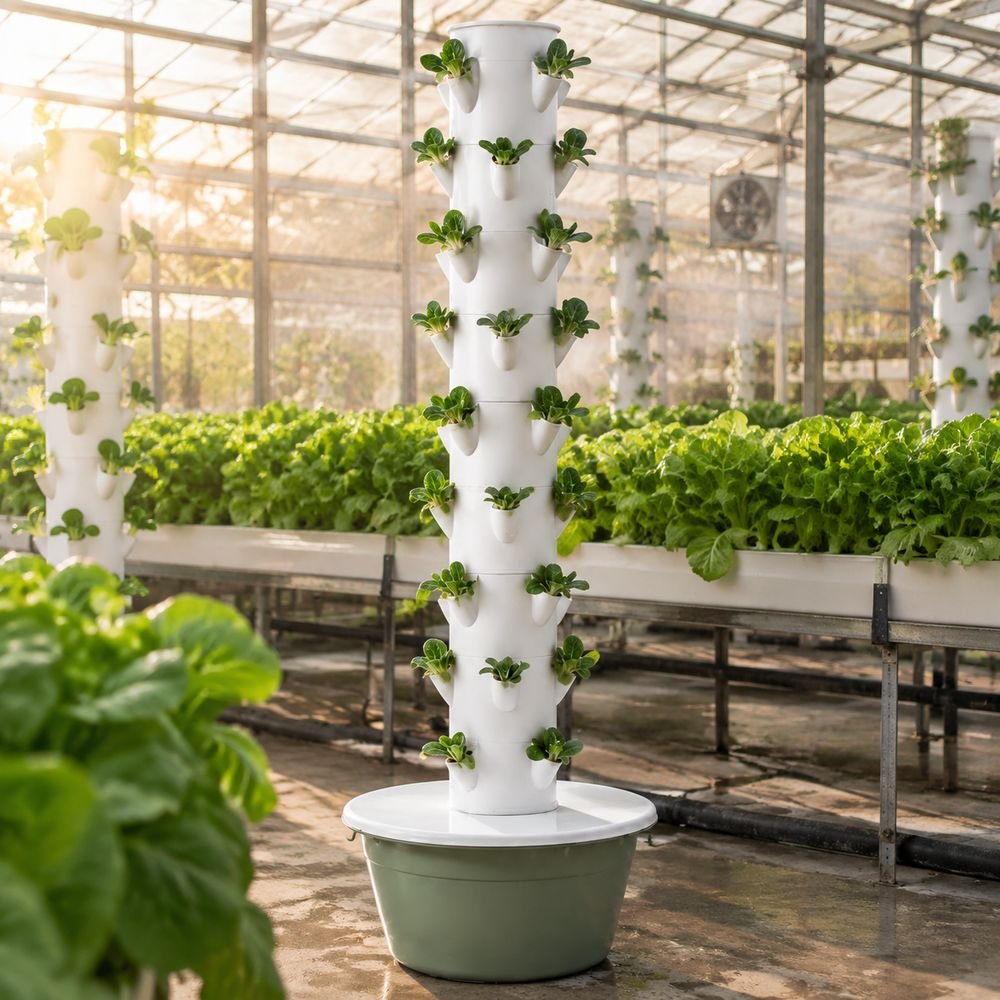
Ask ten produce buyers whether hydroponic lettuce can be sold as organic and you will get ten different answers. Some will tell you it is impossible because organic means soil. Others will point at the organic berries and tomatoes already sitting in their cooler, most of which were grown in containers without a gram of field soil. Both groups are partly right, and that confusion is costing commercial growers real money.
If you are planning a tower farm, this is not an academic debate. Organic certification decides which retail shelves you can reach, what price per pound you can defend, and in some cases whether a wholesale buyer will even take your first call. It also changes your nutrient program, your pest control toolkit, and your paperwork burden from day one.
This guide gives you the straight answer, market by market: where hydroponic produce can legally carry an organic seal, where it cannot, exactly what a certifier will ask a tower operation for, what certification costs, and what to do in the markets that shut the door. If you are still deciding on equipment, read it before you place your order, because a few sourcing decisions made now will either help or block certification later.
Under the USDA National Organic Program (NOP), hydroponic and container-based production can be certified organic. This is not a loophole or a gray area. The National Organic Standards Board debated a formal prohibition in late 2017 and the motion to exclude hydroponics failed, leaving hydroponic operations eligible. Certifiers accredited by the USDA have been certifying container, substrate, and hydroponic operations for years, and a large share of the organic berries, tomatoes, peppers, and cucumbers sold in the United States comes from exactly these systems.
The European Union takes the opposite position. Under Regulation (EU) 2018/848, organic crop production must take place in living soil with a connection to the subsoil, which rules out standard hydroponics. Canada, the United Kingdom, and Japan also require soil-based production for their organic seals. So the same tower farm can be legitimately organic in Ohio and legally barred from the organic label in Ontario or Amsterdam.
The practical rule for exporters: your organic claim travels only as far as the standard that issued it. Certification under one program does not automatically make your produce organic in another market.
The objection is philosophical as much as technical. One camp defines organic agriculture as soil stewardship: you feed the soil, the soil feeds the plant, and biological activity in that soil is the point of the whole system. By that definition a nutrient solution running through a tower cannot be organic no matter what goes into the tank.
The other camp defines organic by inputs and outcomes: no synthetic fertilizers, no prohibited pesticides, no GMOs, verified records, and dramatically lower water and land use. By that definition a well-run tower farm is not just compliant but ahead of the field average.
The regulators split along exactly this line, and the market has too. Expect this to show up in three concrete ways when you sell:
This is the single most important table in this article if you export or plan to. Confirm current details with a certifier before you print packaging, because standards do get revised.
| Market / Standard | Hydroponics eligible for organic? | What growers need to know |
|---|---|---|
| United States (USDA NOP) | Yes | Container, substrate, and recirculating hydroponic systems are certifiable. Aeroponic production has been treated as ineligible, so tower design matters. Certifier interpretation varies, so choose yours early. |
| European Union (EU 2018/848) | No | Organic crops must grow in living soil connected to the subsoil. A narrow legacy exemption for certain demarcated-bed operations in a few Nordic countries is being phased out. |
| United Kingdom | No | Retained soil-based requirements. Major UK certifiers explicitly exclude soilless production from organic status. |
| Canada (COR) | No | The Canadian Organic Standards do not permit hydroponic or aeroponic crop production. Mushrooms and sprouts are handled separately. |
| Japan (JAS Organic) | No | JAS organic plant production is soil-based, so hydroponic produce cannot carry the JAS organic seal. |
| Mexico, Latin America (export to US) | Yes, via USDA certification | Many container and hydroponic operations in Mexico hold USDA Organic certification for the US market. Domestic seals follow their own rules. |
| Middle East, Southeast Asia, Gulf states | Varies, often permissive | Several fast-growing controlled-environment markets recognise USDA or private standards. Verify per country, and expect buyers to weight food safety certification more heavily than organic. |
The strategic takeaway: if your target market is North America, organic is a live option and worth pricing out. If your target market is the EU, UK, Canada, or Japan, stop planning around an organic seal and build your premium on other claims covered later in this article. Growers building an export-oriented operation should read our guide to distribution channels and pricing for hydroponic produce alongside this one.
Certification is not a product you buy, it is an audited system you operate. You submit an Organic System Plan (OSP) describing every input and practice, an inspector visits, and you maintain records that let a third party trace any harvested case back to its inputs. Here is what that means specifically for a vertical tower operation.
This is the biggest operational change. Conventional tower farms run precise mineral salt formulations. Those are synthetic and prohibited. An organic program has to build the same nutrition from approved sources, typically reviewed by a materials review organisation and listed for organic use.
| Function | Conventional tower practice | Organic-compliant approach | Tower-specific consequence |
|---|---|---|---|
| Nitrogen | Calcium nitrate, potassium nitrate | Fish hydrolysate, blood-derived meals, plant protein hydrolysates, composted sources | Nitrogen releases more slowly and less predictably. Expect to mineralise inputs in a separate tank rather than dose directly. |
| Phosphorus and potassium | Mono-potassium phosphate, potassium sulfate | Soft rock phosphate, guano, sulfate of potash from approved mined sources, kelp | Solubility is lower. Fine filtration and frequent line flushing become routine. |
| Calcium and magnesium | Calcium nitrate, magnesium sulfate | Approved gypsum, limestone, magnesium sulfate from allowed sources | Tipburn management gets harder because calcium delivery is less immediate. |
| Micronutrients | Synthetic chelates such as EDTA or DTPA | Approved natural chelates and mineral sources | Deficiency symptoms show up faster, so scouting frequency has to rise. |
| pH control | Nitric or phosphoric acid | Citric acid and other approved acidifiers | Buffering is weaker and drift is faster. Daily checks are not optional. |
| Disease and pest control | Broad synthetic options | Biologicals, beneficial insects, approved botanicals, physical exclusion | Prevention-first programs and weekly scouting carry most of the load. |
| Sanitation | Broad chemical options | Approved sanitisers used within allowed limits | Cleaning protocols must be documented input by input. |
Be honest about the agronomy here: organic nutrition in a recirculating tower is genuinely harder than conventional. Organic nitrogen sources feed microbial populations as well as plants, which means biofilm, oxygen demand in the reservoir, clogged emitters, and more variable EC readings. Operators who succeed usually add a mineralisation or biofilter stage, oversize their filtration, and accept slightly longer crop cycles. If you have not yet built a baseline conventional program, start with our tower nutrient solution guide and our EC and PPM measurement guide, then plan the organic conversion as a second phase.
Certifiers look at the land your operation sits on and what happened there. Land that received prohibited substances typically needs a transition period before certified production. Container and tower systems have a real practical advantage here because plants are not growing in that field soil, and greenhouse or rooftop installations on clean or hard-surfaced sites often avoid the long wait that a soil grower faces. Do not assume it, though. Ask your chosen certifier about your specific site before you sign a lease.
You will also need buffer zones or physical barriers separating your operation from adjacent conventional spraying, plus documented measures preventing contaminated runoff or drift from reaching your system.
Organic seed must be used when it is commercially available in the variety and quantity you need, and genetically engineered varieties are prohibited outright. Document every seed purchase, keep supplier organic certificates on file, and record your search when you have to substitute non-organic untreated seed because no organic source exists. Propagation media and rooting plugs must also be from allowed materials, which rules out some conventional treated products.
Water quality testing, reservoir management, cleaning logs, and lot-level traceability all become auditable records rather than good habits. In practice most tower farms need a written schedule for reservoir change-outs, documented sanitiser use, and a lot code that links each harvest back to a tower block, a nutrient batch, and a cleaning date. Our guides on water quality and pH management, algae prevention, and integrated pest control for towers map closely to what inspectors want to see written down.
The OSP is the master document: crops, inputs, suppliers, sanitation, pest management, harvest handling, record formats, and how you prevent commingling with any non-organic production on site. It is reviewed before approval and updated every year. Then an inspector walks your facility, samples your records, and can trace product both directions through your system. Budget real staff time for this, not just money.
Certification cost varies by certifier, operation size, and country, but the shape of the budget is consistent. The figures below are indicative planning numbers for a small to mid-size US operation, not quotes.
| Item | Typical range (USD) | Notes |
|---|---|---|
| Application and initial certification fees | 400 to 2,000+ | Scales with revenue and complexity. Multi-site or multi-scope operations pay more. |
| Annual renewal and inspection | 500 to 2,500+ | Recurring. Larger operations are often assessed as a percentage of organic sales. |
| Input and material review costs | 0 to 1,000 | Sourcing reviewed and listed inputs, plus any lab verification your certifier requests. |
| Organic input premium (ongoing) | 20 to 60 percent above conventional nutrient cost | The real long-term cost line. Model it per tower per year, not as a lump sum. |
| Staff time for records and OSP | 40 to 120 hours in year one | Frequently underestimated. Assign one accountable person. |
| Cost-share reimbursement | Up to 75 percent of certification cost, capped per scope | US federal cost-share programs have historically reimbursed a share of certification fees. Check current availability with your state agency. |
| Time to first certified harvest | 3 to 12 months | Driven by certifier queue, OSP completeness, and site history questions. |
Model this against your equipment and operating budget rather than in isolation. Our tower cost breakdown and ROI guide and commercial hydroponic farm business plan guide give you the base case to layer certification onto.
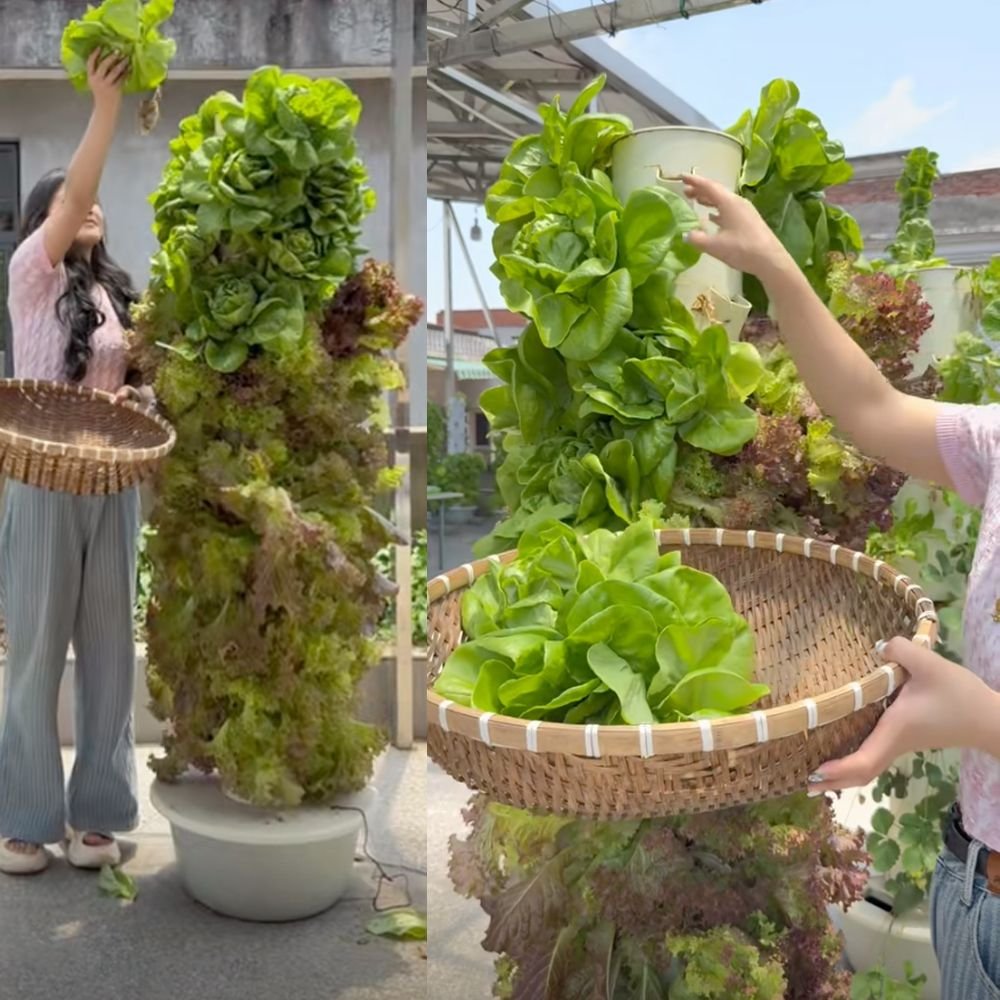
Organic leafy greens and herbs command a retail premium over conventional in most US markets, commonly in the range of roughly 20 to 50 percent depending on crop, region, and season, with packaged organic salads and organic culinary herbs typically at the higher end. What matters for your P&L is how much of that premium reaches the farm gate, and that depends almost entirely on channel.
| Channel | Does organic certification move the price? | Verdict for a tower farm |
|---|---|---|
| Direct to consumer, farmers markets, CSA | Strongly, and the story sells alongside it | Highest realised premium. Certification often pays back fastest here. |
| Independent and natural grocery retail | Yes, frequently a listing requirement in the organic set | Strong case. Certification can be the gate to the shelf, not just the price. |
| Regional and national retail chains | Yes for the organic SKU, but expect volume and food safety demands | Worth it only if you can hold year-round volume and pass a food safety audit. |
| Restaurants and chef accounts | Weakly. Freshness, consistency, and local win more often | Certification is a bonus, not the deciding factor. Quality and reliability close these deals. |
| Foodservice distribution and wholesale | Modestly, and margins are thin | Volume business. Do the math carefully before adding organic input costs. |
| Processors and value-added | Sometimes, contract dependent | Only pursue if a specific buyer contractually requires it. |
The pattern is consistent: organic certification pays best in short supply chains and in retail sets where it is a condition of entry. It pays worst in high-volume wholesale, where the input cost increase can eat the entire premium. Match certification to your actual channel mix before committing.
If you are selling into the EU, UK, Canada, or Japan, or your channel mix does not reward the seal, you are not out of options. These claims are often easier to substantiate and, for controlled-environment produce, frequently more persuasive than organic anyway.
Work through these six questions in order. If you get a no on questions one or two, stop and invest the money elsewhere.
Certifiers do not certify tower hardware, but hardware decisions still show up in your audit. Three things matter, and all three are easier to secure when you buy factory-direct rather than through layers of resellers.
As a factory supplying commercial growers directly, we can provide material specifications, component documentation, and system drawings for your Organic System Plan, and we will tell you plainly when a configuration would complicate certification. Our guide to choosing a hydroponic tower manufacturer covers the full supplier due-diligence checklist, and what a hydroponic tower is and how it works explains the mechanics if you are new to the format.
Yes. If the operation is certified by a USDA-accredited certifier and complies with the National Organic Program, hydroponically grown lettuce can be labeled and sold as organic in the United States.
Because they define organic agriculture as soil-based stewardship. That is the position embedded in EU, UK, Canadian, and Japanese standards, and it is also the position of several private add-on labels in the US that require soil growing on top of USDA certification.
Aeroponics has been treated as ineligible under the US program, unlike container and hydroponic systems. If organic is part of your plan, choose a recirculating tower design and confirm the specifics with your certifier before purchasing.
No. Standard mineral salt formulations are synthetic and prohibited. You need reviewed and listed organic inputs, which behave differently in a recirculating system and usually require extra filtration and a mineralisation stage.
Plan for three to twelve months from application to approval, driven mainly by how complete your Organic System Plan is and any questions about site history. Start the conversation with a certifier before you build, not after.
Not as organic. EU organic rules require soil-based production, so hydroponic produce cannot carry the EU organic logo regardless of its USDA status. Sell into the EU on freshness, food safety, and residue-free claims instead.
Hydroponic produce can be certified organic in the United States and cannot in most of Europe, Canada, and Japan. That single fact should drive your decision. Where the seal is available and your channel pays for it, certification is a real and defensible premium, provided you accept a harder nutrient program and a permanent records discipline. Where it is not available, food safety certification, residue testing, local freshness, and documented resource efficiency will carry your positioning further than an organic label ever would.
Decide before you buy equipment, not after. The material documentation, system design, and irrigation method that make certification straightforward are all sourcing decisions, and they are far cheaper to get right the first time.
Planning a tower farm with organic or certification requirements? Tell us your target market, target crops, and whether certification is in scope. We will send factory-direct pricing along with the material specifications and system documentation your certifier will ask for.
