Our Location
304 North Cardinal St.
Dorchester Center, MA 02124

304 North Cardinal St.
Dorchester Center, MA 02124

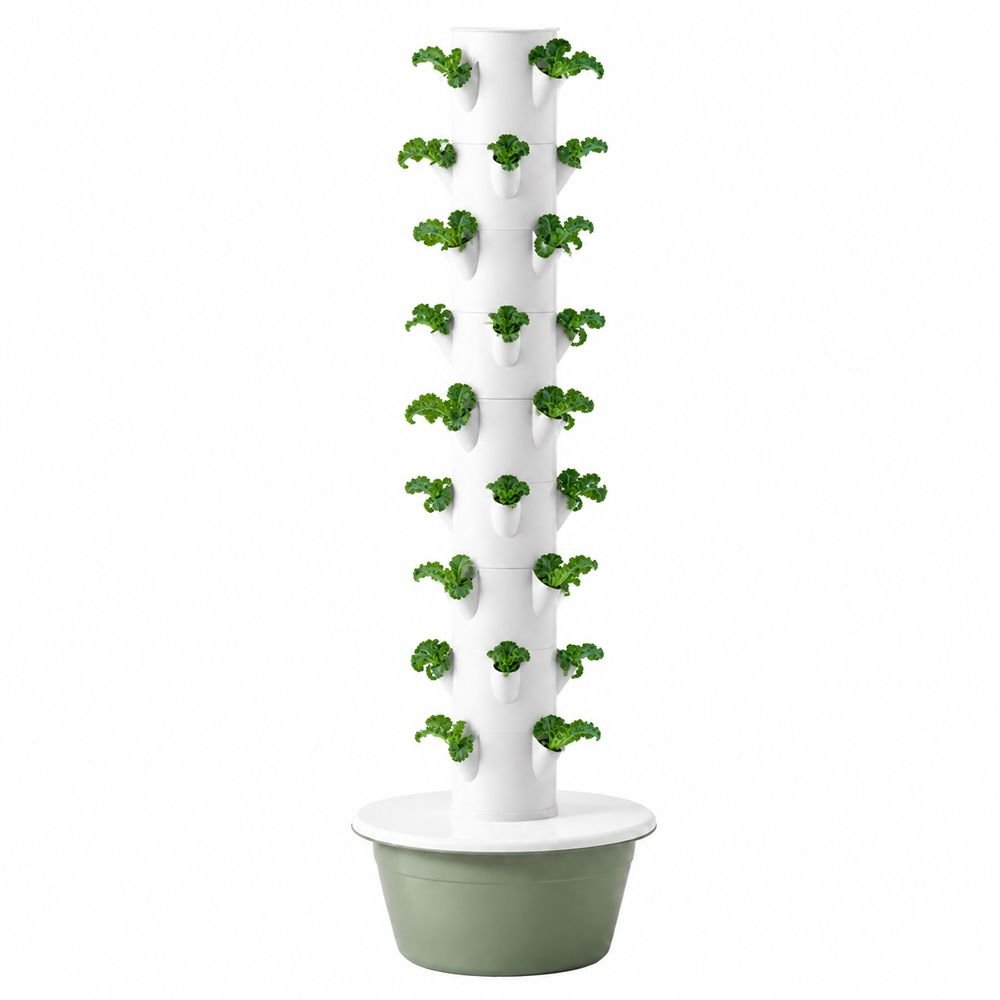
If you are growing only lettuce in your hydroponic towers, you are leaving money on the table. Kale and spinach are two of the highest-value leafy greens per square foot of vertical growing space: they sell for 2–3× the retail price of head lettuce, they tolerate a wider range of conditions than most growers expect, and a single planting can be harvested for months using the cut-and-come-again method. This guide walks through variety selection, the exact temperature and EC ranges that keep leaves sweet instead of bitter, planting and spacing inside tower pockets, the harvest technique that maximizes yield per tower, and how to price the finished crop for retail and restaurant buyers.
Lettuce is the default crop for most tower growers, but kale and spinach consistently outperform it on revenue per tower:
For a full comparison of the most profitable crops for vertical systems, see our guide to the 13 best crops for hydroponic towers.
Not every kale or spinach variety is suited to a vertical tower. Fast-growing, compact, and bolt-resistant genetics give you the most harvests per pocket:
Spinach bolts quickly in warm water and long days, so variety choice matters more than with any other tower crop. Choose slow-bolting cultivars such as Space, Corvair, or Emilia, and plan to grow spinach as baby leaf rather than full bunching heads — baby leaf cycles in 25–35 days and keeps the crop ahead of the bolting clock.
Swiss chard, arugula, mizuna, and baby bok choy use the same nutrient and climate ranges as kale and spinach. Interplanting them in a tower spreads your risk and gives restaurant buyers a mixed-leaf offering from a single unit.
Kale and spinach are cool-season crops. Push the air or water temperature too high and you get bitter, tough leaves — or spinach that bolts before it is worth picking. Target these ranges:
| Crop | Day Air Temp | Night Air Temp | Water Temp | EC (mS/cm) | pH | Notes |
|---|---|---|---|---|---|---|
| Kale | 18–24°C (64–75°F) | 10–15°C (50–59°F) | 18–22°C | 1.5–2.2 | 5.5–6.5 | Cooler nights keep leaves sweet |
| Spinach | 15–22°C (59–72°F) | 10–15°C (50–59°F) | 16–20°C | 1.8–2.4 | 6.0–6.8 | Above 24°C water = rapid bolting |
| Swiss chard | 18–24°C (64–75°F) | 10–16°C (50–61°F) | 18–22°C | 1.5–2.2 | 6.0–6.5 | Very heat-tolerant leafy green |
If leaves turn bitter, the usual culprits are water temperature above 24°C or EC creeping above the crop range. Our guides on EC and PPM management and water quality and pH control cover the adjustments in detail.
Start seedlings in rockwool or coco plugs and transplant at 3–4 weeks, when roots have filled the plug. Our step-by-step seedling transplant guide covers the full process from propagation to pocket installation.
Spacing math matters at commercial scale — see our plant capacity and layout guide to calculate plants per tower before you commit trays to propagation.
Cut-and-come-again is what turns one kale or spinach planting into months of harvests instead of a single cut. The technique is simple:
Timing the first cut matters. Our crop growth timeline guide gives day-by-day expectations for kale, spinach, and nine other tower crops so you can plan harvests against orders.
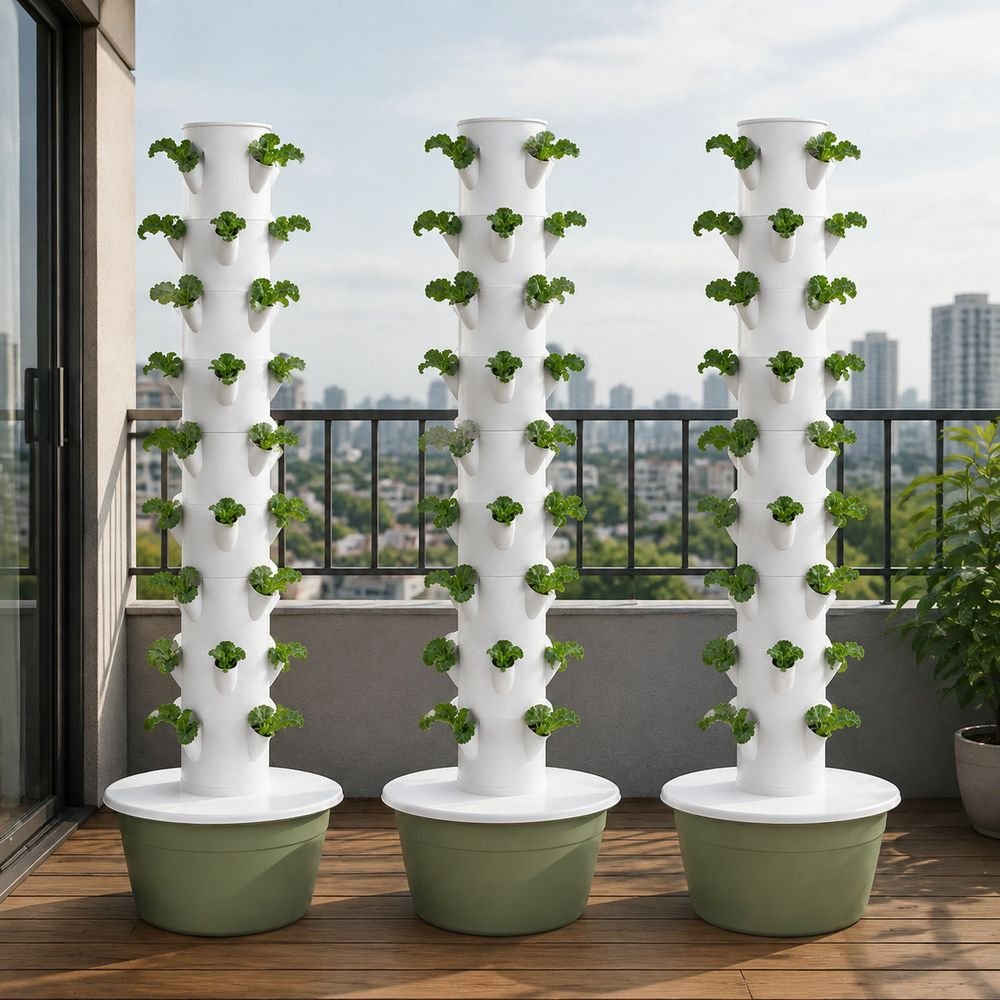
Kale and spinach are where tower-grown produce earns its premium. In the U.S. market, conventional kale retails around $2.00–$2.50 per pound, while baby kale and certified organic bunches sell at $4–$6 per pound. Restaurants pay above wholesale rates for three things towers deliver naturally:
Position your pricing around delivered freshness, not just pounds. For a full breakdown of channels and margins, read our guide to selling hydroponic produce.
| Symptom | Likely Cause | Fix |
|---|---|---|
| Bitter, tough kale leaves | Water temp above 24°C or EC too high | Cool the reservoir; check EC against the crop range above |
| Spinach bolts (sends up flower stalk) | Water or air temp above 24°C; long day length | Move to cooler zone, harvest as baby leaf, shade during heat peaks |
| Yellow lower leaves | Nitrogen deficiency or over-aggressive cutting | Raise EC by 0.2–0.3 mS/cm; leave more lower leaves after harvest |
| Slow regrowth after cutting | Not enough light or root crowding | Check light intensity; thin to one strong plant per pocket |
| Tip burn on new leaves | Calcium uptake blocked by high humidity or low transpiration | Improve airflow around towers; keep pH in range |
Pests are rare in well-maintained towers but worth scouting for — our tower pest control guide covers aphids, thrips, and whitefly prevention from day one.
Work backward from your sales target. A 7-layer tower with cut-and-come-again management produces roughly 1.5–2.5 kg (3–5 lb) of kale or spinach per month once mature, with staggered plantings smoothing out weekly output. A restaurant account that needs 10 lb of mixed greens per week requires roughly 2–3 towers dedicated to leafy greens — and that single account can pay for the system within the first growing season.
Start with one variety per tower, verify your local wholesale prices and buyer demand first, then scale tower count against confirmed orders rather than projected ones.
Ready to put kale and spinach to work in your towers? We supply commercial-grade hydroponic towers factory-direct, with OEM options for brands and distributors.
