Our Location
304 North Cardinal St.
Dorchester Center, MA 02124

304 North Cardinal St.
Dorchester Center, MA 02124

Ask ten vertical farm operators which crop is most profitable and you will get ten confident answers, usually the crop they happen to grow. The honest answer depends on three numbers that have nothing to do with how the plant looks: what your buyer pays per unit, how many times a year you can turn that unit over, and how many plant sites you can fit on a square meter of floor. Get those three right and a modest crop becomes a business. Get them wrong and the most beautiful lettuce in the county is still a loss leader.
This is the revenue side of crop selection, and it pairs directly with our guide to the seven crops that are not worth growing in a tower. Here we rank the seven highest-earning crops for tower systems by revenue per square foot per year and by payback speed, show the wholesale price bands behind those rankings, and give you the crop mix that most consistently turns a tower bay into a profitable farm.
Three metrics matter, and most growers only track the first one:
A crop that wins on revenue per square meter but loses on labor margin is a trap; a crop that pays back in five months but has one buyer is a risk. The crops below are ranked on all three.
The rankings assume a well-managed recirculating tower system at commercial density (roughly 60 plant sites per square meter of floor, which is what our 12-layer configuration delivers), consistent light and climate control, and sales through a realistic mixture of foodservice and wholesale channels. Revenue per site per year uses typical US wholesale ranges — your local prices will differ, and the ranking order is more stable than the absolute numbers.
| Rank | Crop | Typical wholesale price | Cycles per year (per site) | Revenue per site per year | Revenue per m² of floor per year* |
|---|---|---|---|---|---|
| 1 | Fresh-cut culinary basil | $8 – $14 / lb | 10 – 12 cuts | $28 – $42 | $1,680 – $2,520 |
| 2 | Fresh-cut herbs (dill, mint, cilantro, parsley, chives) | $6 – $12 / lb | 8 – 12 cuts | $24 – $36 | $1,440 – $2,160 |
| 3 | Pea shoots & sunflower shoots | $12 – $22 / lb (shoot market) | 10 – 16 cuts | $22 – $34 | $1,320 – $2,040 |
| 4 | Specialty baby leaf & salad mix | $6 – $12 / lb | 8 – 10 cuts | $16 – $26 | $960 – $1,560 |
| 5 | Edible flowers | $40 – $100 / lb, sold by the gram | continuous in season | $14 – $26 | $840 – $1,560 |
| 6 | Head lettuce (romaine, butterhead) | $1.50 – $2.50 / head | 5 – 6 | $7 – $11 | $420 – $660 |
| 7 | Strawberries | $4 – $7 / lb | continuous flush, 12-18 month cycle | $5 – $9 | $300 – $540 |
*At 60 plant sites per square meter of floor, assuming full allocation of the tower to that single crop.
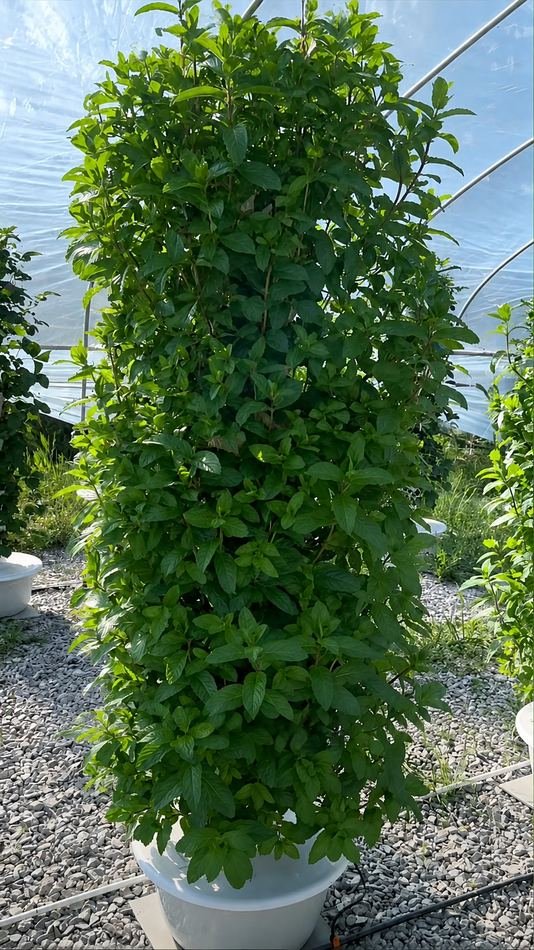
Basil is the single best-performing crop in tower systems, and it wins on every metric at once. It can be cut every 21 to 28 days, which means 10 or more harvests per plant site per year. Wholesale live and fresh-cut basil runs $8 to $14 per pound depending on season and region, and a single plant site produces roughly 100 to 150 g per cut at commercial density. Root systems are shallow and well-behaved in tower channels, and the crop is forgiving of the EC and pH swings that hurt fruiting crops.
The margin risk with basil is not agronomic, it is varietal and channel-driven. Genovese basil sold into wholesale competes with field-grown volume in summer; Thai basil, lemon basil, and specialty varieties sold direct to restaurants hold their price all year. If you are building a basil program, build it around a specific buyer’s spec rather than around a commodity market. Our commercial basil growing guide covers the cut cycle and variety selection in detail.
The rest of the culinary herb family delivers nearly basil-level revenue per square meter with lower price volatility. Dill and cilantro move in high volume through both foodservice and retail; mint and chives are perennial-style cut crops that regrow aggressively; parsley tolerates lower light than most of the list. Prices run $6 to $12 per pound, wholesale and cycles run 8 to 12 cuts per year per site.
The commercial advantage of a mixed herb program is that you sell the same buyer a basket instead of a single item. A restaurant ordering basil, dill, and mint on one invoice is worth several times the margin of a commodity lettuce account, at a fraction of the volume. Cilantro and dill bolt under heat stress, so keep them in the cooler parts of the bay and manage VPD the way our VPD and airflow guide describes.
Shoots are the crop group that most growers overlook, and they have the shortest cycle of anything you can put in a tower: 10 to 21 days from seeding to harvest, which translates to 10 to 16 cuts per site per year. Shoot market pricing is strong — $12 to $22 per pound wholesale for pea shoots, and higher for sunflower — and demand comes from the same chefs and retail accounts that buy microgreens.
Two caveats keep shoots out of the number one slot. Seed cost is a real input rather than a rounding error: pea and sunflower seed dominates the cost per harvested pound, and seed prices move. And shoots are typically grown in shallow trays rather than individual plant sites, so in a tower facility they usually occupy shelf rails or top-layer tray platforms rather than consuming plant sites. If your facility has shelf space under lights that is not being used, shoots are the highest-return crop you can put there.
Baby leaf is where vertical farms earn their reputation and, in many facilities, most of their revenue in absolute terms. Wholesale prices run $6 to $12 per pound for specialty mixes (arugula, mizuna, tatsoi, red mustard, baby kale), and cycles run 25 to 30 days for eight to ten turns per year. The category’s strength is that it is sold as a premium salad ingredient, not as a commodity vegetable — buyers pay for specific leaf varieties and specific mixes rather than for "lettuce."
The margin risk in baby leaf is labor at harvest and packaging. A mixed salad program that ends up with 20 labor minutes per kilogram, hand-sorted into clamshells, can quietly give back everything the price premium earned. Standardize your mixes to two or three SKUs, harvest by the batch into totes for foodservice, and reserve individual packaging for retail accounts that pay for it.
Nasturtium, viola, borage, marigold, and calendula flowers sell for $40 to $100 per pound and are bought by the gram. A single restaurant may take only 200 to 400 g per week, which is why the revenue per square meter is mid-table despite the extraordinary unit price: the plants are low-yielding per site and the buyer base is thin.
Edible flowers work as a 5 to 10 percent specialty block rather than a core crop. They also have the highest rejection risk of anything on this list — damaged petals are unsellable — so they need gentle handling and a buyer relationship that tolerates the occasional short week. If you already sell herbs and baby leaf to chefs, flowers are the easiest possible upsell and they are the item that gets your farm talked about.
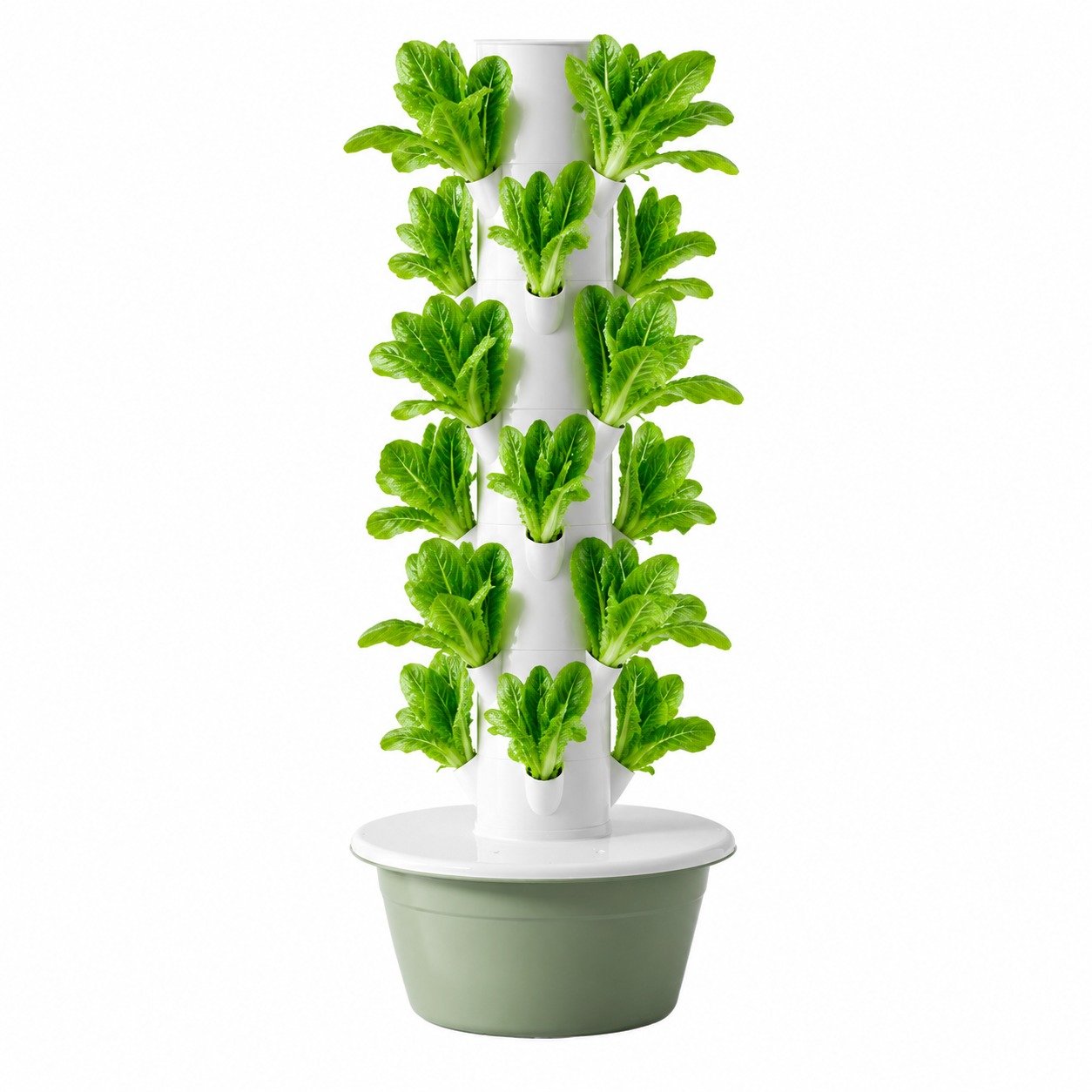
Romaine and butterhead lettuce are the crops that prove a tower system works, and every commercial grower should run some. But the economics are straightforward: one head per site per cycle, five to six cycles per year, $1.50 to $2.50 per head wholesale. That is $7 to $11 per site per year — a third of what the same site earns in basil.
Lettuce earns its place for three reasons: it is the easiest crop to sell in volume, it produces the most convincing photographs and site visits, and it stabilizes cash flow through contracts with distributors and grocery chains. Run it as your baseline and your volume story, but do not build a farm where lettuce is 80 percent of the plant sites. Our lettuce growth timeline covers the cycle that makes 5 to 6 turns a year realistic.
Strawberries are last on revenue per square meter and first on price per pound at the farm gate. Local, vine-ripened strawberries routinely sell for $6 to $12 per pound direct to consumers and $4 to $7 wholesale — several times field-grown commodity pricing, because flavor degrades within hours of harvest and buyers pay for freshness they cannot get any other way.
The reason they rank low here is structural: a strawberry plant occupies a site for 12 to 18 months, so the annualized revenue per site is $5 to $9, and the crop needs pollination management, runner control, and 2 to 3 day harvest intervals during the flush. Strawberries are a marketing asset and a price-point differentiator, not a volume earner. Grow them if you sell direct or if a specific retail account has asked, and read our tower strawberry guide before you commit a block.
Revenue per square meter tells you the ceiling; payback speed tells you how quickly the equipment stops being a debt and starts being an asset. These estimates assume a mid-range 12-layer tower on standard configuration, fully allocated to the listed crop, at typical operating cost.
| Crop | Approximate payback on tower capital | What drives the number |
|---|---|---|
| Fresh-cut culinary basil | 4 – 7 months | High price, 10+ cycles, low harvest labor per unit |
| Fresh-cut herbs (mixed) | 5 – 8 months | Similar economics, slightly longer cycles on parsley and chives |
| Pea and sunflower shoots | 5 – 9 months | Fastest cycles, but seed cost per pound is high |
| Specialty baby leaf | 8 – 13 months | Strong revenue, heavier harvest and packaging labor |
| Edible flowers | 9 – 15 months | Premium price, but low yield per site and slow buyer development |
| Head lettuce | 14 – 24 months | Commodity pricing on a 30 to 35 day cycle |
| Strawberries | 14 – 22 months | Multi-year crop cycle; high price does not offset long occupancy |
The spread here is the entire investment case for crop selection. Two growers with identical buildings, identical towers, and identical energy bills can face payback periods of five months and two years purely because of what they planted. For the capital and operating side of that calculation, see our tower cost and ROI breakdown.
The same crop can earn three times more or less depending on where you sell it. Wholesale commodity pricing is the reference point, not a target.
| Channel | Typical price vs. wholesale baseline | The catch |
|---|---|---|
| Produce distributor / wholesaler | 100% (baseline) | No selling cost, but no pricing power and no loyalty when prices drop |
| Broadline foodservice distributor | 110 – 140% | Spec compliance, packaging requirements, and occasional audit burden |
| Restaurant direct (chef accounts) | 150 – 250% | Weekly delivery and harvest-to-order discipline required |
| Specialty retail / high-end grocery | 180 – 300% | Packaging, labeling, and shrink risk shift to you |
| Farmers market and direct to consumer | 200 – 350% | Highest price, highest labor hours per dollar sold, limited volume |
The productive strategy for a tower farm is usually a two-channel split: a wholesale or foodservice base contract for 60 to 70 percent of production to cover fixed costs, plus a small direct or chef-driven set of accounts for the margin. Selling 100 percent to a distributor makes you a price taker; selling 100 percent direct means you are running a marketing business with a farm attached.
No single crop wins everything, which is why mature tower farms run a mix. A mix that consistently works at commercial scale looks like this:
The mix has operational benefits beyond revenue. Different crops peak at different times, so harvest labor is spread across the week instead of clustered into a single brutal harvest day. Different crops also carry different disease and pest pressures, which reduces the risk of one problem taking the whole bay. And a mixed crop list is what allows you to keep selling when a commodity price collapses — the failure mode that has ended more vertical farms than any equipment problem.
Revenue per square meter is only half the story. Four costs are routinely underestimated:
Run these four numbers for your own crop candidates on a single spreadsheet, using revenue per square meter and labor minutes per unit. The ranking will hold, and your actual margin will become visible before you plant instead of after.
Once the crop decision is made, the equipment follows. Fruiting crops like strawberries and peppers need wider layer spacing and more vertical clearance; leafy greens and herbs want tight spacing and maximum plant site density. Because we build towers rather than resell them, layer count and plant site spacing are set to your crop list at the factory — you are not choosing from a fixed catalog and then adapting your business plan to it. Start with our layer count selection guide to size the configuration, then tell us your target crops and we will spec the tower around them.
Fresh-cut culinary basil, for most commercial operations. It combines 10 or more harvests per plant site per year with $8 to $14 per pound wholesale pricing and low harvest labor per unit. The caveat is market access: basil is only profitable if you have a buyer for it, which is why most farms grow it alongside greens rather than instead of them.
Yes, but as a volume anchor rather than a margin leader. At $7 to $11 revenue per plant site per year, lettuce returns roughly a third of what basil returns on the same site. Its value is predictable, large-volume sales and stable contracts that cover fixed costs.
Three to five SKUs, with a clear split between volume crops and margin crops. Fewer than three leaves you exposed to a single buyer or price move; more than five usually means each crop is grown in volumes too small to sell efficiently.
Per acre of land, yes — by a very large multiple, because a tower stacks 12 production layers on one footprint and cycles crops many times a year. Per dollar of capital invested, the comparison depends heavily on your crop mix, energy cost, and channel. Revenue per square meter of floor is the fair way to compare, and it is the number we plan with.
