Our Location
304 North Cardinal St.
Dorchester Center, MA 02124

304 North Cardinal St.
Dorchester Center, MA 02124

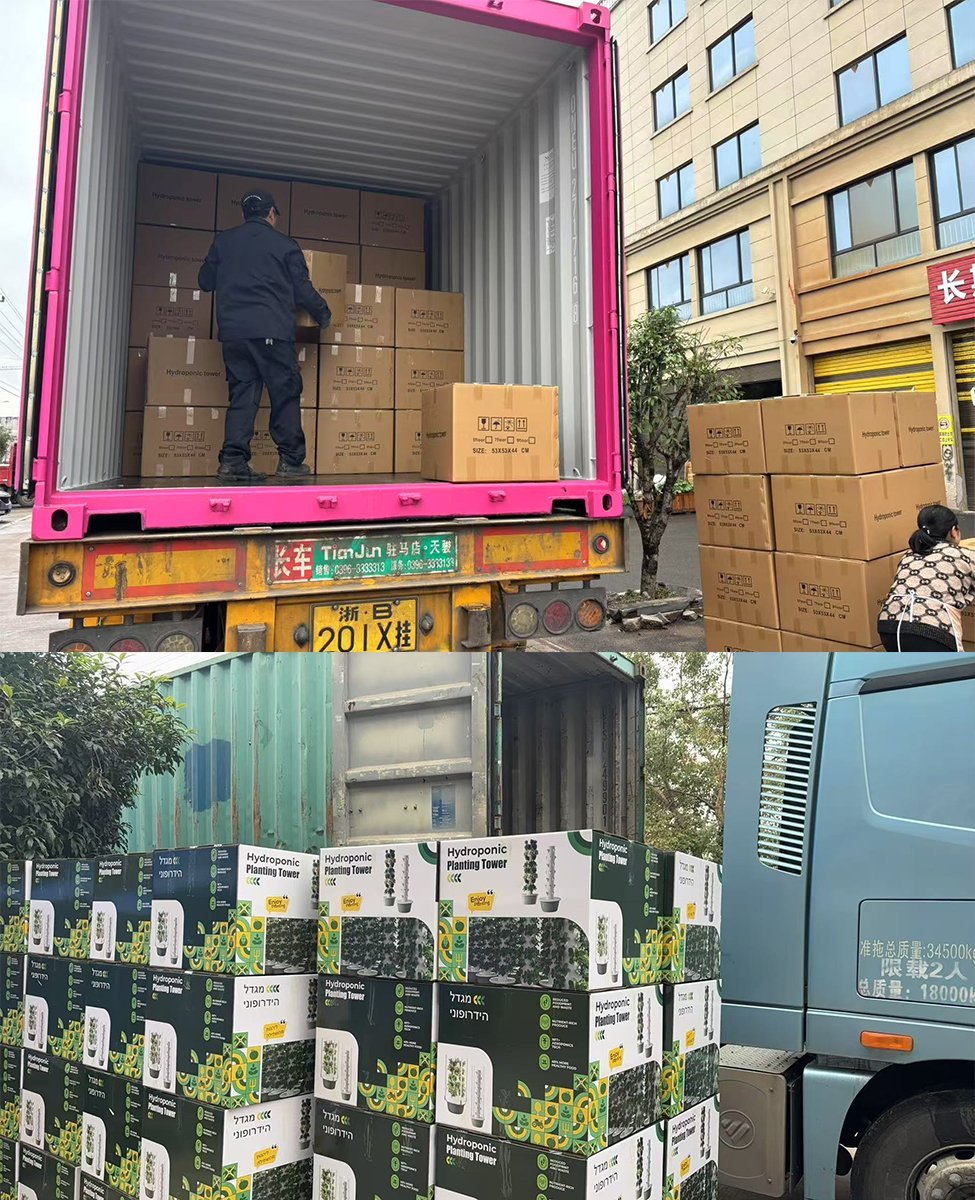
Two purchase orders for the same 40 towers, placed six weeks apart, routinely land eleven weeks apart — and the later one usually pays more freight for the privilege. The towers are identical. The documents are identical. The only thing that changed is the calendar the buyer happened to be standing on.
Most buyers spend weeks on layer counts, hole spacing and per-unit pricing, then lose an entire growing season to a sailing date nobody checked. This guide covers the half of procurement that quotations leave out: the five phases between deposit and planting, the four windows in the Chinese manufacturing calendar that quietly absorb three to six weeks, the freight months when you are competing for space rather than shopping for a rate, and a backward schedule you can copy line by line for your own project.
A supplier quoting “25–30 days production” is describing phase two of five. Every other phase sits outside that number, and each one is where projects slip. A commercial tower project runs through the following stages, and only one of them is under the factory’s full control.
| Phase | What actually happens | Typical duration |
|---|---|---|
| 1. Specification and deposit | Layer count, hole pattern, tower color, carton spec and voltage agreed; proforma invoice issued; deposit cleared through the bank | 1–3 weeks (4–8 weeks for custom tooling) |
| 2. Production | Extrusion and molding, tower assembly, pump and nozzle fitting, leak test, carton packing | 20–35 days standard; 35–55 days custom |
| 3. Inland trucking and port cut-off | Factory to Yantian, Ningbo or Shanghai; VGM filing; export declaration; container stuffed and sealed | 3–7 days, longer before a holiday |
| 4. Ocean transit | Vessel sailing plus any transshipment or routing change | 14–18 days to US West Coast; 28–35 to US East Coast; 30–38 to Northern Europe |
| 5. Import clearance and final delivery | ISF and entry filing, possible exam, drayage, unloading and carton count | 5–12 days |
Add those phases together and a clean order is 60–90 days door to door. Put the same order across Chinese New Year and it becomes 120–150 days. Add a custom layer count and a private-label carton and it stretches again. The number that matters for planning is not the production lead time on the quotation — it is the sum above, measured backward from the day your first seedling goes into a tower. If the project is still being sized, the startup cost and licensing timeline runs in parallel with this one, and both need to finish before the same date.
In 2027 the holiday falls on February 6. The official break is seven days. The effective shutdown is not. Chinese manufacturing runs on migrant labor, and the Spring Festival travel season moves hundreds of millions of workers across the country. In practice, lines start thinning one to two weeks before the holiday as workers leave early to beat the travel rush, and they do not return to full strength until two to three weeks after it. A meaningful share of the workforce — commonly cited at 20–30% in assembly industries — simply does not come back, which means the first month after the holiday is spent hiring and training rather than producing at rate.
For a buyer, that means the calendar to watch is not the seven red days in the middle. It is the nine-week band around them.
| Weeks relative to the holiday | What is happening in the factory and at the port | What it means for your order |
|---|---|---|
| −10 to −8 weeks | Booking window for pre-holiday sailings opens; space available at normal rates | Last comfortable window to ship before the shutdown |
| −6 weeks | Custom production slots close; subcontractors fully booked | Custom layer counts and hole patterns must be locked here |
| −4 weeks | Standard production cut-off for pre-holiday sailing | Any order not in production by now ships after the holiday |
| −2 weeks | Last containers out of south China ports; trucking capacity tight and rates up sharply | Roll risk at its highest; expect equipment and chassis shortages |
| −1 week | Most lines idle; inspection and QC teams already dispersed | Do not schedule pre-shipment inspection in this week |
| Holiday week | Seven official days; ten to fifteen in practice | Production output is zero |
| +1 week | Skeleton crews restart the lines; rework and scrap spike | Output at 30–50% of normal at best |
| +2 to +3 weeks | Labor return uneven across lines and provinces | Full output only approaches at week three |
| +4 weeks | New hires trained, defect rate still elevated versus baseline | First post-holiday shipments deserve extra inspection |
The planning rule is to subtract five weeks of throughput, not two. A factory that ships 40 containers a month does not ship 40 containers in the month of February; it ships something closer to 15 and then works through a backlog in March. Buyers who treat the holiday as a two-week pause are the ones who discover in April that their order is in a queue behind three months of accumulated bookings.
There is a second, less obvious cost: quality. Lines staffed by new workers in the two weeks after restart show higher defect rates on exactly the components that are hardest to fix remotely — nozzle alignment, seal seating, pump wiring. If your container must be produced in that window, budget for a third-party inspection and open every carton of the first pallet on arrival.

Chinese New Year is the largest disruption, but it is not the only one. The national holiday calendar creates four smaller dead zones a year, and the weather creates a fifth. None of them individually justifies moving an order date; together they explain why two shipments booked a fortnight apart can end up three weeks apart.
| Window | Timing | Effect in the factory | Effect on freight |
|---|---|---|---|
| Chinese New Year | Early February (February 6 in 2027) | Two to four week stop; five to six week throughput loss | Space squeeze from December to January; rate trough in February and March |
| Qingming | Early April | One to three days | Negligible |
| Labor Day | May 1–5 | Five to seven days in most plants | Short pre-holiday bump in bookings |
| Dragon Boat | Early June | One to three days | Negligible |
| Typhoon season | July to September, south and east China | One to three day closures; power interruptions; outdoor work stops | Port closures of one to five days; vessel delays; bookings rolled to later sailings |
| Mid-Autumn and National Day (Golden Week) | Late September to October 7 | Seven to fourteen days depending on how the holidays fall | Rush to ship in late September; one to two week backlog after |
| Winter heating restrictions | November to March, northern China | Subcontractor and coating capacity limited | None directly |
The Golden Week pattern deserves its own note because it is easy to misread. The holiday itself is early October, but the shipping rush happens in the two weeks before it, when every exporter in the country tries to get containers on the water rather than leave them sitting for a week. Space tightens, trucking rates spike and port cut-offs move earlier. An order that would normally book in ten days needs three weeks in late September.
Typhoon season is the wildcard. A single port closure in Shenzhen or Ningbo lasts two to four days, but the backlog behind it takes a week to clear, and vessels already at sea get re-sequenced. If your sailing falls in July, August or September, build a five-day buffer into the arrival date rather than assuming the transit time on the booking confirmation will hold.
Ocean freight has its own calendar, and it is not aligned with the factory’s. Two forces dominate. The first is the pre-holiday retail cycle: August to October is the traditional peak for containers moving to North America and Europe ahead of the fourth quarter and year-end inventory. Carriers use that window to push peak season surcharges and general rate increases, and vessel space sells out weeks ahead. The second is the Chinese New Year: exporters front-load orders from November through January to avoid producing during the shutdown, which tightens space a second time.
| Window | Space availability | Rate direction | Booking lead time | Who should ship then |
|---|---|---|---|---|
| January | Tightest of the year | Highest | 4–6 weeks | Only orders with a hard spring deadline |
| February to March | Loose, especially after the early-March trough | Lowest of the year | 1–2 weeks | Cost-driven replenishment, provided QC buffer is planned |
| April to June | Balanced | Flat to slowly rising | 2–3 weeks | Most first-time projects |
| July | Tightening | Rising | 3–4 weeks | Orders that must land before October |
| August to October | Peak; surcharges in force | Highest, with peak surcharges stacked on top | 4–6 weeks | Only if the deadline is immovable |
| November to December | Pre-holiday squeeze begins | Rising quickly | 4–6 weeks | Spring planting orders, booked early |
Transit time is a separate variable from space. Bookings for the same port pair can quote 16 days and deliver in 24 once routing, transshipment and vessel delays are included. Longer routings around the Cape of Good Hope rather than through the Red Sea add roughly ten to fourteen days to Asia–Europe and Asia–US East Coast services. Slot restrictions through the Panama Canal, when they are in force, tighten the East Coast alternative at the same time. Blank sailings announced by alliances can delete an entire week’s capacity from a port with four weeks’ notice.
All of which means the booking is its own lead time item, separate from production and separate from sailing. Once the container is on the water, the arrival process has its own surprises; the arrival, inspection and unloading sequence under FOB, CIF and DDP terms is worth reading before the vessel leaves, not after it arrives.
The reliable way to set an order date is to start at the harvest, not at the quotation. Take the date you want the first crop transplanted into the towers, then walk backward through every phase, assigning a realistic duration to each rather than the best-case one. The table below is a worked example for a spring 2027 planting with a US West Coast destination and a standard-configuration order of roughly 40 towers.
| Milestone | Date | Why this buffer exists |
|---|---|---|
| Target transplant into towers | April 1, 2027 | The date your crop plan needs, not a supplier deadline |
| Fully commissioned, first crop in | March 20 | Week-long ramp of wet runs before committing plants |
| Commissioning window | March 1–19 | Leak test at full head, EC and pH dial-in, pump timing, nozzle inspection |
| Container unloaded and carton count completed | February 26 | Two to three days of unloading and checking against the packing list |
| Delivered to site | February 24 | Drayage plus any last-mile appointment delay |
| Customs release | February 17 | Entry filed, possible exam, duty paid |
| Vessel arrival at destination port | February 12 | 18-day transit plus two days of schedule slippage |
| Vessel sails from Yantian or Ningbo | January 25 | Must clear before the February 6 holiday |
| Container loaded and sealed at factory | January 15 | Cut-off, VGM filing and export declaration |
| Production complete | December 20 | Thirty-day run on a standard configuration |
| Deposit cleared, production slot confirmed | November 20 | Slot booked before the pre-holiday queue forms |
| Specification frozen, PO issued | November 5, 2026 | Layer count, hole pattern, voltage and carton artwork locked |
Read the bottom line: to plant on April 1, 2027, the purchase order needs to be issued at the start of November 2026. That is roughly three weeks from the date of this article. It is not an aggressive schedule — it contains a 26-day buffer between production completion and container loading, which is what pre-holiday port congestion actually consumes.
Now run the same project through the failure mode. The buyer hesitates in November, the deposit lands in December, and the factory quotes 30 days — but the run starts after the holiday, because production slots through January are already committed. The line restarts in the first week of March and reaches full output in the last week of March. The container loads in early April and sails mid-month. It arrives in the second half of May, clears customs in early June, is commissioned in the middle of June, and the first crop goes in at the end of June. A spring planting has become a summer planting, the spring menu the buyer was planning to supply is gone, and the freight was booked in the second-tightest month of the year instead of the second-cheapest.
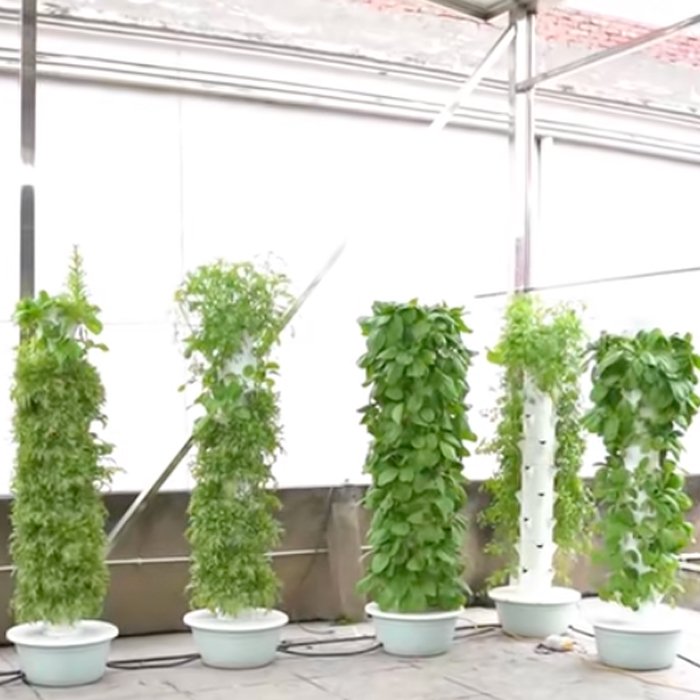
Two orders of the same size can behave differently on the calendar depending on what is inside them. Six factors routinely add time, and all six are visible before the deposit is paid:
Order sizing interacts with all of this. If the tower count is still open, the plant capacity and layout planning guide will pin it down before the specification is frozen, and the supplier vetting checklist covers the questions that determine whether a factory can actually hold a date it promises.

Timing is the cheapest thing to negotiate and the most expensive thing to get wrong, because it is settled before anyone is under pressure. Six clauses are worth insisting on in the purchase order:
Budget matters here too, because the freight and timing decisions are financial ones. The cost breakdown and ROI timeline shows how much of a project’s capital sits in the equipment versus the installation and commissioning around it — the part that is fixed and cannot be compressed once the container is late. Planting calendars work the same way on the crop side: the 12-month crop planning guide will show what a six-week slip actually costs in harvested cycles, and it is usually more than the freight.
For a standard configuration delivered to the US West Coast, four to five months before the date you want plants in the towers. For US East Coast or Northern Europe, five to six months. Add four to six weeks if the order crosses Chinese New Year, and the same again for a custom layer count, custom hole density or private-label packaging. The comfortable planning number is not the production lead time; it is the full door-to-planting sum.
Freight is usually cheapest in the February to March trough, immediately after the holiday, because space is loose and carriers are filling vessels. That advantage is frequently cancelled out by production risk: lines are running with new workers, defect rates are elevated and the backlog from the shutdown is still clearing. If cost is the priority, ship in the post-holiday trough and add inspection. If schedule reliability is the priority, produce before the holiday and sail in January, which costs more in freight and less in surprises.
Yes, and on orders above roughly one container it is usually the right call. Two sailings four to six weeks apart let you commission the first batch, catch installation issues while the second is still in production, and keep a full shutdown or typhoon closure from delaying the entire project. Expect a modest per-unit freight penalty for the smaller second lot, and specify the split in the purchase order rather than negotiating it after the first container ships.
Rolling — being bumped from a confirmed sailing — is common in the peak months and before a holiday, and it adds one to three weeks. Your options depend entirely on the freight terms you agreed: if the forwarder booked the space, they own the rebooking; if you booked it, you own it. Practically, ask for written confirmation that the container is loaded, not merely that it was received at the terminal, and check the vessel name and voyage number against the booking before the cut-off passes.
A tower project has very few variables you can control for free. The order date is one of them, and it is the only one that also decides what you pay for freight. Before the specification is frozen, we will map your target planting date onto our production calendar — the pre-holiday cut-offs, the post-holiday ramp weeks and the sailings that leave enough buffer to commission properly — and tell you the latest date a deposit can land and still make the window.
