Our Location
304 North Cardinal St.
Dorchester Center, MA 02124

304 North Cardinal St.
Dorchester Center, MA 02124

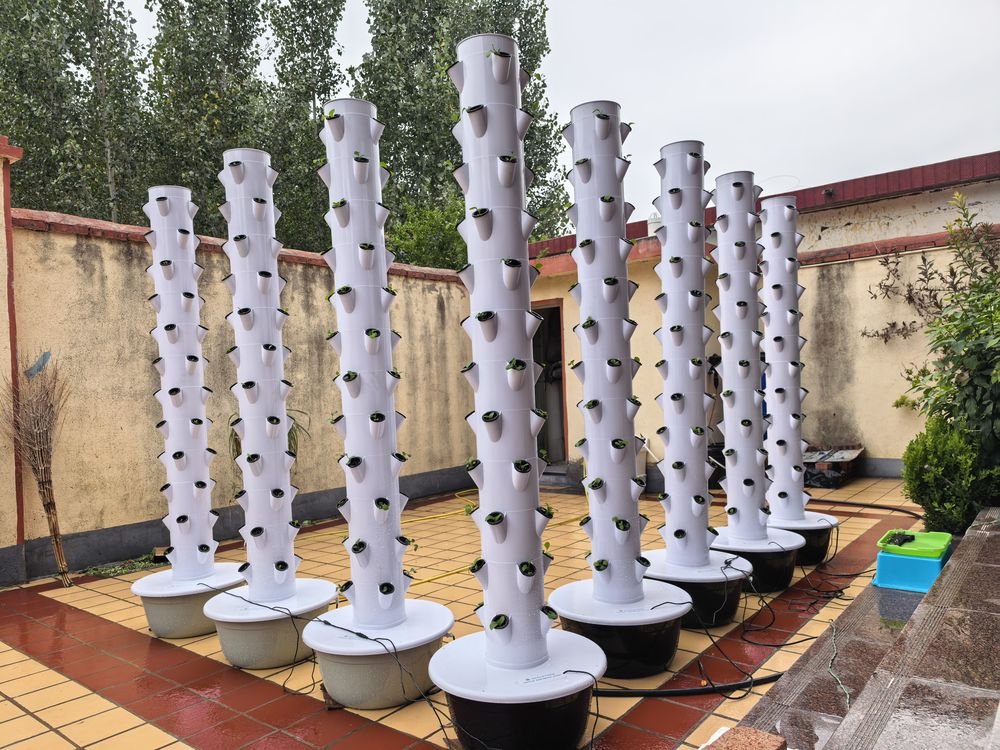
A grower signs a twelve-case-a-week lettuce account, orders forty towers because forty sounds like a real farm, and finds out in week seven that the account wants twenty-four heads a day while the room can only give sixteen. The opposite happens just as often: plants finish faster than the buyer can take them and the excess gets composted at full production cost. Both failures start at the same place, and it is not the tower. The tower count was chosen before the purchase order was converted into plant-days.
This guide runs the chain in the order the money actually flows: weekly cases, then heads, then occupied plant sites, then towers, then floor area, then capital. Every calculation uses the same hardware assumptions we publish elsewhere on this site, so you can check the arithmetic line by line against any quote you are holding.
The question “how many plants fit in a tower” has a clean answer, and that is exactly why it gets used as a capacity plan when it is nothing of the kind. A 12-layer tower holds 48 plant sites. That number tells you the width of the machine. It says nothing about how many sites must be occupied at the same moment to hit a delivery schedule, which is the only figure a buyer is paying for.
Three errors account for almost every missized farm we see. Naming them separately keeps them from hiding inside one another:
Start from the document the customer will actually sign, not from a revenue target. Case counts are the unit buyers speak, and the case pack varies far more than most new growers expect: a case of head lettuce is 24 heads, a case of living lettuce is usually 12 clamshells, and cut herbs are sold by weight with no head count at all. Multiply cases by pack size before doing anything else, and confirm the pack spec in writing, because a 24-count assumption on a 12-count item doubles the farm you build.
| Product | Typical case pack | Net weight per case | Weekly units at 12 cases |
|---|---|---|---|
| Head lettuce, trimmed | 24 heads | 11-14 lb (5.0-6.4 kg) | 288 heads |
| Leaf lettuce, trimmed | 24 heads | 8-10 lb (3.6-4.5 kg) | 288 heads |
| Living lettuce, root-on | 12 clamshells | 9-11 lb (4.1-5.0 kg) | 144 clamshells |
| Basil and cut herbs | 12 x 1 lb bunches | 12 lb (5.4 kg) | 144 bunches |
| Baby leaf mix | 4 x 4 lb bags | 16 lb (7.3 kg) | 48 bags |
| Microgreens | 12 x 4 oz clamshells | 3 lb (1.4 kg) | 144 clamshells |
The working example used through the rest of this article is twelve cases of head lettuce per week: 288 heads, which at 0.4-0.5 lb (180-225 g) trimmed per head is roughly 130 lb or 59 kg of saleable product per week. That is a one-anchor-account farm, not a regional supplier, and it is the size where sizing errors hurt most because there is no slack anywhere in the system.
What occupies a tower site is not a crop, it is a crop plus the gap between crops. The slot is the number of days from transplanting into the tower until the site is cleared, cleaned and replanted. For leafy greens the growing period is well documented; the turnaround is what gets forgotten. Budget five to seven days for pulling root balls, wiping the channel, checking emitters and resetting net pots, and longer if you run a full sanitizing cycle between crops, which you should.
| Crop | Days in tower | Turnaround | Planning slot | Harvests per site per year |
|---|---|---|---|---|
| Butterhead / romaine lettuce | 30-35 | 5-7 days | 6 weeks | 8-9 |
| Basil, cut and regrown | 28-35 | 5 days | 5-6 weeks | 9-10 |
| Baby leaf, cut-and-come-again | 21-25 | 5 days | 4 weeks | 12-13 |
| Kale and Swiss chard | 35-45 | 7 days | 6-7 weeks | 7-8 |
| Strawberries | Continuous, 40+ weeks | Full replant | 12 months | 1 |
Two consequences follow. First, the same tower produces very different annual output depending on what is planted, so a mixed crop room cannot be sized from a single average cycle. Second, the slot is a commitment: if the operation cannot hold a six-week lettuce slot because propagation is late every week, the honest response is to raise the buffer in step 3, not to pretend the towers are faster than they are. The crop-by-crop timeline is set out in more detail in our guide to how long lettuce and nine other crops take in a tower.
This is the step that turns a sales figure into a hardware figure, and it is one multiplication: occupied sites = weekly units x weeks in slot x (1 + cull rate). Nothing else in this article matters as much as getting this line right, because every later number is a multiple of it.
With 288 heads a week on a six-week slot, steady-state occupancy is 1,728 sites. Add a 10 percent cull allowance for germination gaps, tipburn rejects and bolted heads, and the design figure becomes 1,901 sites. Round up to a number that divides cleanly by the sites per tower, because half towers do not exist: 1,920 sites is exactly 40 twelve-layer towers at 48 sites each.
| Planning slot | Cull 10% | Cull 15% | Cull 20% |
|---|---|---|---|
| 5 weeks | 1,584 sites | 1,656 sites | 1,728 sites |
| 6 weeks | 1,901 sites | 1,987 sites | 2,074 sites |
| 7 weeks | 2,218 sites | 2,318 sites | 2,419 sites |
The table is worth reading as a risk chart rather than a set of options. Moving from a five-week to a seven-week slot costs 40 percent more hardware for the same revenue, which is why propagation discipline is a capital expense question and not just an operational habit. Losing the slot and losing the sale cost roughly the same amount of money.
One area is deliberately excluded from the site count: the nursery. Seedlings occupy propagation racks, not towers, and they need 18 to 25 percent of the grow-room floor area for fourteen to twenty-one days before they ever enter the tower. Every farm we have quoted that forgot the nursery ended up converting a production row into a propagation bench in month two, which quietly removed 5 percent of designed capacity.
Our standard configurations hold four sites per layer, which gives 24 sites on a 6-layer tower, 36 on a 9-layer and 48 on a 12-layer. The three models deliver the same 60 sites per square meter of floor once aisle share is included, so the layer choice changes the height of the room and the cost per site, not the plot of land.
| Weekly heads | Design sites (6-week slot, 10% cull) | 6-layer towers | 9-layer towers | 12-layer towers |
|---|---|---|---|---|
| 240 | 1,584 | 66 | 44 | 33 |
| 288 | 1,901 | 80 | 53 | 40 |
| 600 | 3,960 | 165 | 110 | 83 |
| 1,200 | 7,920 | 330 | 220 | 165 |
Higher layer counts cost 25 to 40 percent less per plant site and 35 to 50 percent less per site in freight, because the same shipping volume carries more growing positions. They are not automatically the right purchase: a 12-layer tower needs 3.0 m of clear height with the light and service space already counted, and a taller column means a taller pump head and a longer walk between the top and bottom rows. Low-ceiling basements, mezzanines and retail installations frequently make the 6-layer the correct commercial choice even though it is the least efficient on paper. The trade-off is set out in 6-layer vs. 9-layer vs. 12-layer towers.
Round the tower count up to a full aisle module rather than to a literal number. A 40-tower room is a 6 x 7 layout with service access on both long sides; a 41st tower usually means a second aisle, and the aisle costs more floor area than the tower saves. Layout geometry at scale is covered in how to set up a 100-tower farm.
Tower footprint is the smallest of the space numbers and the one everyone quotes. At 0.8 square meters per tower including aisle share, 40 twelve-layer towers need 32 square meters of grow room. Add what the product actually requires and the building comes out roughly twice that size.
| Area | Basis for 40 x 12-layer towers | m2 | ft2 |
|---|---|---|---|
| Grow room, towers plus aisle share | 40 x 0.8 | 32 | 344 |
| Propagation and nursery racks | 18-22% of grow room | 7 | 75 |
| Pack room, wash-down, cold storage | Fixed minimum, not proportional | 9 | 97 |
| Water treatment, utility, storage, staff | Fixed minimum | 5 | 54 |
| Circulation and code clearances | ~10% | 5 | 54 |
| Total conditioned building | 58-60 | ~630 |
Clear height is the specification that kills more projects than cost does. A 12-layer tower is about 207 cm tall and needs 3.0 m of clear height once the light fixture and service space above it are counted. Nine layers need 2.6 m and six layers 2.2 m. A lease signed against a 2.7 m ceiling cannot be fixed with a different pump; it means dropping to the 9-layer model and adding towers, so check the tape measure before the site visit, not after.
Two more site items belong in the same conversation. Doors and turns must accept the tower sections as shipped, which is often the constraint in a converted retail unit. And the floor must take the point loads with a full reservoir, since a 12-layer column with water in every channel is a different load case from an empty display unit.
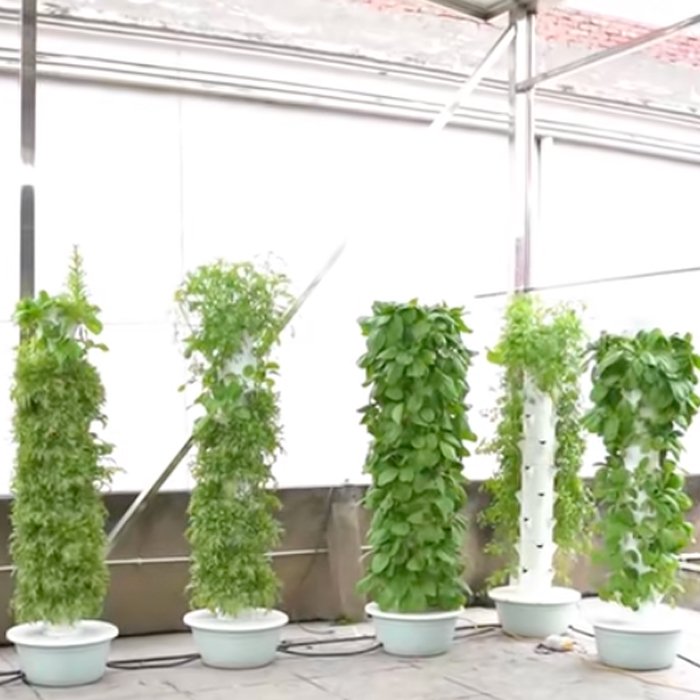
A farm designed to 100 percent of average demand misses half its deliveries. Demand is not flat across the week: most wholesale accounts take the bulk of their volume on two or three days, and a harvest that is spread evenly produces the right weekly total with the wrong daily shape. Anything harvested for Thursday has to be standing in the tower on Wednesday, which means the site occupancy peak is set by the delivery day, not the weekly average.
The tower count that satisfies a signed account in month one is rarely the count that should be ordered on day one. A common and defensible split is 70 percent of the design count in the first purchase and the remainder after one full cycle has been shipped, harvested and paid for. The second order is informed by your own cull rate, your own slot discipline and your own pack labor, all three of which are estimates until then.
The counterweight is logistics. Splitting an order means two sets of freight, two customs entries and two sets of documentation, and past a certain volume the freight penalty exceeds the value of the information gained. The practical break-even most growers find is that a second order under roughly a quarter of a container is not worth splitting. Order timing against production and freight calendars is a separate subject, covered in order timing for hydroponic towers.
A tower quote is only meaningful against a demand profile. Send the following and the specification conversation takes one round instead of five:
That last item is where a factory-direct order differs from a catalog purchase. Layer spacing and hole pitch are production parameters. A room built for cut basil at high density and a room built for romaine at wider spacing can use the same tower model and still land on different site counts per tower, which means the sizing calculation has to be re-run on the final specification rather than on the brochure number. Density and spacing planning is covered in how many plants a tower actually holds.
It runs the equation backwards. Revenue per square foot is an output that emerges from crop mix, price, slot length and utilization; using it as an input assumes the answer you are trying to calculate. It is a useful benchmark after the fact, and we publish both the yield data and the crop revenue rankings, but neither can tell you how many towers a specific twelve-case account requires. See real yield per square foot and the crop revenue rankings for those benchmarks.
No. Seedlings sit on propagation racks for fourteen to twenty-one days before transplant, and that area is floor space without tower sites on it. Budget 18 to 25 percent of grow-room area and do not borrow it from the production layout later. A nursery that shares a bench with a harvest table is a scheduling conflict that repeats every week.
Convert both to site-days per week and add them. A six-week lettuce slot consumes 42 site-days per head, and a four-week baby leaf slot consumes 28. If the week’s demand is 288 heads of lettuce and 48 trays of baby leaf, the requirement is 12,096 plus 1,344 site-days, or 13,440 site-days per week. Divide by seven to get occupied sites, 1,920 in this case, and apply the cull allowance once at the end. The method scales to any number of crops and is the only way to size a mixed room honestly.
Size to the anchor account and leave the remaining capacity as a documented expansion step. An empty tower costs money every month; a phased order costs one extra freight movement. The one thing not to do is build to a revenue forecast without a signed case count behind it, which is how rooms end up half-planted and fully staffed. Startup cost structure and phasing are covered in the tower cost breakdown and the 12-month planting calendar.
If you send the weekly case volumes, the case packs, the crop mix and the room dimensions, the tower count, layout drawing and site-per-tower figure come back as one document you can take to a landlord or a lender.
