Our Location
304 North Cardinal St.
Dorchester Center, MA 02124

304 North Cardinal St.
Dorchester Center, MA 02124

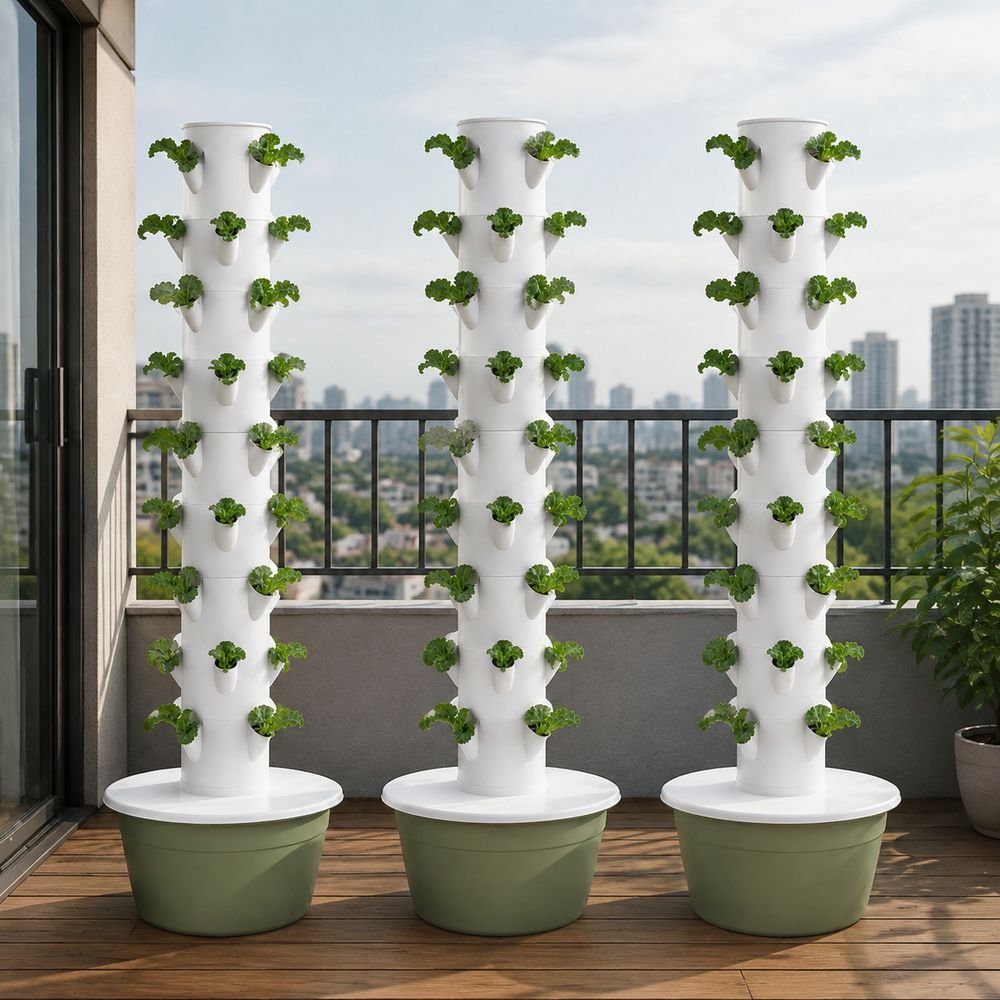
If you run the numbers on a commercial hydroponic tower farm, basil almost always comes out on top. Restaurants, pizzerias, pesto producers and specialty grocers buy fresh-cut basil every single week of the year, they pay two to four times the per-pound price of lettuce, and a single planting keeps producing for months instead of being harvested once and pulled. Add mint, cilantro, parsley and chives to the same growing space and you have the highest revenue-per-square-foot crop mix available to a tower system.
Herbs are also less forgiving than lettuce. Basil hates cold water, sulks below 18 C (65 F), goes bitter the moment it flowers, and gets flattened by downy mildew if your airflow is poor. Cut it in the wrong place and the plant never bushes out again. This guide covers everything a commercial grower needs: variety selection, planting density, EC and pH targets, climate, the cut-and-come-again harvesting technique that decides your total yield, post-harvest handling, and a realistic revenue calculation per tower per year.
Three things make culinary herbs the profit engine of a vertical tower farm:
| Crop | Typical wholesale price | Harvests per planting | Days to first cut (after transplant) |
|---|---|---|---|
| Basil (Genovese) | USD 8-14 / lb | 4-8 cuts | 28-35 days |
| Mint | USD 8-12 / lb | 6-10 cuts | 25-30 days |
| Cilantro | USD 5-9 / lb | 1-2 cuts | 25-30 days |
| Parsley (curly / flat) | USD 5-8 / lb | 5-8 cuts | 35-45 days |
| Chives | USD 10-16 / lb | 5-8 cuts | 40-50 days |
| Leaf lettuce (reference) | USD 2-3 / lb | 1 (whole head) | 21-35 days |
If you are still deciding on your crop mix, our overview of the 13 best crops for hydroponic towers compares herbs against leafy greens and fruiting crops side by side.
Genovese-type sweet basil is the commercial standard: large aromatic leaves, strong pesto flavour, and it is what every chef means when they order “basil”. But variety choice also decides your disease risk. Basil downy mildew and Fusarium wilt have wiped out entire greenhouse crops, and the cheapest insurance is buying resistant seed from a reputable supplier.
| Variety type | Profile & market | Days seed to first cut | Notes for tower growing |
|---|---|---|---|
| Genovese (e.g. Nufar F1, Eleonora) | Classic sweet basil, pesto and pizza trade — your volume seller | 50-65 | Choose Fusarium-resistant and mildew-tolerant hybrids; strong branching |
| Italian Large Leaf | Big soft leaves, restaurant plating | 55-65 | Leaves bruise easily — handle once, pack shallow |
| Thai basil | Anise flavour, Asian restaurants and wholesalers | 60-70 | More heat-tolerant, slower to go bitter; great niche premium |
| Lemon / lime basil | Specialty, cocktail bars, high-end kitchens | 55-65 | Bolts quickly — harvest often, plant small blocks |
| Purple (Opal, Red Rubin) | Garnish and farmers-market colour | 60-75 | Lower yield, sells by appearance not weight |
| Greek / dwarf bush basil | Compact, small-leaf, pots and garnish | 55-65 | Best fit if your tower holes are tightly spaced |
Practical rule: keep 70-80% of your herb space in Genovese basil (predictable weekly volume) and 20-30% in specialty herbs and basil types that command a premium but sell in smaller quantities.
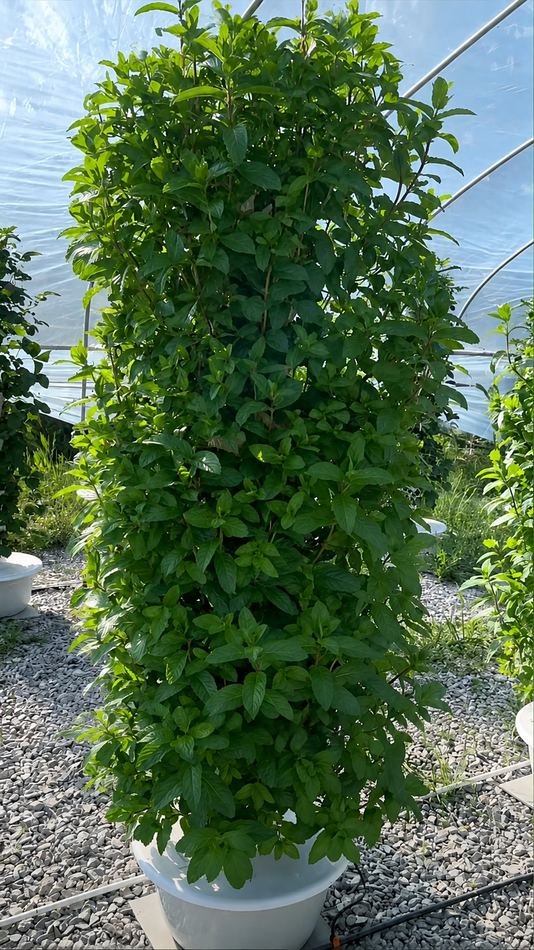
Basil pays the bills, but a mixed herb tower lets you deliver a full order sheet to the same customer — and one delivery of five herbs is far more profitable than one delivery of basil alone.
| Herb | EC target (mS/cm) | Ideal air temp | Cut interval | Watch out for |
|---|---|---|---|---|
| Basil | 1.0-1.6 | 20-27 C / 68-80 F | 14-21 days | Cold damage below 10 C / 50 F; downy mildew |
| Mint | 1.6-2.0 | 18-24 C / 64-75 F | 21-28 days | Runners invade neighbouring holes — give it its own tower or bottom layers |
| Cilantro / coriander | 1.2-1.8 | 15-22 C / 59-72 F | Succession, 1-2 cuts | Bolts fast above 24 C / 75 F; replant every 2-3 weeks |
| Parsley | 1.8-2.2 | 16-24 C / 61-75 F | 21-28 days | Slow germination (14-21 days) — start seedlings early |
| Chives | 1.8-2.4 | 16-24 C / 61-75 F | 21-28 days | Slow to establish, then productive for many months |
| Oregano / thyme | 1.5-2.0 | 18-26 C / 64-79 F | 28-42 days | Woody perennials: they hold holes for a long time — keep them in dedicated layers |
| Dill | 1.4-1.8 | 16-22 C / 61-72 F | Succession, 1-2 cuts | Bolts and gets tall — use lower layers so it does not shade the tower |
Reservoir grouping matters. One tower shares one nutrient solution, so do not put basil (EC 1.0-1.6) and chives (EC 1.8-2.4) on the same reservoir if you can avoid it. Run a “soft herbs” tower (basil, cilantro, dill) and a “hard herbs” tower (parsley, chives, oregano, thyme). If you must mix, hold EC around 1.6 and accept slightly slower growth on the high-EC herbs.
Every SpaceTree tower has 4 planting holes per layer, so capacity scales directly with height: a 7-layer tower has 28 holes, a 10-layer has 40, and a 12-layer has 48. Unlike lettuce, where the rule is strictly one plant per hole, herbs can be planted more densely because you harvest the tops rather than the whole plant.
| Herb | Plants per hole | Plants in a 7-layer tower (28 holes) | Plants in a 12-layer tower (48 holes) |
|---|---|---|---|
| Basil (Genovese, commercial cut) | 1 | 28 | 48 |
| Basil (small-leaf / bunching) | 2 | 56 | 96 |
| Mint | 1-2 | 28-56 | 48-96 |
| Cilantro / dill | 3-4 | 84-112 | 144-192 |
| Parsley | 2 | 56 | 96 |
| Chives | 3-4 (clumps) | 84-112 | 144-192 |
Do not over-plant basil. Crowded stems mean poor airflow inside the canopy, which is exactly the condition downy mildew needs. For a full breakdown of hole counts, spacing and multi-tower farm layout, see our guide on how many plants you can grow in a hydroponic tower.
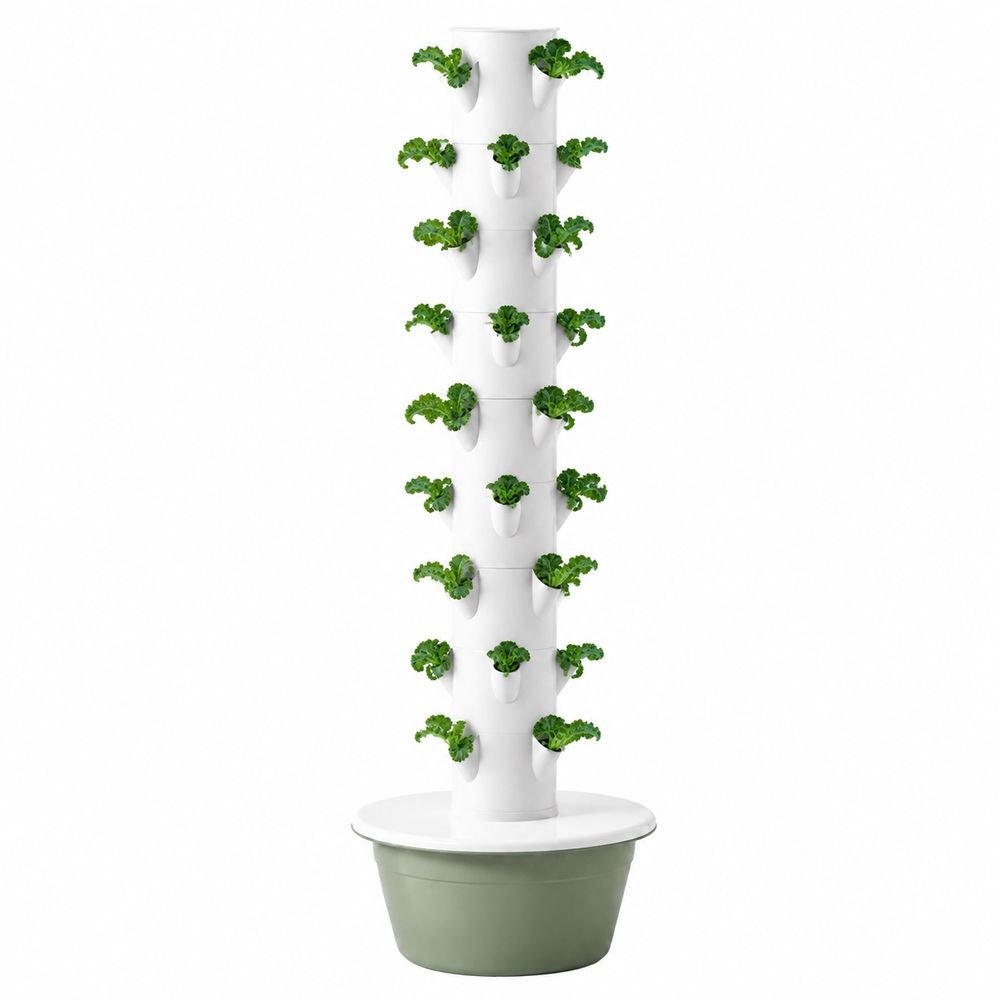
Herbs are nitrogen-hungry during vegetative growth — but push basil too hard and you get big, soft, watery leaves with weak aroma that bruise in transit. Aromatic oil content, which is what the chef is actually paying for, develops best at moderate EC with strong light.
| Stage | EC (mS/cm) | PPM (500 scale) | pH | Notes |
|---|---|---|---|---|
| Seedling / propagation | 0.6-0.8 | 300-400 | 5.8-6.2 | Weak feed until roots exit the cube |
| Establishment (first 7-10 days after transplant) | 0.8-1.2 | 400-600 | 5.6-6.2 | Keep humidity up, avoid harvesting |
| Vegetative / production (basil) | 1.2-1.6 | 600-800 | 5.5-6.5 | Higher nitrogen ratio; steady growth is the goal |
| Vegetative / production (parsley, chives, oregano) | 1.8-2.2 | 900-1100 | 5.5-6.5 | These herbs tolerate and want stronger feed |
| Post-cut recovery (2-3 days after harvest) | Hold at production EC | — | 5.5-6.5 | Do not spike the feed to force regrowth — it causes soft, leggy shoots |
Keep water temperature in the 18-24 C (64-75 F) band; basil roots stop working in cold solution and rot risk climbs fast. Full formulation details are in our hydroponic tower nutrient solution guide, and if you are not yet confident with meters, read how to measure and adjust EC and PPM and our water quality and pH management guide first.
Basil is a warm-climate crop and it behaves like one. These are the numbers that matter:
This single section decides whether you get two harvests or eight from the same plant. Basil branches from the pair of buds sitting just above each leaf node, so where you cut determines how the plant regrows.
Mint, oregano and thyme follow the same logic: cut above a node, never scalp the plant. Parsley and chives are different — harvest the outer stems at the base and leave the central crown growing.
More basil profit is lost in the two hours after harvest than anywhere else in the crop cycle. Basil is chilling-sensitive: store it in a standard 2-4 C (36-39 F) cold room with your lettuce and the leaves will develop black necrotic patches within 24-48 hours.
For pricing, channel selection and how to approach restaurants and specialty grocers, see our guide on how to sell hydroponic produce.
| Symptom | Likely cause | Fix |
|---|---|---|
| Flower spikes forming, leaves shrinking, bitter taste | Bolting — plant too old, heat stress or harvest interval too long | Pinch buds weekly, harvest on schedule, replace plants after 4-8 cuts |
| Grey-purple fuzz on leaf undersides, yellow blotches on top | Basil downy mildew — high humidity, stagnant air, leaf wetness | Increase airflow, drop RH below 70%, remove infected plants immediately, switch to resistant varieties |
| Sudden wilting, brown streaks inside the stem | Fusarium wilt (seed-borne) | Remove and destroy plants, sanitise the tower and reservoir, buy certified resistant seed only |
| Tall, pale, long-stemmed plants with few leaves | Insufficient light or excess nitrogen | Raise DLI to 12-18 mol/m²/day, moderate EC, harvest tops to force branching |
| Blackened leaf patches after harvest | Chilling injury in the cold room | Store basil at 12-15 C / 54-59 F, never with lettuce |
| Basil leaves large but flavour weak | EC too high, light too low, over-watering effect | Hold EC 1.2-1.6, increase light, avoid nitrogen spikes |
| Mint taking over neighbouring holes | Runners — normal mint behaviour | Give mint its own tower or bottom layers; trim runners at every harvest |
| Slimy brown roots, herbs stalling | Root rot from warm or stagnant solution | Water temperature 18-24 C, clean reservoir, follow the troubleshooting protocol |
Deeper diagnostics live in our tower troubleshooting guide, the nutrient deficiency chart, and our pest control guide — aphids and thrips love soft basil tips.
Here is a conservative worked example for one 12-layer tower (48 holes) planted entirely with Genovese basil. Use your own local prices — the structure of the calculation is what matters.
| Input | Conservative figure |
|---|---|
| Plants per tower | 48 (1 per hole) |
| Fresh cut weight per plant per harvest | 50-80 g (1.8-2.8 oz) |
| Yield per harvest per tower | 2.4-3.8 kg (5.3-8.4 lb) |
| Harvests per year (2-3 plantings, 4-8 cuts each) | 12-16 |
| Annual fresh basil per tower | 30-55 kg (66-120 lb) |
| Wholesale value at USD 8-12 / lb | USD 530-1,440 per tower per year |
| Same tower planted with leaf lettuce (reference) | approx. USD 200-350 per tower per year |
Two operational notes before you convert your whole farm to basil. First, herbs are labour-heavier than lettuce: pinching, cutting and bunching take more hands per kilo than pulling whole heads. Second, herb demand is narrower — a city can absorb tonnes of lettuce but only so much basil. The realistic commercial answer for most growers is a mixed farm: leafy greens for volume and cash flow, herbs for margin. Plan the rotation with our 12-month planting calendar, size the harvest windows with the crop growth timeline, and compare footprints with our yield per square foot data.
SpaceTree manufactures vertical hydroponic towers in 5, 7, 9, 10, 11, 12 and 13-layer configurations, with 4 planting holes per layer and food-grade UV-stabilised housings. For herb growers we recommend running mixed heights: taller towers for long-cycle basil and parsley blocks, shorter towers for fast succession crops like cilantro and dill that you replant every few weeks. LED-integrated models are available where natural light cannot hold 12-18 mol/m²/day year round.
Because we ship factory-direct, you deal with the manufacturer instead of a trading company: wholesale pricing on volume orders, spare parts availability, OEM and private-label options, and technical support on nutrient and climate setup for your specific crop mix. If you are comparing suppliers, our manufacturer sourcing guide and cost and ROI breakdown will tell you exactly what to ask for.
Tell us your target crops, weekly volume and growing environment, and we will send a tower configuration, quantity recommendation and factory-direct quote.
