Our Location
304 North Cardinal St.
Dorchester Center, MA 02124

304 North Cardinal St.
Dorchester Center, MA 02124

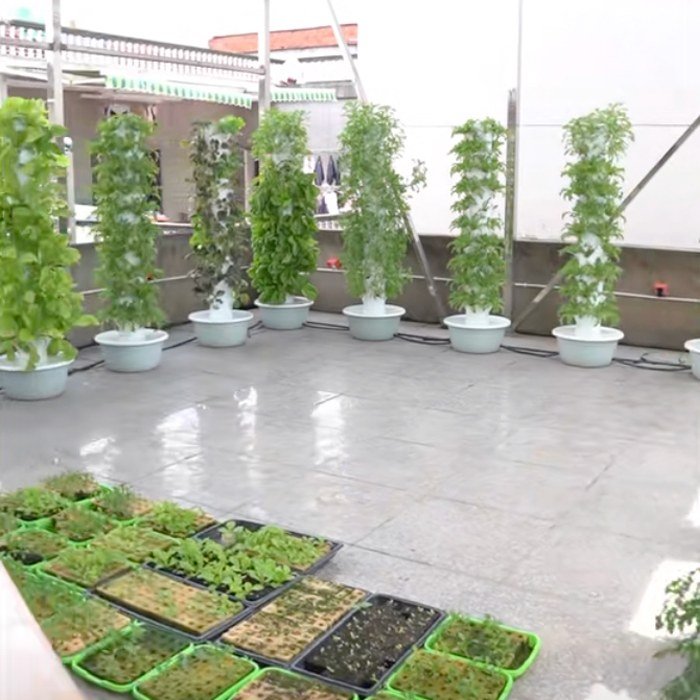
Most commercial tower failures are not caused by bad luck or bad plants. They are caused by decisions made in the three weeks before the first seedling goes in — and then paid for again on every single crop cycle for the next eight to fifteen years. A tower system carries 24 to 48 plant sites in less than one square meter, so a mistake that would cost a field grower a few plants costs a tower grower an entire harvest.
This guide catalogs the 25 most expensive mistakes in commercial hydroponic tower production, organized by the eight stages where they happen: site planning, sourcing, installation, propagation, nutrient management, climate, sanitation and sales. Every entry carries a cost tag so you can see what ignoring it actually costs, plus the specific fix. If you are still deciding what a tower system is and how it works, start with What Is a Hydroponic Tower and How Does It Work, then come back here.
Three structural reasons. First, density magnifies everything: a clogged feed line does not affect one row, it starves every plant above the blockage. Second, coupling: shared pump, shared reservoir, shared nutrient solution mean one contaminated reservoir is a system-wide event. Third, duration: a frame-and-channel tower is built to last 8 to 15 years, so a specification error at purchase is not a one-time loss — it is a tax on every cycle you run.
For reference, a single lost cycle in one 12-layer tower (48 plant sites) at basil pricing runs roughly $120-160 in unsold production. Multiply by your tower count and number of cycles per year and the smallest operational error becomes a five-figure annual line item — see the full hydroponic tower cost breakdown and the 5-year cost of ownership analysis for the arithmetic.
Mistake 1 — Designing the room around the building instead of around the workflow. Towers get placed where the space already is: against walls, in alcoves, around existing posts. The result is aisles under 90 cm, no turning space for carts, and harvest paths that cross planting paths. Fix it before you order anything: lay out aisle width, harvest stations and reservoir access first, then fill the remaining area with towers. The planning parameters are in how many plants you can grow in a hydroponic tower. Cost if ignored: 10-25% of your labor hours, permanently.
Mistake 2 — Underestimating clear height. A 12-layer tower stands about 207 cm / 6.8 ft, and it needs roughly 3.0 m of finished clear height once you add the base reservoir, lighting and maintenance clearance (2.2 m for a 6-layer, 2.6 m for a 9-layer). Low ceilings force you into shorter towers, which means more floor area, more reservoirs and a higher cost per plant site. Cost if ignored: A permanently unreachable top layer – roughly 25% of the plant sites in a 12-layer tower.
Mistake 3 — Ignoring floor loading and where the water actually goes. A full system is heavy water: 30 L in each base reservoir alone, plus solution in the channels and the main reservoir. Check floor loading, drain capacity and the slope of the floor toward a drain before you place the first tower. Retrofitting a floor drain under a working farm costs several times more than installing it during the fit-out. Cost if ignored: Structural remediation, or a flooded floor at 3 a.m..
Mistake 4 — Buying on lowest price per tower instead of lowest cost per plant site. A cheap 6-layer tower quoted at a lower unit price can cost more per plant site than a 12-layer tower from the same factory: frame, base reservoir, pump, timer and plumbing are shared across layers, so only the layers, channels and net cups are incremental. Compare quotes per plant site and per cubic meter of shipped volume, not per tower. See 6-layer vs. 9-layer vs. 12-layer towers. Cost if ignored: 25-40% higher per-site capital cost over the life of the system.
Mistake 5 — Specifying one tower model for every crop. Layer spacing and hole density are manufacturing variables, not fixed catalog options. Compact greens want tight layers; fruiting and vining crops want wider spacing to avoid shading and to allow trellising. If your supplier cannot adjust layer spacing and hole density to your crop plan, you are buying a consumer product at commercial volumes. Cost if ignored: A full crop slot that never performs.
Mistake 6 — Ordering no spare parts with the first container. Pumps, nozzles, seals and float valves wear on predictable timelines: pumps and aerators 2-4 years, nozzles 12-24 months, O-rings 1-2 years. Shipping spares separately later costs the same freight for a fraction of a container’s value. Load spares into the original shipment — the parts inventory math is in the 5-year TCO breakdown. Cost if ignored: $200-480 per tower over five years, plus unplanned downtime.
Mistake 7 — Assuming ‘turnkey’ includes commissioning. A factory-direct shipment arrives as hardware, not as a running farm. Confirm in writing who does pressure testing, control programming, dosing calibration and operator training, and what documentation arrives with the container. What to expect on delivery is covered in from factory to farm. Cost if ignored: Weeks of production delay and a first crop that underperforms.
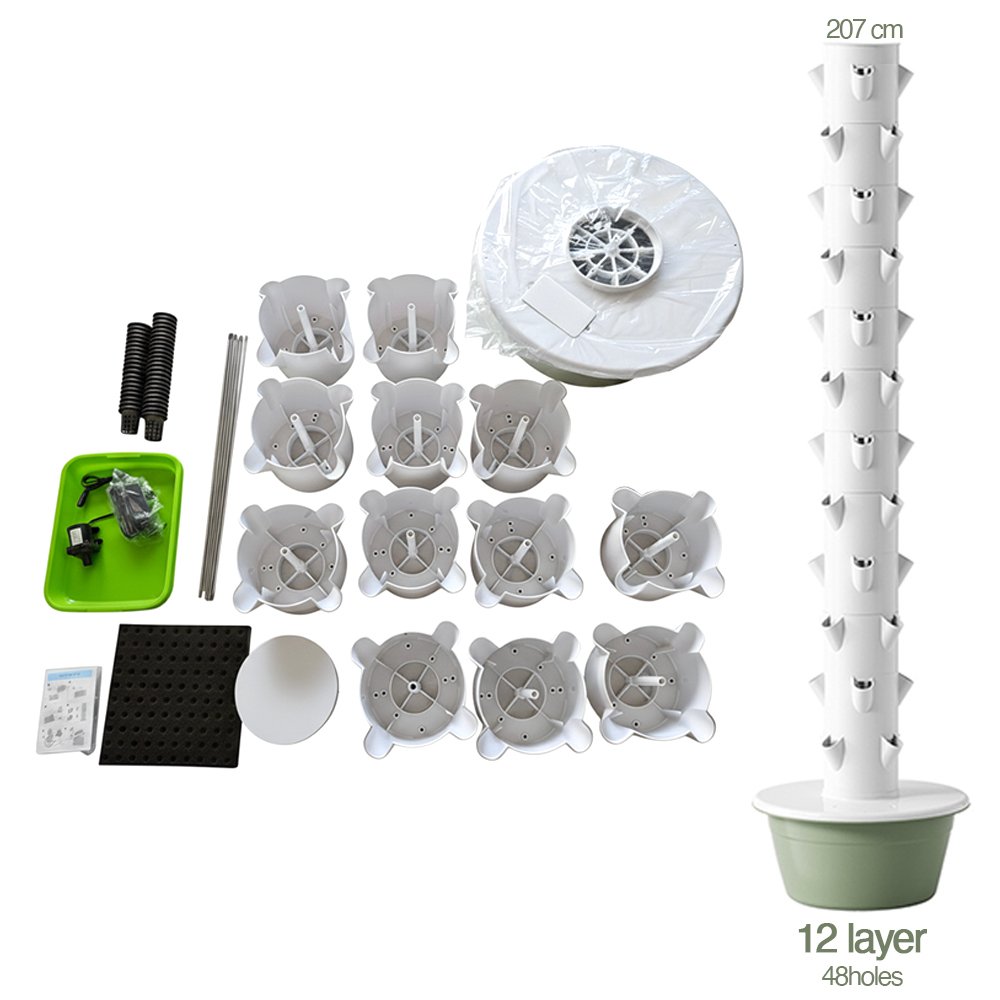
Mistake 8 — Planting before pressure testing. Run every tower for 24-48 hours with plain water before any seedling goes in. Watch for weeping joints, uneven flow to the top layer and nozzle clogging. Repairing a leak is trivial on an empty system and disruptive on a planted one. Cost if ignored: A flood, or a dry top layer discovered after transplanting.
Mistake 9 — Leveling and drain-slope errors. Channels must drain completely between cycles. A tower that is out of level by a few millimeters holds a film of solution at the low end, which is exactly where root rot and algae start. Level each tower at installation and re-check after the first full week of operation with solution in the system. Cost if ignored: Standing solution in channels: root disease and algae.
Mistake 10 — Undersized pump and ignored head loss. Required head is roughly 1.2 m for a 6-layer tower, 1.8 m for 9-layer and 2.3 m for 12-layer at the top nozzle, before you add pipe friction and fittings. Add aeration demand that rises with layer count, and specify the pump from the top of the system rather than the middle. Cost if ignored: Uneven feeding, burned-out pumps, top-layer wilt on hot days.
Mistake 11 — Skipping a dedicated propagation area. Germinating in the tower wastes premium vertical space on plants that are not producing. A separate propagation bench with its own light and humidity control lets you transplant a uniform, ready crop into the tower and immediately start the next batch. The workflow is in how to transplant seedlings into a hydroponic tower. Cost if ignored: 5-10 lost days per cycle and uneven stands.
Mistake 12 — Transplanting plants that are already too large. Tower geometry is designed around compact, young transplants. Overgrown seedlings shade the layer below, lean out of the channel and block the light that the rest of the column needs. Move plants at the size your crop plan specifies, not when the bench becomes inconvenient. Cost if ignored: Shading, tipping and 10-20% yield loss in the layers below.
Mistake 13 — Mixing crop start dates in the same tower. Two crops at different growth stages in one tower mean every nutrient, climate and harvest decision is wrong for one of them. Group towers by crop and by cohort, and keep a simple board or spreadsheet showing which towers come off on which date — the framework for that is in the 12-month tower planting calendar. Cost if ignored: 25-40% of cycle capacity lost to compromise harvest timing.
Mistake 14 — Chasing a target EC instead of reading the trend. EC is a trend line, not a set point. Rising EC with falling water level means the crop is drinking more than it is feeding; falling EC means you are overfeeding. Log EC and water level daily and adjust from the direction of the change. The method is in how to measure and adjust EC and PPM. Cost if ignored: Silent yield erosion that shows up as ‘inconsistent quality’.
Mistake 15 — Topping off with plain water only. Topping off with water dilutes everything, including calcium and magnesium, and the crop starts showing marginal burn or interveinal yellowing that gets misdiagnosed as a pathogen. Top off with a proportionally diluted nutrient solution, and verify the mix against the nutrient solution formulation guide. Cost if ignored: Nutrient drift, then deficiency symptoms that look like disease.
Mistake 16 — Ignoring source water alkalinity. Alkalinity drives pH drift far more than the pH reading of your source water suggests. High-alkalinity tap or well water forces acid into every top-off and leaves deposits that clog nozzles. Test alkalinity, hardness, sodium and chlorine before you design your dosing regime — see water quality and pH management or start from source water testing and blending. Cost if ignored: pH that will not stay put, plus scale in nozzles and lines.
Mistake 17 — Full reservoir dumps on a fixed calendar. Dumping on a schedule regardless of crop load, water temperature or EC trend wastes solution and shocks the crop with an abrupt change in chemistry. Base change-outs on EC/water-level trend, crop age and pathogen pressure, and only do a full change when the numbers say so: reservoir management schedule. Cost if ignored: 15-30% of your water and fertilizer bill thrown away.
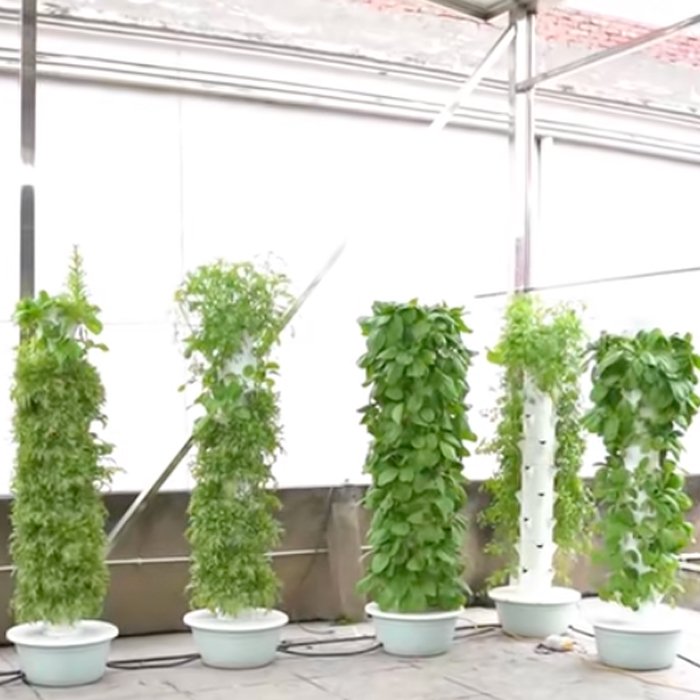
Mistake 18 — Treating humidity as a comfort problem instead of a VPD problem. Relative humidity alone tells you nothing useful inside a tower canopy. What matters is vapor pressure deficit at canopy level, which is a function of temperature, humidity and airflow together. High VPD stalls growth; low VPD with still air grows soft tissue that rots in storage. Target VPD and move air through the columns: the VPD, humidity and airflow guide. Cost if ignored: Tip burn, soft growth and a standing invitation to botrytis.
Mistake 19 — Lighting the top of the tower and shadowing the bottom. A single fixture over the column lights the top three layers and leaves the bottom in shade. Towers need side and inter-layer lighting, with intensity specified at canopy height rather than at the fixture. Fixture count, spectrum and height are covered in the LED lighting guide. Cost if ignored: 30-50% yield difference between the top and bottom layers of the same tower.
Mistake 20 — Having no seasonal operating strategy. Every farm has a hot-weather problem and a cold-weather problem; the mistake is discovering both for the first time in the same year. Build the cold-weather plan (heating, root-zone temperature, daylength) and the heat-management plan (water temperature ceiling, extra aeration, shading, cycle timing) before the season arrives: winter strategies and hot summer management. Cost if ignored: A predictable yield collapse twice a year.
Mistake 21 — Cleaning only what you can see. Tower hygiene means reservoirs, channels, pump housings, net cups and the propagation area – not just the visible panels. Pathogens overwinter in biofilm inside plumbing, and a tower system recirculates, so whatever grew in the last crop gets delivered to the next one. Follow a written between-crop procedure: deep cleaning and sanitizing between crops. Cost if ignored: One contaminated cycle turning into three.
Mistake 22 — Reacting to pests after they have spread. Flying pests move between layers in hours, and the top of an infested tower is a launch pad for the whole room. Monitor with sticky cards at multiple heights, scout on a fixed schedule, and treat at threshold. Prevention and treatment for the common tower pests is in hydroponic tower pest control, and recurring symptoms are indexed in tower troubleshooting. Cost if ignored: 10-30% of a cycle, plus rejected loads at your buyer.
Mistake 23 — Harvesting by the calendar instead of by the crop. Tower crops do not ripen on schedule; they ripen on temperature, light and nutrient supply. Walk the room with a harvest list twice a week and cut what is ready, rather than running one harvest day for everything. Growth timelines by crop are in production data for commercial growers. Cost if ignored: 5-15% loss to over-mature and bolted product.
Mistake 24 — Selling the entire output to a single buyer at spot price. One buyer means no price leverage and no cushion when they cut an order. Channels pay differently: broadline food service runs 110-140% of wholesale baseline, direct restaurant supply 150-250%, specialty retail 180-300% and farmers markets or direct sales 200-350%. Build at least two channels from the first harvest: how to sell hydroponic produce. Cost if ignored: 30-60% of the price you could have captured.
Mistake 25 — Treating labor as an afterthought. If aisles are too narrow, reservoirs are hard to reach and harvest stations are missing, every task takes longer forever. Design the room so one person can move a full tray from tower to packing table without lifting anything over their head. The routine that keeps the room efficient is in the daily, weekly and monthly maintenance checklist. Cost if ignored: Labor is 15-25% of five-year operating cost – and it multiplies every layout error.
| # | Mistake | Cost if ignored | First fix |
|---|---|---|---|
| 1 | Building-shaped layout | 10-25% of labor hours, forever | Design aisles and workflow first |
| 2 | Insufficient clear height | Top 25% of sites unreachable | Confirm 2.2 / 2.6 / 3.0 m before ordering |
| 3 | Floor loading and drainage ignored | Structural work or flooding | Check loading, drain, floor slope |
| 4 | Cheapest tower instead of cheapest site | 25-40% higher per-site capex | Quote per plant site and per m3 |
| 5 | One model for all crops | Dead crop slots | Specify layer spacing per crop |
| 6 | No spares in the first container | $200-480 per tower / 5 years | Load a spares kit with the shipment |
| 7 | ‘Turnkey’ assumed | Weeks of lost production | Define commissioning in writing |
| 8 | No pressure test before planting | Flood or dry top layer | 24-48 h wet run on plain water |
| 9 | Leveling and slope errors | Standing solution, root rot | Level each tower, recheck week one |
| 10 | Undersized pump, ignored head loss | Uneven feeding, pump failures | Size from the top nozzle plus friction |
| 11 | No propagation area | 5-10 lost days per cycle | Separate bench with own light and humidity |
| 12 | Transplanting oversized plants | 10-20% yield loss below | Move plants at specified size |
| 13 | Mixed start dates in one tower | 25-40% capacity lost | One cohort per tower, tracked on a board |
| 14 | Target EC instead of EC trend | Silent yield erosion | Log EC and water level daily |
| 15 | Plain-water top-offs | Nutrient drift, false disease diagnosis | Top off with diluted nutrient solution |
| 16 | Alkalinity not tested | pH drift and nozzle scale | Test alkalinity, hardness, sodium, chlorine |
| 17 | Calendar reservoir dumps | 15-30% of water and fertilizer bill | Change out on trend and crop age |
| 18 | Humidity managed, VPD ignored | Tip burn, soft tissue, botrytis | Control temperature, humidity and airflow together |
| 19 | Only top lighting | 30-50% top-to-bottom yield gap | Add side and inter-layer lighting |
| 20 | No seasonal strategy | Two yield collapses a year | Pre-build winter and summer plans |
| 21 | Surface-level cleaning | One bad cycle becomes three | Written between-crop deep clean |
| 22 | Late pest response | 10-30% of a cycle | Sticky cards at multiple heights, fixed scouting |
| 23 | Calendar harvesting | 5-15% over-mature loss | Twice-weekly walk with a harvest list |
| 24 | Single buyer at spot price | 30-60% of achievable price | Build two channels from harvest one |
| 25 | Labor ignored in design | 15-25% of five-year cost | One-person tray flow, no overhead lifting |
Most ‘tower problems’ are one of a handful of upstream mistakes. Match the symptom before you change anything — otherwise you fix the symptom and pay for the cause twice.
| What you see | The mistake behind it | What to do first |
|---|---|---|
| Yellowing starts in the lowest layers | Top-only lighting plus weak flow to the top nozzles | Check side light coverage and pump head, then review EC trend |
| Roots brown and smell, tops still green | Standing solution from slope or leveling error, warm reservoir | Level the towers, cut reservoir temperature, increase aeration, cull affected plants |
| pH will not hold after top-off | Alkalinity untreated, plain-water top-offs | Test alkalinity, switch to blended or acid-adjusted water, correct the top-off mix |
| Fuzzy gray growth at stem junctions | Low VPD with still air in dense canopy | Raise airflow through the columns, lower humidity at canopy level, cut affected material out |
| Bitter, bolted greens before harvest | Calendar harvesting plus warm root zone | Harvest on crop condition, drop solution temperature, shift cycle timing |
| Algae film on net cups and channels | Light reaching solution, incomplete drainage, infrequent cleaning | Light-proof the system, fix drainage, add the deep-clean rotation |
| Uneven growth between identical towers | Pressure test never done, mixed cohort planting, clogged nozzles | Flow test each tower, one cohort per tower, nozzle inspection schedule |
| Yield fine but profit missing | Single-channel selling plus labor-heavy layout | Add a second sales channel, restructure aisles and harvest stations |
| Priority | Fix | Why it pays first |
|---|---|---|
| 1 | Weighted EC and water-level logging | Free to start, catches underfeeding before it becomes visible |
| 2 | Side and inter-layer lighting | Closes a 30-50% top-to-bottom yield gap on existing hardware |
| 3 | Water temperature and aeration control | Removes the single largest root disease risk in recirculating systems |
| 4 | A written between-crop deep clean | Converts a recurring loss into a scheduled task |
| 5 | A second sales channel | Raises realized price 10-60% without growing a single extra plant |
Quantify it per site rather than per year: a 12-layer tower holds 48 plant sites, and a single lost cycle is worth roughly $120-160 at basil pricing. A farm running 100 towers on a 30-day cycle has about 1,200 cycles a year, so even a 5% productivity loss from lighting, EC drift and layout friction is a five-figure annual number. Full cost drivers are itemized in the cost breakdown and 5-year TCO articles.
Water temperature combined with poor aeration. Pythium and similar root pathogens multiply in warm, low-oxygen solution and spread through an entire recirculating system in days, not weeks. Everything else on this list costs money; this one costs the harvest. Rank it above every other operational fix.
Aisles, drain points and harvest stations are the expensive ones because they touch the building. Tower placement, cohort grouping, lighting and reservoir management are cheap to change later. That is why the layout decision — mistake 1 — deserves the most time before you order any hardware.
For the same floor area, taller towers almost always win on economics: 12-layer towers run 25-40% lower cost per plant site and 35-50% lower shipping cost per site than 6-layer towers, because frame, reservoir, pump and plumbing are shared. The exception is a building with low clear height, or crops that need wide layer spacing – both of which are solved by specifying layer spacing at the factory rather than by buying short towers. Compare configurations in how to choose the right tower model.
Every mistake in this list is cheaper to prevent at the specification stage than to fix in production. That is why factory-direct ordering works best when the factory is treated as a manufacturing partner rather than a catalog: layer count and layer spacing set per crop, hole density set per crop plan, a spares kit in the same container, and documentation that lets your team commission the system without guesswork. Compare suppliers on the criteria in how to choose a hydroponic tower manufacturer, then send us your crop plan and building dimensions and we will specify the configuration against it.
